
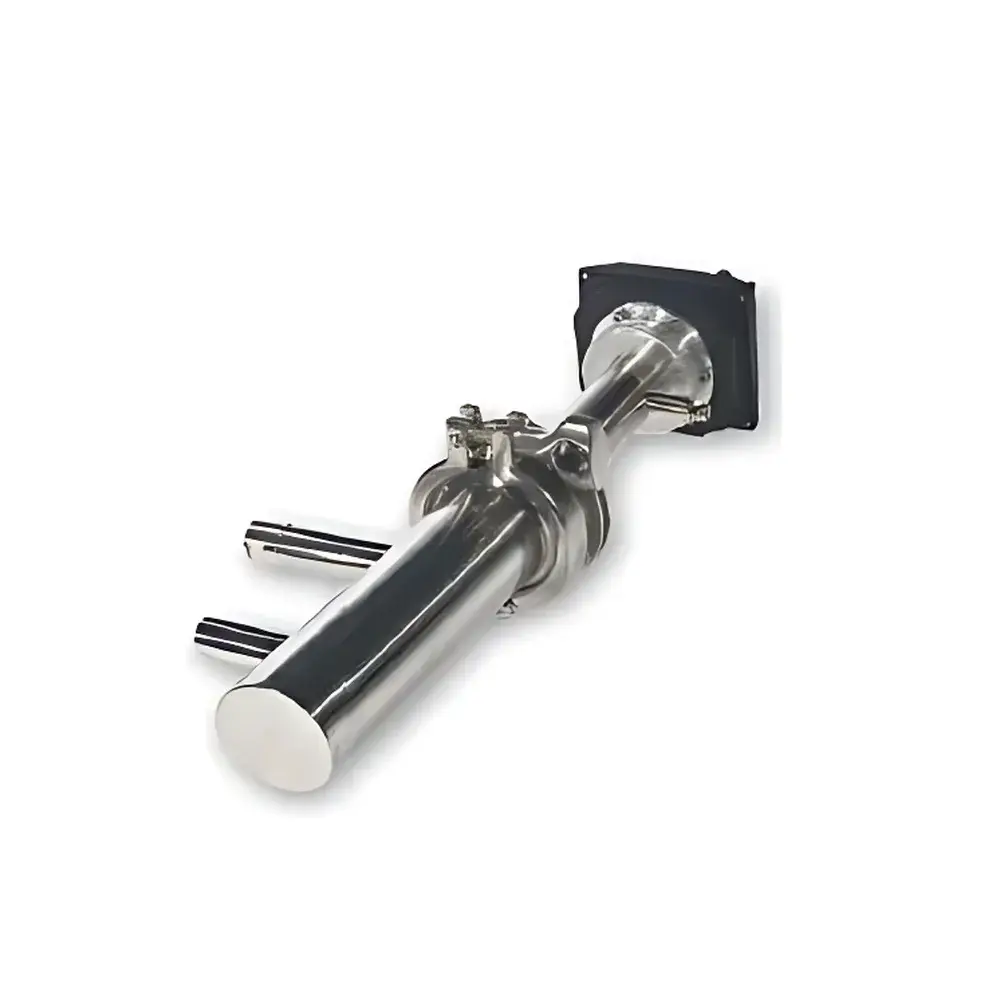
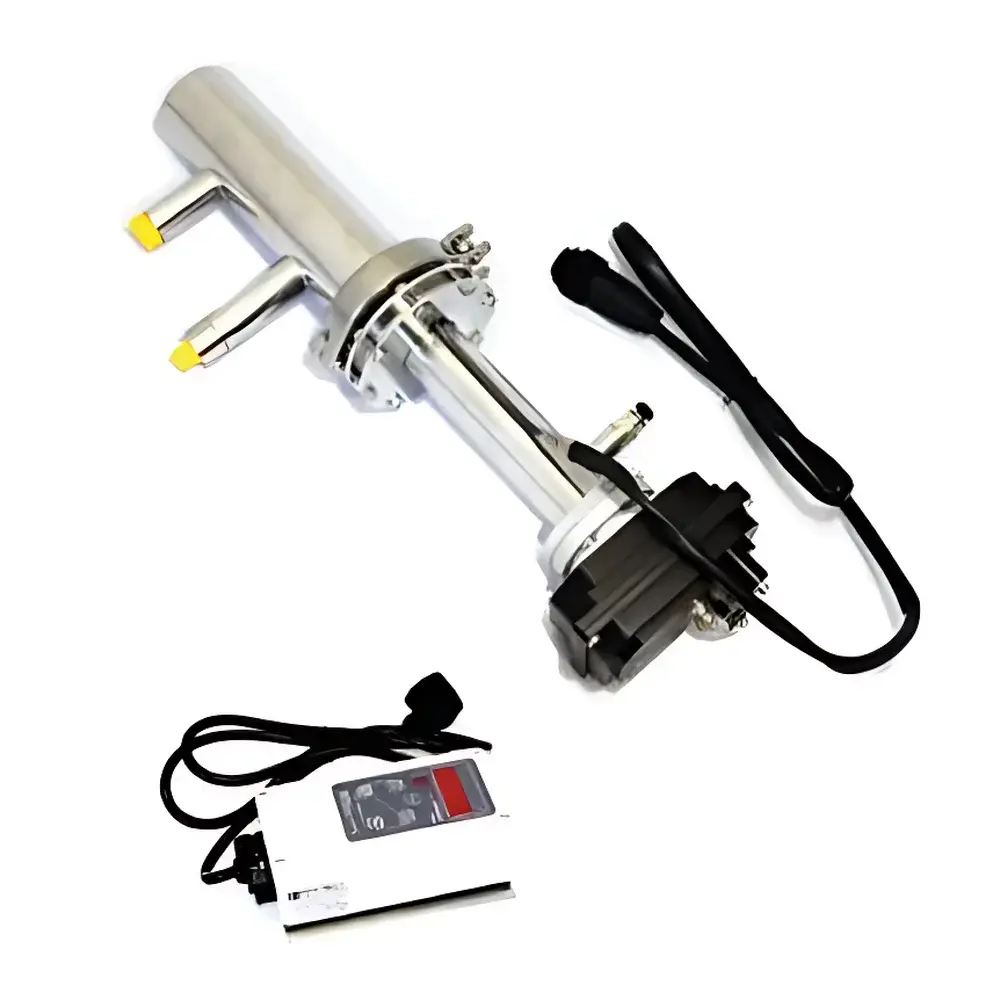
Pegasor PPS-M Fast Particulate Sensor
| Brand | Pegasor |
|---|---|
| Origin | Finland |
| Model | PPS-M |
| Particle Size Range | ~nm–2.5 µm |
| Mass Concentration Range | 1 µg/m³–500 mg/m³ (dependent on sample gas temperature) |
| Number Concentration | Supported via Faraday cup current differential |
| Response Frequency | Up to 100 Hz |
| Operating Sample Gas Temperature | Standard version up to 200 °C |
| Ambient Temperature Range | −20 °C to +50 °C |
| Sample Gas Pressure | 1–10 bar (absolute) |
| Power Consumption | 6 W |
| Output Interface | USB (standard), analog output optional |
| Sensor Housing Material | Stainless steel |
| Dimensions | 400 mm (length) |
| Weight | 2.6 kg |
| Gas Inlet/Outlet | G1/4″ (inlet), G3/8″ (outlet), G1/8″ (clean air supply) |
Overview
The Pegasor PPS-M Fast Particulate Sensor is a field-deployable, real-time particulate mass and number concentration monitor engineered for continuous, in-situ measurement of ultrafine and fine particles in undiluted exhaust and ambient gas streams. Unlike optical or filter-based methods, the PPS-M employs a robust electrostatic detection principle rooted in Faraday cup electrometry combined with corona ionization and jet dilution. This architecture enables direct sampling without preconditioning—eliminating reliance on costly consumables, calibration gases, or periodic filter replacement. Designed and manufactured in Finland, the sensor meets stringent requirements for long-term stability in harsh industrial and regulatory monitoring environments—including automotive engine test cells, stack emissions monitoring, urban air quality networks, and occupational health applications.
Key Features
- Real-time, continuous measurement with 100 Hz data acquisition capability—enabling transient emission profiling during dynamic engine cycles or process upsets.
- Direct sampling of raw, undiluted exhaust—no dilution tunnels, thermal denuders, or volatile removal systems required.
- Wide operational temperature range: standard sensor rated to 200 °C sample gas temperature; high-temperature variant certified for sustained operation up to 850 °C—suitable for turbine exhaust, kiln stacks, and aftertreatment system diagnostics.
- Insensitive to fluctuations in sample flow rate, pressure, or temperature—ensuring stable calibration across variable process conditions.
- Stainless steel mechanical construction with IP65-rated enclosure—designed for permanent outdoor installation or integration into OEM emission control systems.
- Self-contained clean air supply via integrated platinum corona needle (2 kV DC), generating positive ions for particle charging without radioactive sources or external ionizers.
- Faraday cup differential current measurement provides simultaneous proportional response to both particle mass and number concentration—traceable to SI units via charge calibration.
Sample Compatibility & Compliance
The PPS-M is compatible with complex, humid, and chemically aggressive gas matrices typical of diesel and gasoline exhaust, biomass combustion flue gas, and industrial process off-gases. Its non-optical, charge-based detection mechanism avoids interference from vapor condensation, lens fouling, or refractive index variability. The sensor complies with key international standards governing particulate monitoring: it supports traceable reporting aligned with ISO 8502-12 (electrostatic measurement principles), fulfills functional requirements referenced in EU Regulation (EU) 2017/1151 for RDE (Real Driving Emissions) particulate number (PN) instrumentation, and is deployable in GLP-compliant ambient air monitoring networks per EN 16450. While not a Class I medical device, its design conforms to IEC 61000-6-2 (immunity) and IEC 61000-6-3 (emissions) for industrial electromagnetic environments.
Software & Data Management
The PPS-M interfaces via native USB 2.0 to Windows-based host systems (Windows XP through Windows 10/11) using Pegasor’s proprietary GUI-based data acquisition software. This application performs real-time signal conditioning, calculates mass and number concentrations using factory-applied charge-to-mass transfer functions, logs timestamped datasets in CSV and binary formats, and supports user-defined alarm thresholds. All raw Faraday cup current values—including inlet and outlet channel readings—are accessible for post-processing. Audit trails, user access controls, and data integrity safeguards align with FDA 21 CFR Part 11 expectations when deployed in regulated QA/QC environments. Optional analog outputs (0–10 V or 4–20 mA) enable integration into PLC-based SCADA systems without PC dependency.
Applications
- Automotive Emission Testing: On-engine PN monitoring during WLTC/RDE cycles, DPF upstream/downstream characterization, OBD-II readiness verification, and chassis dynamometer certification testing.
- Stack & Process Emissions: Continuous compliance monitoring of PM2.5, PM10, and ultrafine fractions in cement kilns, waste incinerators, and chemical reactors—meeting EPA Method 202 and EN 13284-1 performance criteria.
- Ambient & Indoor Air Quality: Deployment in dense urban sensor grids, HVAC health monitoring, cleanroom particle ingress detection, and occupational exposure assessment per ACGIH TLV® and EU Directive 2008/50/EC.
- Research & Development: Catalyst aging studies, nanoparticle synthesis process control, and aerosol generation system validation where sub-10 nm sensitivity and temporal resolution are critical.
FAQ
Does the PPS-M require zero gas or span calibration during operation?
No. The sensor operates on a fundamental physical principle (charge conservation) and does not rely on gas-phase calibration standards. Periodic verification using reference aerosols (e.g., DEHS, NaCl) is recommended annually for metrological traceability—but no daily or shift-based recalibration is needed.
Can the PPS-M measure particles smaller than 10 nm?
Yes. The instrument detects particles down to several nanometers in mobility diameter, enabled by efficient bipolar ion attachment and low-noise electrometer design—making it suitable for nucleation mode aerosol analysis.
Is the sensor compatible with corrosive exhaust containing SO₂ or NOₓ?
Yes. The stainless steel flow path and absence of optical windows or polymer seals ensure long-term functionality in high-SO₂ diesel exhaust and lean-burn natural gas turbine effluents.
What is the minimum detectable mass concentration?
At 100 Hz sampling, the lower limit of quantification is approximately 1 µg/m³ under standard conditions (25 °C, 1 atm), verified against gravimetric reference filters per ISO/IEC 17025-accredited protocols.
Can multiple PPS-M units be synchronized for spatially resolved measurements?
Yes. Units can be time-synchronized via external TTL trigger input or NTP-enabled host PCs, supporting coordinated multi-point monitoring in wind tunnel studies or plume dispersion mapping.







