
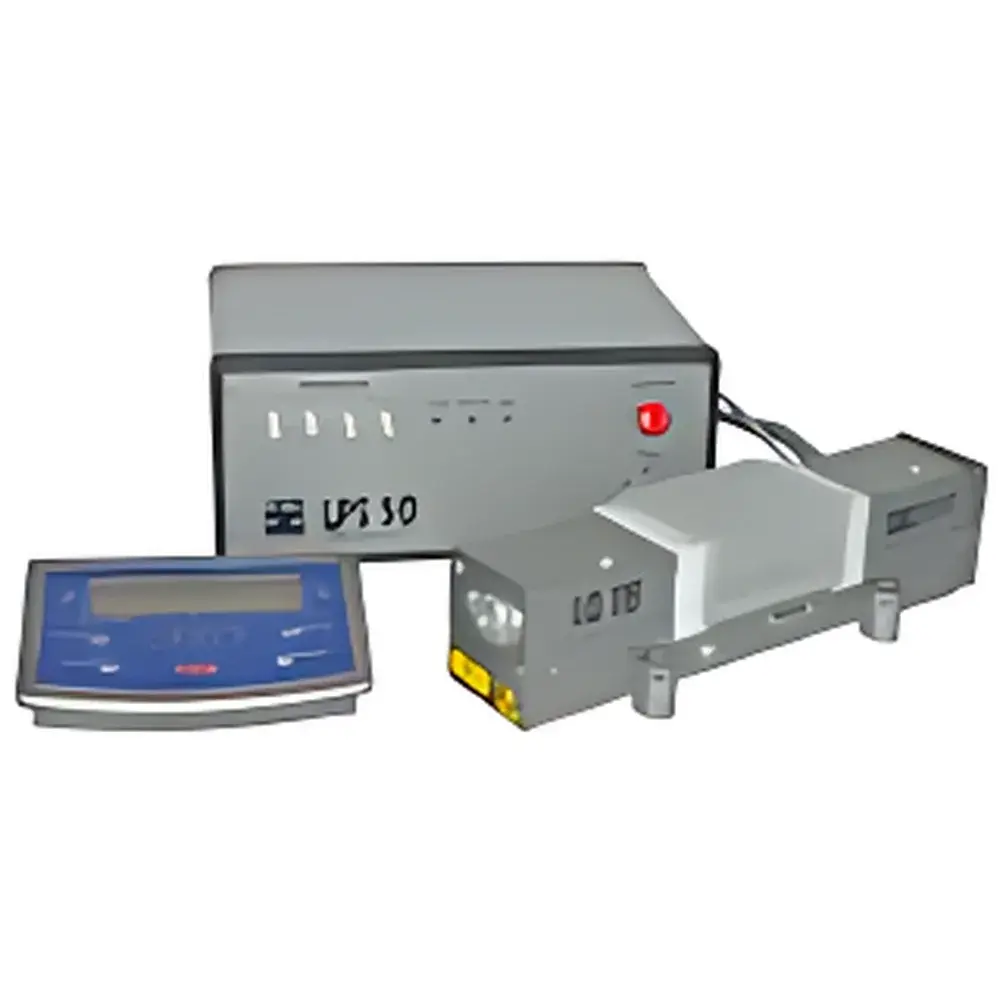
Solar LQ Series Q-Switched Nd:YAG Pulsed Laser Systems
| Brand | Solar |
|---|---|
| Origin | Belarus |
| Type | Solid-State Pulsed Laser System |
| Model Variants | LQ115, LQ215, LQ215-D, LQ629, LQ529C, LQ529B, LQ529A, LQ929B, LQ929A |
| Pulse Energy (1064 nm) | 90–1400 mJ |
| Pulse Repetition Rate | 1–100 Hz |
| Pulse Width (FWHM) | 6–18 ns |
| Beam Divergence | ≤3 mrad (typ. <1.5 mrad) |
| Beam Diameter | 4–11 mm |
| Pulse Energy Stability | ±1.5% to ±2.5% (RMS) |
| Jitter (External Trigger) | ±1 ns to ±1.5 ns |
| Cooling | Air or Integrated Water-to-Air |
| Interface | RS232 |
| Optional Harmonic Generators | LG101 (SHG), LG103 (THG/FHG), LG105 (FHG) |
Overview
The Solar LQ Series represents a family of industrial-grade, flashlamp-pumped, Q-switched neodymium-doped yttrium aluminum garnet (Nd:YAG) pulsed laser systems engineered for high-energy, nanosecond-duration output across fundamental and harmonic wavelengths. Operating on the principle of electro-optic or passive Q-switching within a solid-state resonator cavity, these lasers deliver precise temporal control and excellent spatial beam quality (M² < 2), enabling reproducible energy delivery critical for demanding scientific and industrial applications. Designed and manufactured in Belarus by Solar, the LQ platform integrates robust thermal management, stable cavity alignment, and low-noise power supply architecture to ensure long-term operational reliability under laboratory, manufacturing, and field-deployable conditions—including integration into mobile laser platforms.
Key Features
- Multi-wavelength output: Fundamental 1064 nm emission with optional harmonic generation to 532 nm (second harmonic), 355 nm (third), 266 nm (fourth), and 213 nm (fifth) via integrated or external nonlinear crystals (e.g., KDP, BBO, LBO).
- Configurable architectures: Oscillator-only (LQ115/LQ215) and oscillator-amplifier (LQ529/LQ929) variants provide scalable pulse energy from 90 mJ to 1400 mJ at 1064 nm, supporting both single-shot and burst-mode operation.
- Precision timing control: Sub-nanosecond jitter (< ±1 ns) relative to external TTL triggers ensures synchronization with diagnostics such as ICCD cameras, streak cameras, or time-of-flight spectrometers.
- Thermal stability: Self-contained water-to-air cooling systems (LQ529/LQ929) or forced-air solutions (LQ115/LQ215) maintain diode pump and crystal temperature within ±0.1 °C, minimizing drift in pulse energy and pointing.
- Beam specification compliance: All models meet ISO 11146 beam parameter measurement standards; divergence ≤1.5 mrad and beam diameter ≤11 mm support efficient coupling into fiber launchers, optical parametric amplifiers (OPAs), or harmonic generation stages.
- Industrial interface & safety: RS232 serial communication enables remote parameter control (repetition rate, delay, Q-switch timing); integrated interlock circuits comply with IEC 60825-1 Class 4 laser safety requirements.
Sample Compatibility & Compliance
The LQ Series is compatible with standard optical tables, kinematic mounts, and OEM integration frames. Its mechanical footprint, electrical interface (85–264 VAC, 47–63 Hz), and cooling requirements are specified per model to facilitate installation in cleanroom environments, metrology labs, or vehicle-mounted systems. The laser system conforms to electromagnetic compatibility (EMC) directives per EN 61326-1 and laser product safety standards per EN 60825-1:2014. Harmonic modules (LG101/LG103/LG105) are CE-marked and designed for use under controlled atmospheric conditions (20–25 °C, RH < 60%) to preserve nonlinear crystal transmission and damage threshold integrity.
Software & Data Management
While the LQ Series operates via hardware front-panel controls and RS232 commands, Solar provides a Windows-based configuration utility for setting pulse repetition rate, external trigger delay, and harmonic selection. All operational parameters—including pulse count, accumulated runtime, and internal temperature logs—are timestamped and stored in non-volatile memory. For GLP/GMP-regulated environments, third-party SCADA or LabVIEW integration supports audit-trail generation, electronic signature capability, and data export in CSV/ASCII format compliant with FDA 21 CFR Part 11 requirements when deployed with validated software layers.
Applications
- Nonlinear optics research: Pump source for optical parametric oscillators (OPOs), difference-frequency generation (DFG), and ultrafast pulse compression experiments.
- Laser-induced breakdown spectroscopy (LIBS): High peak power (>1 GW) enables efficient plasma generation in solids, liquids, and gases for elemental analysis per ASTM E2926 and ISO 21087.
- Time-resolved fluorescence & phosphorescence lifetime imaging: Nanosecond pulses synchronize with gated detectors for decay curve acquisition in material science and biomedical assays.
- Pump-probe spectroscopy: Dual-pulse configurations (e.g., LQ215-D) enable variable inter-pulse delays (0–80 µs, 1 µs step) for coherent control studies.
- Industrial ablation & thin-film processing: Stable pulse energy and beam homogeneity support precision micromachining of ceramics, polymers, and coated substrates under ISO 10110-3 surface quality specifications.
- Aerosol & wind velocimetry: Used as transmitter in Doppler lidar systems requiring high pulse energy and low beam divergence for extended range atmospheric profiling.
FAQ
What harmonic generation options are supported?
The LQ Series supports second-harmonic (532 nm), third/fourth-harmonic (355/266 nm), and fifth-harmonic (213 nm) output via optional LG101, LG103, and LG105 modules—each featuring motorized crystal alignment, temperature stabilization, and automatic wavelength calibration.
Is remote triggering supported with sub-microsecond resolution?
Yes. All models accept TTL-compatible external triggers with jitter ≤ ±1 ns (LQ529/LQ929) and offer programmable delay between pulses up to 80 µs with 1 µs resolution in dual-pulse configurations.
Can the laser be operated continuously at maximum repetition rate?
Continuous operation at rated rep-rate (e.g., 100 Hz for LQ629) is permitted only when equipped with the specified water-to-air cooling system and ambient temperature remains below 28 °C; duty-cycle derating applies above this threshold.
Are OEM integration kits available?
Solar offers mechanical mounting flanges, beam-height adapters, RS232-to-USB converters, and custom firmware builds for embedded control, subject to NDA and minimum order quantities.
Does the system include beam diagnostics?
Beam profiling (M², divergence, centroid stability) requires external instrumentation (e.g., Ophir Pyrocam, Coherent PowerMax); however, all LQ models feature built-in photodiode monitors for real-time pulse energy trending and interlock validation.



