
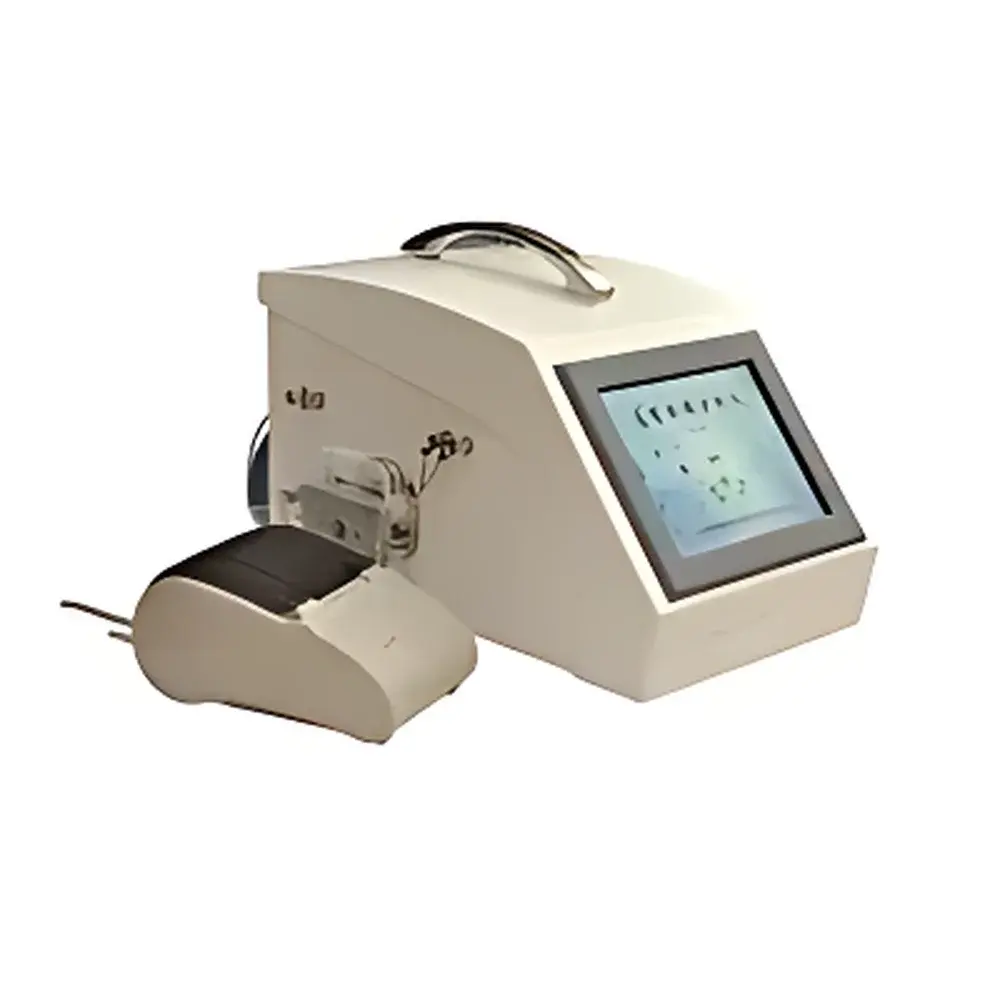
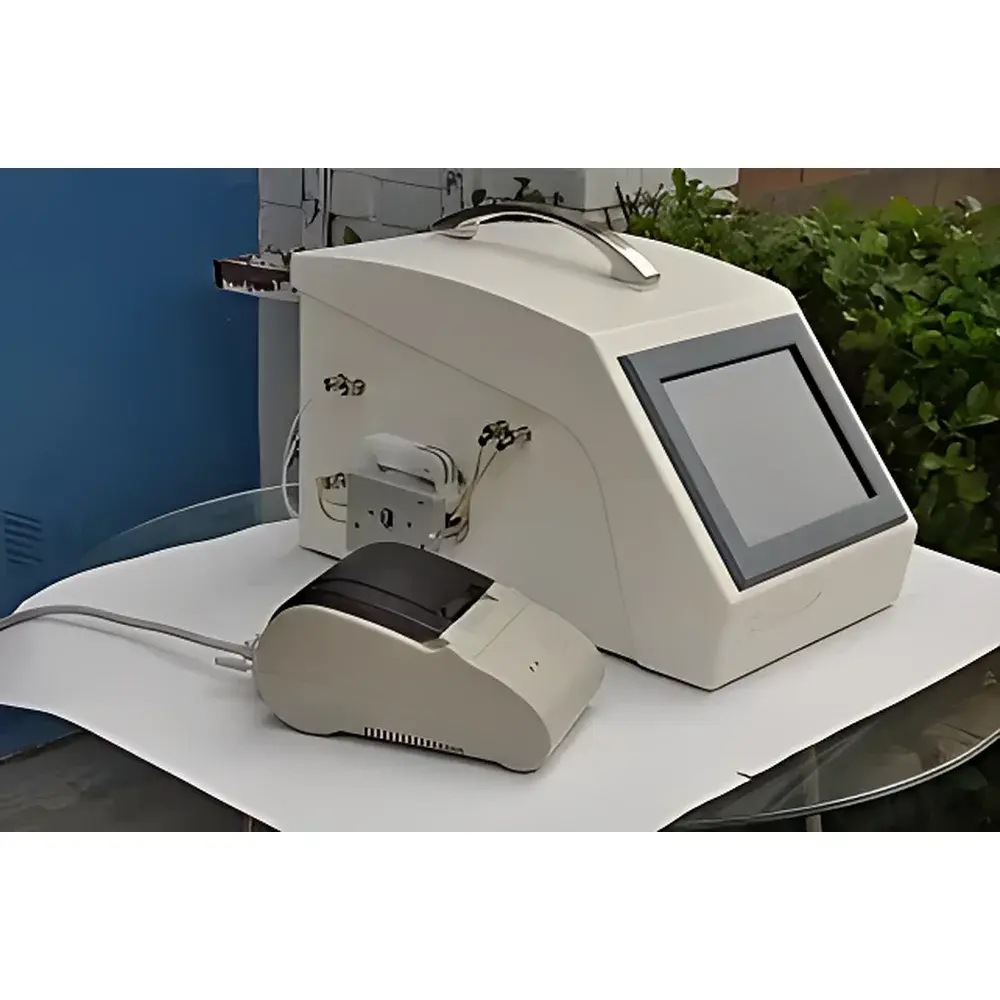
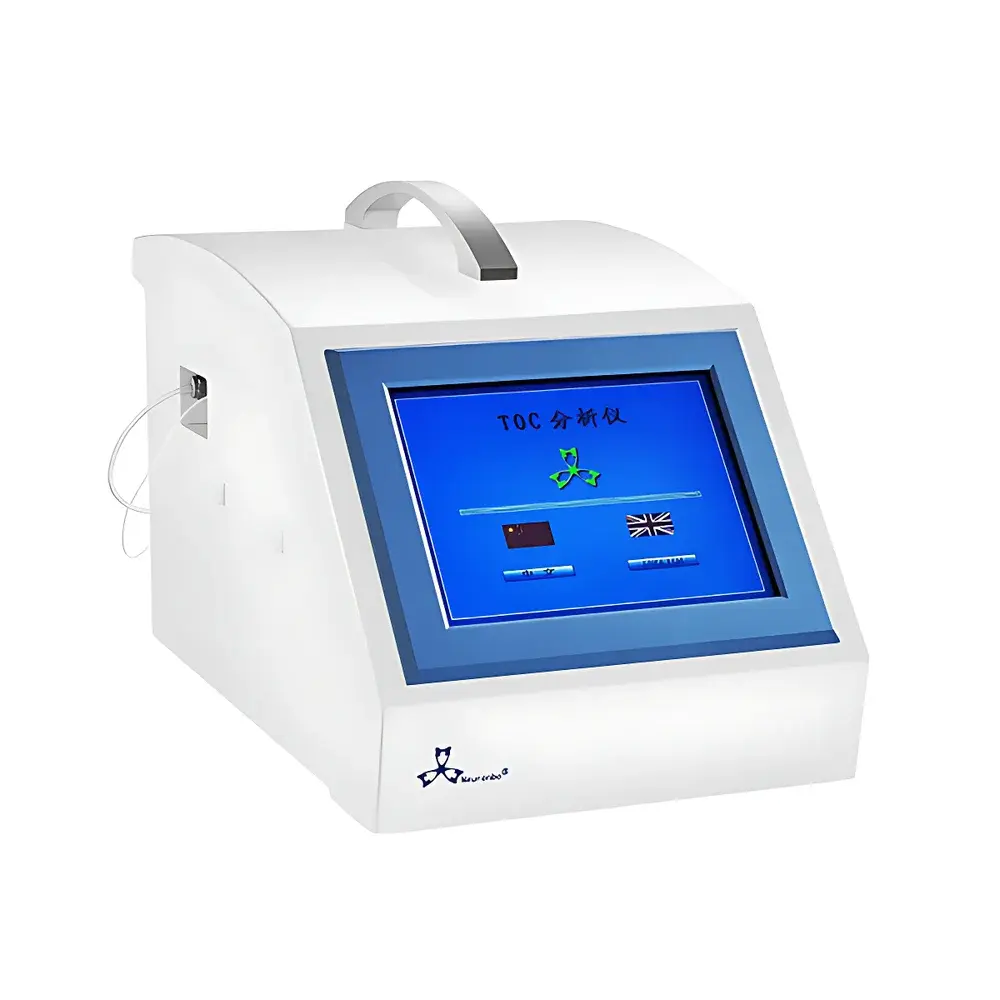
NeuronBC TA-1.1 Offline Laboratory Total Organic Carbon (TOC) Analyzer
| Brand | NeuronBC |
|---|---|
| Origin | Beijing, China |
| Model | TA-1.1 |
| Instrument Type | Benchtop Offline TOC Analyzer |
| Detection Principle | Direct Conductivity Measurement |
| Oxidation Method | UV Photocatalytic Oxidation (185/254 nm) |
| Measurement Range | 1–1000 ppb (0.001–1.0 mg/L) |
| Accuracy | ±3% of reading |
| Detection Limit | 1 ppb (0.001 mg/L) |
| Repeatability | ≤3% RSD |
| Resolution | 0.001 mg/L |
| Analysis Time | <5 minutes per sample |
| Sample Temperature Range | 1–99 °C |
| Power Supply | 100–240 VAC, 50 Hz, 120 W |
| Dimensions (L×W×H) | 400 × 240 × 270 mm |
| Weight | 8.5 kg |
| Data Logging | ≥5000 records with time-stamped audit trail (16 event categories) |
| User Access Control | 4-tier password-protected authentication |
| Compliance | Designed to support FDA 21 CFR Part 11, USP <643>, EP 2.2.44, and ChP 2020 Edition General Chapter 0682 requirements |
Overview
The NeuronBC TA-1.1 Offline Laboratory Total Organic Carbon (TOC) Analyzer is a benchtop instrument engineered for precise, regulatory-compliant quantification of total organic carbon in low-conductivity aqueous matrices—specifically pharmaceutical-grade purified water (PW), water for injection (WFI), and ultrapure water (UPW). It employs UV photocatalytic oxidation (at dual wavelengths: 185 nm for radical generation and 254 nm for direct photolysis) to fully mineralize non-purgeable organic compounds into CO₂, followed by highly sensitive direct conductivity detection of the resultant carbonate/bicarbonate ions. This methodology eliminates reliance on carrier gases (e.g., zero-air or nitrogen), acid reagents, persulfate oxidants, or high-temperature combustion—reducing operational complexity, consumables cost, and system contamination risk. The analyzer operates exclusively in offline mode, supporting discrete vial-based sampling in controlled laboratory environments, and is validated for use in GMP-compliant cleanroom support labs and QC/QA facilities performing routine water quality release testing and cleaning validation.
Key Features
- UV photocatalytic oxidation system with dual-wavelength low-pressure mercury lamp (185/254 nm), ensuring >95% oxidation efficiency for refractory organics including methanol, ethanol, acetone, and formaldehyde
- Direct conductivity detection module with temperature-compensated, microfluidic flow cell—no membrane sensors or catalytic converters required
- Integrated color touchscreen HMI (7-inch capacitive display) with intuitive workflow navigation and real-time signal monitoring
- Onboard audit trail capturing 16 predefined event types (e.g., calibration, sample analysis, user login/logout, method change, alarm trigger), each time-stamped and user-attributed
- Four-level hierarchical user access control (Administrator, Supervisor, Analyst, Viewer) with encrypted password storage and session timeout enforcement
- Automated system suitability testing (SST) protocol compliant with USP : includes blank response verification, standard recovery assessment (e.g., 500 ppb sucrose), and oxidation efficiency check
- Configurable limit alarms: user-definable pass/fail thresholds per test; visual and audible alerts triggered upon exceedance
- USB-host interface for secure data export (CSV format) and firmware updates; optional integration with LIMS via RS-232 or Ethernet (Modbus TCP)
Sample Compatibility & Compliance
The TA-1.1 is optimized for samples with conductivity <5.1 µS/cm and total dissolved solids (TDS) <10 ppm—typical of PW, WFI, and UPW per pharmacopoeial specifications. It excludes interference from inorganic carbon (IC) through automated IC subtraction via acid sparging (optional internal module) or manual blank correction. The instrument design and software architecture align with critical regulatory expectations: data integrity per FDA 21 CFR Part 11 (electronic signatures, audit trail immutability, role-based access), analytical method validation per ICH Q2(R2), and routine testing compliance with USP , EP 2.2.44, JP 18 , and Chinese Pharmacopoeia 2020 Edition Section 0682. IQ/OQ/PQ documentation packages—including installation checklists, operational performance verifications (e.g., linearity, precision, LOD/LOQ), and PQ protocols for specific water systems—are available upon request.
Software & Data Management
Firmware v3.2 embeds a deterministic real-time operating system (RTOS) managing all acquisition, calculation, and storage tasks. Raw conductivity signals are digitized at 100 Hz, filtered using adaptive digital FIR filtering, and converted to TOC concentration using a two-point calibration curve (blank + certified standard). All results include metadata: sample ID, analyst ID, timestamp, ambient temperature/humidity (via optional external sensor), and SST status. Data are stored locally in non-volatile memory with cyclic overwrite protection; historical records (≥5000 entries) support chronological or event-type search. Exported files retain full traceability: each CSV row contains calibrated value, uncertainty estimate, and associated audit trail reference ID. Optional PC-based software (NeuronLink Suite) enables trend analysis, SPC charting (X-bar/R), and automated report generation compliant with ALCOA+ principles.
Applications
- Routine release testing of purified water and water for injection in pharmaceutical manufacturing facilities
- Cleaning validation studies for process equipment, bioreactors, and filling lines—quantifying residual organics post-rinse
- Investigation of TOC excursions during water system qualification (e.g., distribution loop hot-spot mapping)
- Supporting annual water system requalification per EU Annex 1 and FDA guidance
- Research applications requiring rapid, reagent-free TOC screening of deionized water used in semiconductor rinse processes or analytical standards preparation
FAQ
Does the TA-1.1 require carrier gas or chemical oxidants?
No. It uses only UV light for oxidation and measures conductivity directly—eliminating need for compressed air, nitrogen, phosphoric acid, or sodium persulfate.
Can it be integrated into an existing LIMS or MES environment?
Yes. Via RS-232 serial output or optional Ethernet module (Modbus TCP), enabling automated result transfer and electronic batch record linkage.
Is the audit trail compliant with FDA 21 CFR Part 11?
Yes. All user actions, data modifications, and system events are recorded with immutable timestamps, operator ID, and reason-for-change fields—fully satisfying electronic record and signature requirements.
What validation support is provided?
Comprehensive IQ/OQ/PQ documentation templates, factory-verified performance data (linearity, accuracy, repeatability), and on-site or remote validation assistance are available under service agreement.
How is calibration verified during daily operation?
Through automated System Suitability Testing (SST) per USP , including blank analysis, standard recovery (e.g., 500 ppb sucrose), and oxidation efficiency confirmation—executed before first sample and after every 24 hours of continuous use.
Related Products







