
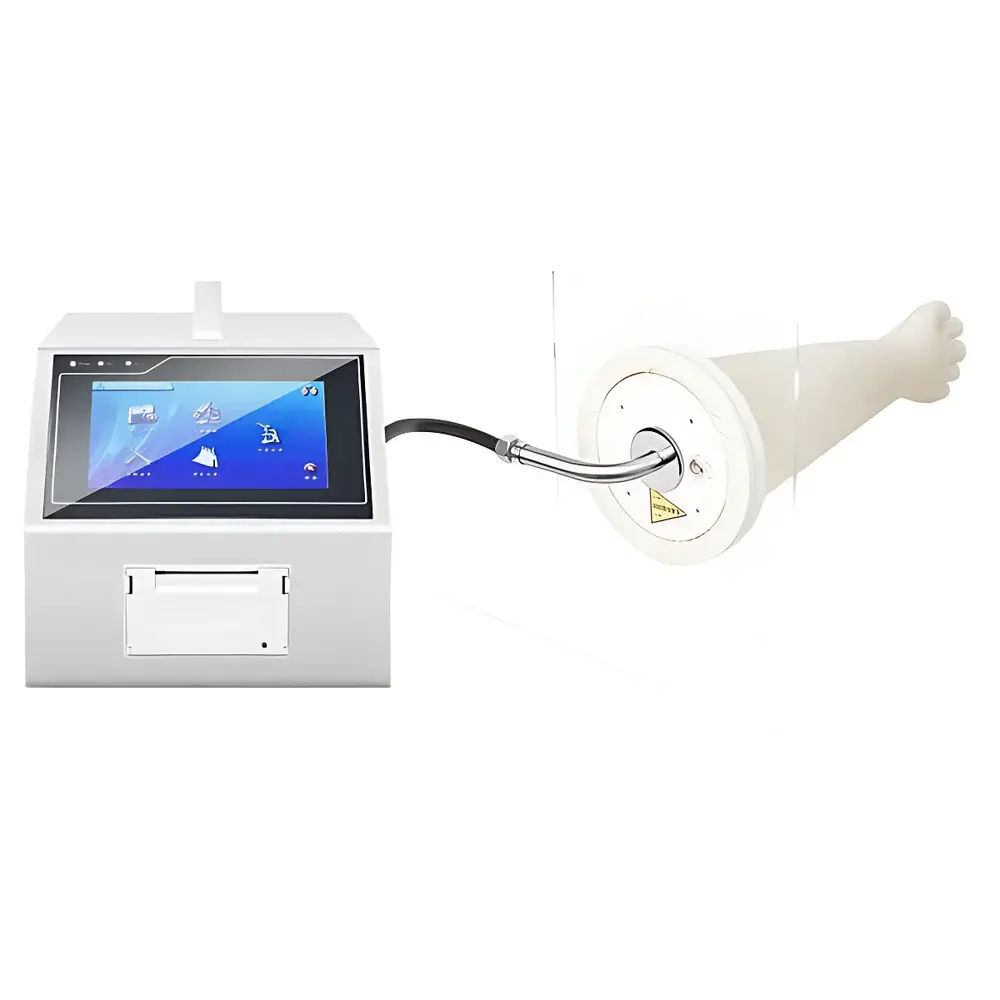
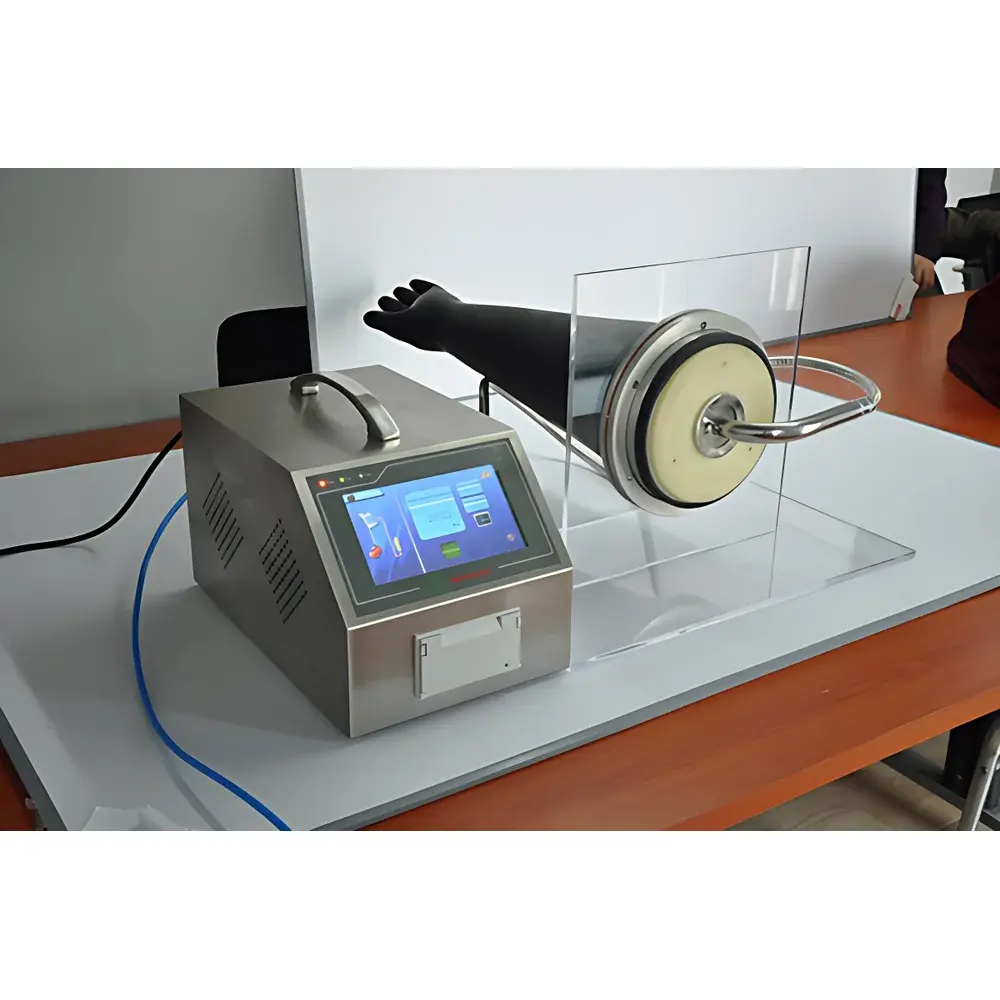
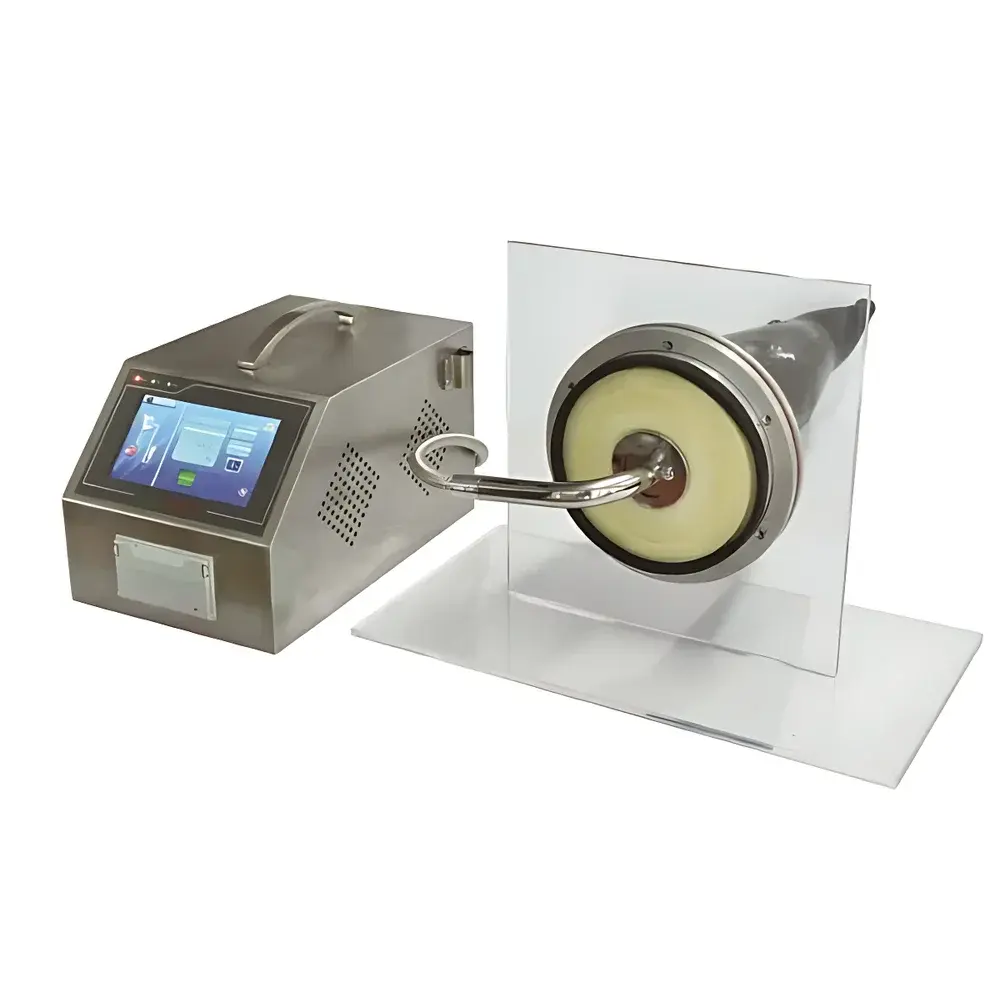
NeuronBC GT-2.0 Online Glove Integrity Tester
| Brand | NeuronBC |
|---|---|
| Origin | Beijing, China |
| Model | NeuronBC GT-2.0 Online |
| Power Supply | 100–220 VAC, 50 Hz |
| Rated Power | 120 W |
| Test Duration | 2–8 min |
| Pressure Range | 500–5000 Pa |
| Pressure Resolution | ≤50 Pa |
| Noise Level | ≤50 dB(A) |
| Operating Mode | Continuous |
| External Gas Source | Compressed air, nitrogen, or inert gas (max. inlet pressure ≤0.5 MPa) |
| Seal Pressure Capacity | ≤0.8 MPa |
| Data Storage Capacity | ≥10,000 test records |
| Dimensions | 400 × 260 × 250 mm |
| Weight | 7.5 kg |
Overview
The NeuronBC GT-2.0 Online Glove Integrity Tester is an engineered solution for real-time, non-destructive integrity verification of isolator and glovebox gloves in aseptic pharmaceutical manufacturing environments. Designed in strict alignment with the principles defined in ISO 14644-7:2004 and GB/T 25915.7–2010, the instrument employs a controlled positive-pressure decay methodology to detect micro-leaks at the glove material surface and cuff interface. Unlike offline bubble or dye penetration methods, the GT-2.0 performs fully automated, quantitative pressure-hold testing without requiring glove removal or process interruption—enabling seamless integration into continuous cleanroom operations. Its architecture integrates high-stability pressure regulation, low-drift transduction, and adaptive pneumatic control to ensure reproducible results across varying glove thicknesses, materials (e.g., butyl, nitrile, chloroprene), and geometries—including long-sleeve and multi-layer configurations.
Key Features
- Adaptive pressure ramping via pulsed, low-volume gas injection—minimizes glove deformation while maintaining uniform internal pressurization
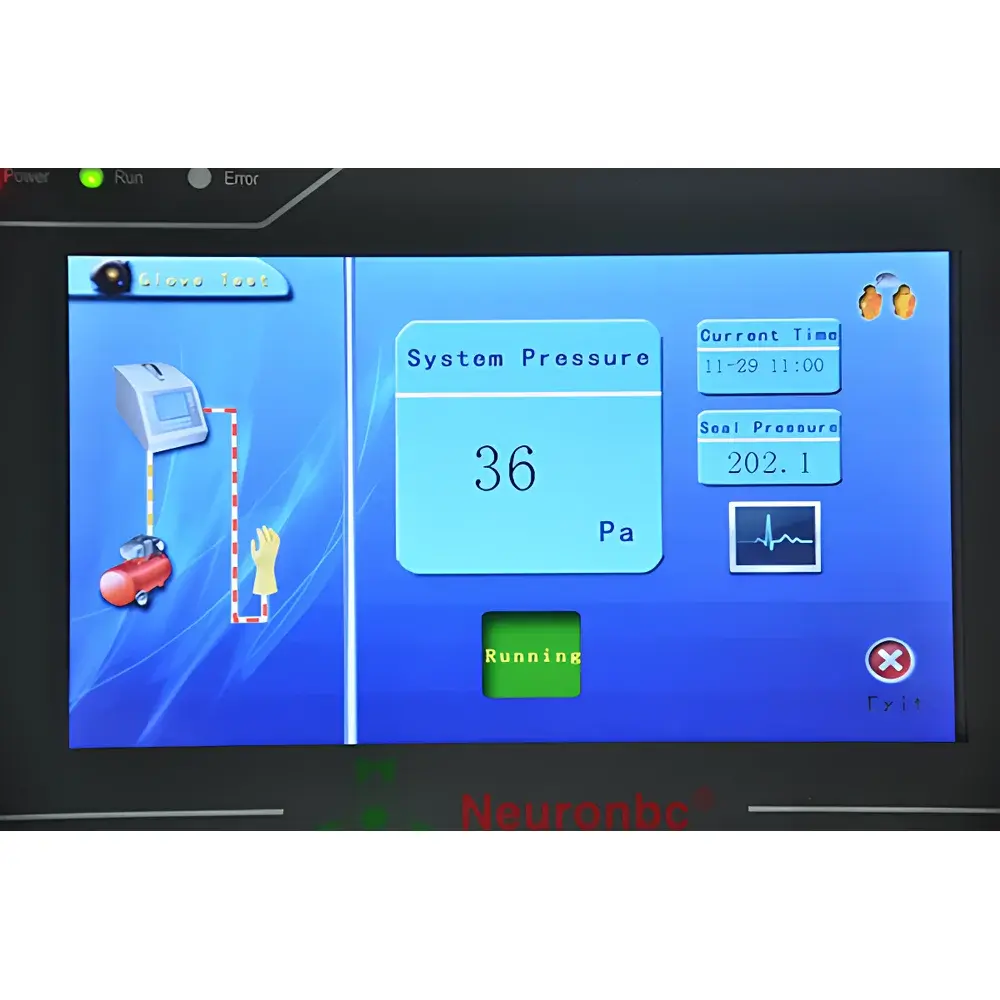
- 7-inch full-color capacitive touchscreen with intuitive, context-aware UI; automatically selects optimal test protocol based on pre-configured glove type, length, and wall thickness parameters
- Fully compliant with FDA 21 CFR Part 11 requirements: role-based user authentication, electronic signatures, audit-trail-enabled operation logs, and tamper-evident data storage
- Integrated thermal printer for immediate hard-copy documentation of pass/fail outcomes, test parameters, timestamps, and operator ID
- Self-contained design—no external vacuum pumps, flow meters, or calibration gases required; operates with standard plant-grade compressed air or inert gas (≤0.5 MPa supply pressure)
- Robust mechanical interface: precision-machined glove disc with dual-seal elastomeric gasket ensures repeatable, leak-tight coupling to glove cuffs without adhesive or clamping hardware
Sample Compatibility & Compliance
The GT-2.0 supports integrity assessment of single- and double-layer gloves ranging from 300 mm to 900 mm in length and up to 1.5 mm nominal wall thickness. It accommodates both flat-mount and flanged glove ports, including custom-configured online glove discs designed for permanent installation in RABS and isolator walls. All firmware and data handling protocols conform to GMP Annex 1 (2022), EU GMP Chapter 4, and PIC/S PI 036-3 standards for contamination control. Device validation documentation—including IQ/OQ templates, traceable calibration certificates (NIST-traceable pressure sensor), and risk-based URS alignment—is provided as part of the delivery package. Electronic records meet ALCOA+ principles (Attributable, Legible, Contemporaneous, Original, Accurate, Complete, Consistent, Enduring, Available) for regulatory inspection readiness.
Software & Data Management
Embedded firmware v3.2 features a secure SQLite database with encrypted storage of ≥10,000 complete test records—including raw pressure-time curves, calculated leak rates (Pa/s), environmental temperature/humidity metadata, and operator credentials. Data export is supported via USB flash drive in CSV and PDF formats, preserving digital signatures and audit trail headers. Remote diagnostics and firmware updates are performed over Ethernet (RJ45) with TLS 1.2–secured communication. The system maintains full audit trail integrity: every parameter change, test initiation, result override, or user login is timestamped, uniquely identified, and immutable post-execution—fully satisfying FDA and EMA expectations for electronic record retention under 21 CFR Part 11 and Annex 11.
Applications
- Routine in-process integrity verification of critical barrier gloves during Grade A/B aseptic filling operations
- Pre-use qualification of gloves following sterilization cycles (VHP, steam, gamma)
- Periodic requalification per facility SOPs—integrated into preventive maintenance schedules for isolators and RABS
- Root cause analysis during environmental monitoring excursions where glove breach is suspected
- Supporting Annex 1 §6.45 compliance for “continuous monitoring of critical barriers” through scheduled or event-triggered testing
- Validation support for new glove material qualification studies and glove port redesign projects
FAQ
Does the GT-2.0 require annual recalibration by an accredited lab?
Yes—pressure sensor calibration must be performed annually using NIST-traceable deadweight testers or certified pressure calibrators, with full calibration certificate retained in the device’s audit log.
Can the instrument be integrated into a SCADA or MES system?
Yes—via Modbus TCP or OPC UA (optional firmware module); enables real-time status reporting, alarm forwarding, and centralized test data aggregation.
Is the glove disc compatible with all standard glove port diameters?
Standard discs support 120 mm, 140 mm, and 160 mm DIN/ISO flange interfaces; custom discs are available for proprietary port geometries upon engineering review.
What happens if ambient temperature fluctuates during testing?
The built-in temperature-compensated pressure transducer and real-time drift correction algorithm maintain measurement stability across 15–30 °C operating range; compensation coefficients are factory-characterized and stored in non-volatile memory.
How is data security enforced during USB export?
Exported files are digitally signed and encrypted using AES-256; decryption requires authorized workstation credentials synchronized with the instrument’s active user database.






