
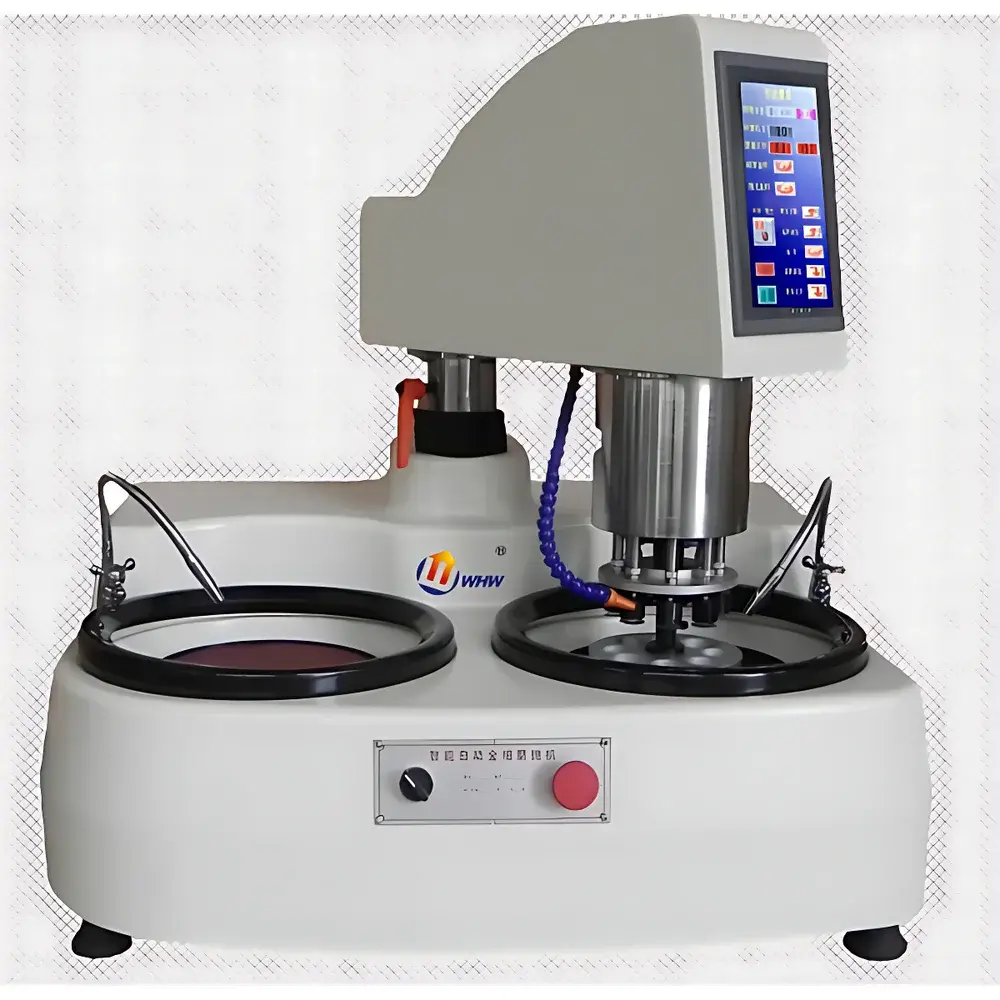
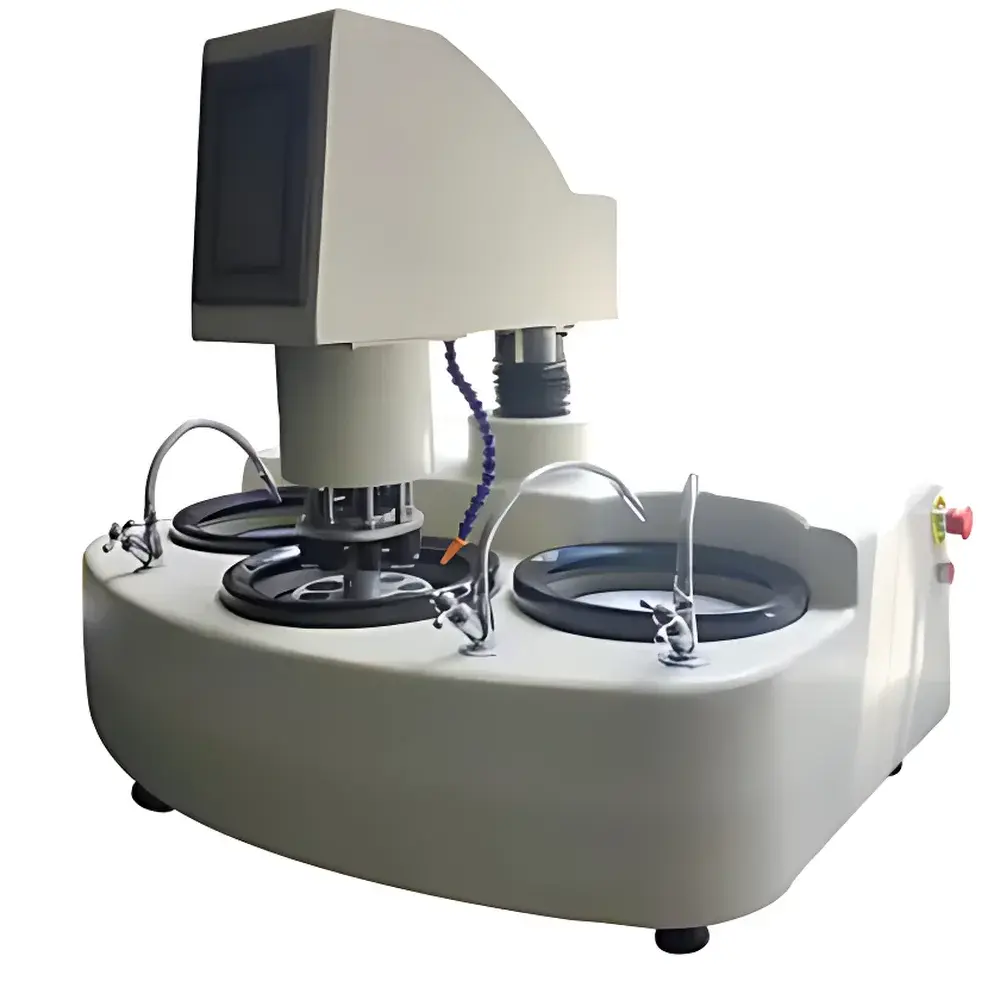
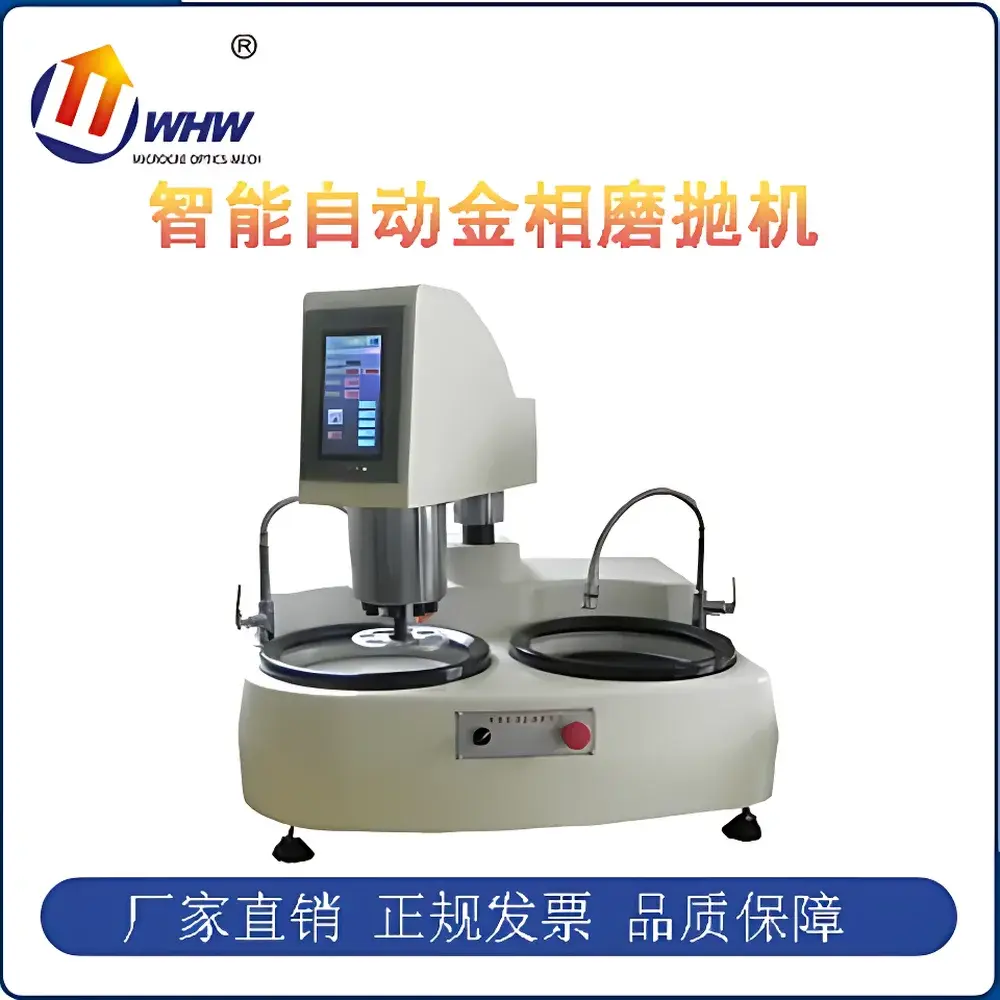
YANRUN ZMP-2000 Intelligent Automated Metallographic Grinding and Polishing System
| Brand | YANRUN |
|---|---|
| Origin | Shanghai, China |
| Manufacturer Type | Direct Manufacturer |
| Country of Origin | China |
| Model | ZMP-2000 |
| Rotational Speed | 50–1500 rpm (intelligent auto-adjustable) |
| Platen Diameter | 230 mm (optional: 200 / 250 / 300 mm) |
| Number of Platens | 2 |
| Pressure Control | Pneumatic (0.5 MPa), center load up to 300 N, individual sample load 1–40 N × 8 |
| Sample Capacity | 8 specimens (standard configuration: six 30 mm + two 40 mm mounting holes) |
| Control System | PLC with 8-inch color touchscreen interface |
| Grinding/Polishing Time Range | 0–9999 s × 2 stages |
| Abrasive Delivery | Dual-channel intelligent spray system (minimum interval: 0.1 s |
| minimum duration | 0.1 s) |
| Motor Power | 550 W × 2 (AC variable-frequency drive) |
| Dimensions (W×D×H) | 870 × 800 × 700 mm |
| Voltage | 220 V / 50 Hz |
| Storage Capacity | Up to 100 programmable grinding-polishing protocols |
Overview
The YANRUN ZMP-2000 Intelligent Automated Metallographic Grinding and Polishing System is a precision-engineered, pneumatically actuated dual-platen instrument designed for reproducible, high-fidelity specimen preparation in metallurgical, materials science, and failure analysis laboratories. Built upon Couette-flow polishing mechanics and controlled normal-force application, the ZMP-2000 delivers consistent material removal rates and surface finish quality across diverse sample matrices—including ferrous and non-ferrous metals, superalloys, ceramics, geological specimens, optical glasses, semiconductor wafers, and advanced composites. Its architecture integrates real-time pressure modulation, closed-loop rotational speed control, and synchronized abrasive delivery to minimize edge rounding, relief artifacts, and subsurface deformation—critical prerequisites for accurate microstructural evaluation per ASTM E3, ISO 13007, and GB/T 13298 standards.
Key Features
- PLC-based 8-inch color touchscreen interface with intuitive menu-driven navigation and multilingual support (English, Chinese, Spanish)
- Dual independent platens (230 mm standard; optional 200/250/300 mm) driven by separate AC variable-frequency motors (550 W each), enabling simultaneous grinding and polishing or parallel multi-stage processing
- Pneumatic pressure system delivering precise center loading (up to 300 N) and individually adjustable sample loads (1–40 N × 8 positions), compliant with ISO 14855-1 for force uniformity verification
- Intelligent dual-channel abrasive dispensing with programmable spray intervals (0.1 s resolution) and durations, ensuring optimal slurry concentration and minimizing reagent waste
- Automated protocol storage for up to 100 distinct grinding-polishing sequences, including stage-specific speed, time, pressure, and spray parameters—supporting audit-ready traceability under GLP and ISO/IEC 17025 frameworks
- Modular sample holder accommodating eight specimens (standard: six 30 mm + two 40 mm bores); custom fixtures available for irregular geometries, thin foils, or electronic packages
- Three operational modes: fully automated (predefined protocol execution), semi-automatic (user-triggered stage transitions), and manual (direct speed/pressure override)
Sample Compatibility & Compliance
The ZMP-2000 accommodates specimens ranging from standard metallographic mounts (30–40 mm diameter) to specialized substrates such as sintered carbides, brittle ceramics, and layered battery electrodes. Its low-vibration mechanical design and dynamically balanced platens reduce harmonic distortion during high-speed operation (up to 1500 rpm), preserving structural integrity of delicate phases. The system supports full compliance with international metallographic preparation guidelines, including ASTM E3-22 (Standard Guide for Preparation of Metallographic Specimens), ISO 13007-1:2021 (Ceramic tile testing), and USP <1056> (instrument qualification for regulated environments). Optional accessories—including diamond-impregnated grinding discs (240–3000#), colloidal silica suspensions (0.02–0.5 µm), and alumina-based polishing compounds—enable method development aligned with ASTM E1558 (electrolytic polishing) and ISO 643 (steel microstructure assessment).
Software & Data Management
All operational parameters are logged in non-volatile memory with timestamped records for each run, supporting 21 CFR Part 11-compliant electronic signatures when integrated with validated LIMS or ELN platforms. Protocol files include metadata on operator ID, date/time, platen RPM, applied load per specimen, total abrasive volume dispensed, and cumulative runtime—exportable via USB to CSV or XML for statistical process control (SPC) analysis. Firmware updates are delivered via secure OTA channels, and system diagnostics include motor current monitoring, pneumatic line pressure validation, and touch-screen calibration verification—facilitating IQ/OQ/PQ documentation required in GMP-regulated laboratories.
Applications
- Routine quality control of castings, forgings, and weldments in aerospace and automotive manufacturing
- Failure analysis of fracture surfaces, corrosion products, and intergranular degradation in power generation components
- Preparation of cross-sections for SEM-EDS, EBSD, and TEM lamella extraction
- Standardized polishing of geological thin sections (e.g., granite, basalt, shale) for petrographic microscopy
- Surface conditioning of optical substrates and MEMS devices prior to coating or metrology
- Development of polishing methodologies for novel materials such as MAX phases, metal-organic frameworks (MOFs), and solid-state electrolytes
FAQ
Does the ZMP-2000 support regulatory compliance for pharmaceutical or medical device labs?
Yes—the system’s audit trail functionality, user access controls, and electronic record integrity meet baseline requirements for FDA-regulated environments when deployed with validated software extensions and documented SOPs.
Can the machine handle non-circular specimens such as rectangular electronic packages or irregularly shaped rock fragments?
Yes—custom-machined clamping fixtures are available upon request, and the modular platen design allows integration of vacuum chucks or magnetic holders for non-standard geometries.
Is remote monitoring or integration with laboratory automation systems possible?
The ZMP-2000 features RS-232 and Ethernet ports for bidirectional communication; OEM SDKs enable integration with MES, SCADA, or robotic sample-handling platforms.
What maintenance intervals are recommended for pneumatic and drive components?
Compressed air filters require quarterly replacement; motor bearings are sealed for life; platen runout should be verified semiannually using ISO 1101 geometric tolerance checks.
How does the dual-channel abrasive system prevent cross-contamination between grinding and polishing stages?
Each channel operates independently with dedicated nozzles, tubing, and reservoirs; physical separation and programmable purge cycles eliminate carryover between coarse and fine abrasives.



