
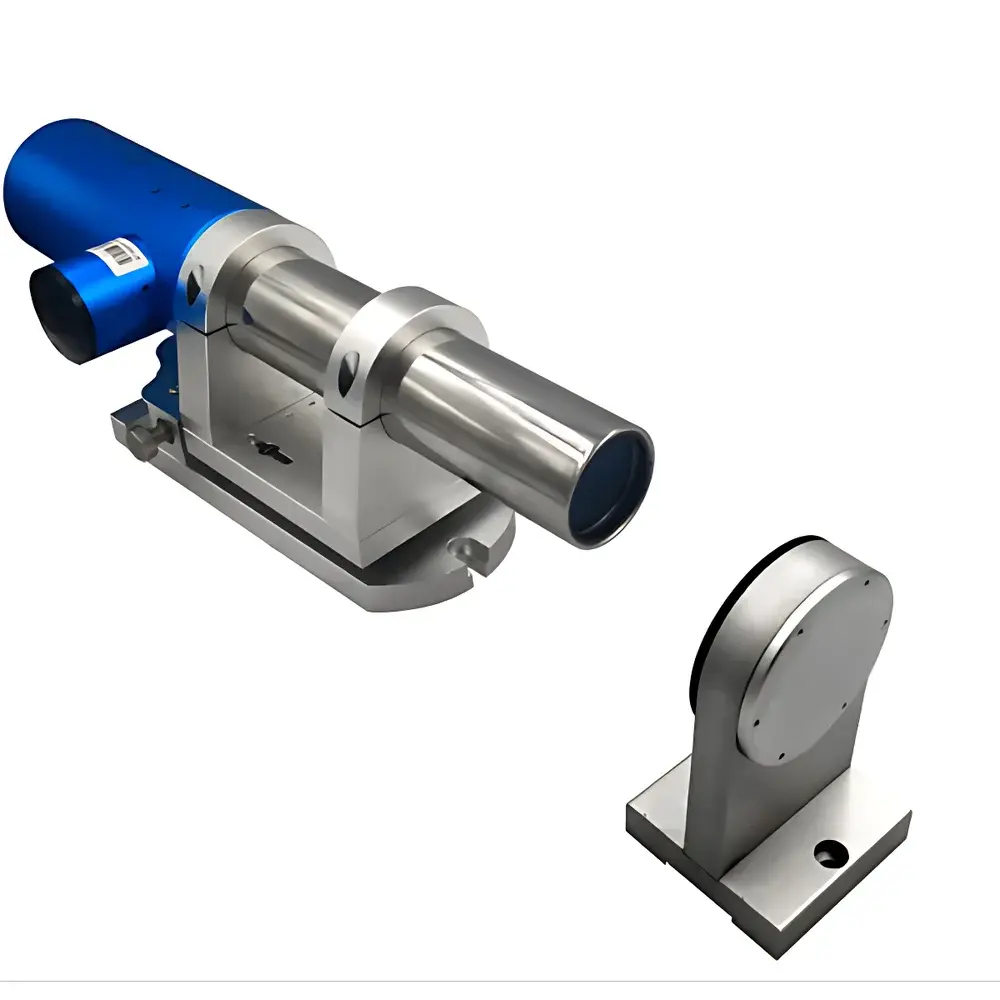
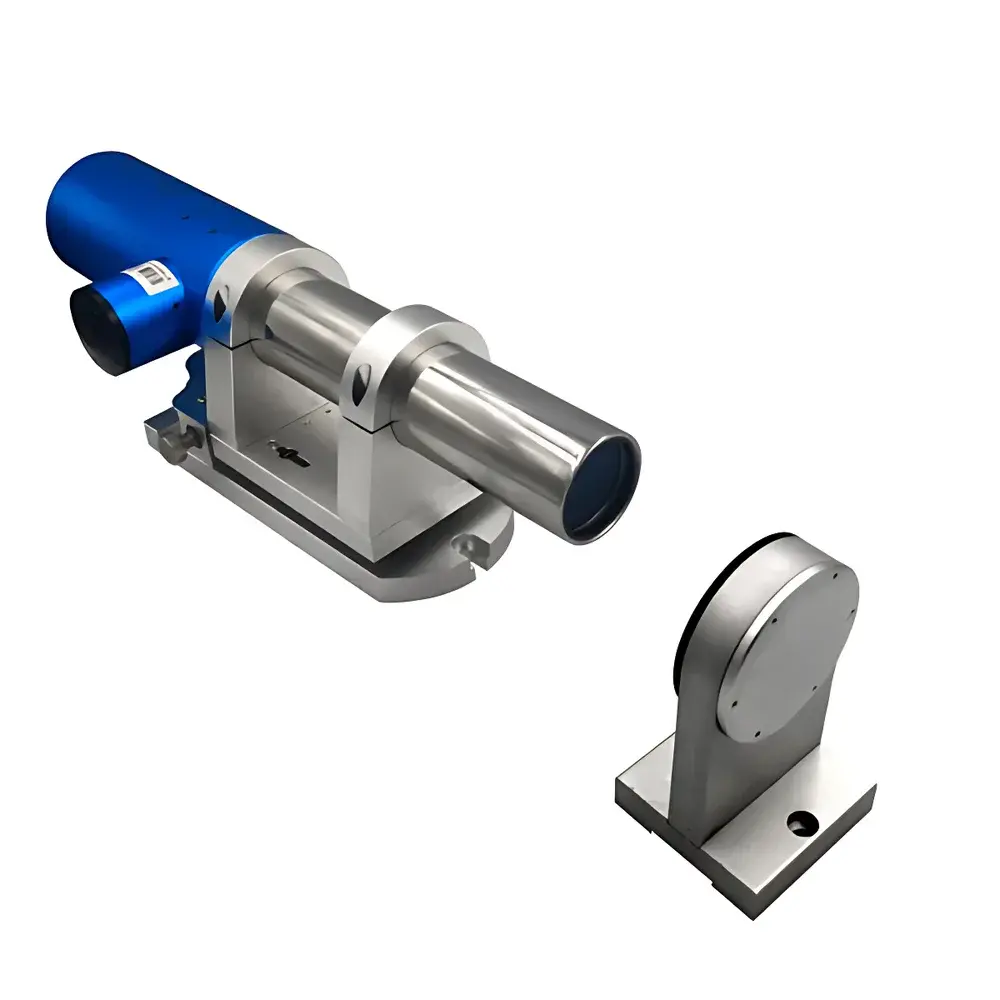
YANRUN YRUH3000E Dual-Axis Photoelectric Autocollimator (0.2 arcsec)
| Brand | YANRUN |
|---|---|
| Origin | Shanghai, China |
| Manufacturer Type | Direct Manufacturer |
| Model | YRUH3000E |
| Focal Length | 300 mm |
| Aperture | 50 mm |
| Measurement Range | 0–25 m |
| Resolution | Adjustable from 1.0 to 0.0001 arcsec |
| Field of View (X/Y) | 1800″ × 1600″ |
| Accuracy (Center, ±60″) | ≤ ±0.2 arcsec |
| Accuracy (±600″) | ≤ ±0.3 arcsec |
| Repeatability | 0.05 arcsec |
| Sampling Frequency | 9 Hz |
| Interface | USB 2.0 |
| Dimensions | 390 × 155 × 125 mm |
| Weight | 5.1 kg |
| Light Source | High-Stability Semiconductor LED |
| Software Platform | Windows 7 or later (64-bit), Intel Core i3-4th Gen or higher |
Overview
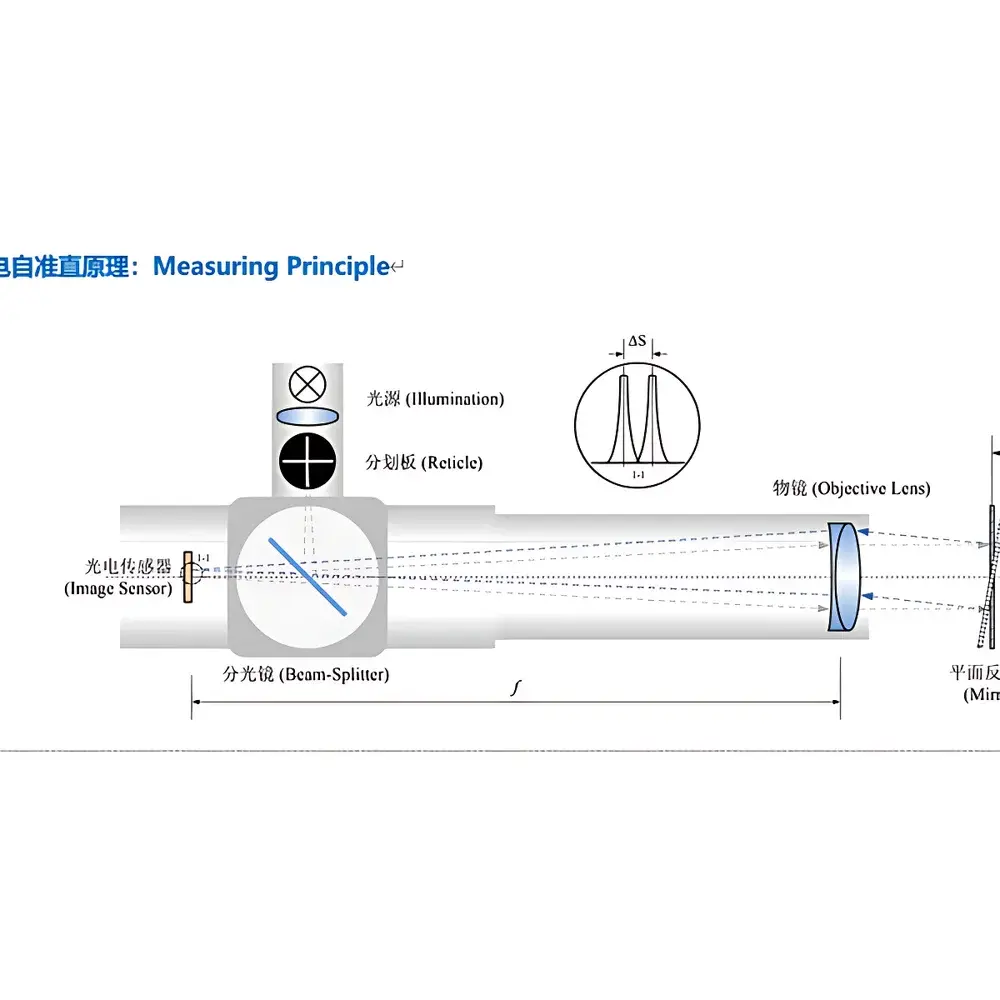
The YANRUN YRUH3000E Dual-Axis Photoelectric Autocollimator is an advanced optical metrology instrument engineered for high-precision angular measurement based on the fundamental principle of optical autocollimation. It employs a collimated beam generated by a 300 mm focal length objective lens, directed onto a plane mirror placed perpendicular to the optical axis. The reflected beam re-enters the objective and forms a real image of the reticle on a high-resolution photodetector located at the shared focal plane—constituting a confocal optical architecture. When the mirror rotates by angle α, the returned reticle image shifts by ΔS = 4f·α (where f = 300 mm), enabling sub-arcsecond angular quantification via pixel-level displacement analysis. Unlike traditional visual autocollimators requiring manual eyepiece alignment, the YRUH3000E integrates a digital imaging sensor and real-time centroid detection algorithm to eliminate observer-dependent parallax and human aiming error. Its dual-axis (X/Y) simultaneous acquisition capability supports vectorial angular deviation analysis critical for multi-degree-of-freedom alignment tasks in precision engineering environments.
Key Features
- Dual-axis synchronous measurement with independent X/Y angular resolution down to 0.0001 arcsec (adjustable), ensuring traceable angular metrology across orthogonal planes.
- Confocal optical design with 50 mm clear aperture and 300 mm focal length, optimized for stability over 25 m working distance while maintaining ≤ ±0.2 arcsec accuracy within ±60″ range.
- High-stability semiconductor LED light source with >50,000-hour lifetime, eliminating thermal drift associated with halogen or laser sources and supporting long-duration calibration runs.
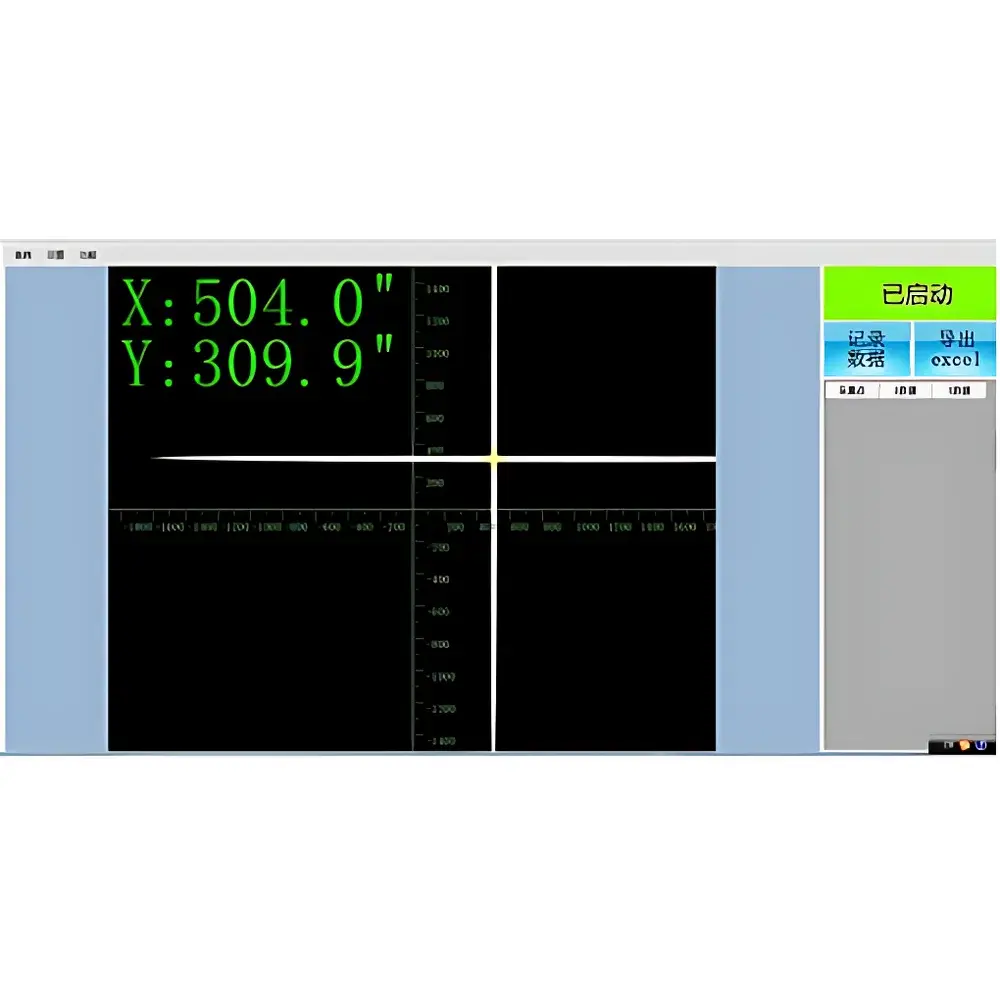
- Real-time electronic eyepiece visualization via USB 2.0 interface; no external frame grabber required. Captured images display reticle centroid position, residual tilt vector, and dynamic trend plots.
- Robust mechanical architecture featuring precision-machined aluminum housing (390 × 155 × 125 mm, 5.1 kg), integrated two-axis fine-adjustment base, and vibration-damped optical path.
- Comprehensive software suite compliant with ISO/IEC 17025 documentation requirements—supports audit trails, user access levels, and electronic signature per FDA 21 CFR Part 11 when configured with optional validation package.
- Modular firmware architecture allowing field-upgradable measurement modules: straightness, flatness, squareness, parallelism, and rotary table indexing verification.
Sample Compatibility & Compliance
The YRUH3000E is designed for use with standard optical flat mirrors (included), kinematic mirror mounts, magnetic bases, and custom retroreflector arrays. It complies with core metrological standards including ISO 10360-1 (coordinate measuring machines), ISO 230-1 (machine tool testing), and ASTM E2919 (optical alignment procedures). For regulated environments—such as aerospace component assembly or medical device manufacturing—the system supports GLP/GMP-aligned workflows through configurable report templates, data integrity logs, and exportable .csv/.xlsx outputs traceable to NIST-traceable angle standards. All factory calibrations are performed under controlled temperature (20 ± 0.5 °C) and humidity (45–55% RH) conditions, with certificate of calibration issued per ISO/IEC 17025 requirements.
Software & Data Management
The included YANRUN Autocollimator Control Suite operates natively on Windows 7+ (64-bit) platforms with Intel Core i3-4th generation or higher CPU. It provides real-time image capture, automatic centroid fitting using Gaussian-weighted moment analysis, and statistical process control (SPC) overlays. Measurement data is stored in structured SQLite databases with timestamped metadata (operator ID, environmental conditions, instrument serial number). Export options include ISO-standard .xslx reports compliant with ISO 5725 reproducibility guidelines, PDF measurement certificates with embedded digital signatures, and ASCII-compatible .dat files for integration into MATLAB, Python (NumPy/Pandas), or LabVIEW-based QA systems. Optional modules support automated multi-point straightness profiling along granite rails, flatness mapping using adjustable bridge plates, and dynamic angular tracking at 9 Hz sampling rate for rotating stage characterization.
Applications
- Precision alignment of CNC machine tool spindles, linear guides, and hydrostatic bearing surfaces per ISO 230-6 geometric accuracy standards.
- Verification of angular stability in astronomical telescope mounts and satellite payload pointing mechanisms.
- Calibration of polygon mirrors, multi-face prisms (8–36 facets), and optical encoder scales used in semiconductor lithography tools.
- Flatness assessment of optical benches and vacuum chamber flanges using configurable bridge plate configurations and least-squares surface fitting algorithms.
- Dynamic angular monitoring of piezoelectric nanopositioners and voice-coil actuators during closed-loop feedback testing.
- Teaching and research applications in university optics laboratories—including Abbe error analysis, interferometric reference validation, and laser cavity alignment studies.
FAQ
What is the recommended warm-up time before high-accuracy measurements?
For measurements requiring ≤ ±0.2 arcsec uncertainty, power-on stabilization for ≥15 minutes is mandatory to allow thermal equilibrium of the optical bench and sensor electronics.
Does the system support remote operation in cleanroom or vacuum environments?
The host unit is rated IP52 and operates at ambient pressures; for vacuum applications, only the external mirror and mounting hardware require UHV-compatible materials—optical path remains atmospheric.
Can the software generate reports compliant with ISO/IEC 17025 accreditation?
Yes—when paired with optional Validation Pack, the software delivers full audit trail logging, electronic signatures, and calibration certificate templates aligned with ILAC-MRA requirements.
Is firmware update capability available over USB without vendor intervention?
Yes—field updates are delivered as signed .bin packages via secure HTTPS portal; update integrity is verified via SHA-256 checksum prior to flash programming.
What accessories are required for flatness measurement of a 1 m × 1 m granite surface?
Standard configuration includes adjustable bridge plate, magnetic mirror mount, and flatness analysis module; optional laser-assisted finder improves initial alignment efficiency on large surfaces.





