
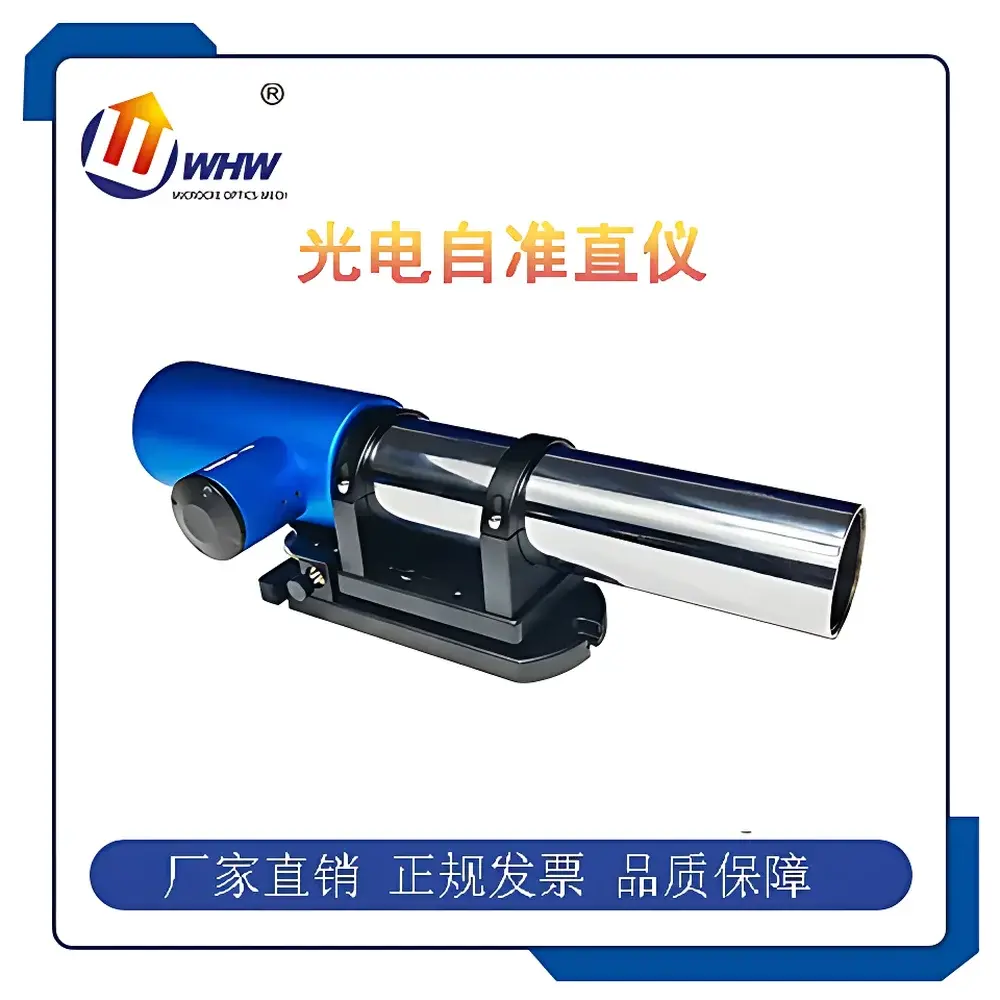
Yanrun YRMAT3035H Dual-Axis Electronic Autocollimator (1 Arcsecond Accuracy)
| Brand | Yanrun |
|---|---|
| Origin | Shanghai, China |
| Manufacturer Type | OEM Manufacturer |
| Country of Origin | China |
| Model | YRMAT3035H |
| Focal Length | 300 mm |
| Aperture Diameter | 50 mm |
| Light Source | Semiconductor LED |
| Measurement Range | 0–35 m |
| Detector | High-Resolution CMOS Sensor |
| Display Resolution | 0.01″ to 1″ (selectable) |
| Field of View (X/Y) | 2200″ × 1800″ |
| Central Accuracy | ±0.5″ (typical), ±100″ (full range) |
| Data Interface | USB 2.0 |
| Software | Autocollimator Control Software V2.0 |
| Dimensions (L×W×H) | 388 × 135 × 125 mm |
| OS Requirement | Windows 7 or later, 64-bit |
Overview
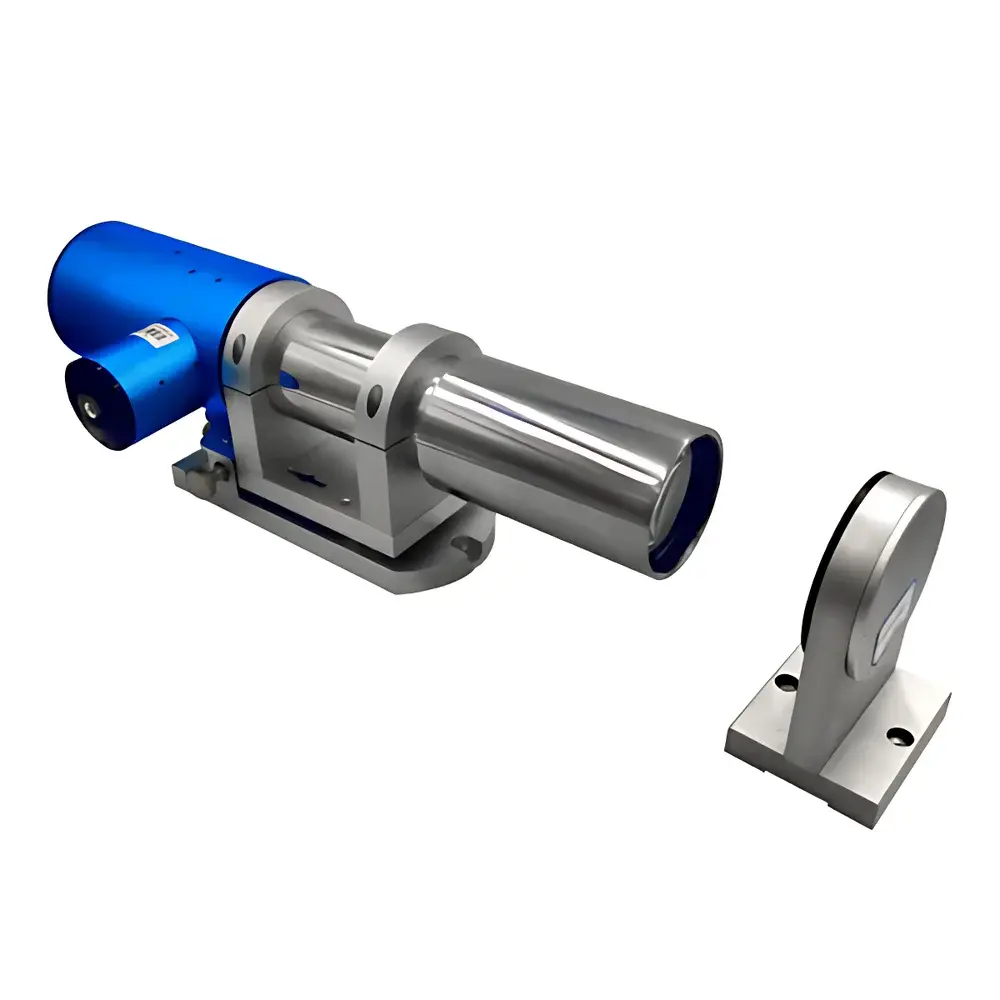
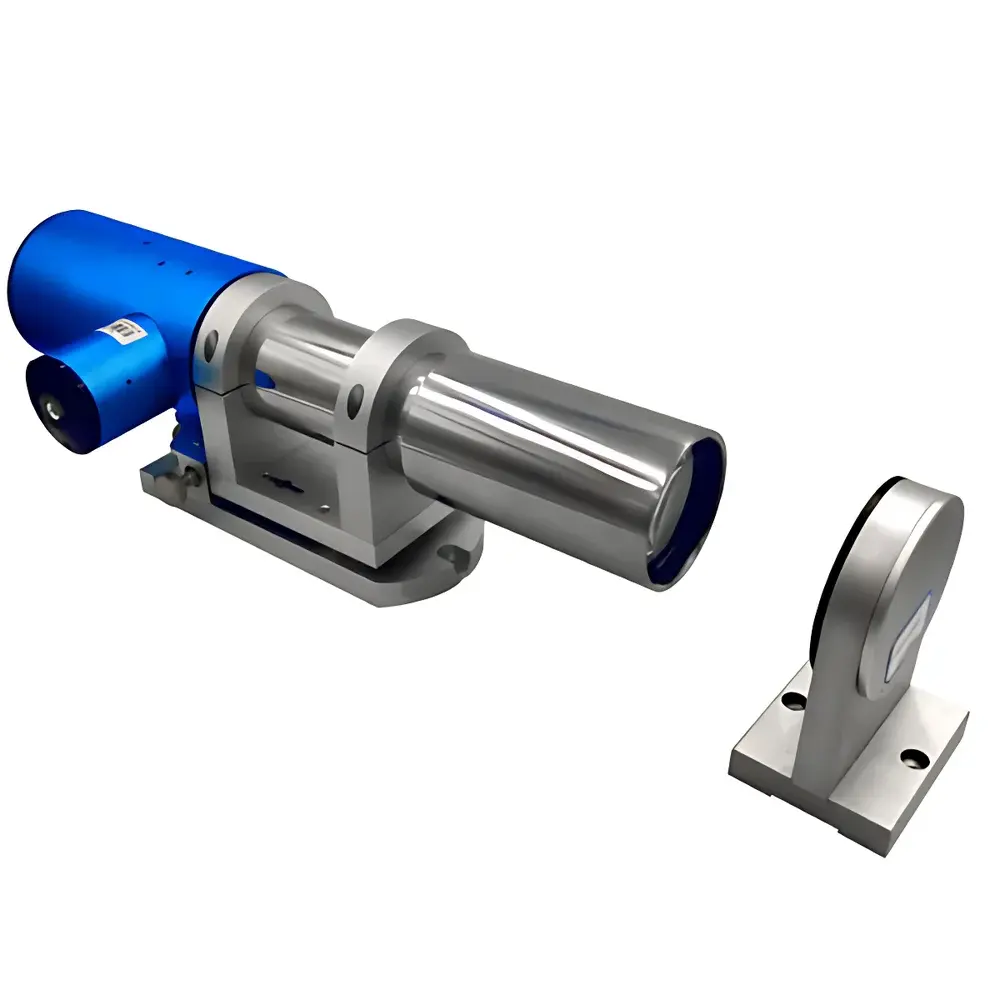
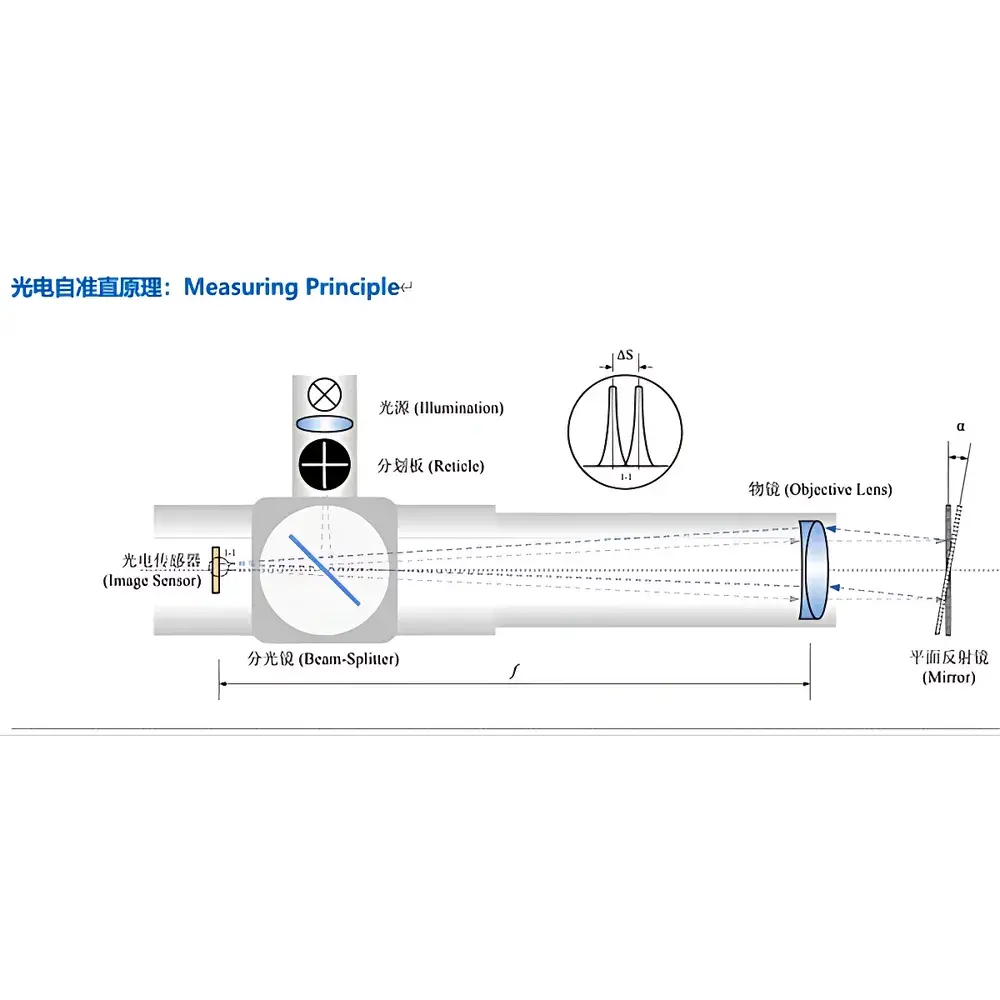
The Yanrun YRMAT3035H Dual-Axis Electronic Autocollimator is a precision optical metrology instrument engineered for high-accuracy angular measurement and alignment verification in industrial metrology, optical assembly, and precision mechanical calibration environments. Operating on the principle of autocollimation—where a collimated beam is reflected back from a retroreflector or plane mirror and reimaged onto a high-resolution position-sensitive detector—the YRMAT3035H quantifies angular deviations by measuring the displacement of the returned spot relative to the optical axis. Its dual-axis architecture enables simultaneous real-time measurement of pitch and yaw (X and Y angular components) with sub-arcsecond resolution, eliminating sequential reorientation and reducing cumulative setup error. The system integrates an f = 300 mm objective lens with a 50 mm clear aperture, optimized for signal-to-noise ratio and depth-of-field stability across its full 0–35 m working distance. A temperature-stabilized semiconductor LED source ensures consistent illumination intensity, minimal thermal drift, and >20,000 hours of operational lifetime—critical for GLP-compliant calibration workflows requiring traceable repeatability.
Key Features
- Dual-axis synchronous measurement (X and Y) with independent digital readout, enabling vectorial angular analysis without mechanical rotation
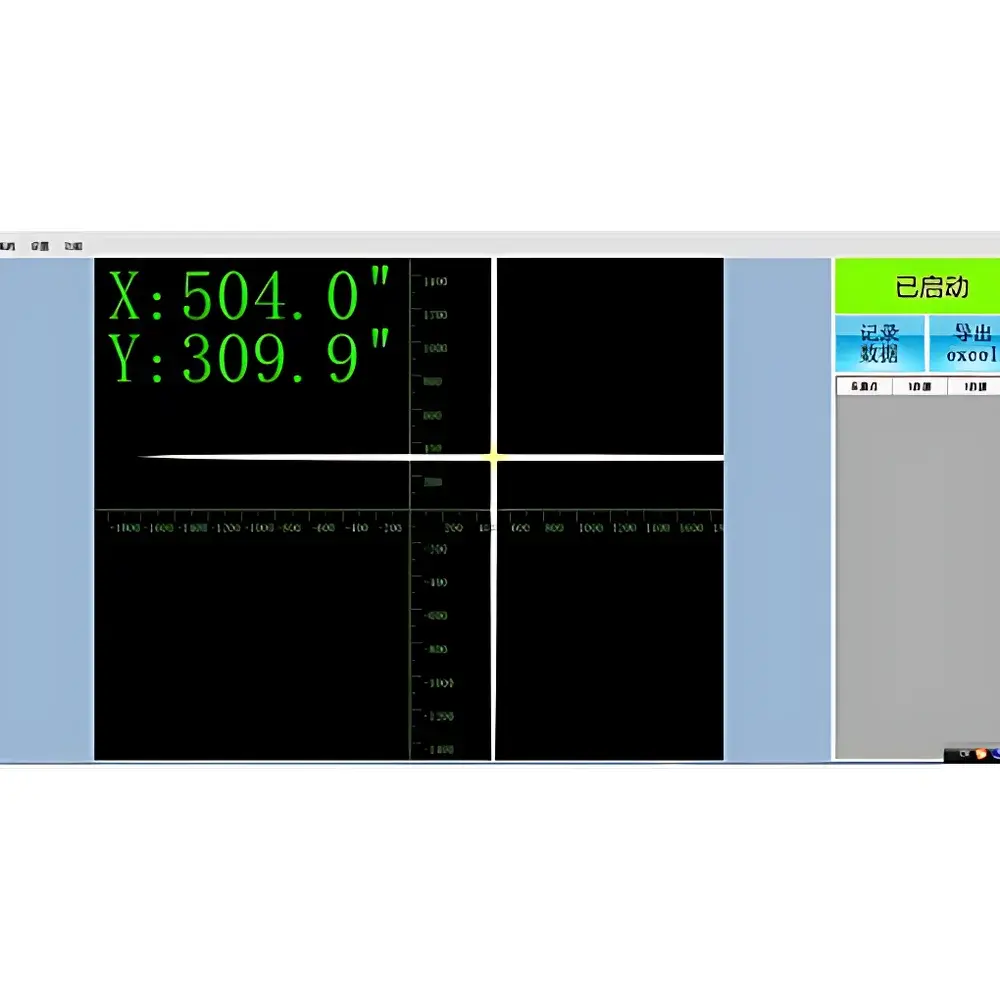
- Real-time electronic eyepiece display with live centroid tracking, eliminating observer-dependent parallax and subjective targeting errors inherent in traditional visual autocollimators
- High-resolution CMOS position sensor with 0.01″ display resolution and calibrated linearity across full FOV (2200″ × 1800″)
- Embedded digital image processing engine performing on-device centroid calculation, noise suppression, and dynamic background compensation
- USB 2.0 interface with plug-and-play driver support under Windows 7+ (64-bit); no external frame grabber or proprietary hardware required
- Compact monolithic housing (388 × 135 × 125 mm) designed for portability and integration into constrained workspaces, including cleanroom-compatible setups
- Standard compliance-ready architecture: supports audit trails, user access levels, and data export in .CSV and Excel-compatible formats per ISO/IEC 17025 documentation requirements
Sample Compatibility & Compliance
The YRMAT3035H interfaces with standard optical flat mirrors (≥λ/20 surface flatness), kinematic mirror mounts, and commercially available reference artifacts such as metal polygon prisms (e.g., 12- or 24-face) for multi-angle calibration. It meets functional equivalency to ISO 10110-5 (optical component testing), ISO 230-1 (machine tool geometric accuracy), and ASTM E2917 (standard practice for autocollimator use in angular metrology). While not certified to IEC 61000-6-3 for EMC or ISO 17025 as a standalone accredited calibration service, the instrument’s documented measurement uncertainty budget (±0.5″ at center, traceable to NIM standards via internal calibration protocol) supports its use as a reference-grade tool within GMP/GLP laboratories where user-performed periodic verification is maintained per SOP-INST-027.
Software & Data Management
The bundled Autocollimator Control Software V2.0 provides modular measurement modules—including straightness, flatness, perpendicularity, parallelism, and coaxiality analysis—each implementing ISO 1101 geometric tolerance algorithms. All raw centroid coordinates, timestamped measurement sequences, and operator annotations are stored in encrypted binary logs with optional CSV export. The software enforces role-based access control (administrator/operator), supports electronic signatures compliant with FDA 21 CFR Part 11 Annex 11 principles, and maintains immutable audit trails for all configuration changes and report generation events. Calibration certificates generated include uncertainty statements per GUM (JCGM 100:2008) and are compatible with LIMS integration via ODBC drivers.
Applications
- Precision alignment of optical benches, laser cavities, and interferometer components in R&D and production environments
- Geometric error mapping of CNC machine tools, coordinate measuring machines (CMMs), and rotary tables per ISO 230-6
- Verification of angular stability in aerospace optical assemblies, including star tracker and telescope mount calibration
- Flatness assessment of granite surface plates using bridge-mounted reflector scanning protocols
- Dynamic angular monitoring during thermal soak tests or vibration qualification (when paired with optional high-speed acquisition module)
- Educational use in university optics and precision engineering labs for teaching fundamental principles of collimation, wavefront sensing, and error separation techniques
FAQ
What is the minimum resolvable angle of the YRMAT3035H, and how is it verified?
The instrument achieves a display resolution of 0.01″; however, its calibrated measurement uncertainty at the optical center is ±0.5″ (k=2), validated using NIM-traceable polygon prism calibrations and repeated intercomparison against a PTB-certified reference autocollimator.
Can the YRMAT3035H perform measurements beyond 35 meters?
Yes—while the specified maximum working distance is 35 m for optimal SNR and spot size, extended-range operation up to 50 m is feasible with high-reflectivity mirrors (R > 98%) and ambient light shielding; accuracy degrades linearly beyond 35 m due to beam divergence and atmospheric turbulence.
Is the software compatible with virtualized Windows environments or LabVIEW integration?
Native operation requires physical Windows 7+ (64-bit) installation; virtualization is unsupported due to USB timing constraints. However, DLL-based API access enables custom LabVIEW, MATLAB, or Python (via PyUSB) integration for automated test sequences.
Does the system support automatic focus or motorized mirror positioning?
No—focus is manually adjusted via precision micrometer on the objective tube. Motorized accessories (e.g., motorized mirror goniometers) are available as third-party integrations but are not natively controlled by the standard software stack.





