
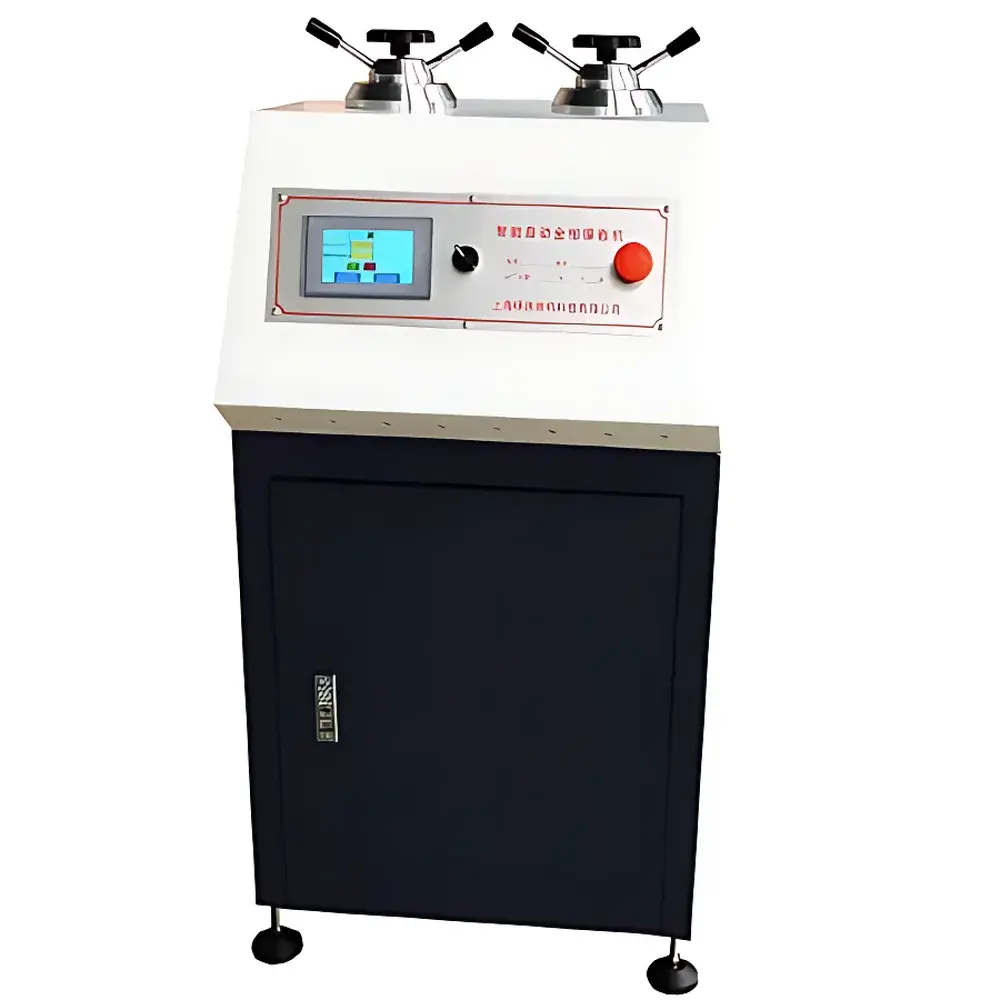
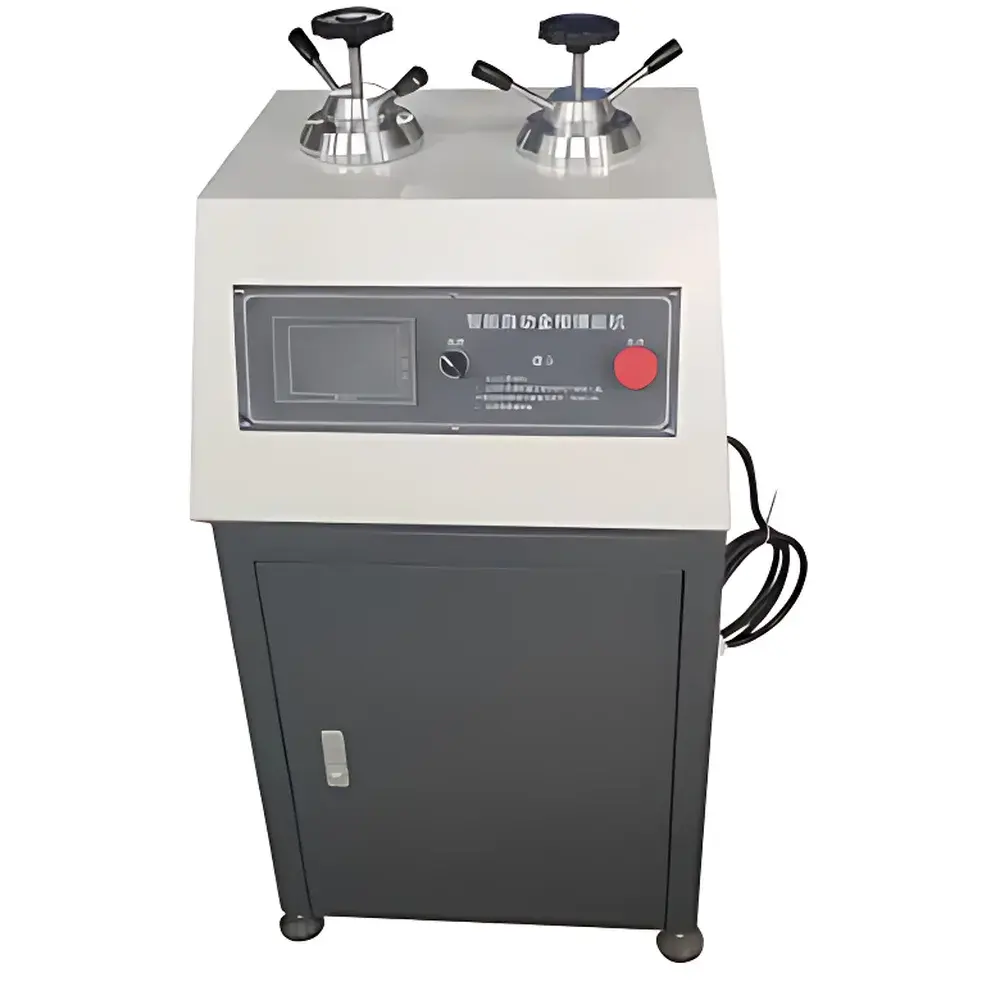
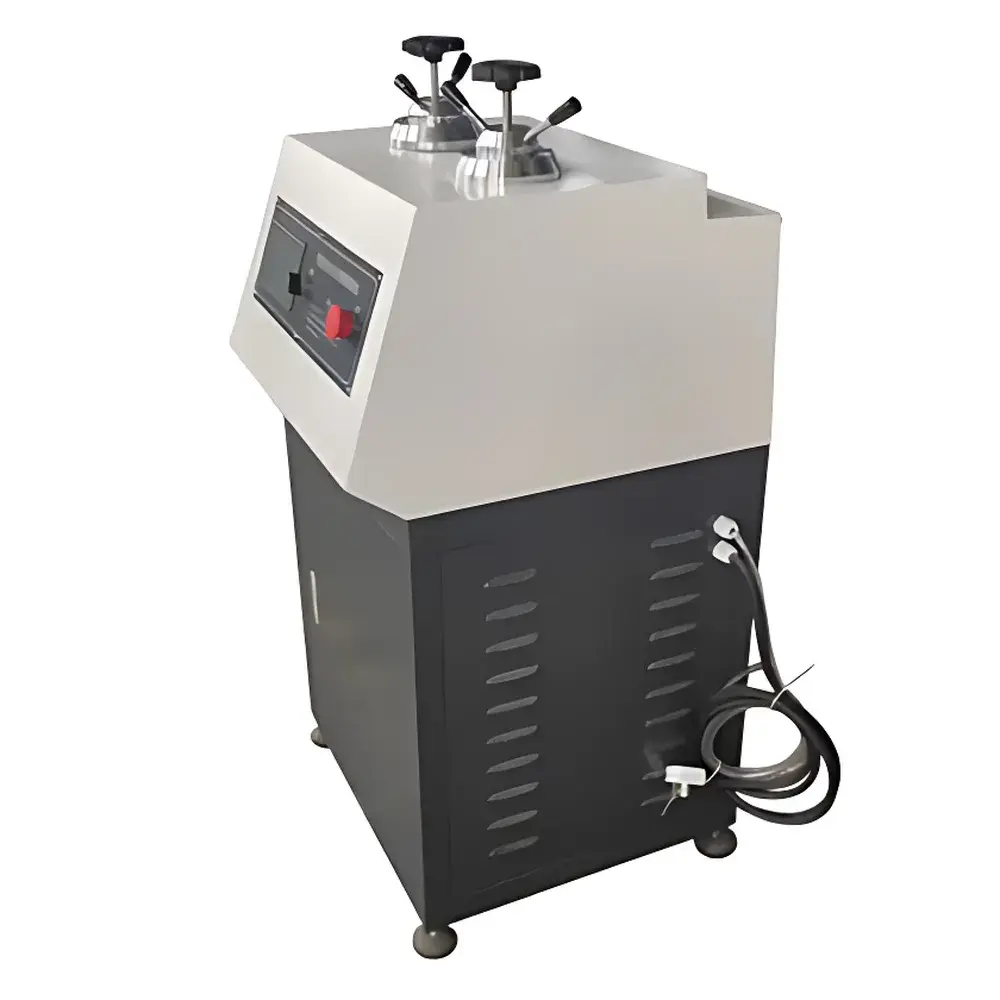
YANRUN AXQ-100 Intelligent Fully Automatic Hot Mounting Press
| Brand | YANRUN |
|---|---|
| Origin | Shanghai, China |
| Manufacturer Type | Direct Manufacturer |
| Country of Origin | China |
| Model | AXQ-100 |
| Instrument Type | Hot Mounting Press |
| Sample Diameter Options | Φ25 mm, Φ30 mm, Φ40 mm, Φ45 mm |
| Heating Power | 2 × 1000 W |
| Temperature Range | 0–300 °C |
| Pressure Range | 0–2 MPa (applied pressure) |
| Curing Time | 0–99 min (adjustable) |
| Cooling Time | 0–99 min (adjustable) |
| Air Supply Requirement | 0.5–0.8 MPa |
| Cooling Method | Automated Recirculating Water Cooling |
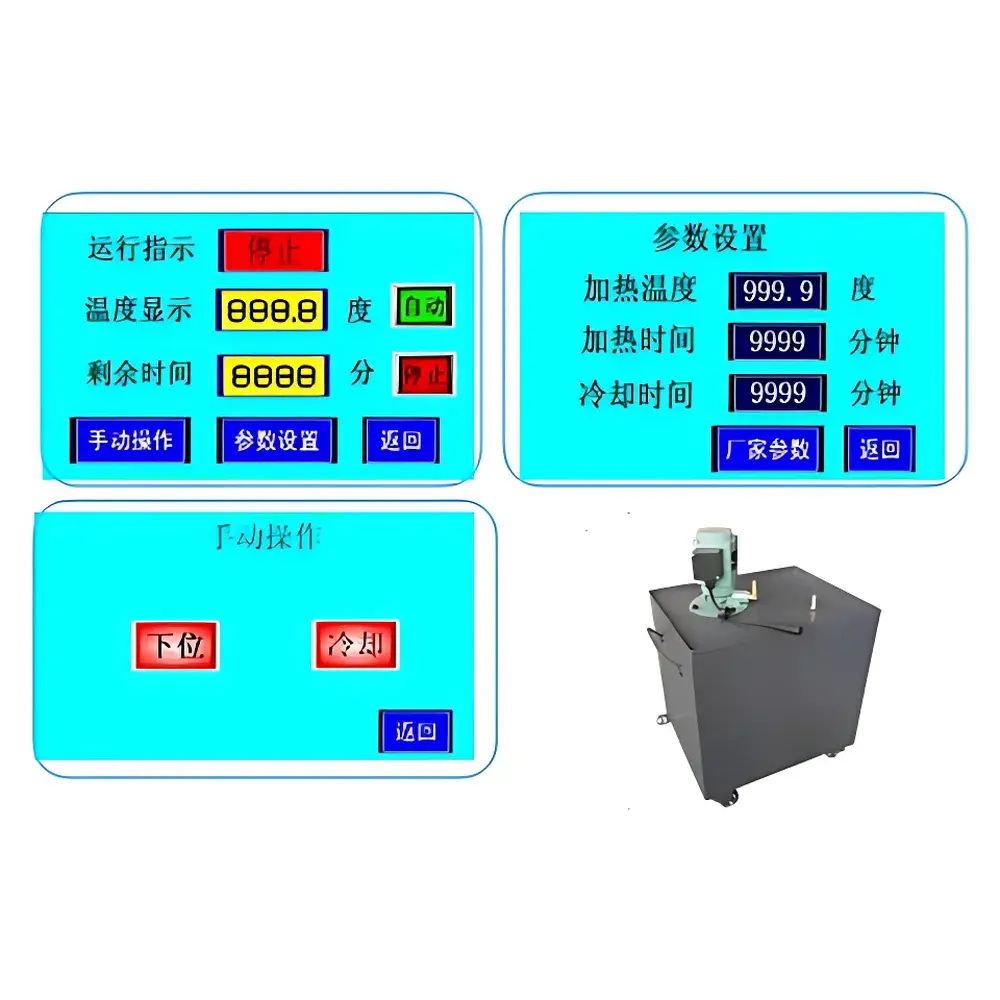
| Control System | PLC with Color Touchscreen Interface |
| Machine Configuration | Floor-standing, Dual-Station, Fully Automatic Cycle |
| Dimensions (W×D×H) | 700 × 560 × 1250 mm |
| Weight | 100 kg |
Overview
The YANRUN AXQ-100 Intelligent Fully Automatic Hot Mounting Press is an industrial-grade, floor-standing dual-station thermosetting mounting system engineered for high-throughput, repeatable, and operator-independent metallographic specimen preparation. It operates on the principle of hot compression molding—applying controlled heat and pressure to thermosetting resins (e.g., phenolic, epoxy, and diallyl phthalate) to encapsulate irregular, fragile, or dimensionally unstable samples in a rigid, dimensionally stable cylindrical mount. The AXQ-100 integrates precise thermal regulation, programmable pneumatic force application, and closed-loop recirculating water cooling to ensure consistent cross-linking kinetics and minimal thermal distortion—critical for downstream grinding, polishing, and high-magnification optical or electron microscopy analysis. Designed for laboratories performing routine QC/QA, failure analysis, or R&D in metallurgy, additive manufacturing, composites, and electronic packaging, the system supports GLP-aligned workflows through deterministic process logging and parameter traceability.
Key Features
- PLC-based intelligent control architecture with 7-inch color touchscreen interface, offering intuitive menu-driven programming of temperature ramp profiles, dwell times, pressure sequences, and cooling cycles.
- Dual-station configuration enables parallel processing of two specimens—reducing cycle time per batch without compromising reproducibility or cross-contamination risk.
- Pneumatic actuation system delivers clean, oil-free compression force (0.5–0.8 MPa supply pressure), translating to controllable sample compaction pressures up to 72 MPa—optimized for both brittle ceramics and ductile alloys.
- Automated recirculating water cooling circuit rapidly extracts latent heat post-cure, reducing total cycle time by up to 40% compared to passive air-cooled systems; integrated temperature monitoring prevents thermal shock-induced cracking.
- Modular steel mold sleeve design allows tool-less, rapid interchange between four standard mounting diameters (Φ25 mm, Φ30 mm, Φ40 mm, Φ45 mm), eliminating downtime during multi-size sample batches.
- Dual 1000 W heating elements provide uniform thermal distribution across the mold cavity, maintaining ±1.5 °C stability within the 0–300 °C operating range—validated per ASTM E220 calibration methodology.
Sample Compatibility & Compliance
The AXQ-100 is compatible exclusively with thermosetting embedding media, including but not limited to phenolic resin (low porosity, high hardness), epoxy (low shrinkage, excellent edge retention), and acrylic (fast cure, transparent finish). It is not suitable for thermoplastic materials (e.g., polyethylene, PVC) due to their reversible melt behavior under sustained heat and pressure. All operational parameters—including temperature setpoints, dwell durations, applied pressure, and cooling rates—are fully programmable and stored with timestamped metadata, supporting audit readiness for ISO/IEC 17025-accredited labs and FDA 21 CFR Part 11–compliant environments when paired with validated software extensions. The unit meets CE safety directives (2014/30/EU EMC, 2014/35/EU LVD) and incorporates overtemperature cutoff, pressure relief valves, and emergency stop functionality.
Software & Data Management
While the AXQ-100 operates autonomously via its embedded PLC controller, optional Ethernet or RS-485 communication modules enable integration into centralized laboratory information management systems (LIMS). Process logs—including start/stop timestamps, actual vs. setpoint temperature curves, pressure profiles, and cooling rate data—are exportable in CSV format for statistical process control (SPC) analysis. Firmware updates are performed via USB, and password-protected administrator mode restricts modification of critical calibration constants, ensuring long-term measurement integrity and regulatory compliance in GMP/GLP settings.
Applications
- Routine metallographic preparation of ferrous and non-ferrous alloys, weld zones, heat-affected zones (HAZ), and coated substrates.
- Encapsulation of powder metallurgy compacts, sintered ceramics, and porous filters prior to sectioning and pore structure analysis.
- Stabilization of fractured or laminated electronic components (PCBs, solder joints, die attach interfaces) for cross-sectional SEM/EDS evaluation.
- Embedding of composite cross-sections (CFRP, GFRP) to prevent fiber pull-out during mechanical polishing.
- High-volume QC labs requiring >50 mounts/day with <2% inter-batch variability in hardness, shrinkage, or edge rounding—verified using ASTM E3-22 standard practice for metallographic specimen preparation.
FAQ
What types of embedding resins are compatible with the AXQ-100?
Only thermosetting resins—such as phenolic, epoxy, and diallyl phthalate—are supported. Thermoplastic resins are incompatible due to lack of permanent cross-linking under the machine’s thermal-pressure profile.
Is external chiller required for the recirculating water cooling system?
No—the AXQ-100 includes an integrated water reservoir and pump; tap-water circulation is sufficient for standard operation. For ambient temperatures >35 °C or continuous high-load use, an optional external chiller (10–15 °C output) is recommended to maintain optimal cooldown efficiency.
Can the AXQ-100 be validated for ISO 17025 compliance?
Yes—its programmable parameters, real-time sensor feedback, and exportable log files support IQ/OQ/PQ protocol development. Full validation documentation packages are available upon request from YANRUN Technical Services.
What maintenance intervals are recommended for pneumatic and thermal subsystems?
Air filter elements should be inspected monthly and replaced quarterly; heating element calibration verification is advised annually using NIST-traceable thermocouples; water reservoir should be drained and refilled with deionized water every six months to prevent scaling.



