YANRUN YR-60I High-Throughput Batch Image Measuring System
| Brand | YANRUN |
|---|---|
| Origin | Shanghai, China |
| Manufacturer Type | Direct Manufacturer |
| Model | YR-60I |
| Operation Mode | Fully Automatic |
| Image Sensor | 1/1.8" 5 MP CCD |
| Telecentric Lens Magnification | 0.138X |
| Measurement Range | 62 × 42 mm |
| Accuracy | ±0.01 mm |
| Working Height | 200 mm |
| Illumination | Collimated Parallel Light Source |
| Dimensions (W×D×H) | 550 × 400 × 895 mm |
Overview
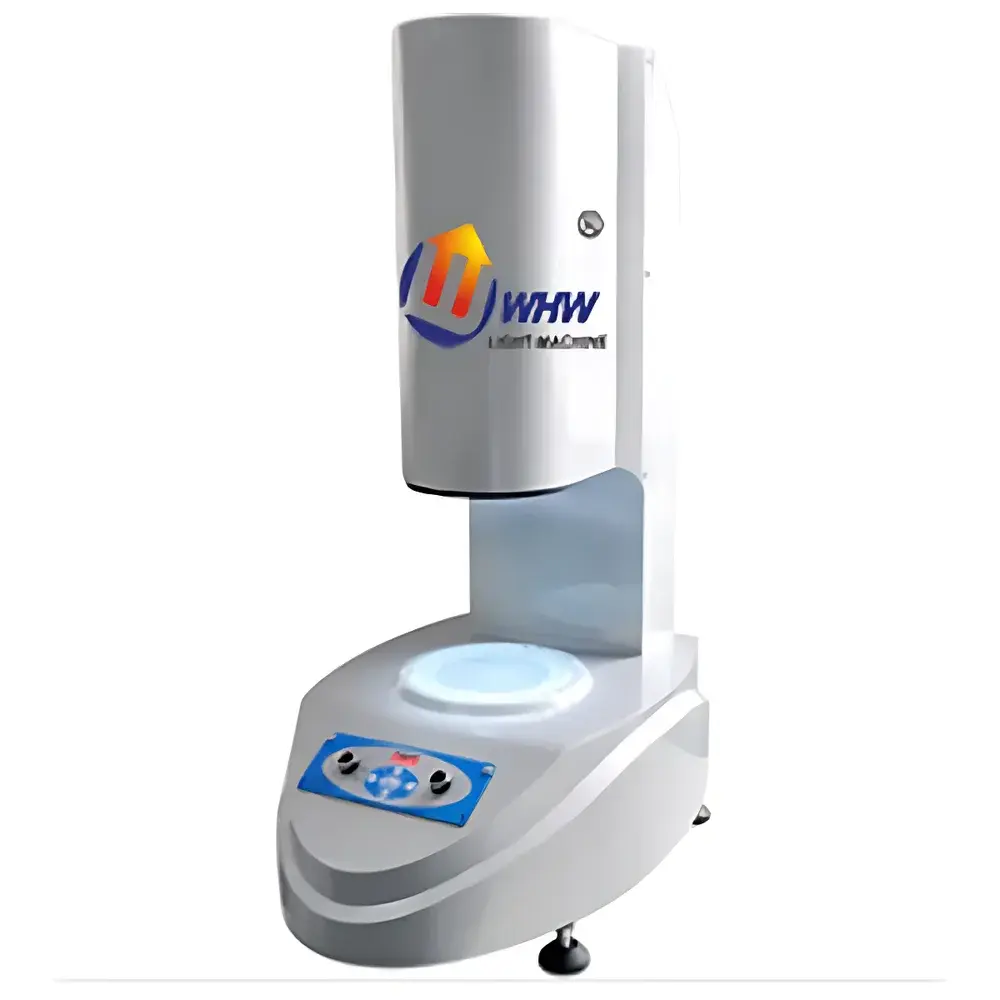
The YANRUN YR-60I High-Throughput Batch Image Measuring System is an industrial-grade, fully automated optical metrology platform engineered for rapid, non-contact geometric inspection of small-to-medium precision components. Based on telecentric imaging and high-resolution CCD acquisition, the system employs a fixed-stage, top-down optical architecture—eliminating mechanical stage movement during measurement. This design enables true single-shot, full-field image capture across its 62 × 42 mm field of view, allowing simultaneous dimensional analysis of multiple parts placed side-by-side on the stationary worktable. Unlike traditional coordinate measuring machines (CMMs) or scanning-based vision systems, the YR-60I leverages pixel-level sub-pixel edge detection algorithms and calibrated telecentric optics to deliver traceable, repeatable measurements without manual focusing, part repositioning, or fixture dependency. Its core measurement principle conforms to ISO 10360-7 (geometric product specifications — acceptance and reverification tests for coordinate measuring systems — part 7: CMMs equipped with optical distance sensors), adapted for fixed-optic image metrology workflows.
Key Features
- Fully automated measurement cycle: Complete dimensional evaluation—including length, width, diameter, angle, position, and profile deviation—executed in ≤2 seconds per batch, supporting up to 10+ identical parts per frame.
- Fixed-stage architecture with zero-platform-motion requirement: Eliminates mechanical drift, reduces maintenance intervals, and ensures long-term stability under factory-floor conditions.
- High-fidelity telecentric optical path: Italian-sourced large-aperture telecentric lens (0.138X magnification) minimizes perspective error and ensures orthographic projection across the entire FOV—critical for GD&T compliance in flatness, parallelism, and positional tolerance verification.
- Direct CAD-to-part comparison engine: Supports import of DXF or STEP geometry files; overlays nominal dimensions and tolerances onto live measurement results, highlighting deviations (e.g., burr presence, oversize/undersize features) with color-coded pass/fail indicators.
- Collimated parallel illumination system: Provides uniform, shadow-free backlighting and surface-diffused front lighting—optimized for high-contrast edge extraction on reflective, translucent, or matte-surface components such as tempered glass, stamped metal, and injection-molded plastics.
Sample Compatibility & Compliance
The YR-60I is validated for use with rigid, planar, or near-planar components ≤200 mm in height and ≤62 × 42 mm in footprint. Typical applications include gear teeth, fasteners (M1–M6 screws, rivets), smartphone housings (aluminum, polycarbonate), cover glass (0.3–1.1 mm thickness), PCB fiducials, and medical micro-components (e.g., cannula tips, sensor housings). The system supports ISO/IEC 17025-aligned calibration procedures via NIST-traceable step gauges and grid targets. All measurement reports comply with ISO 14253-1 (Geometrical Product Specifications — Inspection by measurement of workpieces and measuring equipment — Part 1: Decision rules for proving conformance or non-conformance with specification) and are structured to support internal GLP/GMP audit trails when integrated with enterprise MES or QMS platforms.
Software & Data Management
The embedded YR-Metrology Suite v3.2 provides intuitive GUI navigation, scriptable measurement routines, and export-ready reporting. Raw images and coordinate data are stored in vendor-neutral HDF5 format, preserving metadata (timestamp, operator ID, calibration ID, lens temperature). Export options include native Microsoft Word (.docx) and Excel (.xlsx) templates compliant with ANSI Z540 and ISO 9001 documentation requirements. Audit logs record all user actions—including parameter edits, report generation, and calibration events—with time-stamped digital signatures. Optional integration with SQL Server or Oracle databases enables centralized SPC charting (X̄–R, Cp/Cpk), trend analysis, and real-time dashboarding aligned with Industry 4.0 infrastructure.
Applications
The YR-60I serves high-volume quality control environments where throughput, repeatability, and operator independence are critical. It is routinely deployed in Tier-1 automotive suppliers for fastener thread pitch and head geometry validation; in consumer electronics contract manufacturers for glass edge chamfer consistency and bezel gap uniformity; and in precision machining shops for first-article inspection of multi-cavity mold outputs. Its fixed-optic architecture makes it especially suitable for inline or near-line deployment—mounted above conveyor belts or integrated into automated loading cells using optional pneumatic part presence sensors and I/O-triggered measurement initiation.
FAQ
Does the YR-60I require external calibration standards for routine operation?
Yes—annual recalibration against certified reference artifacts (e.g., NIST-traceable grid plates or step gauges) is recommended per ISO/IEC 17025 Clause 6.6. Internal verification using built-in pattern recognition routines can be performed daily.
Can the system measure features with surface texture or reflectivity variations?
Yes—the dual-mode illumination (backlight + coaxial diffuse) combined with adaptive histogram equalization ensures robust edge detection across matte, anodized, polished, or coated surfaces typical in metal stamping and glass processing.
Is CAD model alignment supported for asymmetric or rotated parts?
Yes—automatic best-fit alignment (least-squares registration) is applied prior to nominal-actual comparison, accommodating rotational offsets up to ±15° without manual intervention.
What software licensing model applies to firmware updates and feature upgrades?
All firmware revisions and metrology algorithm improvements released within 24 months of purchase are included at no additional cost. Extended support contracts provide priority bug resolution and custom report template development.
How is measurement uncertainty quantified and reported?
Uncertainty budgets follow GUM (JCGM 100:2008) methodology and incorporate contributions from lens distortion, pixel size, illumination stability, and environmental thermal drift. Expanded uncertainty (k=2) is displayed per feature in exported reports.