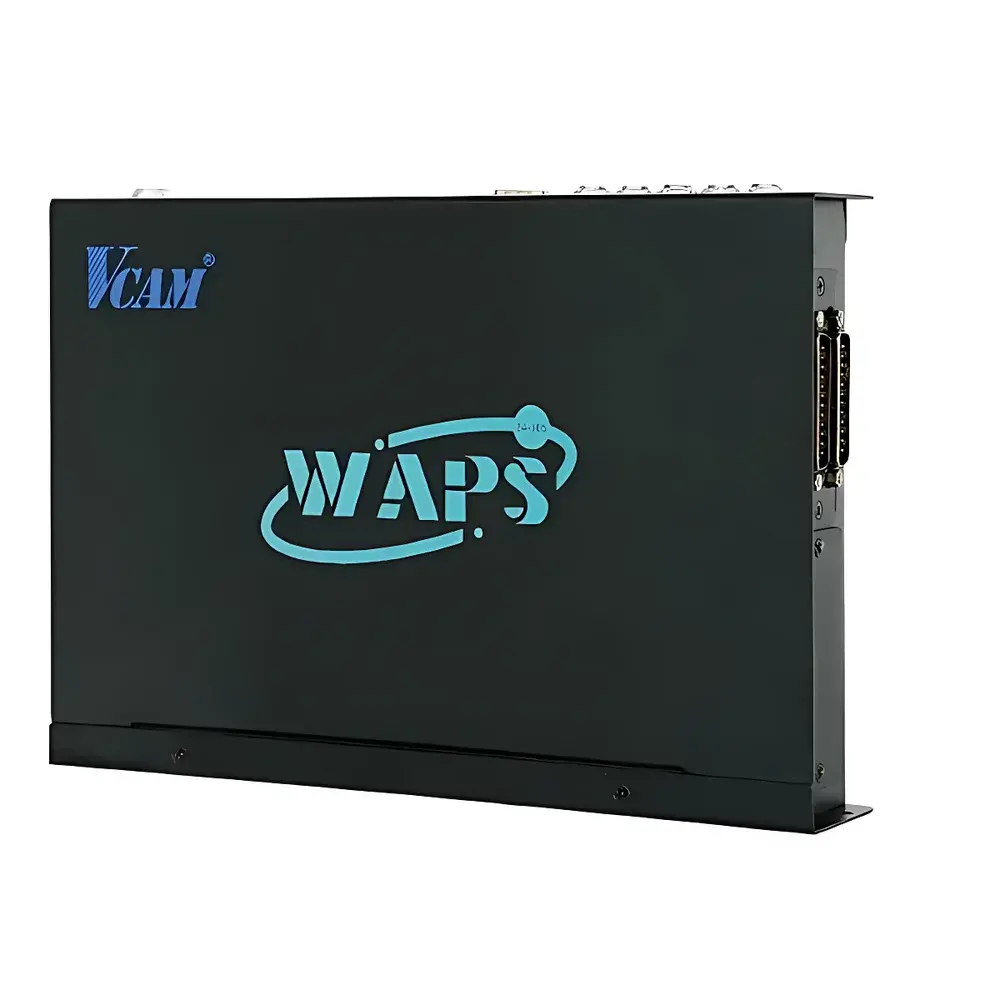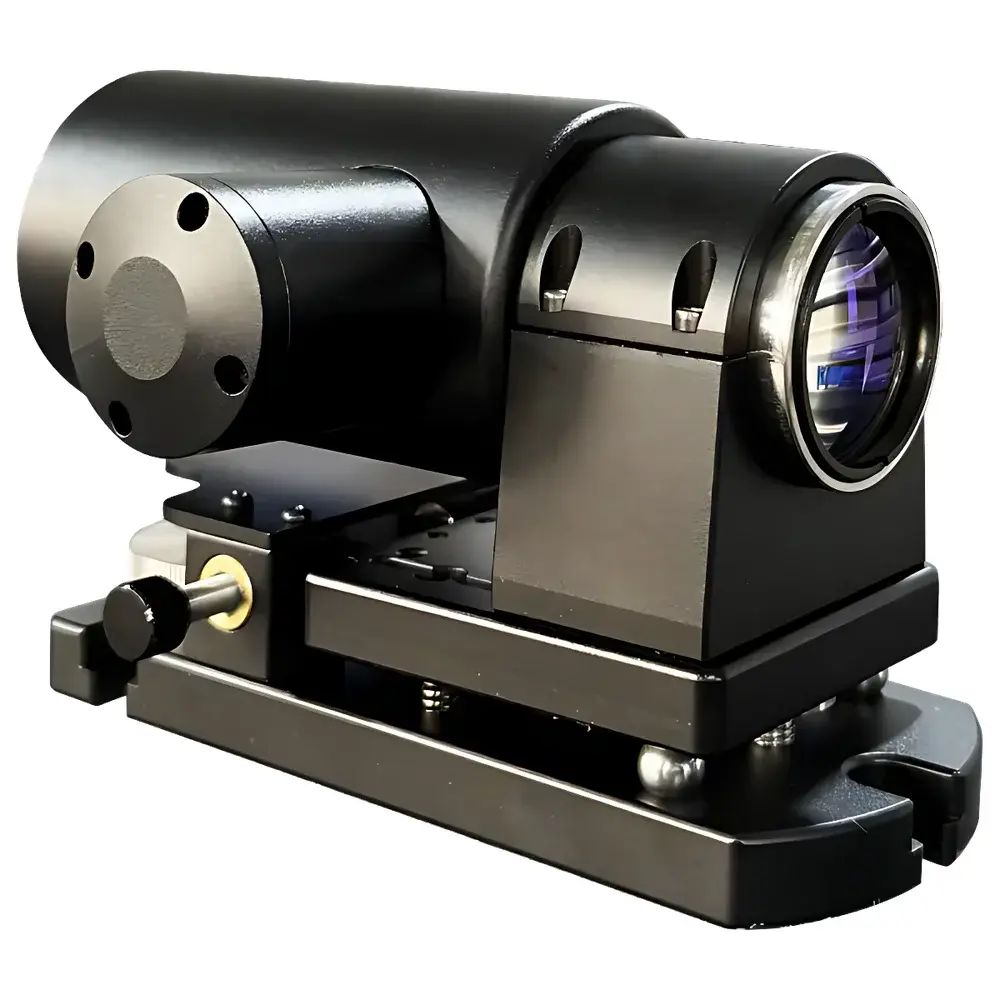
YANRUN MC030-WF100-6000 Dual-Axis Electronic Autocollimator
| Brand | YANRUN |
|---|---|
| Origin | Shanghai, China |
| Manufacturer Type | Direct Manufacturer |
| Model | MC030-WF100-6000 |
| Price Range | USD 2,800 – 5,600 |
Overview
The YANRUN MC030-WF100-6000 is a dual-axis electronic autocollimator engineered for high-precision angular metrology in controlled industrial and laboratory environments. It operates on the principle of optical autocollimation—where a collimated beam is reflected from a target mirror back into the instrument’s objective lens—and leverages a high-resolution CMOS image sensor coupled with real-time digital image processing algorithms to determine angular deviations in both X and Y axes simultaneously. Unlike traditional visual or analog autocollimators, this system eliminates human parallax error and enables sub-arcsecond resolution through centroid detection of the reflected spot position. Its core architecture integrates a stabilized He–Ne or solid-state laser source (depending on configuration), precision air-bearing or kinematic mirror mounts, and temperature-compensated optical path design—making it suitable for applications demanding long-term repeatability and traceable calibration under ISO/IEC 17025-accredited conditions.
Key Features
- Dual-axis simultaneous measurement capability for pitch and yaw angles, with real-time vector output
- Configurable angular resolution options: 0.1 arcsecond (standard), 0.01″, 0.001″, and 0.0001″ models available upon request
- Integrated high-dynamic-range CMOS sensor with on-board FPGA-based centroid calculation engine
- Thermally stable optical bench with low-coefficient-of-expansion materials to minimize drift over 8-hour operational cycles
- Compact, portable form factor (< 3.2 kg) with integrated battery option for field deployment in cleanroom or workshop settings
- USB 3.0 and Ethernet interfaces for deterministic data streaming; compatible with Windows/Linux host platforms
Sample Compatibility & Compliance
The MC030-WF100-6000 is designed for use with standard optical flats, retroreflective targets, and kinematic mirror mounts compliant with ISO 10110-7 surface quality specifications. It supports measurement distances ranging from 0.5 m to 10 m (adjustable via interchangeable focus optics). The instrument meets electromagnetic compatibility requirements per EN 61326-1:2013 and conforms to safety standards IEC 61010-1:2010 for laboratory electrical equipment. Calibration certificates are issued traceable to NIM (National Institute of Metrology, China) or optional UKAS-accredited labs. While not FDA-regulated, its measurement uncertainty budget and audit trail functionality support GLP/GMP-aligned validation protocols when integrated into regulated manufacturing workflows (e.g., semiconductor lithography tool alignment or aerospace inertial sensor assembly).
Software & Data Management
The included YANRUN AutoCal Studio v4.x software provides full control, real-time visualization, and automated reporting. It features time-synchronized multi-channel logging (angle vs. time, thermal drift compensation logs), statistical process control (SPC) charting, and export to CSV, XML, and HDF5 formats. The software implements role-based access control and full 21 CFR Part 11 compliance mode—including electronic signatures, audit trails with immutable timestamps, and user action logging—for environments requiring regulatory documentation. Raw sensor frames and processed angle values are stored separately to enable retrospective reanalysis using updated algorithms without instrument recalibration.
Applications
- Precision alignment of CNC machine tool spindles, linear guides, and rotary tables per ISO 230-1 and ISO 230-6
- Verification of flatness and straightness in granite surface plates and optical reference benches
- Dynamic angular stability testing of inertial navigation platforms and satellite attitude control mechanisms
- Calibration of angular encoders, goniometers, and interferometric tilt sensors
- In-process monitoring during high-accuracy optical assembly—e.g., lens centering, prism bonding, and laser cavity alignment
- Research-grade angular metrology in national metrology institutes and university precision engineering labs
FAQ
What is the typical measurement uncertainty at 1 meter working distance?
For the 0.01″ resolution model, expanded uncertainty (k=2) is ≤ ±0.015″ under ISO 5725-2 repeatability conditions with stabilized ambient temperature (±0.5°C/hour).
Does the system support external trigger synchronization?
Yes—TTL-compatible trigger input allows synchronization with motion controllers, environmental chambers, or laser interferometers.
Can the instrument be calibrated in-house using customer-owned reference mirrors?
Yes, provided the reference mirror surface quality meets λ/20 PV @ 633 nm and is mounted on a kinematic base with verified orthogonality; calibration procedures follow ISO 10110-7 Annex D guidelines.
Is firmware upgrade capability available remotely?
Firmware updates are delivered via signed binary packages through the AutoCal Studio interface, with SHA-256 verification and rollback support.
What environmental conditions are recommended for optimal performance?
Operational range: 15–25°C, <50% RH non-condensing; vibration isolation recommended below 5 Hz; air turbulence mitigation advised for measurements beyond 3 m baseline.