
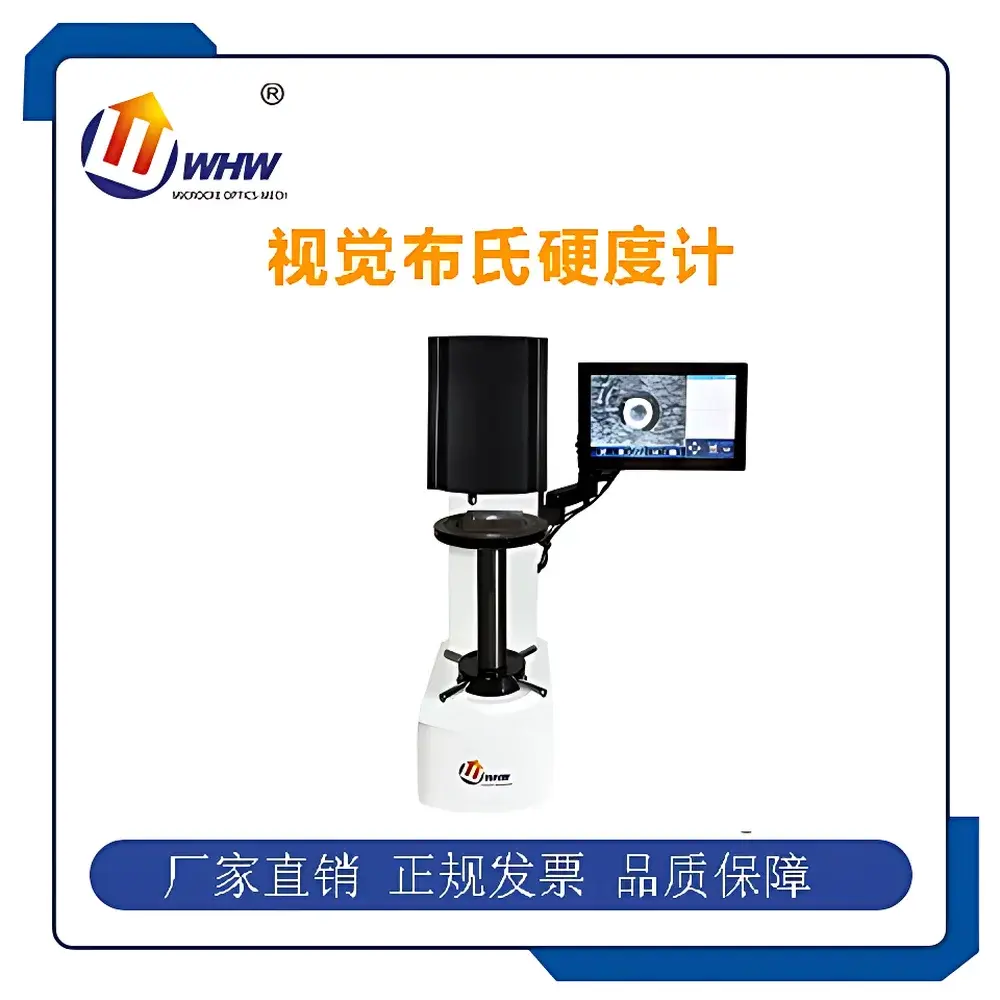
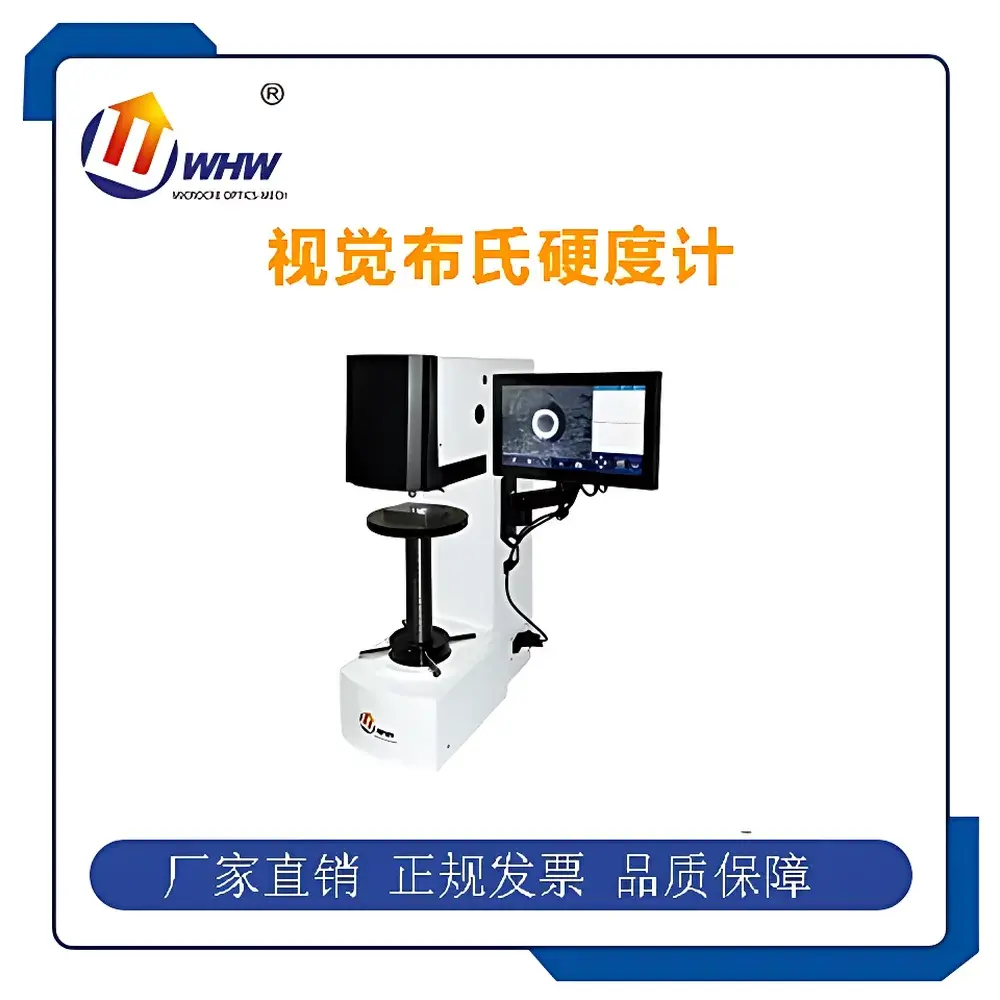
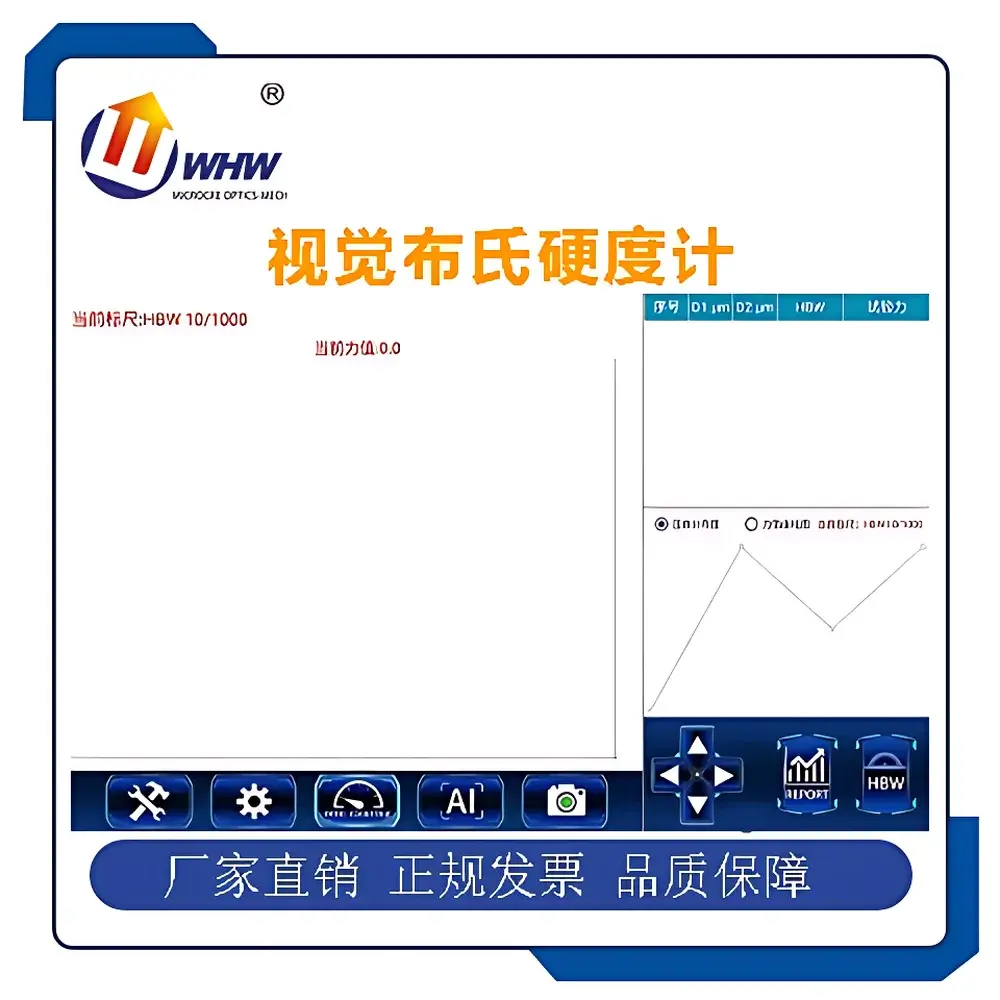

YANRUN HBSZ-3000 Automated Brinell Hardness Tester
| Brand | YANRUN |
|---|---|
| Origin | Shanghai, China |
| Manufacturer Type | Direct Manufacturer |
| Model | HBSZ-3000 |
| Hardness Scale | Brinell (HBW) |
| Measurement Range | 5–650 HBW |
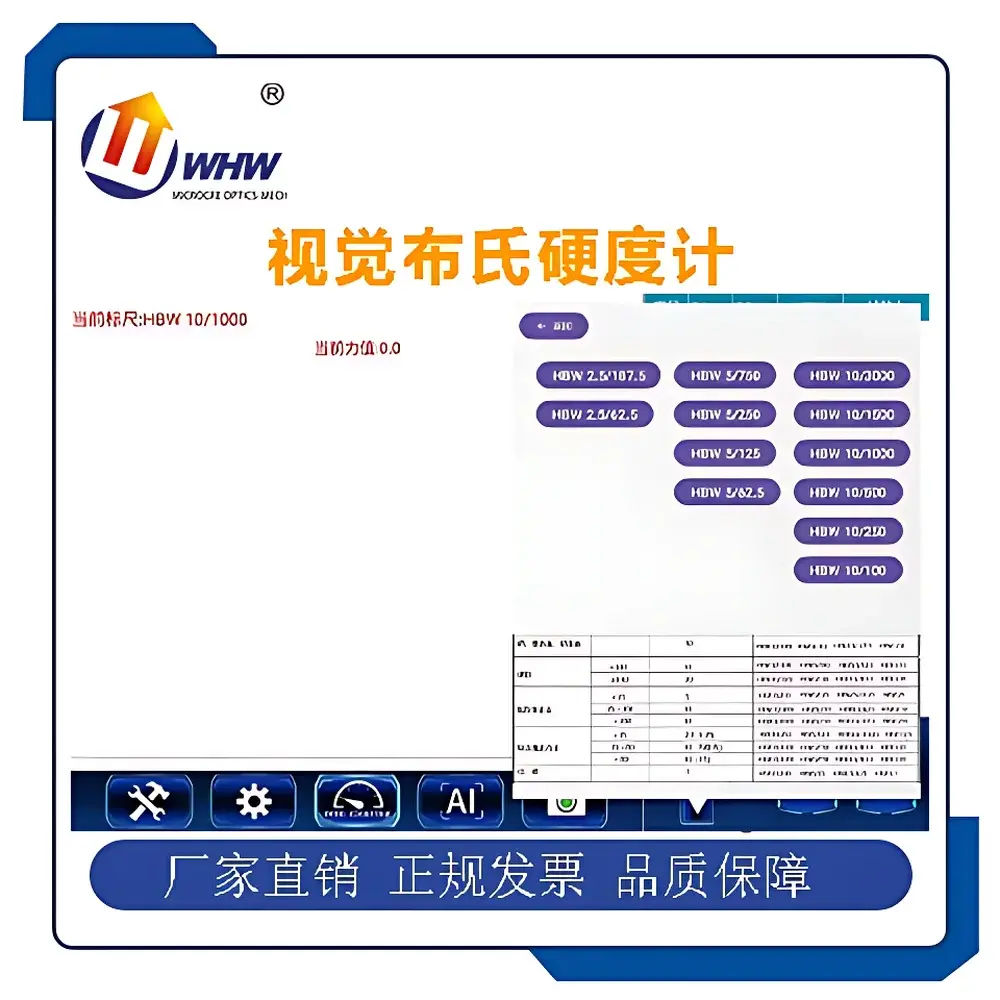
| Test Forces | 62.5, 100, 125, 187.5, 250, 500, 750, 1000, 1500, 3000 kgf |
| Automation | Fully Automated Loading/Unloading with Motorized Z-Axis Stage |
| Imaging System | Integrated Industrial Tablet PC with CCD Camera & Digital Image Analysis Software |
| Turret | Motorized Dual-Position Turret (Indenter + Objective Lens) |
| Optical System | Dual-Focal-Length Objective Lenses |
| Data Interface | RS232 Serial Output |
| Compliance | ASTM E10, ISO 6506-1, GB/T 231.1 |
Overview
The YANRUN HBSZ-3000 is a fully automated Brinell hardness tester engineered for precision, repeatability, and operational efficiency in metallurgical laboratories, quality control departments, and R&D facilities. It operates on the fundamental Brinell principle—applying a precisely controlled spherical indenter (typically tungsten carbide, 10 mm diameter) under standardized test forces to produce a permanent indentation in the material surface. The resulting indentation diameter is measured optically, and hardness is calculated using the internationally recognized formula defined in ASTM E10 and ISO 6506-1. Unlike manual or semi-automatic systems, the HBSZ-3000 integrates closed-loop electronic force control, motorized Z-axis stage positioning, and real-time digital image acquisition—enabling consistent application of load, dwell time, and unloading across all test cycles, regardless of specimen geometry or placement on the stage.
Key Features
- Fully automated test sequence: motorized stage elevation, indenter approach, closed-loop force application, dwell time control, and automatic unloading—all programmable and repeatable per ASTM E10 Annex A3 requirements.
- Integrated industrial tablet PC mounted on the machine frame, equipped with high-resolution CCD imaging system and proprietary image analysis software supporting both manual and auto-edge detection for indentation diameter measurement.
- Dual-objective optical system (e.g., 10× and 20× magnifications) enables accurate measurement of indentations across the full hardness range (5–650 HBW), accommodating variations in indentation size from low-force (62.5 kgf) to high-force (3000 kgf) tests.
- Motorized dual-position turret automatically alternates between the Brinell indenter and optical lens—eliminating manual turret rotation and reducing operator-induced variability.
- Real-time hardness value validation: user-defined upper/lower tolerance limits trigger audible alerts when measured values fall outside specification, supporting in-process QC decision-making.
- On-device hardness calibration offset correction: allows fine-tuning of reported HBW values within ±5 HBW without recalibration—useful for traceable alignment with reference blocks certified per ISO 6506-3.
- Electronic force control architecture ensures <±0.5% deviation from set test load during dwell phase, meeting repeatability requirements for GLP-compliant environments.
Sample Compatibility & Compliance
The HBSZ-3000 accommodates flat, cylindrical, and irregularly shaped metallic specimens up to 250 mm in height and 200 mm in diameter. Its motorized Z-axis stage provides 120 mm of vertical travel, enabling automatic focusing and indentation depth compensation—even for non-planar surfaces. All test protocols conform to ASTM E10 (Standard Test Method for Brinell Hardness of Metallic Materials), ISO 6506-1 (Metallic materials — Brinell hardness test — Part 1: Test method), and Chinese national standard GB/T 231.1. The instrument supports verification and calibration using certified Brinell reference blocks (e.g., NIST-traceable HBW 10/3000, HBW 10/1500), and its data logging structure permits audit-ready documentation for ISO/IEC 17025-accredited labs.
Software & Data Management
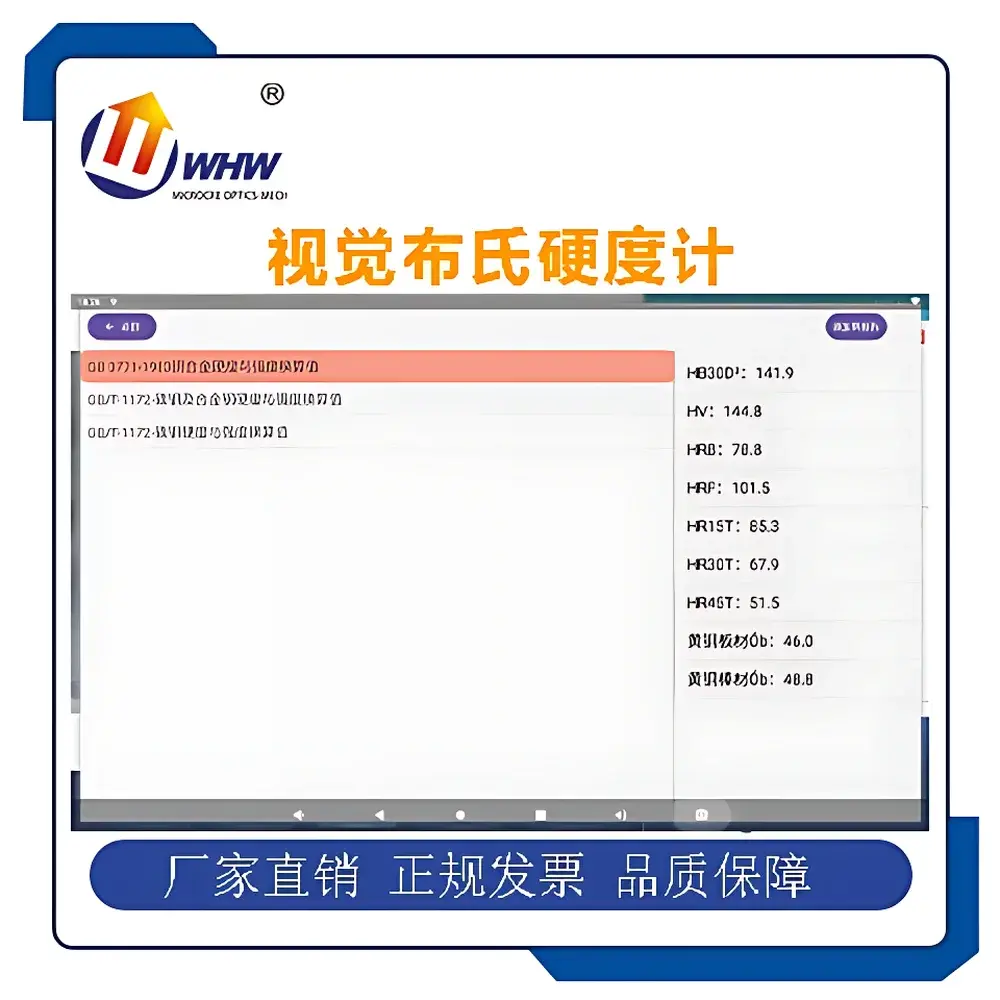
Embedded firmware enables local storage of ≥2000 test records, grouped into batches of up to 10 readings each. Each record includes timestamp, test force, dwell time, indentation diameter (in µm), calculated HBW, operator ID, and captured grayscale image (640×480 px). Data export is supported via RS232 serial interface to external LIMS or QA databases; CSV-formatted output includes all raw and derived parameters. The software implements basic audit trail functionality—recording user login, test initiation, parameter modification, and result export events—aligning with FDA 21 CFR Part 11 expectations for electronic records in regulated manufacturing environments.
Applications
This instrument is routinely deployed for hardness verification of cast iron, aluminum alloys, copper-brass composites, forged steels, and heat-treated components where macro-indentation resistance correlates with tensile strength, wear performance, and microstructural homogeneity. Typical use cases include incoming material inspection per ASME B16.5, post-weld heat treatment validation in pressure vessel fabrication, batch release testing in automotive casting foundries, and failure analysis workflows requiring correlation between hardness gradients and case depth in carburized gears. Its robust cast-iron monoblock frame (automotive-grade baked enamel finish) ensures long-term dimensional stability in shop-floor environments with ambient temperature fluctuations.
FAQ
What Brinell standards does the HBSZ-3000 comply with?
ASTM E10, ISO 6506-1, and GB/T 231.1 are natively supported through preconfigured test methods and calculation algorithms.
Can the system measure non-ferrous metals such as aluminum or copper?
Yes—the 10 mm tungsten carbide ball indenter and selectable test forces (62.5–3000 kgf) cover the full spectrum of non-ferrous and ferrous materials per ISO 6506-1 Annex B.
Is remote software update or calibration possible?
Firmware updates require local USB connection; calibration verification must be performed using physical reference blocks—no over-the-air calibration is supported for metrological integrity.
Does the instrument support network connectivity (Ethernet/Wi-Fi)?
No—data transfer is limited to RS232 serial output; integration with Ethernet-based lab networks requires an external serial-to-Ethernet converter.
What is the minimum indentation diameter resolvable by the optical system?
With 20× objective and sub-pixel edge detection, the system reliably resolves indentations ≥0.15 mm in diameter—sufficient for HBW ≥15 at 3000 kgf and HBW ≥60 at 500 kgf.



