
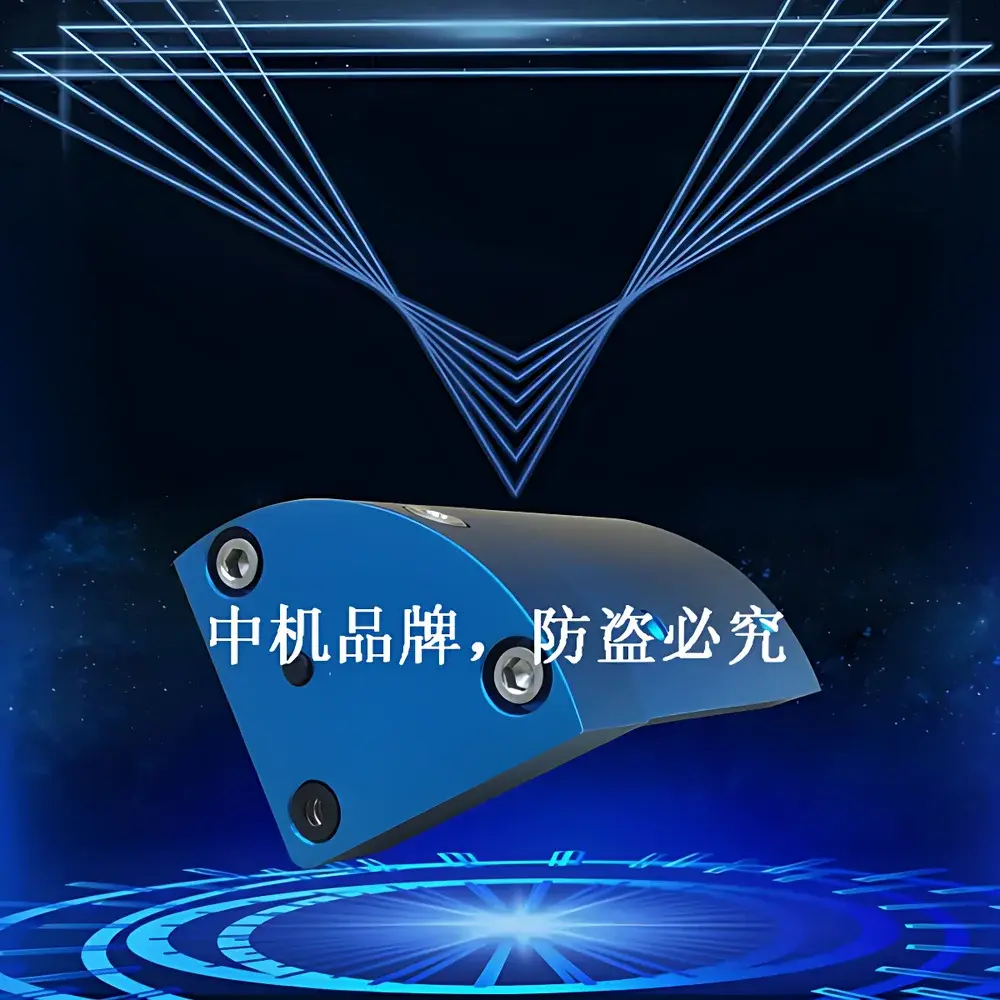
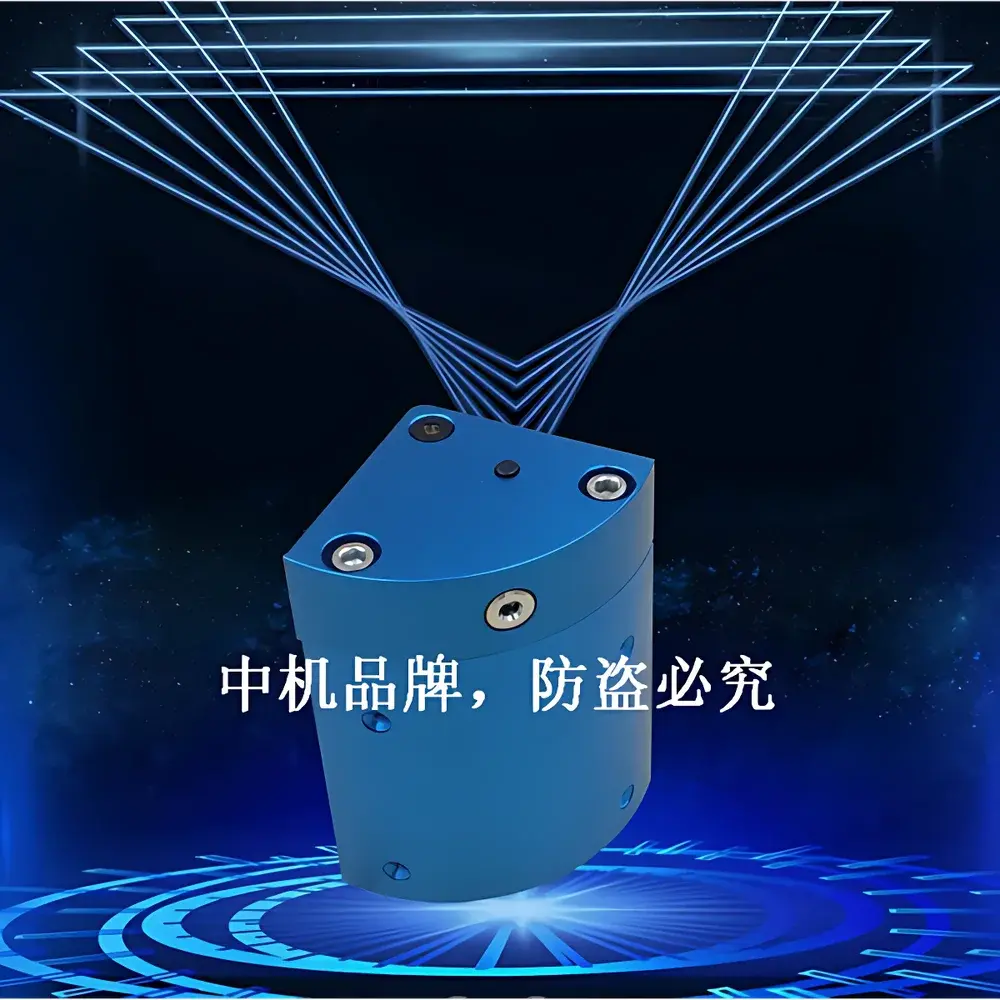
YANRUN JG-1 Laser Alignment Finder
| Brand | YANRUN |
|---|---|
| Origin | Shanghai, China |
| Manufacturer Type | Direct Manufacturer |
| Country of Origin | China |
| Model | JG-1 |
| Component Category | Auxiliary Optical Alignment Device |
| Price | USD 495 (FOB Shanghai) |
Overview
The YANRUN JG-1 Laser Alignment Finder is a precision auxiliary optical component engineered for integration with photoelectric autocollimators in high-accuracy alignment workflows. It operates on the principle of coaxial laser projection and retroreflected beam visualization, enabling rapid identification and coarse positioning of the autocollimator’s target image plane prior to fine angular measurement. Unlike standalone alignment tools, the JG-1 does not perform quantitative angular measurement itself; rather, it functions as a deterministic pre-alignment aid—reducing operator dependency on iterative manual adjustments and minimizing setup time in optical bench configurations, interferometric calibration setups, and collimator-based metrology systems.
Key Features
- Coaxial 635 nm red diode laser output with <1.5 mrad divergence, optimized for visibility under standard laboratory lighting without compromising eye safety (Class II compliant per IEC 60825-1)
- Integrated kinematic mounting interface compatible with standard M4 and M6 threaded optical posts and breadboard systems
- Adjustable focus lens assembly enabling sharp spot projection at working distances from 0.3 m to 5 m
- Fixed 1:1 beam-to-optical-axis alignment verified during factory calibration, eliminating need for in-field realignment
- Aluminum alloy housing with black anodized finish for thermal stability and EMI shielding in electromagnetically sensitive environments
- No internal power regulation circuitry—designed for direct DC 3.3 V ±5% input from compatible autocollimator power buses or external regulated sources
Sample Compatibility & Compliance
The JG-1 is mechanically and electrically designed for seamless interoperability with industry-standard photoelectric autocollimators—including models from Thorlabs (ACL series), Newport (502/503 series), and domestic equivalents meeting GB/T 22557–2008 (General Requirements for Photoelectric Autocollimators). It imposes no optical path obstruction and introduces negligible wavefront error (<λ/20 @ 633 nm) when mounted in-line. The device complies with ISO 10110–7 (surface imperfections), RoHS Directive 2011/65/EU (hazardous substance restrictions), and meets CE marking requirements for electromagnetic compatibility (EN 61326-1) and low-voltage safety (EN 61010-1). While not a measuring instrument per se, its use supports traceable alignment procedures aligned with ISO/IEC 17025:2017 clause 6.4.10 (equipment verification for measurement assurance).
Software & Data Management
As a passive electro-optical auxiliary component, the JG-1 requires no embedded firmware, drivers, or software interface. Its operation is fully hardware-synchronized with the host autocollimator’s trigger and illumination control logic. When used in automated metrology stations, the JG-1’s activation sequence can be integrated into LabVIEW, Python (via PyVISA), or MATLAB-based control scripts through TTL-level enable signals provided by the main instrument’s I/O port. Audit trails for alignment verification steps—including timestamped activation logs and operator ID tags—can be recorded within the host system’s GLP-compliant data acquisition framework, satisfying FDA 21 CFR Part 11 requirements where electronic records are mandated.
Applications
- Preliminary alignment of retroreflective targets (e.g., cube corners, flat mirrors) in laser tracker and theodolite-based coordinate metrology
- Rapid setup of multi-axis interferometer configurations (e.g., Michelson, Twyman–Green) requiring precise beam overlap before fringe analysis
- Calibration support for angular encoders and rotary stages using autocollimator-based null methods
- Education and training labs: visual demonstration of optical axis definition, parallax elimination, and collimation verification principles
- Alignment of optical cavities in tunable laser systems and cavity ring-down spectroscopy (CRDS) platforms
FAQ
Is the JG-1 suitable for vacuum or cleanroom environments?
Yes—the unit contains no outgassing elastomers or adhesives; all seals use metal-to-metal contact, and surface finish meets ISO Class 5 particulate limits when handled with cleanroom protocols.
Does the JG-1 require recalibration after mechanical shock?
No—its alignment is fixed via hardened dowel pin registration and verified under vibration testing per MIL-STD-810G Method 514.6, Category 24.
Can it be used with digital autocollimators that lack a dedicated laser port?
Yes—external 3.3 V DC power and TTL trigger lines are accessible via a 4-pin LEMO connector (F-SMA optional), allowing independent operation alongside any autocollimator with auxiliary I/O capability.
What is the expected lifetime of the laser diode under continuous operation?
Rated for ≥10,000 hours MTBF at 25°C ambient, per Telcordia GR-468-CORE reliability standards.
Is NIST-traceable calibration documentation available?
While the JG-1 itself is not calibrated, YANRUN provides a Certificate of Conformance with beam alignment verification data referenced to a NIST-traceable autocollimator (NIST SRM 2089a), issued with each unit.




