
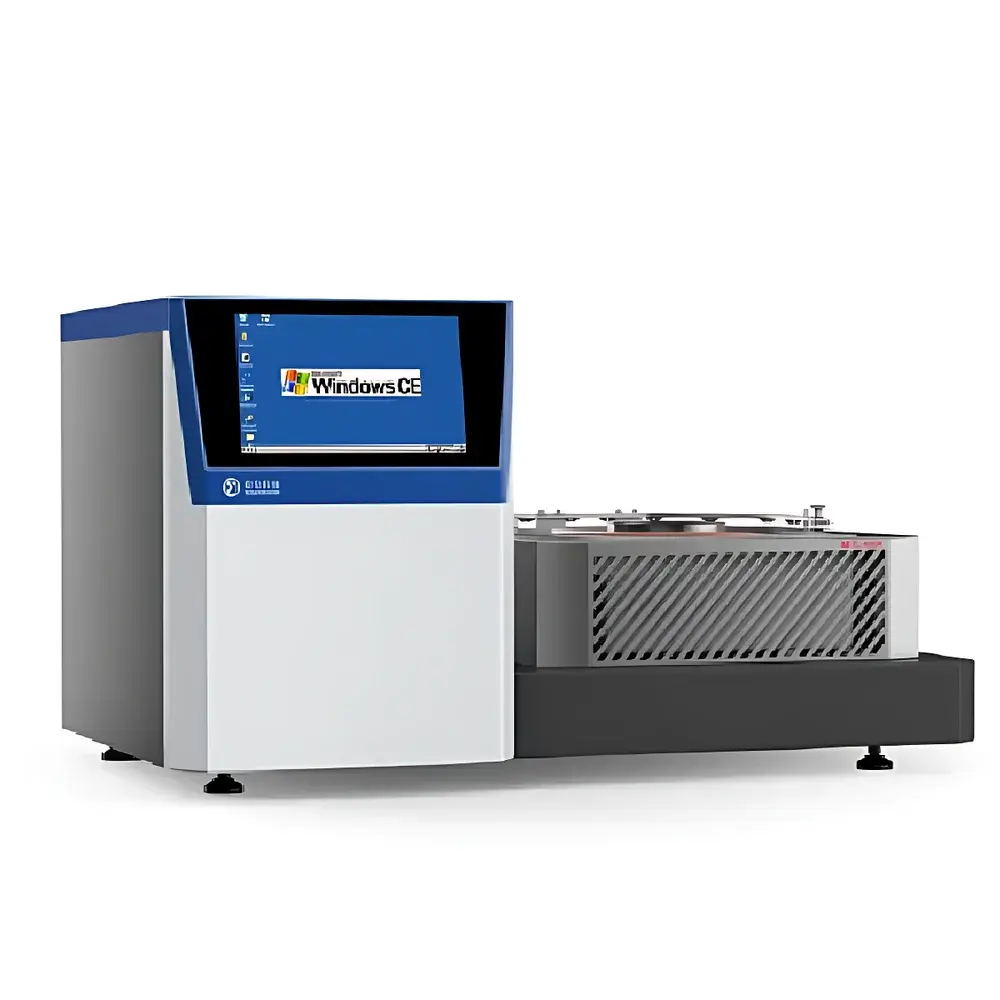
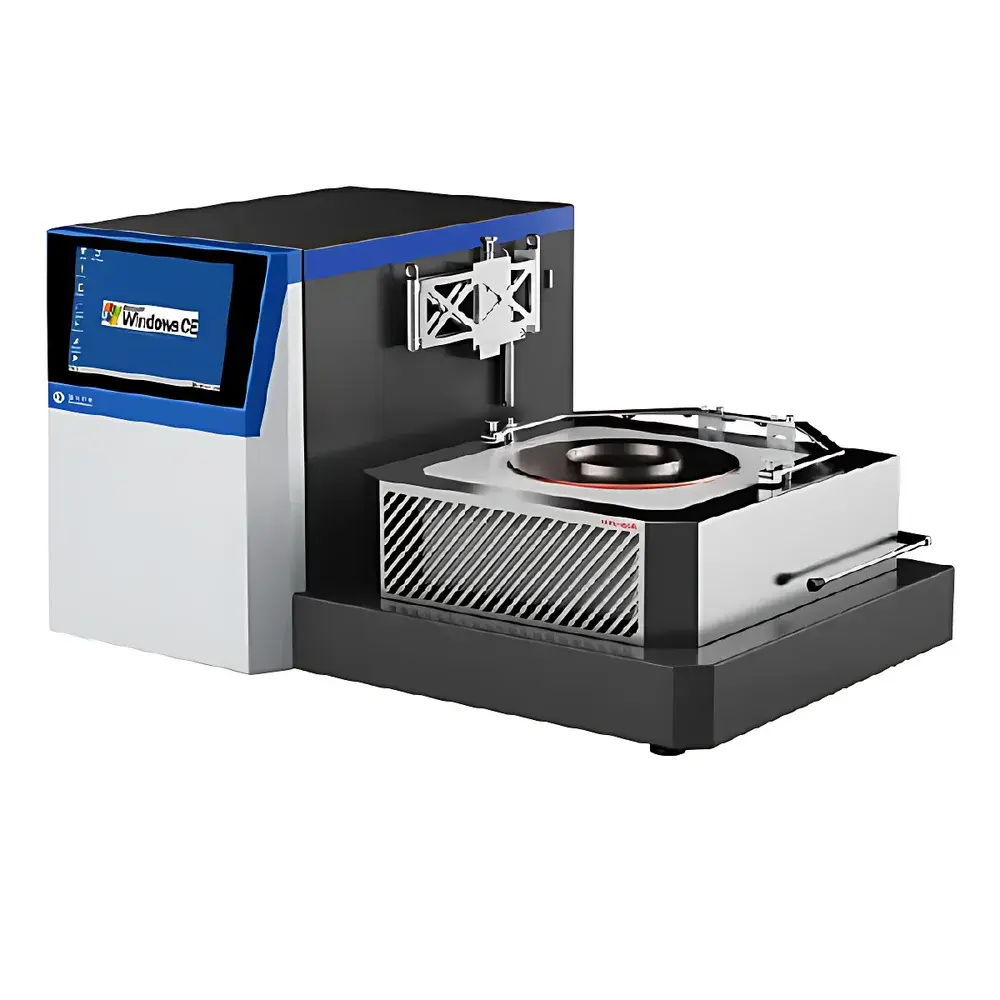
Young Instruments MITL-450A Dust Layer Minimum Ignition Temperature Tester
| Brand | Young Instruments |
|---|---|
| Origin | Zhejiang, China |
| Manufacturer Type | Direct Manufacturer |
| Country of Origin | China |
| Model | MITL-450A |
| Temperature Range | Ambient to 450 °C |
| Heating Plate Diameter | 200 mm |
| Dust Layer Height Options | 5 mm / 12.5 mm / 15 mm |
| Temperature Uniformity | ±5.0 °C |
| Temperature Stability | ±3.0 °C |
| Temperature Accuracy | ±3.0 °C |
| Temperature Precision | ±0.1 °C |
| Ramp Time | ≤40 min (ambient to 350 °C) |
| Ambient Sensor Range | –10 °C to +60 °C / 5–95% RH |
| Power Supply | 220 VAC, 50 Hz |
| Power Consumption | 2800 W |
| Dimensions | 670 mm × 400 mm × 390 mm |
| Interface | Dual USB 2.0 |
| Display | 7-inch color TFT touchscreen |
Overview
The Young Instruments MITL-450A Dust Layer Minimum Ignition Temperature (MIT) Tester is a precision-engineered laboratory instrument designed to determine the lowest surface temperature at which a specified thickness of dust layer—deposited on a heated horizontal plate—undergoes sustained ignition under controlled ambient conditions. Operating on the principle of thermal ignition testing per standardized hot-surface ignition protocols, the MITL-450A replicates real-world scenarios where combustible dust accumulates on process equipment surfaces (e.g., hoppers, ducts, or heat exchangers), enabling rigorous assessment of thermal ignition hazards in industrial settings. The system employs a calibrated stainless-steel heating plate with programmable ramp-and-hold thermal profiles, ensuring reproducible test conditions aligned with internationally recognized electrothermal ignition methodologies.
Key Features
- Pre-loaded compliance templates for ASTM E2021, EN 50281-2-1, GB/T 16430, IEC 61241-2, and ISO/IEC 80079-20-2—enabling direct standard-mode execution or user-defined parameter configuration
- Adaptive PID-based intelligent temperature control algorithm delivering ±3.0 °C stability over extended dwell periods
- Dual-redundant Pt100 RTD sensors embedded in the heating plate assembly for fail-safe thermal monitoring and operational continuity
- Dedicated calibration port for traceable sensor verification and offset correction using external reference standards
- Electropolished 316 stainless-steel heating plate (Ø200 mm) engineered for long-term oxidation resistance and thermal consistency
- Integrated thermal uniformity evaluation module that maps surface temperature distribution across the active zone per IEC 60584 requirements
- Rotatable thermocouple mounting fixture enabling unobstructed access for residue removal between tests
- Tooling kit included: precision dust-layer height rings (5 mm, 12.5 mm, 15 mm), non-static sample spreader, and dedicated stainless-steel cleaning brush
- Certified Class A Pt100 sensors from a globally recognized metrology supplier, validated for ≥10,000 thermal cycles
- Onboard environmental monitoring (–10 °C to +60 °C / 5–95% RH) with automatic timestamped logging synchronized to test records
- Three-tier user authentication (Operator, Technician, Administrator) supporting audit-ready role-based access control
- Dual USB 2.0 host ports for direct export of CSV-formatted test reports, raw thermal logs, and calibration certificates
- Industrial-grade enclosure with IP20-rated front panel and EMI-shielded internal architecture compliant with IEC 61326-1
- 7-inch resistive touchscreen interface with real-time graphical display of plate temperature, ambient conditions, and test progression timeline
Sample Compatibility & Compliance
The MITL-450A supports standardized testing of a broad spectrum of organic and inorganic combustible dusts, including but not limited to aluminum, zinc, and magnesium metal powders; polymeric materials (e.g., polyethylene, nylon, PVC); pharmaceutical intermediates; food-grade particulates (wheat flour, sugar, milk powder, tea dust); agricultural residues (wood chips, cellulose fibers); coal dust; and carbonaceous pigments. All test configurations adhere strictly to the sample preparation, layer geometry, and atmospheric conditioning requirements defined in ASTM E2021 Annex A1 and EN 50281-2-1 Clause 6. The instrument’s mechanical design—including its fixed-height stainless-steel containment rings and non-reactive heating surface—ensures geometric fidelity critical for inter-laboratory comparability. Data outputs are structured to support GLP-compliant documentation workflows and satisfy traceability requirements under ISO/IEC 17025 accreditation.
Software & Data Management
Embedded firmware implements deterministic real-time scheduling for thermal profiling, data acquisition at 1 Hz resolution, and metadata tagging (operator ID, sample ID, ambient RH/T, calibration status). Test records include full time-series temperature traces for both plate and ambient sensors, annotated with ignition event timestamps determined by ≥2 s self-sustaining flame observation per ISO/IEC 80079-20-2 Section 7.3. Exported files comply with ASTM E2021 Section 9.2 reporting structure and are compatible with LIMS integration via configurable CSV schema. Audit trails record all parameter modifications, user logins, calibration actions, and system errors—retained for ≥12 months with write-protected archival. Optional firmware upgrade path supports future alignment with FDA 21 CFR Part 11 electronic signature modules upon customer request.
Applications
This instrument serves as a foundational tool for process safety engineers, occupational hygienists, and regulatory affairs specialists conducting hazard assessments under OSHA 29 CFR 1910.272, NFPA 652 Fundamental Principles, and the EU ATEX Directive 2014/34/EU. Typical use cases include: establishing safe maximum surface temperatures for equipment installed in hazardous areas; validating dust explosion protection strategies (e.g., thermal inerting or surface cooling); supporting technical dossiers for CE marking of machinery; generating input data for DHA (Dust Hazard Analysis) and Layer Ignition Risk Matrices; and fulfilling due diligence obligations during facility commissioning or process change reviews. Its quantitative output directly informs Zone classification (Zone 20/21/22) and selection of appropriate Ex-rated components per IEC 60079-10-2.
FAQ
What dust layer thicknesses can be tested?
Standard configurations support 5 mm, 12.5 mm, and 15 mm layers using certified stainless-steel containment rings traceable to NIST SRM 1921b.
Is the heating plate temperature uniformly distributed across its surface?
Yes—the integrated thermal mapping function verifies uniformity within ±5.0 °C across the central Ø150 mm zone prior to each test sequence, per IEC 60584-2 validation protocol.
How is ignition confirmed during testing?
Ignition is determined visually by trained operators observing ≥2 seconds of self-sustaining flame or glowing combustion, consistent with the pass/fail criteria in ASTM E2021 Section 7.4 and ISO/IEC 80079-20-2 Clause 7.3.
Can test data be exported for third-party review or regulatory submission?
All raw and processed data export in timestamped, comma-delimited format with embedded metadata; optional PDF report generation includes digital signature fields compliant with ISO/IEC 17025 Clause 7.8.2.
Does the system support periodic recalibration verification?
Yes—built-in calibration interface accepts external reference standards (e.g., Fluke 724 or equivalent) and stores calibration history with operator ID, date, and deviation values for audit readiness.






