
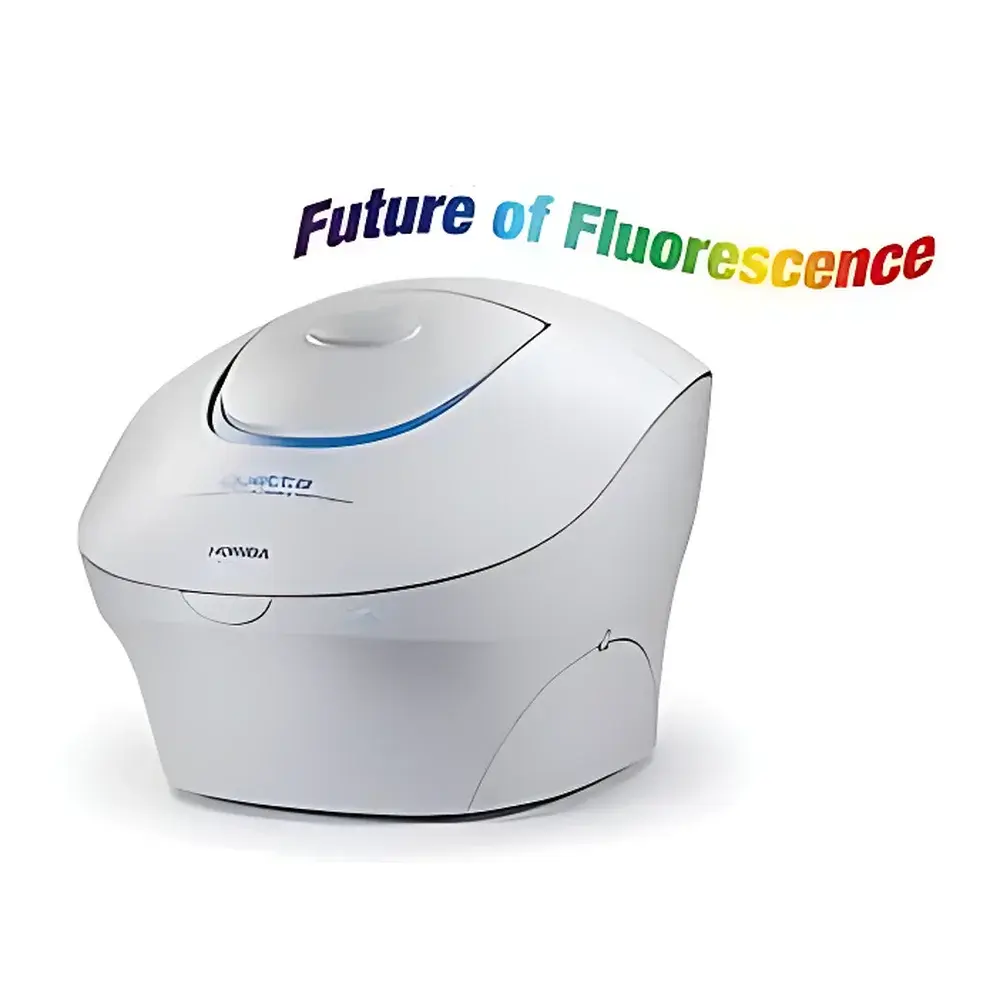
HORIBA Duetta A-TEEM Dual-Mode Spectrophotometer with Synchronous Fluorescence and Absorption Detection
| Brand | HORIBA |
|---|---|
| Origin | Canada |
| Model | Duetta |
| Wavelength Range (Excitation/Absorption) | 250–1000 nm |
| Wavelength Range (Emission) | 250–1100 nm |
| Slit Width (Spectral Bandpass) | 1–20 nm |
| Optical Resolution | 1 nm |
| Wavelength Accuracy | ±1 nm |
| Fluorescence Sensitivity (Water Raman SNR) | ≥6000:1 (350 nm excitation, 5 nm bandwidth) |
| Absorbance Accuracy | ≤±0.02 A |
| Absorbance Range | 0–2 A |
| Spectral Acquisition Rate | ≥510,000 nm/min |
| A-TEEM Mode Acquisition Time | ≤30 s |
| EEM 3D Scan Time | ≤1 s (configurable) |
| Light Source | 75 W Xenon Arc Lamp |
| Detector (Fluorescence) | CCD Array |
| Detector (Absorption) | Silicon Photodiode |
Overview
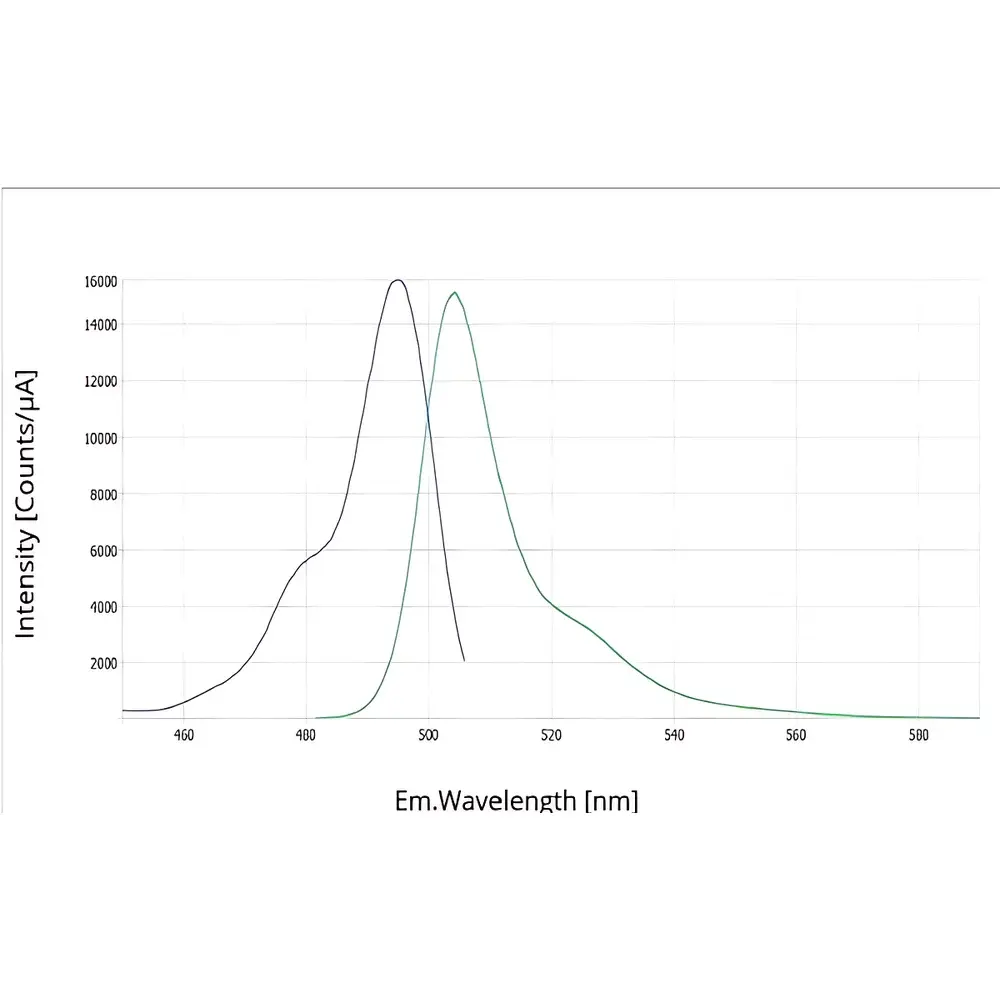
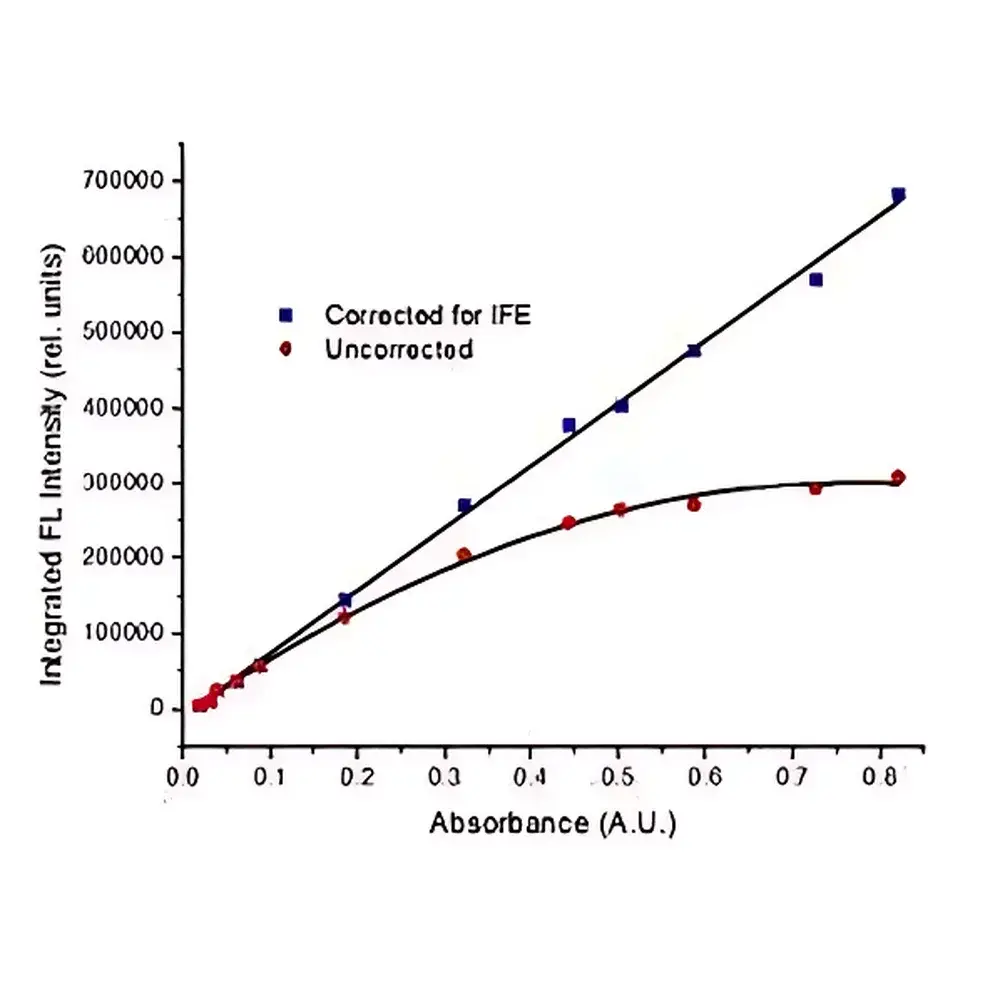
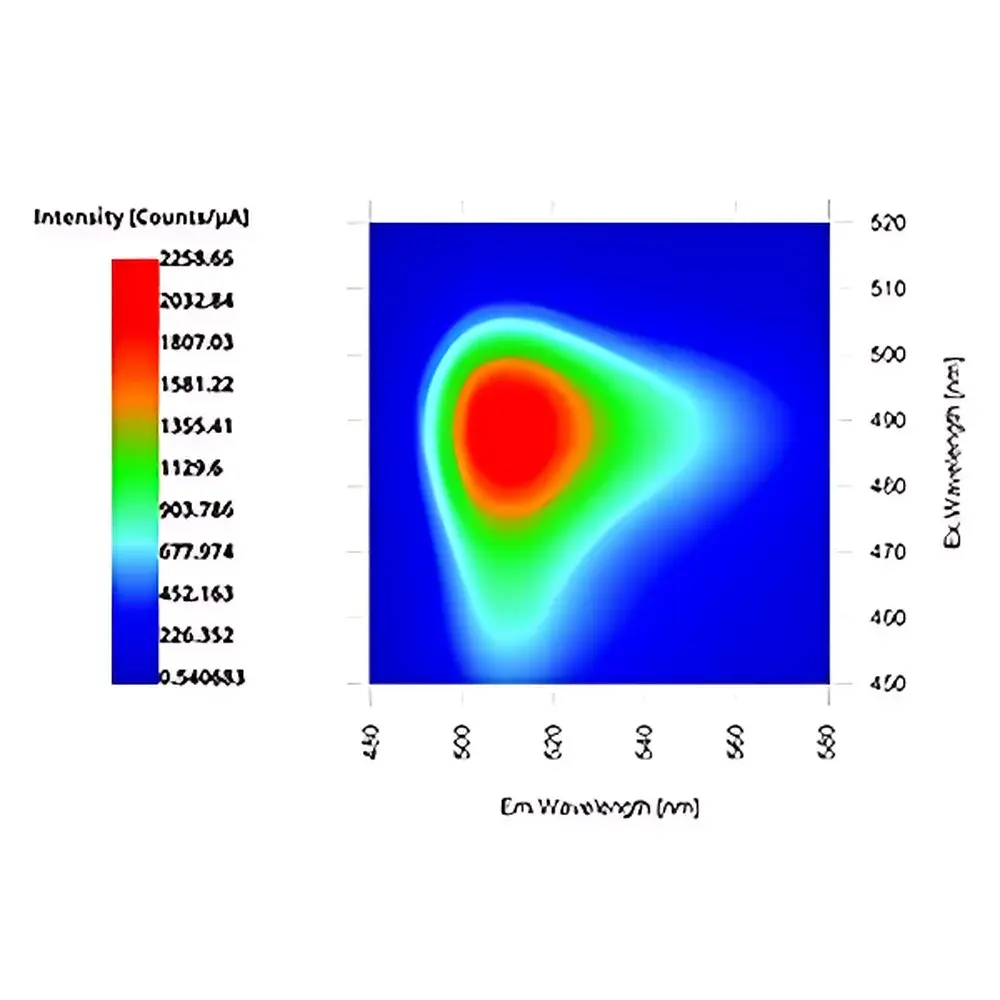
The HORIBA Duetta is a dual-mode molecular spectrofluorometer engineered for simultaneous, synchronized acquisition of absorption and fluorescence spectra — enabling rigorous correction of the inner-filter effect (IFE) in quantitative fluorescence analysis. Unlike conventional fluorometers that measure emission only, the Duetta implements an integrated absorbance measurement at every excitation and emission wavelength step, permitting real-time IFE correction across the full 250–1100 nm spectral range. This A-TEEM (Absorbance-Transmitted Excitation-Emission Matrix) architecture is grounded in fundamental photophysical principles: it accounts for both primary (excitation beam attenuation) and secondary (emission reabsorption) inner-filter contributions, thereby restoring linearity between fluorescence intensity and analyte concentration over extended dynamic ranges. Designed for laboratories requiring trace-level quantification in complex matrices — including biological fluids, environmental water samples, and polymer formulations — the Duetta delivers high reproducibility in EEM (excitation-emission matrix) mapping, kinetic profiling, and multi-component deconvolution without reliance on dilution series or empirical calibration offsets.
Key Features
- True simultaneous A-TEEM acquisition: absorption and fluorescence data collected in lockstep within a single scan cycle, eliminating temporal drift and instrumental misalignment artifacts.
- Integrated inner-filter correction algorithm embedded in firmware and software — applied automatically during data collection, not as a post-hoc processing step.
- High-speed spectral acquisition: up to 510,000 nm/min for 2D scans; full EEM (3D) maps acquired in under 1 second (dependent on resolution settings).
- Dual-detector architecture: back-thinned CCD array (250–1100 nm) for fluorescence detection; calibrated silicon photodiode (250–1100 nm) for absorption — both optimized for low-noise, high-dynamic-range performance.
- Modular xenon lamp system: 75 W source with pre-aligned, tool-free cartridge replacement — ensuring consistent irradiance and minimizing downtime during maintenance.
- Variable spectral bandpass: selectable slit widths (1–20 nm for fluorescence; 2–10 nm for absorption) to balance signal-to-noise ratio and resolution per application requirement.
- Factory-provided spectral calibration files for wavelength and photometric accuracy traceable to NIST standards.
Sample Compatibility & Compliance
The Duetta accommodates standard 1 cm quartz cuvettes (including low-volume and microcell variants), solid-sample holders, and fiber-optic probes for non-invasive or remote measurements. Its broad spectral coverage supports characterization of near-infrared fluorophores (e.g., cyanine dyes, quantum dots), aromatic proteins (Trp/Tyr), nucleic acids, humic substances, and synthetic polymers. The instrument complies with ISO/IEC 17025 requirements for analytical instrument validation and supports GLP/GMP workflows via audit-trail-enabled software (HORIBA FluoroMax® Suite). Absorbance accuracy (≤±0.02 A) and wavelength fidelity (±1 nm) meet ASTM E275 and USP specifications for spectrophotometric instrumentation. Full electronic records — including raw spectra, method parameters, operator ID, timestamp, and instrument configuration — are exportable in PDF with digital signature fields and customizable lab branding.
Software & Data Management
Controlled by HORIBA’s FluoroMax® Suite v5+, the Duetta provides a validated, 21 CFR Part 11–compliant environment with role-based access control, electronic signatures, and immutable audit trails. The software includes built-in modules for protein quantification (A280), nucleic acid purity assessment (A260/A280), molar concentration derivation from Beer-Lambert law, photoluminescence quantum yield (PLQY), Förster resonance energy transfer (FRET) efficiency calculation, ion-binding kinetics modeling, CIE color space mapping, and enzyme reaction rate analysis. All processing algorithms — including multivariate curve resolution (MCR), parallel factor analysis (PARAFAC), and peak deconvolution — operate directly on corrected A-TEEM datasets. Reports are generated in publication-ready PDF format, embedding 2D contour plots, 3D surface visualizations, fitted curves, metadata, and user-defined annotations.
Applications
- Quantitative multi-analyte detection in serum, urine, or cell lysates without sample dilution — critical for clinical biomarker studies where IFE-induced bias compromises assay linearity.
- Characterization of dissolved organic matter (DOM) in wastewater and natural waters using EEM-PARAFAC to resolve humic-like, fulvic-like, and protein-like components.
- Stability assessment of biotherapeutics: monitoring aggregation-induced quenching or conformational changes via time-resolved A-TEEM kinetics.
- Quality control of fluorescent nanomaterials: correlating quantum yield, Stokes shift, and spectral homogeneity across synthesis batches.
- Development of optical sensors: calibrating response functions for metal-ion or pH-sensitive fluorophores under physiologically relevant absorbance backgrounds.
- Forensic ink analysis and pigment identification through fingerprinting of excitation-emission-resolved spectral signatures.
FAQ
How does the Duetta differ from traditional fluorescence spectrometers?
It uniquely acquires absorption and fluorescence spectra concurrently at each wavelength step — enabling physics-based inner-filter correction rather than heuristic or post-acquisition approximations.
Can the Duetta perform time-resolved fluorescence measurements?
Yes — it supports full-spectrum time dynamics (time-resolved EEMs) and single-wavelength intensity monitoring with millisecond temporal resolution, suitable for stopped-flow or photochemical kinetics.
Is the instrument compliant with regulatory data integrity requirements?
Yes — FluoroMax® Suite supports 21 CFR Part 11 compliance, including electronic signatures, audit trails, and secure user authentication protocols required for FDA-submitted analytical data.
What sample volumes are supported?
Standard 1 cm pathlength cuvettes (≥350 µL); optional microcells (down to 50 µL) and capillary cells are compatible without hardware modification.
Does the system support third-party data import/export formats?
Yes — ASCII, CSV, JCAMP-DX, and HDF5 export; import of external spectra for comparative analysis or reference library building.





