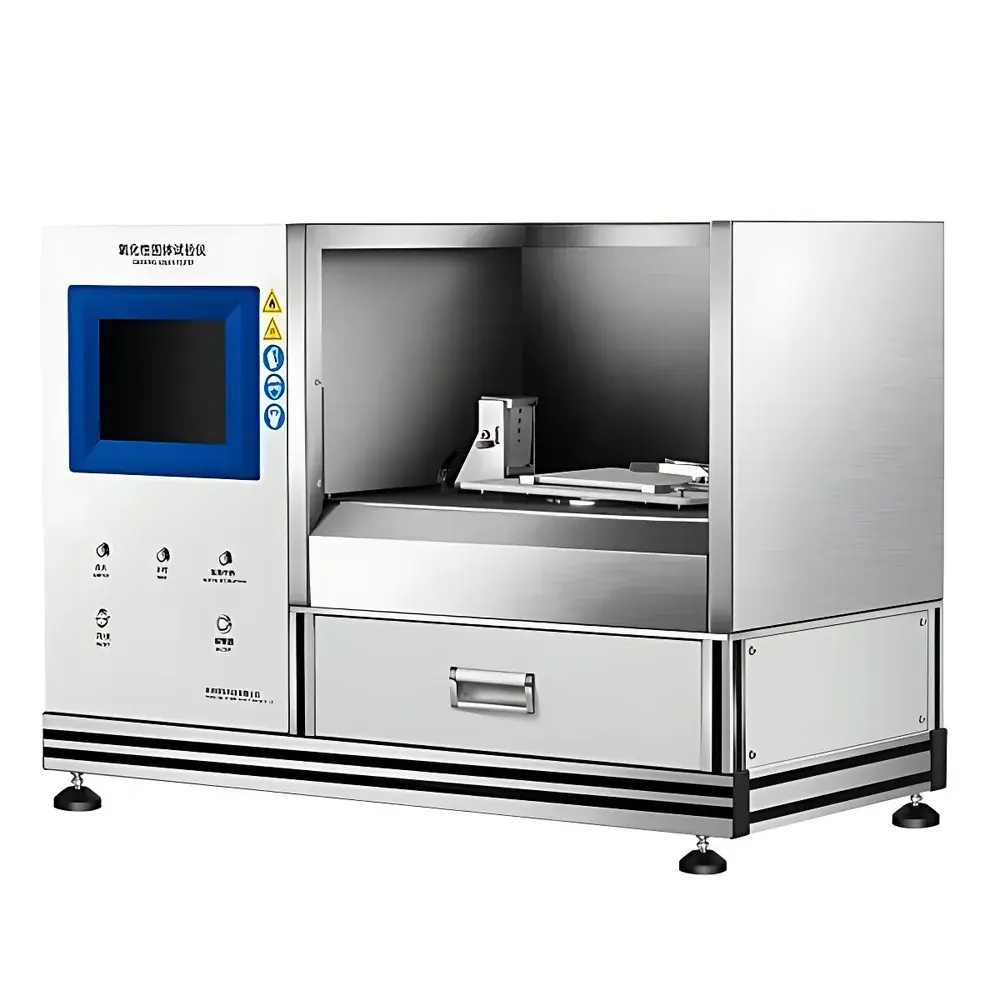
Young Instruments HWP05-20S Oxidizing Solids Test Instrument
| Brand | Young Instruments |
|---|---|
| Origin | Zhejiang, China |
| Manufacturer Type | Manufacturer |
| Model | HWP05-20S |
| Operating Temperature | (-5–45) °C, <95% RH |
| Optical Detection Range | 760–1100 nm (IR), Sampling Frequency: 5000 Hz |
| Mass Measurement Range | 0–3100 g, Resolution: ≤±0.01 g |
| Mass Data Acquisition Rate | ≤5 Hz |
| Heating Element | Inert metal wire (standard geometry), Power: 150 W ±2 W |
| Detection Modes | IR sensor array or analytical balance |
| Balance Accuracy | ±0.1 g |
| Ambient Temp. Range | -10–+60 °C, Accuracy: ±0.5 °C |
| Ambient Humidity Range | 5–95% RH, Accuracy: ±5.0% RH |
| Timer Range | 0–24 h, Resolution: ±0.01 s, Accuracy: ±7 ms/min |
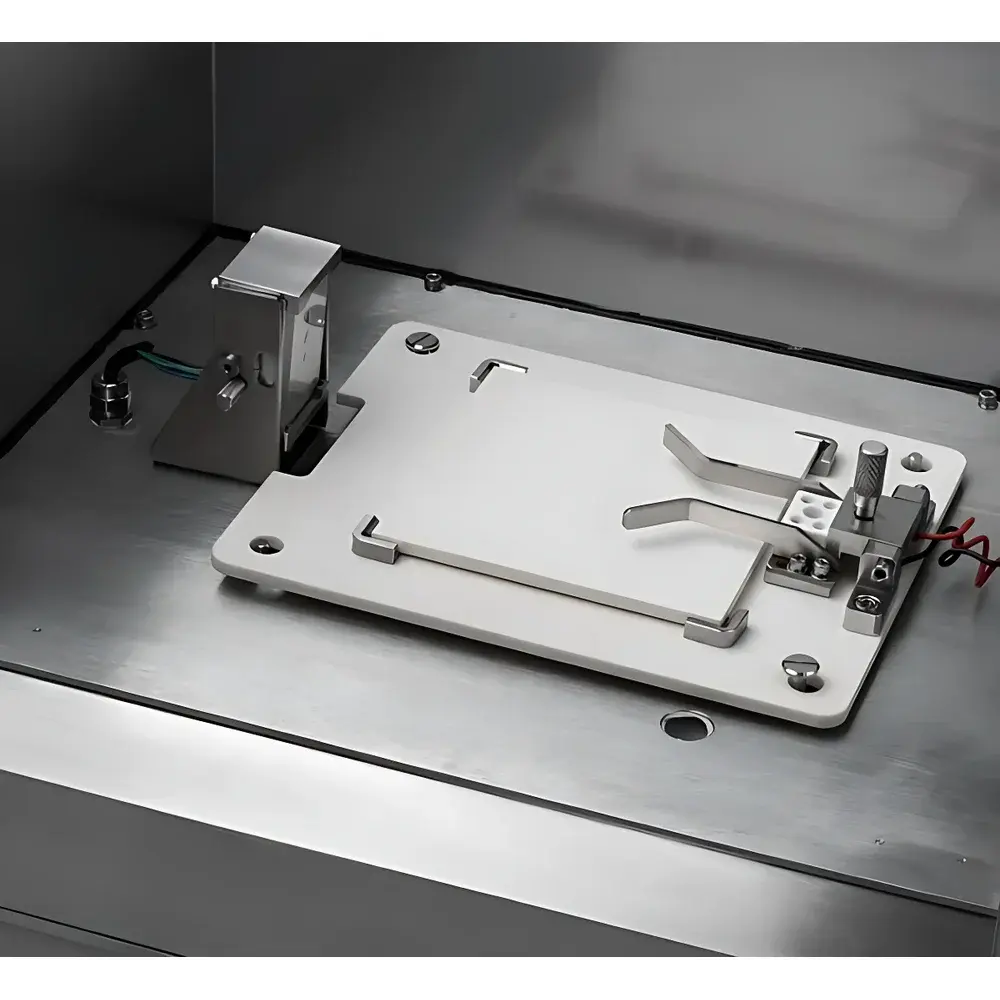
| Test Plate | Alumina ceramic, 150 mm × 150 mm × 6 mm |
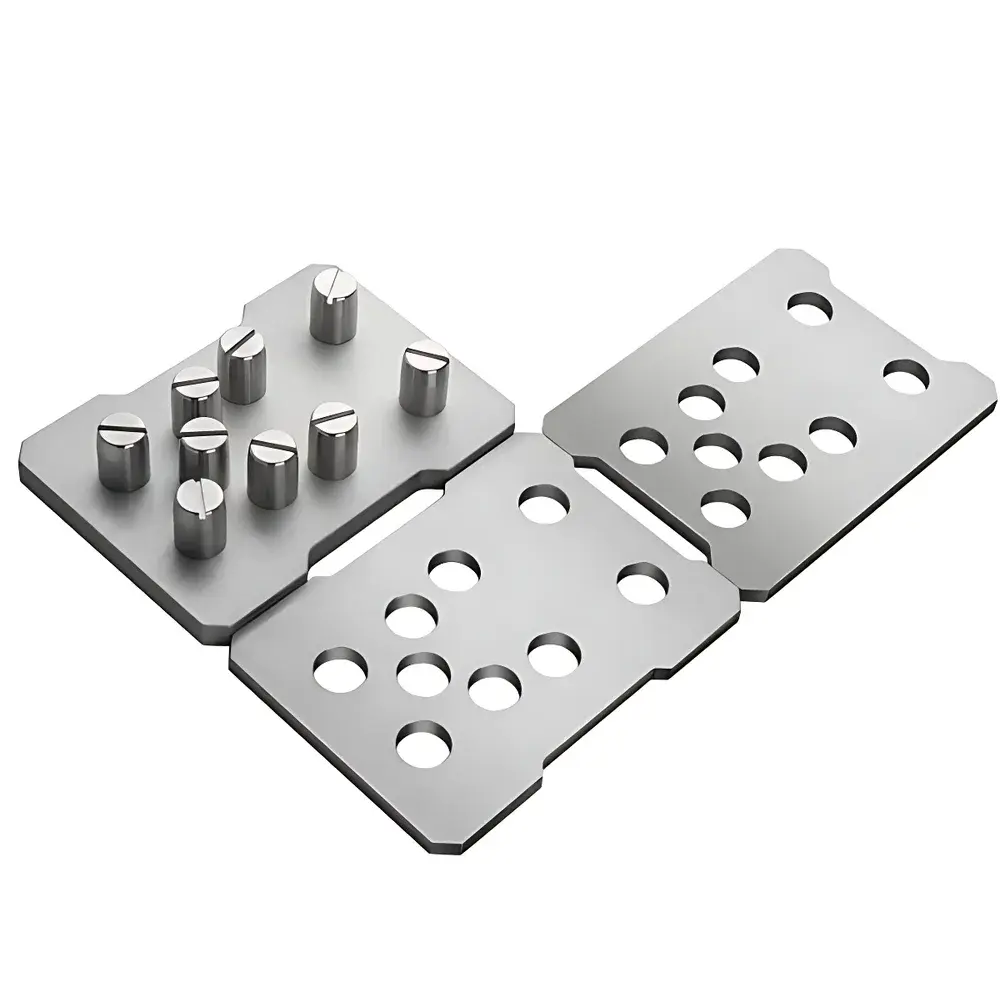
| Sample Mold | PTFE, conical (70 mm ID, 60° apex angle) |
Overview
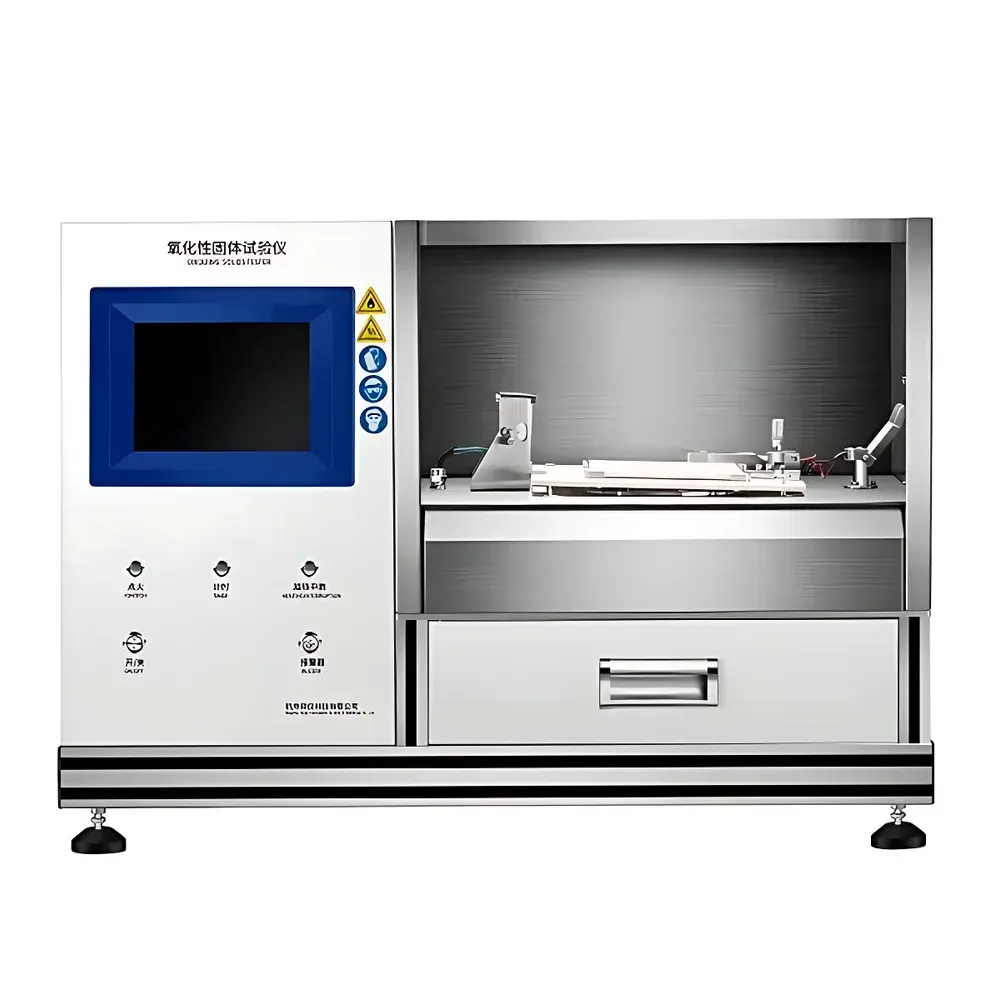
The Young Instruments HWP05-20S Oxidizing Solids Test Instrument is a fully automated, standards-compliant benchtop system engineered for the quantitative assessment of oxidizing potential in solid substances under controlled thermal initiation. It implements two primary test protocols defined in international transport and regulatory frameworks: UN Test O.1 (combustion propagation time measurement using infrared optical detection) and UN Test O.3 (mass loss rate determination via high-stability gravimetric analysis). The instrument operates on the principle that oxidizing solids accelerate the combustion of combustible substrates—typically powdered cellulose—when intimately mixed and subjected to localized thermal stimulus via a standardized inert metal wire. By precisely measuring either flame propagation duration (O.1) or mass loss kinetics (O.3), the HWP05-20S enables unambiguous classification of solids into Packing Groups I, II, or III per the UN Recommendations on the Transport of Dangerous Goods, Manual of Tests and Criteria, Section 34.4.
Key Features
- Embedded Windows CE platform with 8-inch industrial-grade capacitive touchscreen interface for real-time visualization of test status, dynamic flame animation, and live parameter monitoring.
- Dual-mode detection architecture: (a) High-speed IR photodiode array (760–1100 nm spectral response, 5 kHz sampling) optimized to reject ambient visible-light interference; (b) IP65-rated electromagnetic balance module with dynamic temperature compensation, vibration isolation, and anti-drift filtering for robust mass-loss tracking.
- Constant-power heating control: Precision-regulated 150 W ±2 W delivery to the standardized inert metal wire—maintained independently of wire resistance drift during heating—ensuring reproducible thermal input across repeated tests.
- Alumina ceramic test plate (150 × 150 × 6 mm) provides exceptional thermal insulation, chemical inertness, and mechanical stability, eliminating heat transfer artifacts and protecting the weighing system from radiant energy and particle splatter.
- Integrated environmental monitoring: Simultaneous acquisition of ambient temperature (−10 to +60 °C, ±0.5 °C) and relative humidity (5–95% RH, ±5.0% RH) with timestamped logging—critical for GLP-compliant reporting and method validation.
- Automated safety interlocks: Real-time detection of metal wire melt-through triggers audible/visual alarms and immediate test termination; remote ignition capability eliminates operator proximity during initiation.
- Full test automation: Parameter configuration, auto-start, raw data capture (time–mass curves), endpoint determination, and pass/fail classification are executed without manual intervention.
Sample Compatibility & Compliance
The HWP05-20S is validated for use with powdered, granular, or compacted solid samples up to 3100 g total mass. Sample preparation follows strict geometrical constraints defined in UN Manual of Tests and Criteria, including use of the supplied PTFE conical mold (70 mm inner diameter, 60° apex angle) to ensure consistent mixture density and surface profile. The instrument meets or exceeds requirements of multiple harmonized regulatory standards: UN ST/SG/AC.10/Rev.6 Section 34.4.1 (Test O.1) and 34.4.3 (Test O.3); GB/T 21617–2008; GAT 536; NY/T 1860.28; and GB 5085.5. All firmware logic, calibration traceability, and data handling procedures support audit readiness for ISO/IEC 17025-accredited laboratories and FDA 21 CFR Part 11–compliant environments where electronic records and signature integrity are mandated.
Software & Data Management
The embedded software suite supports configurable test templates, user-defined pass/fail thresholds, and automatic generation of compliant test reports—including digital signatures, audit trails, and metadata (operator ID, environmental conditions, calibration status, firmware version). Raw time-series data (mass, IR signal amplitude, timer, ambient T/RH) are stored in CSV and XML formats with millisecond-level timestamps. Exported datasets retain full traceability to NIST-traceable calibration certificates for the balance, IR sensors, and environmental probes. Optional network connectivity enables centralized data archiving via secure FTP or laboratory information management systems (LIMS).
Applications
- Determination of oxidizing hazard classification for industrial chemicals, battery cathode materials, fertilizers, and metallurgical powders prior to transportation or storage.
- Regulatory submission testing for REACH, CLP, and GHS labeling—specifically for Hazard Class 5.1 (Oxidizing Substances).
- Quality control screening of raw materials in pharmaceutical excipient manufacturing where oxidative degradation risks must be excluded.
- Research and development of novel energetic formulations, requiring precise quantification of oxygen-release kinetics under thermal stress.
- Waste characterization per national hazardous waste identification protocols (e.g., GB 5085.5) to assess reactive hazard potential.
FAQ
Which international test standards does the HWP05-20S directly implement?
It natively executes UN Test O.1 (infrared flame propagation timing) and UN Test O.3 (gravimetric mass loss rate), as specified in the UN Manual of Tests and Criteria, Section 34.4.
Is the instrument suitable for GLP or GMP-regulated environments?
Yes—its embedded audit trail, electronic signature support, environmental parameter logging, and calibration traceability align with OECD GLP Principles and FDA 21 CFR Part 11 requirements for electronic records.
Can the test plate or sample mold be customized for non-standard geometries?
Standard configurations comply with UN specifications; however, alumina plate dimensions and PTFE mold angles can be modified per customer request, subject to validation documentation and re-certification.
What maintenance is required for long-term measurement stability?
Annual recalibration of the balance, IR sensor gain/response curve, and environmental probes is recommended; all modules feature factory-traceable calibration certificates with documented uncertainty budgets.
Does the system support remote operation and data export for centralized lab networks?
Yes—Ethernet and USB interfaces enable secure data export in CSV/XML, integration with LIMS, and optional remote diagnostics via authenticated TLS-encrypted sessions.