
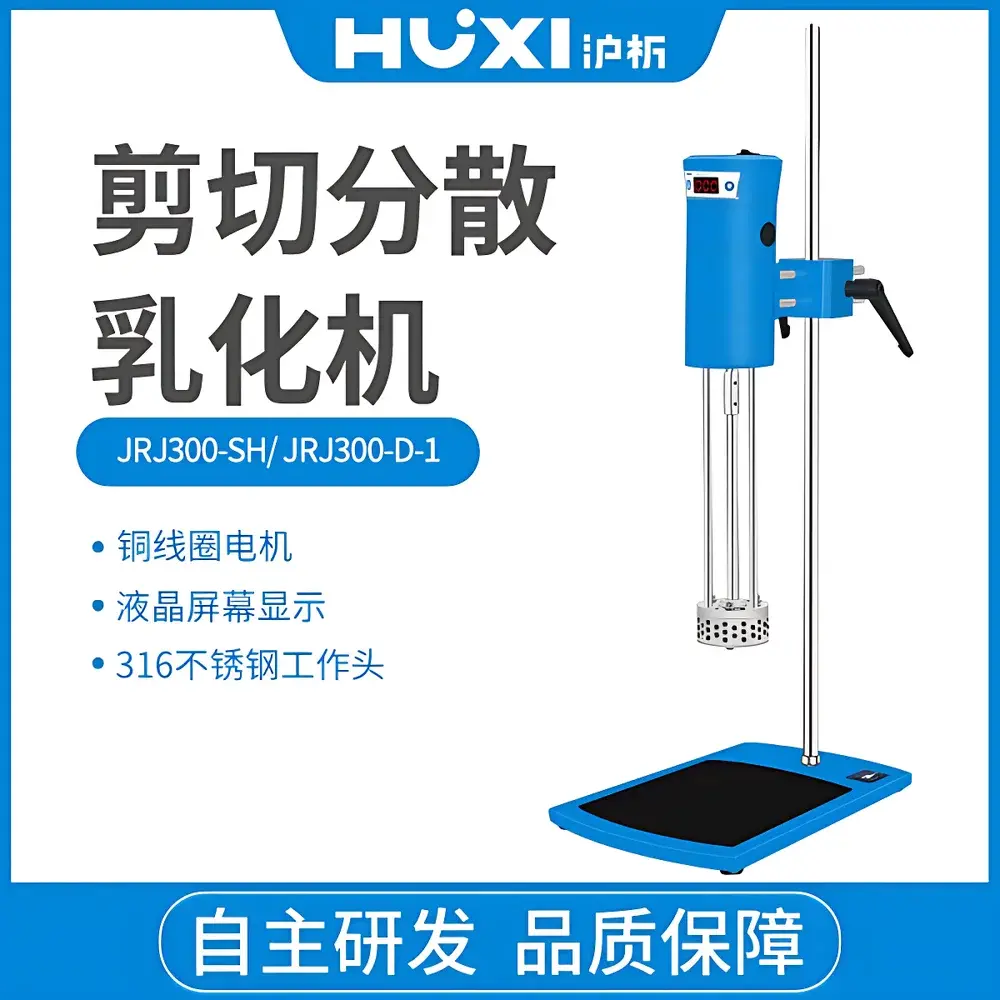
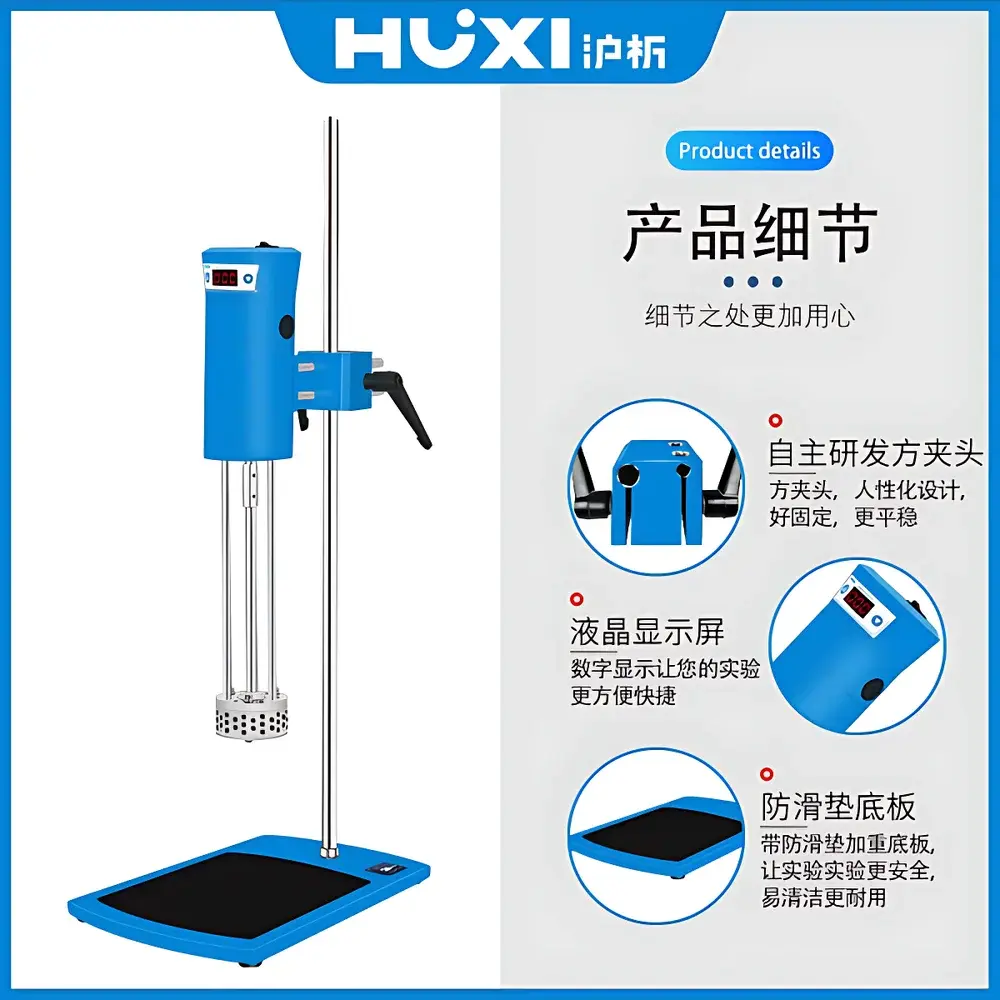
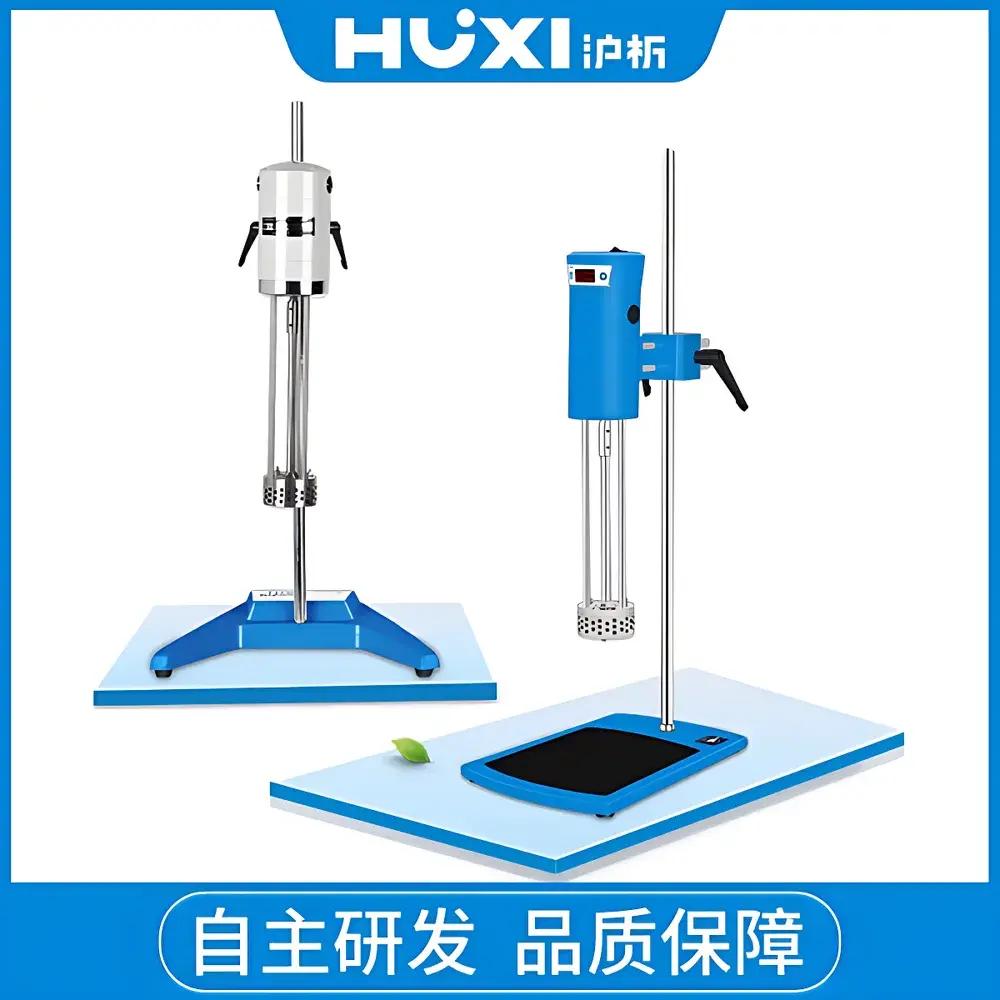
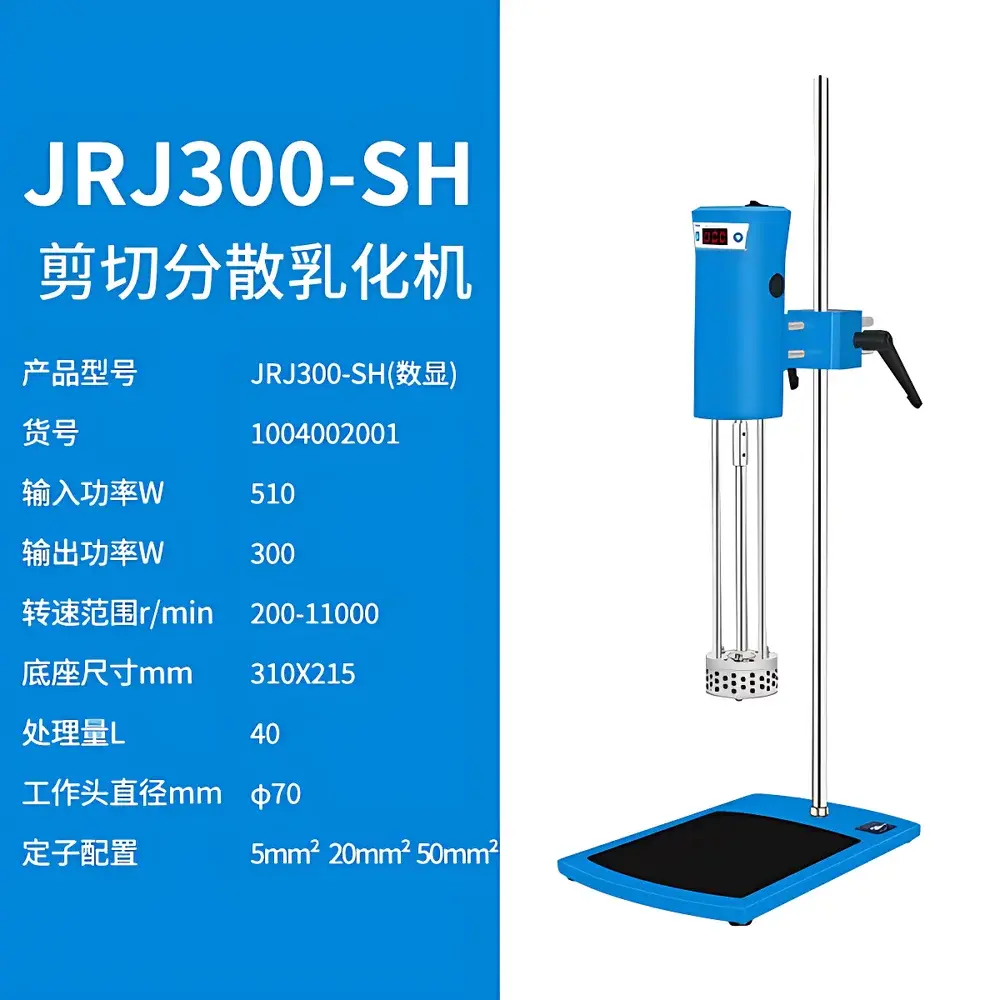
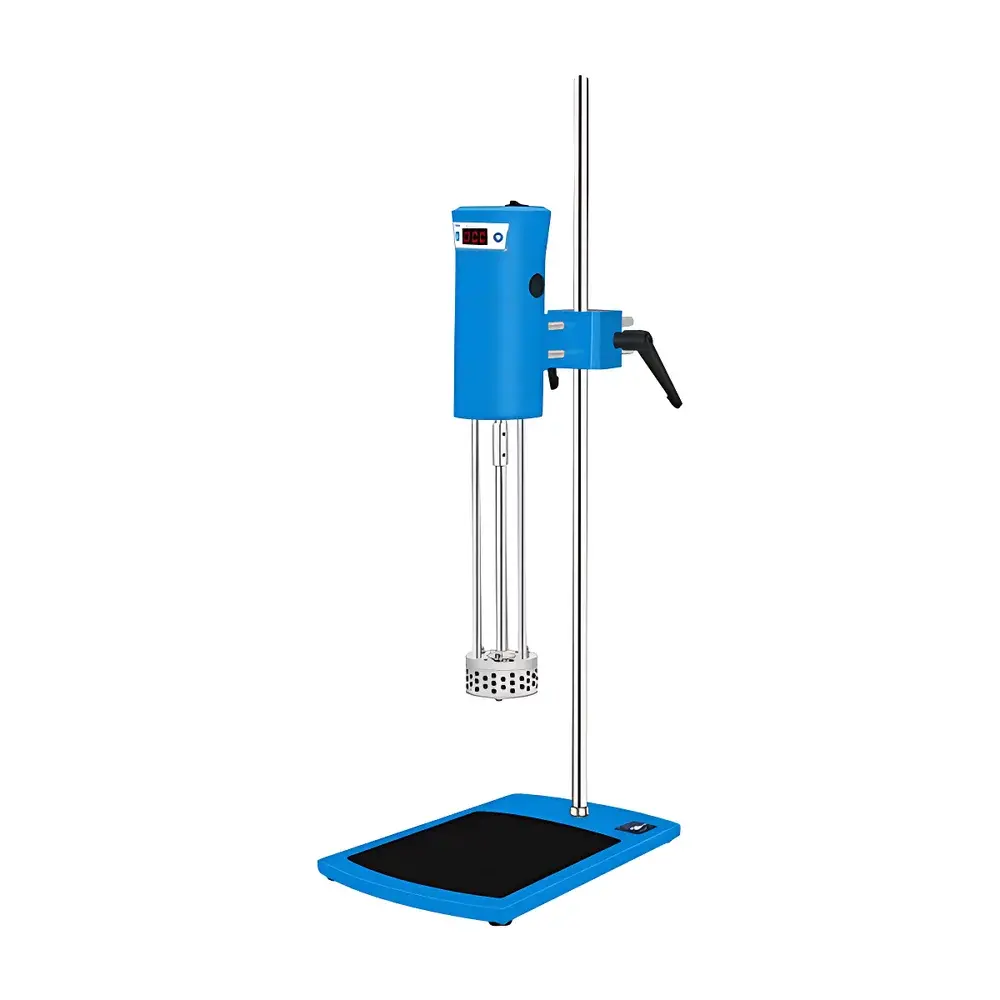
HUXI JRJ300-SH Digital Display High-Shear Homogenizer
| Brand | HUXI |
|---|---|
| Origin | Shanghai, China |
| Manufacturer Type | Direct Manufacturer |
| Product Category | Domestic |
| Model | JRJ300-SH |
| Instrument Type | Probe-Type Rotor-Stator Homogenizer |
| Dimensions (W×D×H) | 315 × 200 × 780 mm |
| Max. Processing Volume | 40 L |
| Speed Range | 200–11,000 rpm |
| Input Power | 510 W |
| Output Power | 300 W |
| Rated Torque | 34.1 N·cm |
| Power Supply | AC 220 V, 50 Hz |
| Working Head Diameter | φ70 mm |
| Stator Orifice Options | 5 mm², 20 mm², 50 mm² |
| Net Weight | 10.8 kg |
Overview
The HUXI JRJ300-SH Digital Display High-Shear Homogenizer is a laboratory-scale rotor-stator homogenization system engineered for reproducible particle size reduction, emulsification, dispersion, and cell disruption in liquid-phase systems. It operates on the principle of high-velocity mechanical shear generated between a rapidly rotating rotor and a fixed stator—creating intense hydrodynamic forces including cavitation, turbulent flow, and elongational stress within the sample stream. This mechanism enables efficient disintegration of aggregates, uniform distribution of immiscible phases, and controlled nano/micron-scale particle generation in low-to-high viscosity media (up to 50,000 mPa·s). Designed for benchtop use in R&D labs, quality control environments, and pilot-scale process development, the JRJ300-SH supports consistent batch-to-batch performance under variable load conditions.
Key Features
- Digitally controlled variable-speed operation (200–11,000 rpm) with real-time LED speed readout ensures precise parameter replication across experiments.
- High-torque串激 (series-wound) motor delivers stable rotational output up to 34.1 N·cm, maintaining speed consistency even during high-viscosity or high-load processing.
- Interchangeable stainless steel rotor-stator heads (φ70 mm) with three standard orifice cross-sectional areas (5 mm², 20 mm², 50 mm²) allow optimization of shear intensity for diverse sample rheologies—from fragile biological suspensions to abrasive particulate slurries.
- Robust aluminum alloy housing provides structural rigidity and thermal dissipation, while integrated safety interlocks prevent operation without proper head attachment.
- Direct-coupled shaft design minimizes vibration and mechanical energy loss at elevated speeds, enhancing operational stability and extending component service life.
- Compact footprint (315 × 200 × 780 mm) accommodates standard fume hoods and laminar flow cabinets without compromising accessibility or ergonomic handling.
Sample Compatibility & Compliance
The JRJ300-SH is compatible with aqueous, organic, and mixed-solvent systems, including buffers, polymer solutions, oil-in-water/water-in-oil emulsions, colloidal dispersions, microbial lysates, and suspension-based pharmaceutical formulations. Its 316L stainless steel wetted parts meet general corrosion resistance requirements per ASTM A240 and are suitable for cleaning validation under ISO 14644-1 Class 7 cleanroom protocols. While not certified to specific regulatory standards (e.g., FDA 21 CFR Part 11), the instrument’s repeatable mechanical operation supports data integrity in GLP-compliant workflows when paired with documented SOPs and calibration records. Users must validate process parameters (e.g., residence time, energy input per volume) for each application according to internal quality systems or relevant industry guidelines (e.g., USP , ISO 13320 for particle size correlation).
Software & Data Management
The JRJ300-SH operates as a standalone analog-digital hybrid unit with no embedded microprocessor or external software interface. All operational parameters—including set speed, actual rpm, and runtime—are monitored locally via front-panel digital display. For traceability, users are advised to log settings manually or integrate the device into lab information management systems (LIMS) using external timing and sensor modules. Optional third-party data acquisition hardware (e.g., USB-connected tachometers or torque meters) may be employed to record real-time performance metrics for audit-ready documentation. No firmware updates, remote diagnostics, or electronic signature functionality are provided.
Applications
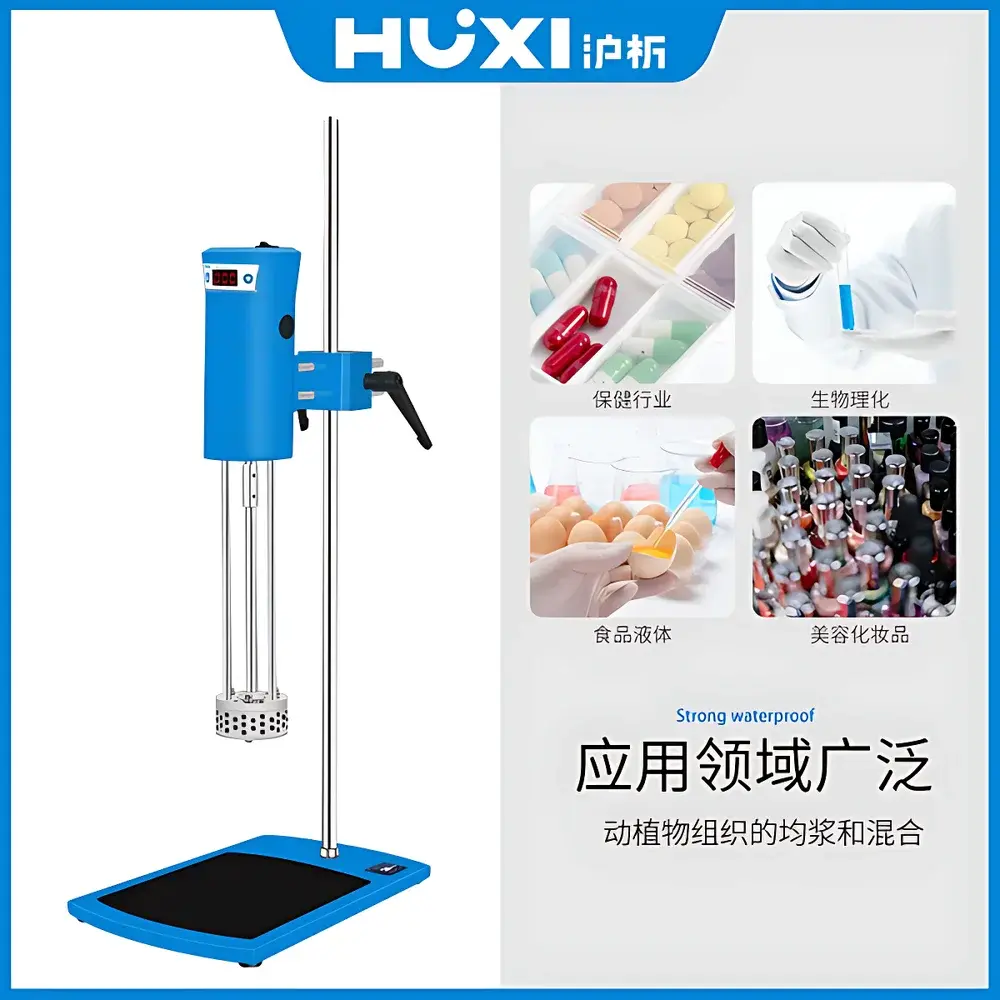
- Preparation of stable nanoemulsions and liposomes for drug delivery research
- Homogenization of tissue homogenates and bacterial cell lysates prior to protein extraction
- Dispersion of carbon nanotubes, graphene oxide, or ceramic nanoparticles in polymer matrices
- Routine QC mixing of paint, ink, cosmetic, and food-grade suspensions
- Scale-down simulation of industrial inline homogenizer processes for formulation development
- Viscosity-dependent phase inversion studies in surfactant-based systems
FAQ
What is the maximum recommended viscosity for continuous operation?
Continuous processing is validated up to 50,000 mPa·s at ≤6,000 rpm; higher viscosities require intermittent duty cycles to manage thermal load.
Can the JRJ300-SH be used for sterile applications?
Yes—provided rotor-stator heads are autoclaved (121°C, 20 min) and the unit is operated in a classified environment; however, electrical components are not IP-rated for direct sterilization exposure.
Is replacement stator geometry available beyond the three standard options?
Custom stator configurations (e.g., narrow-gap, multi-stage, or slotted designs) can be supplied upon engineering review and minimum order quantity agreement.
Does the unit include overload protection?
Yes—an integrated thermal cutoff interrupts power if motor temperature exceeds safe operating limits, resetting automatically after cooldown.
How frequently should the rotor-stator assembly be inspected for wear?
Visual inspection is recommended after every 50 hours of cumulative operation; dimensional verification using calibrated micrometers is advised quarterly or after processing abrasive materials.



