
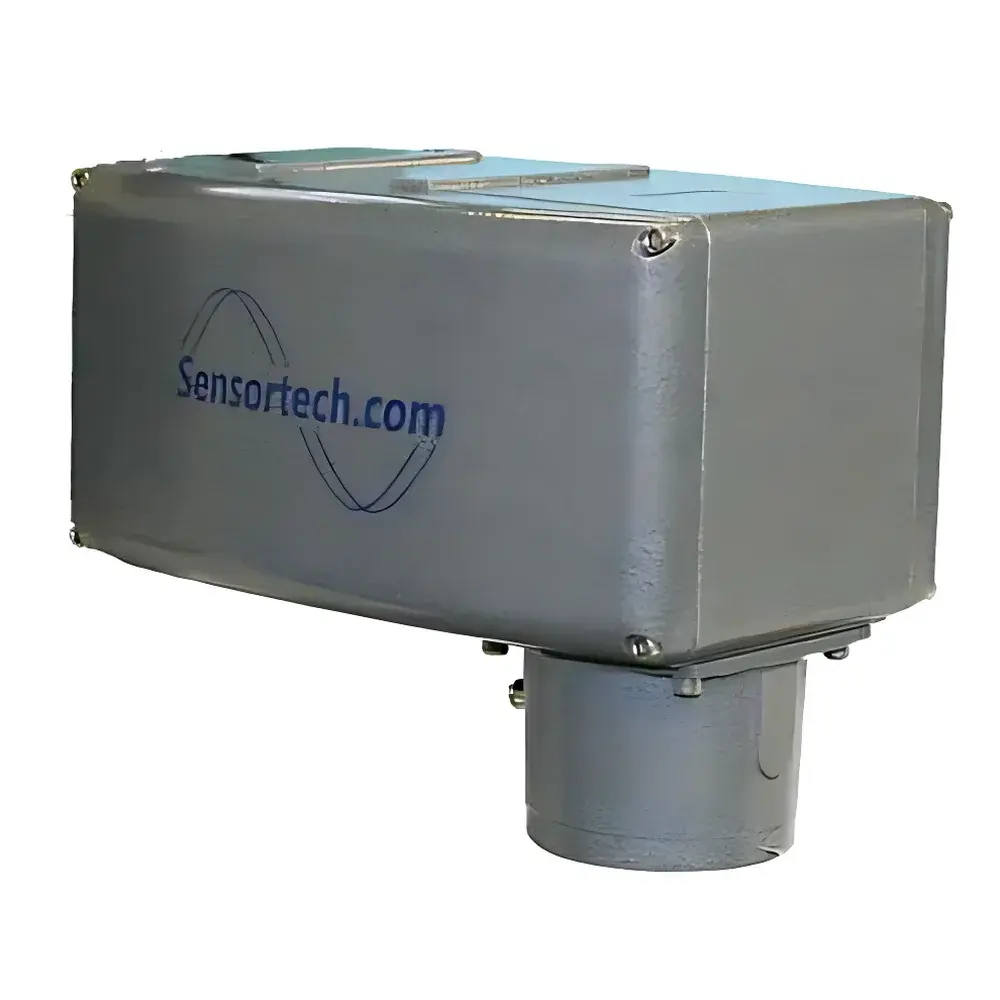
KPM Sensortech NIR-6000 Industrial Online Moisture Analyzer for Wood, Paper, Textiles, and Coal
| Brand | KPM Sensortech |
|---|---|
| Origin | USA |
| Model | NIR-6000 |
| Instrument Type | Online Near-Infrared Spectrometer |
| Principle | Filter-Based NIR Reflectance |
| Wavelength Range | 550–2500 nm |
| Measurement Interval | User-Configurable (as low as 4 ms) |
| Sampling Mode | Diffuse Reflectance |
| Scan Speed | Real-Time |
| Chemometrics Software | Embedded KPM NIR Analysis Suite |
| Operating Temperature | −20°C to +85°C (with optional thermal management) |
| Ingress Protection | IP65 |
| Calibration | Pre-Loaded Application-Specific Models |
Overview
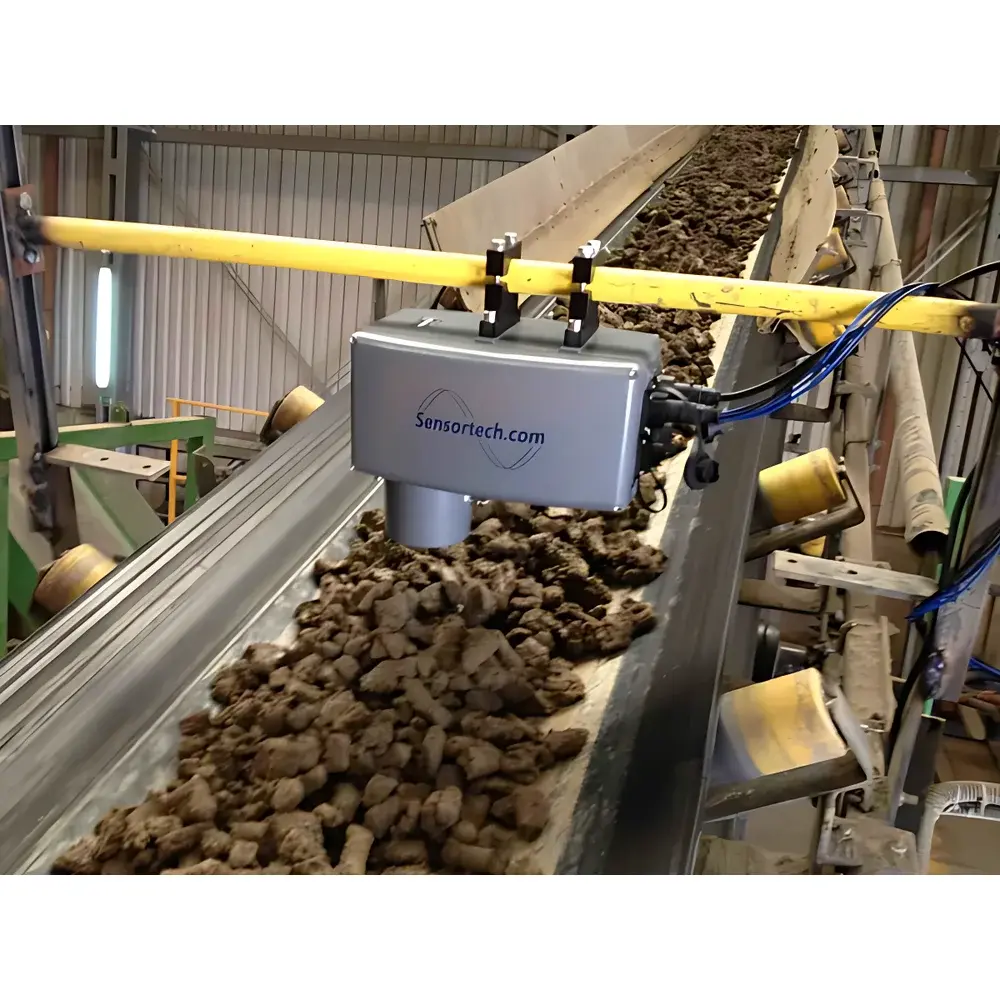
The KPM Sensortech NIR-6000 is an industrial-grade, filter-based near-infrared (NIR) spectrometer engineered for continuous, non-contact, and non-destructive moisture analysis in dynamic process environments. Leveraging the well-established physical principle of water’s characteristic absorption bands in the NIR region—particularly around 1450 nm and 1940 nm—the NIR-6000 quantifies moisture content by measuring diffuse reflectance from bulk materials without requiring physical sampling or process interruption. Designed explicitly for inline integration into conveyor belts, chutes, hoppers, and pneumatic transport lines, it delivers high-temporal-resolution measurements at intervals as short as 4 milliseconds—enabling closed-loop feedback control of drying, blending, and conditioning operations. Its optical architecture employs fixed interference filters optimized for robustness and long-term wavelength stability under thermal and mechanical stress, eliminating moving parts commonly found in scanning monochromator systems. The analyzer operates across a broad spectral range (550–2500 nm), supporting not only moisture but also co-quantification of up to three analytes—including lignin, cellulose, or ash content—when calibrated for multi-component regression models.
Key Features
- Real-time measurement capability with configurable sampling intervals down to 4 ms, enabling millisecond-level process responsiveness.
- Ruggedized IP65-rated enclosure with hardened electronics; standard operating range of 0–55°C, expandable to −20°C (with heater option) and +85°C (with vortex air cooling).
- Fixed-filter NIR optical design ensures long-term photometric stability, minimal drift, and immunity to vibration—critical for 24/7 industrial deployment.
- Pre-loaded chemometric calibration library covering >120 material classes, including softwood/hardwood chips, kraft pulp, corrugated board, cotton-linen blends, bituminous coal, and lignite.
- Embedded KPM NIR Analysis Suite provides real-time spectral preprocessing (baseline correction, multiplicative scatter correction), PLS regression inference, and alarm-triggered data logging.
- Flexible mounting options—including side-mount flanges, top-mount brackets, and purge-compatible housings—for integration into confined or hazardous-area process zones (ATEX/IECEx compliant variants available upon request).
Sample Compatibility & Compliance
The NIR-6000 is validated for heterogeneous, particulate, and fibrous matrices with surface roughness ranging from 10 µm to >5 mm—common in wood fiber streams, crushed coal conveyors, unwound paper reels, and nonwoven textile webs. It meets ASTM E1655-22 for multivariate spectroscopic calibration validation and supports GLP-compliant audit trails when configured with optional 21 CFR Part 11–enabled firmware. All factory calibrations are traceable to NIST SRM 1921b (moisture reference standards) and undergo cross-validation using independent holdout sets per ISO 12099:2017. For low-reflectivity applications (e.g., wet black liquor sludge or carbon-rich coke fines), the high-sensitivity variant incorporates intensified InGaAs detectors and adaptive gain control to maintain signal-to-noise ratios >10,000:1.
Software & Data Management
The embedded KPM NIR Analysis Suite enables full lifecycle management of chemometric models—from initial calibration transfer and outlier detection to drift monitoring and automatic revalidation triggers. Raw spectra and processed results are timestamped and exported via Modbus TCP, OPC UA, or Ethernet/IP protocols for seamless integration with DCS, MES, and historian systems (e.g., OSIsoft PI, Ignition SCADA). Configuration is performed through a web-based interface accessible via standard browsers; no proprietary runtime licenses are required. Audit logs record all parameter changes, calibration updates, and user logins—supporting FDA 21 CFR Part 11 compliance when paired with enterprise identity management. Remote diagnostics and firmware updates are supported over secure TLS 1.3 connections.
Applications
- Wood & Biomass Processing: Real-time moisture control in green chip drying, MDF fiber drying, pellet mill feed conditioning, and biomass boiler fuel staging.
- Paper & Board Manufacturing: Basis weight-corrected moisture profiling across Yankee dryers, size press zones, and reel-up stations.
- Coal & Minerals Handling: Feedstock moisture compensation prior to pulverization, blending consistency verification in ROM stockpiles, and export specification compliance checks.
- Textile & Nonwovens: Uniformity monitoring of spunbond and meltblown web moisture during thermal bonding and finishing.
- Chemical & Agrochemicals: Granular fertilizer coating uniformity, plastic resin drying endpoint detection, and tobacco leaf rehydration control.
FAQ
What is the typical measurement uncertainty for moisture in wood chips?
For properly calibrated installations on homogeneous chip streams (>25 mm particle size), the root-mean-square error (RMSE) is ≤ ±0.15 wt% moisture, referenced to ASTM D4442 oven-dry methodology.
Can the NIR-6000 be used in explosive atmospheres?
Yes—ATEX Zone 21 and IECEx Zone 22 configurations are available with intrinsically safe optical interfaces and purged enclosures.
Is field recalibration required?
No routine recalibration is needed; the system includes automated drift compensation using internal reference channels and periodic validation against portable NIR check standards.
How is spectral data synchronized with process variables?
Via hardware-timestamped pulse inputs (encoder, encoder wheel, or PLC pulse) that align each spectrum with belt speed, position, or mass flow rate.
Does the analyzer support third-party chemometrics platforms?
Yes—raw .csv spectral exports and model interchange formats (e.g., PMML, JSON-PLS) are supported for integration with Unscrambler, Pirouette, or custom Python-based modeling pipelines.





