
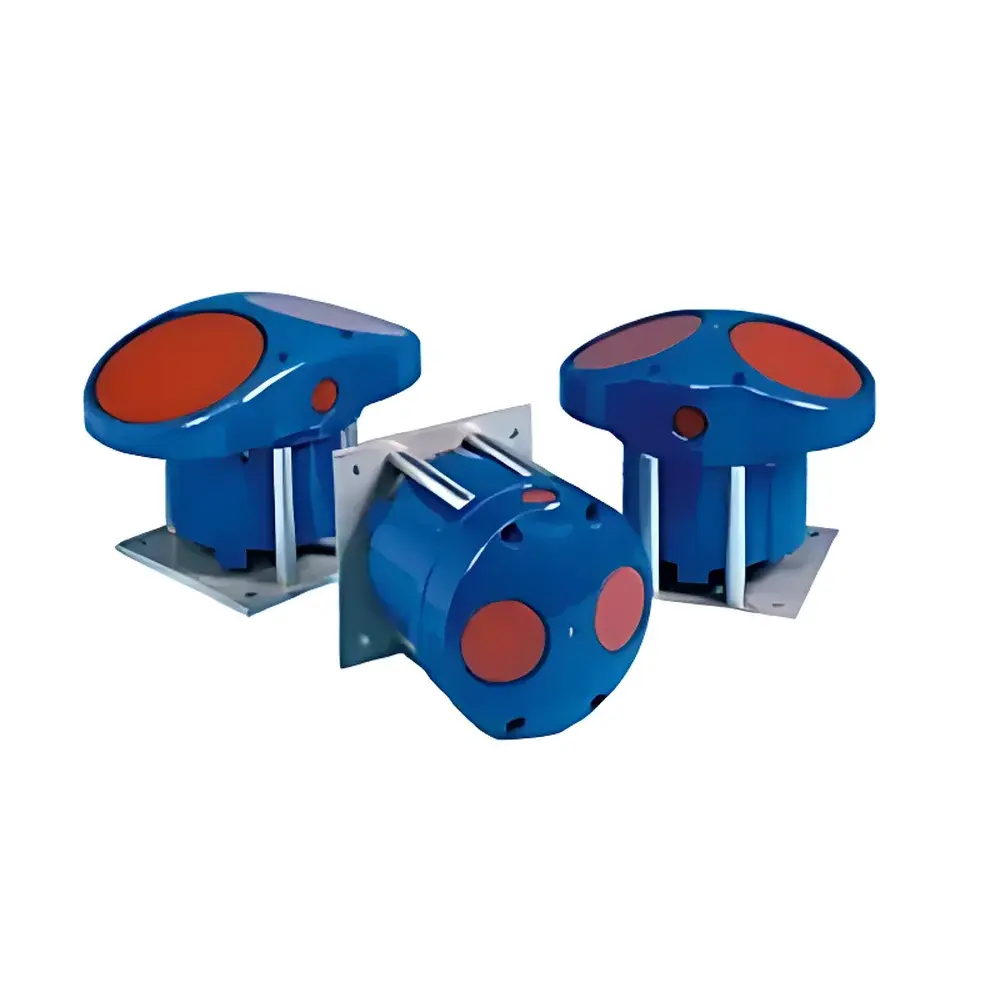
Teledyne RDI ChannelMaster H-ADCP Horizontal Acoustic Doppler Current Profiler
| Origin | USA |
|---|---|
| Manufacturer Type | Authorized Distributor |
| Origin Category | Imported |
| Model | ChannelMaster H-ADCP |
| Pricing | Upon Request |
| Instrument Type | In-Channel Flow Monitoring System |
| Operating Principle | Broadband Pulse-Coherent Acoustic Doppler Velocimetry |
| Frequency Options | 300 kHz / 600 kHz / 1200 kHz |
| Velocity Range | ±5 m/s (default), ±20 m/s (extended) |
| Velocity Accuracy | ±0.5% of measured value or ±0.2 cm/s (whichever is greater) |
| Cell Size Range | 0.25–8 m |
| Maximum Profiling Range | 20–300 m (frequency-dependent) |
| Built-in Sensors | Ultrasonic & Pressure Water Level, Dual-Axis Tilt, Thermistor |
| Data Output | Real-time velocity profiles, stage, discharge, and quality indicators via RS-232/RS-422/SDI-12 |
| Memory | 4 MB internal flash |
| Power | 10–18 VDC, typical consumption 0.13–0.16 W (active), 0.25 mW (standby) |
| Enclosure | Polyurethane-cast housing with titanium fasteners and stainless-steel mounting frame |
Overview
The Teledyne RDI ChannelMaster H-ADCP is a horizontally mounted, broadband acoustic Doppler current profiler engineered for continuous, high-fidelity flow monitoring in open-channel environments—including rivers, irrigation canals, flumes, and harbor approaches. Unlike vertical-profiling ADCPs, the H-ADCP transmits two fixed-angle acoustic beams (±20°) parallel to the water surface from a bank-mounted or pier-mounted position, enabling non-intrusive, long-range measurement of horizontal velocity structure across the channel cross-section. Its pulse-coherent broadband signal processing delivers superior resolution and accuracy—particularly critical for low-velocity flows (<0.1 m/s), unsteady hydrographs, and shallow or highly turbulent sections where traditional mechanical or electromagnetic methods exhibit drift or poor signal-to-noise ratios. The system operates under ASTM D5766/D5766M (Standard Test Method for Measurement of Discharge Using Acoustic Doppler Current Profilers) and supports compliance with USGS Water Resources Mission Area protocols for stage-discharge rating curve development and real-time hydrometric reporting.
Key Features
- Broadband pulse-coherent Doppler technology for enhanced velocity resolution and reduced velocity noise floor, especially at low flow conditions
- Three frequency variants (300 kHz, 600 kHz, 1200 kHz) optimized for different depth–velocity regimes: CM300 for deep rivers (>50 m), CM600 for medium channels (10–50 m), CM1200 for shallow streams and regulated canals (<10 m)
- Configurable cell structure: 1–128 user-defined depth cells per profile, with adjustable cell size (0.25–8 m) and blanking distance (0.5–40 m), enabling adaptive profiling aligned with hydraulic geometry
- Integrated multi-sensor suite: dual water level sensing (ultrasonic + pressure transducer), ±10° dual-axis tilt compensation, and calibrated thermistor (–4°C to +40°C) for real-time density correction and beam-angle correction
- Real-time output of instantaneous velocity vectors, water surface elevation, cross-sectional area, and total discharge—formatted for direct ingestion by SCADA, telemetry RTUs, or cloud-based data platforms via SDI-12 v1.3 or RS-422
- Ruggedized enclosure: polyurethane-cast body rated IP68, titanium alloy hardware, and stainless-steel mounting bracket designed for long-term exposure to UV, salt spray, and sediment-laden flow
Sample Compatibility & Compliance
The ChannelMaster H-ADCP is validated for deployment in natural and engineered open channels with suspended sediment concentrations up to 10 g/L and turbidity levels exceeding 3000 NTU. Its acoustic design minimizes sensitivity to air entrainment and surface foam, ensuring stable profiling during storm events and snowmelt runoff. All firmware and data acquisition routines conform to ISO/IEC 17025 requirements for measurement traceability, and raw binary data files (.adcp) retain full metadata—including beam geometry, temperature-compensated sound speed, and tilt-corrected coordinate transformation—for audit-ready post-processing. When integrated into regulatory monitoring networks (e.g., EPA Clean Water Act Section 303(d) TMDL programs or EU WFD compliant stations), the instrument satisfies GLP-aligned data integrity requirements through time-stamped, write-once memory logging and optional firmware-level checksum validation.
Software & Data Management
WinH-ADCP provides native configuration, real-time visualization, and diagnostic monitoring—including beam signal strength, correlation coefficient maps, and bottom-track confidence metrics. For operational deployment, the optional “FlowPro-H” software enables automated discharge computation using user-defined cross-section geometry, stage-area relationships, and ISO 748-compliant velocity integration methods (e.g., mid-section, index velocity). All data exports support CF-compliant NetCDF and CSV formats with embedded units, coordinate reference systems (EPSG:4326 or local UTM), and QA/QC flags. Firmware updates preserve backward compatibility with legacy .adcp archives, and memory management supports cyclic overwrite or event-triggered storage—critical for solar-powered remote installations with limited telemetry bandwidth.
Applications
- Continuous discharge monitoring at USGS, NOAA, and national hydrometric network gauging stations
- Real-time input for hydrodynamic models (e.g., HEC-RAS, Delft3D) requiring boundary condition calibration and uncertainty quantification
- Regulatory compliance monitoring for wastewater outfalls, irrigation diversions, and hydropower bypass flows under NPDES or equivalent permits
- Research-grade velocity field mapping in tidal estuaries, river confluences, and floodplain inundation zones
- Integration into smart water infrastructure systems for demand-responsive canal control and leakage detection via flow continuity analysis
FAQ
Can the ChannelMaster H-ADCP operate in saline or brackish water?
Yes—the transducers are titanium-housed and acoustically tuned for sound speed variations across 0–40 PSU; firmware applies real-time salinity-temperature-density corrections to beam angle and velocity scaling.
Is tilt compensation mandatory for accurate discharge calculation?
Yes—dual-axis tilt sensors are factory-calibrated and continuously applied to transform beam velocities into true Cartesian components; omission introduces systematic error >3% in sloped or vibrating installations.
How is water level measured when both ultrasonic and pressure sensors are present?
The system performs automatic sensor fusion: ultrasonic level is primary above 0.5 m; pressure transducer assumes priority below 0.5 m or during heavy surface turbulence; configurable logic allows manual override or weighted averaging.
What is the minimum detectable velocity and under what conditions?
At 1200 kHz with 0.25-m cells and 120-second ensemble averaging, the system resolves velocities ≥0.003 m/s (3 mm/s) with SNR >15 dB in clear, low-turbulence water; field performance typically exceeds 0.01 m/s in natural sediment-laden flows.
Does the H-ADCP support NMEA 0183 or Modbus RTU output?
No—native protocols are RS-232, RS-422, and SDI-12 only; however, third-party protocol converters (e.g., Campbell Scientific NL115 or OTT Hydromet QLX) enable seamless translation to Modbus TCP or NMEA for SCADA integration.
Related Products







