
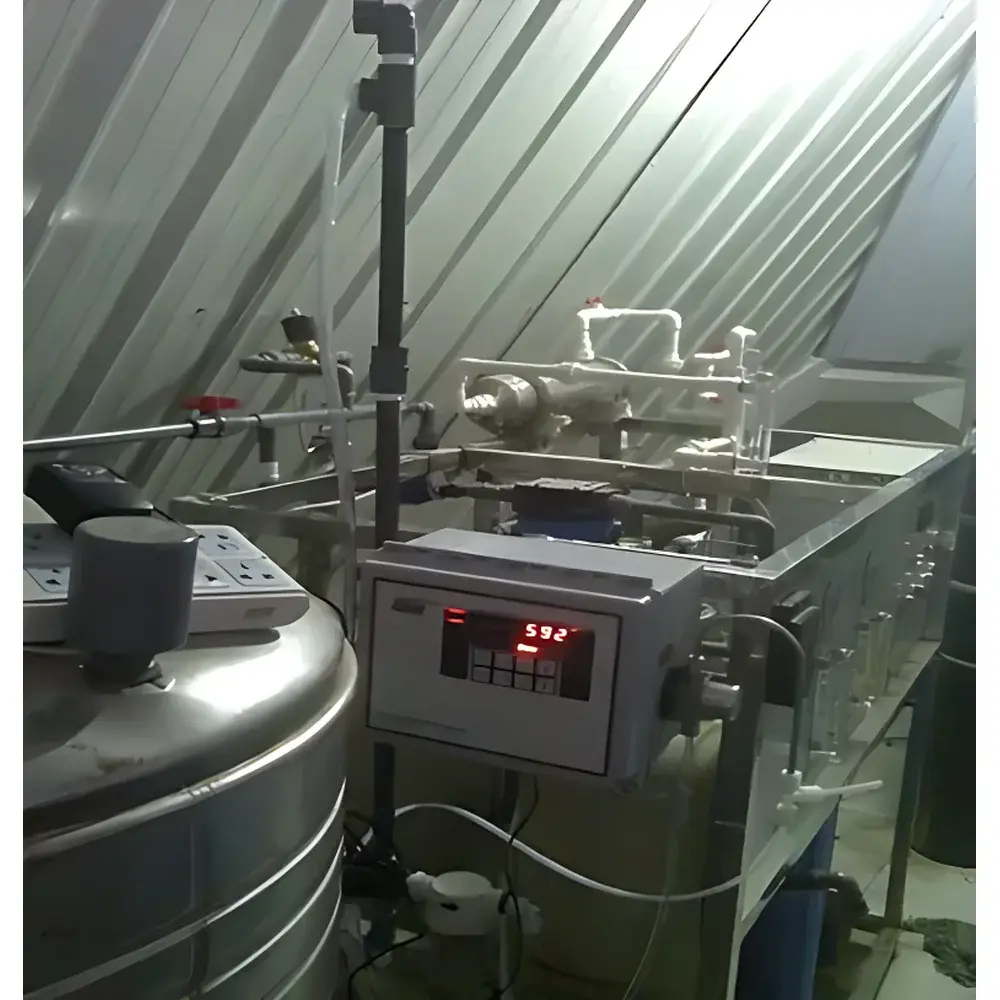
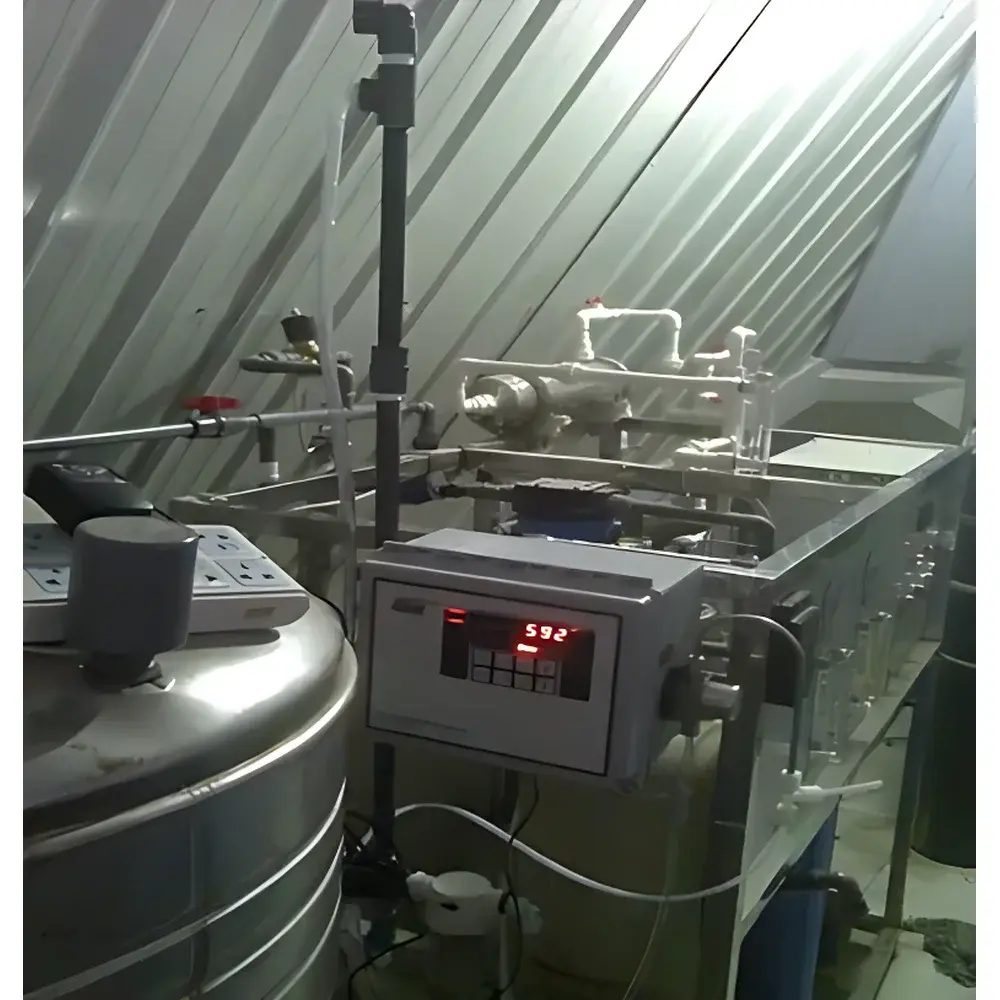
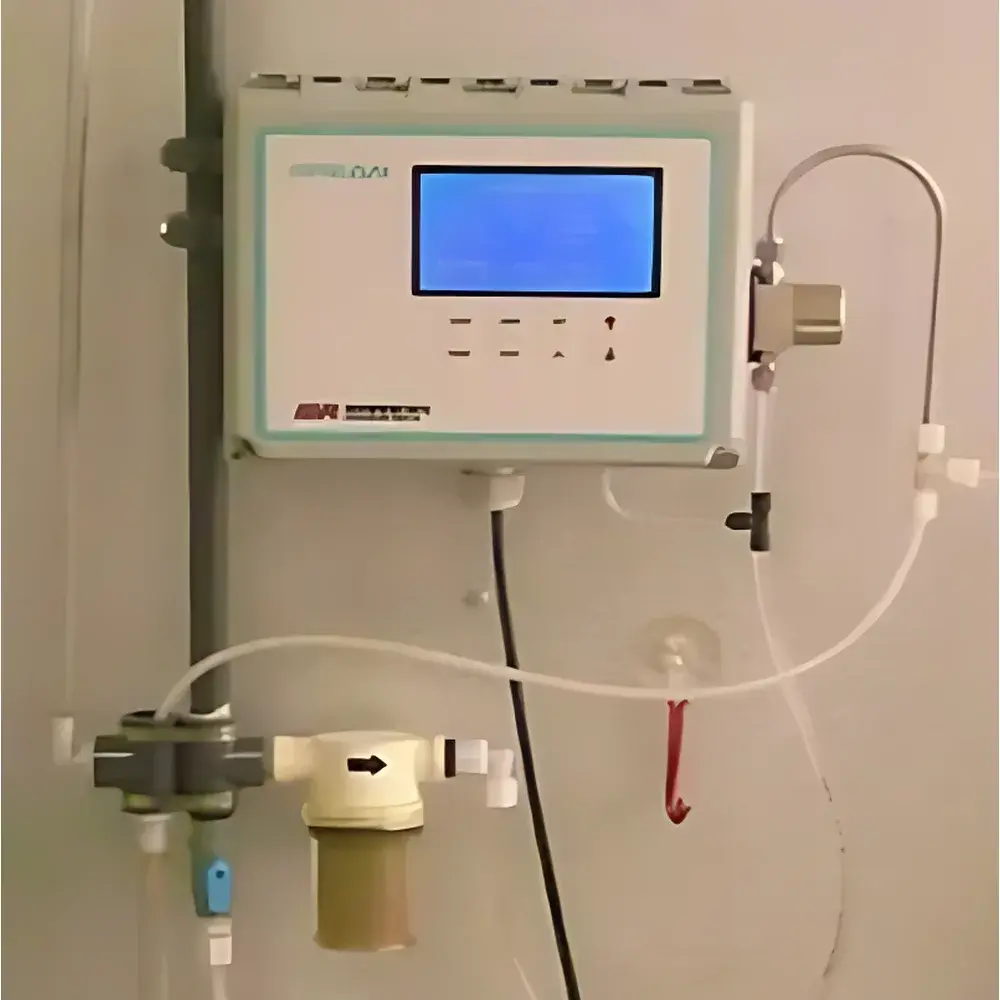
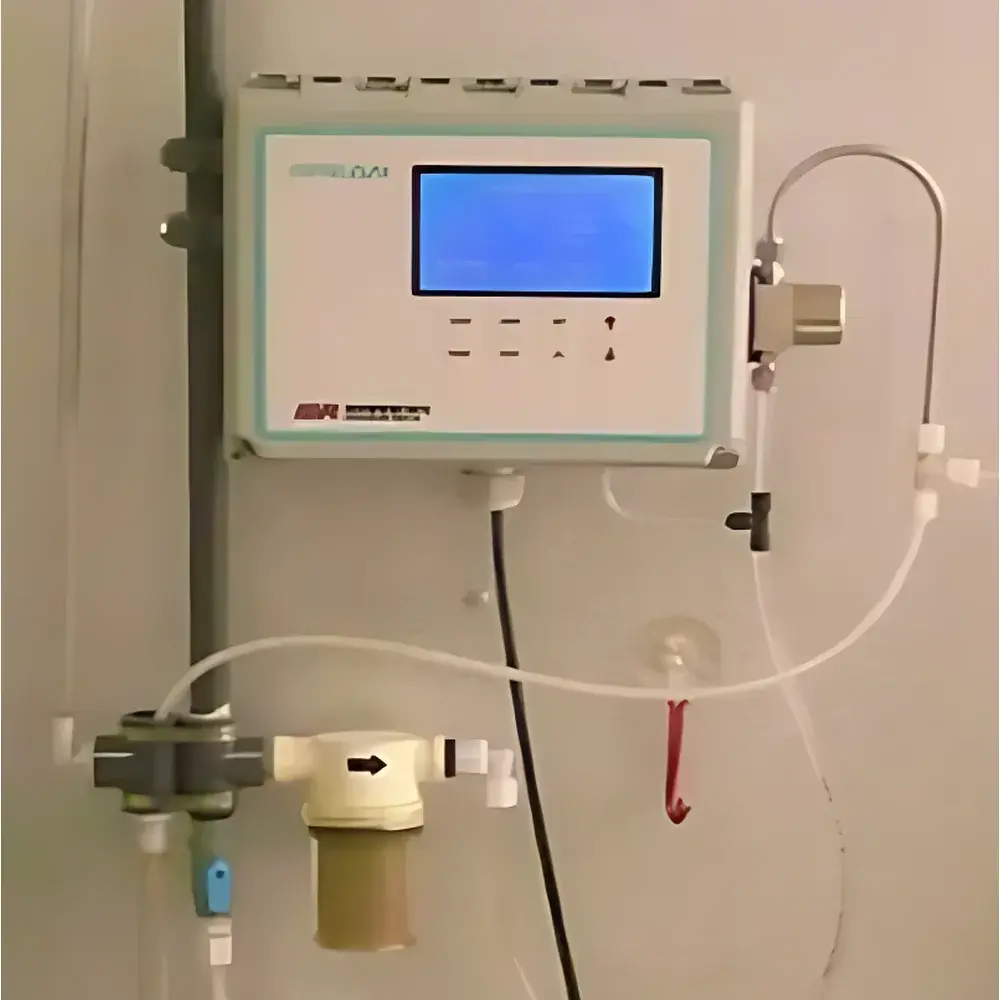
IBR ONLINE Laser-Based Suspended Solids Analyzer for Water and Oil
| Origin | Beijing, China |
|---|---|
| Manufacturer Type | Authorized Distributor |
| Origin Category | Domestic (China) |
| Model | ONLINE (IBR) |
| Pricing | Upon Request |
| Instrument Type | Online Real-Time Analyzer |
| Measurement Principle | Laser Light Absorption / Particle Shadow Imaging |
| Particle Size Range | 2–400 µm |
| Number of Adjustable Channels | 8 |
| Sensitivity Threshold | 2 µm |
| Resolution | ≤9% @ 2 µm, ≤5% @ 10 µm |
| Signal-to-Noise Ratio | 3:1 |
| Counting Efficiency | ≥50% @ 1 µm, 98% @ 1.5 µm, 99.9% @ 2 µm |
| Max Particle Concentration | 18,000 counts/mL |
| Coincidence Loss (at max concentration) | ≤10% |
| Flow Accuracy | ≤2% |
| Light Source | High-Stability Laser Diode |
| Sample Flow Rate | 60 mL/min (controlled via overflow tube & hydraulic pressure) |
| Flow Path Cleaning | Semi-Automatic Rinse |
| Sensor MTBF | 60,000–80,000 hours |
| Communication Interfaces | RS-485 (2-wire/4-wire), Modbus RTU, 4–20 mA analog output, custom protocols |
| Data Transmission Rate | 9600 bps |
| Output Modes | Cumulative count or time-segmented distribution |
| Maximum Display Value | 9,999,999 (cumulative) |
Overview
The IBR ONLINE Laser-Based Suspended Solids Analyzer is an industrial-grade, real-time in-line instrument engineered for continuous monitoring of particulate contamination in aqueous and hydrocarbon-based process streams—including potable water, wastewater effluent, filtered water, membrane permeate, and lubricating oils. It operates on the principle of laser light absorption (also referred to as particle shadow imaging), where a collimated laser diode beam intersects the sample flow perpendicularly. As particles traverse the beam, they attenuate incident light proportionally to their projected cross-sectional area. This attenuation generates discrete voltage pulses in a high-speed photodiode detector; pulse amplitude correlates with particle size, while pulse frequency reflects particle concentration. Unlike turbidity meters—which provide only an integrated optical density metric—the IBR analyzer delivers quantitative, size-resolved particle counts across eight user-configurable channels spanning 2–400 µm. This enables direct assessment of both total suspended solids (TSS) concentration (in counts/mL) and granulometric distribution—critical parameters for evaluating coagulation efficiency, filter integrity, membrane performance, and pathogen removal potential.
Key Features
- Real-time, in-situ analysis without sample dilution or filtration—enabling immediate process feedback.
- Eight programmable size channels within the 2–400 µm range, supporting customizable binning strategies aligned with regulatory or operational thresholds (e.g., >2 µm for Cryptosporidium risk assessment).
- High counting efficiency (>99.9% at ≥2 µm) and low coincidence loss (<10% at 18,000 counts/mL), ensuring statistical reliability under high-load conditions typical in clarifier effluents or backwash streams.
- Patented de-bubbling fluidic design minimizes false positives from entrained air, enhancing measurement robustness in variable-pressure or degassing-prone installations.
- Laser diode source with thermal stabilization ensures long-term optical consistency and drift-free calibration over sensor lifetime (MTBF ≥60,000 hours).
- Integrated flow control via precision overflow tube and hydraulic head regulation maintains constant 60 mL/min throughput, eliminating dependence on external pumps or flow meters.
- Semi-automatic rinse cycle reduces biofilm accumulation and particulate carryover between measurements—critical for unattended 24/7 operation.
Sample Compatibility & Compliance
The analyzer is validated for use with clarified drinking water, surface water, tertiary-treated wastewater, reverse osmosis permeate, and mineral-based industrial oils (ISO VG 32–100). Its non-invasive optical path and chemically resistant wetted materials (316L stainless steel flow cell, sapphire optical windows) ensure compatibility with chlorine, ozone, and low-pH environments common in municipal treatment plants. While not certified to ISO 7027 (turbidity) or ASTM D6975 (oil particulate standards) as a standalone device, its raw count data supports compliance reporting under US EPA LT2ESWTR (Long Term 2 Enhanced Surface Water Treatment Rule), where particle counts >2 µm serve as a surrogate for protozoan oocyst removal verification. The instrument’s 4–20 mA and Modbus RTU outputs facilitate integration into SCADA systems compliant with IEC 62443 and ISA-95 frameworks. Audit-trail-capable data logging (when paired with compatible host software) aligns with GLP/GMP documentation requirements for validation studies.
Software & Data Management
The IBR analyzer communicates via standard industrial protocols—RS-485 (Modbus RTU), 4–20 mA analog output, and optional Ethernet or wireless gateways. Host-side configuration and visualization are supported through vendor-supplied PC software or third-party platforms (e.g., Ignition SCADA, Siemens Desigo CC). Data can be streamed as cumulative counts or time-binned distributions (e.g., 1-min, 5-min, hourly aggregates), enabling trend analysis of particle breakthrough events, coagulant dose response, or filter ripening cycles. All transmitted values include timestamping, flow status flags, and self-diagnostic codes (e.g., low signal, air bubble detection, sensor fouling alert). Firmware updates are performed remotely via serial or network interface, and configuration backups support rapid recovery during maintenance. No cloud dependency or proprietary SaaS subscription is required—data ownership remains fully with the end user.
Applications
- Drinking Water Treatment Optimization: Quantifying particle count reduction across coagulation, flocculation, sedimentation, and filtration stages to validate removal efficiency and adjust chemical dosing in real time.
- Filter Integrity Monitoring: Detecting early-stage media breakthrough by tracking sudden increases in >10 µm particles downstream of rapid sand or multimedia filters.
- Membrane Process Control: Identifying microfiltration/ultrafiltration membrane breaches or fiber breakage via persistent elevation in sub-5 µm counts in permeate streams.
- Distribution System Surveillance: Comparing particle load at plant exit versus remote network nodes to localize biofilm sloughing, corrosion debris release, or cross-connection incidents.
- Oil-in-Process Monitoring: Assessing hydraulic fluid cleanliness per ISO 4406 or NAS 1638 standards in power generation or manufacturing lubrication circuits.
- Bench-Scale Coagulation Studies: Supporting jar test optimization by correlating floc size distribution shifts with coagulant type, dose, and mixing intensity.
FAQ
Does the analyzer require periodic recalibration?
No routine recalibration is needed. The system relies on stable laser diode output and geometrically fixed optical alignment. Verification is performed using NIST-traceable polystyrene latex (PSL) reference particles during initial commissioning and after major maintenance.
Can it operate in pressurized pipelines?
Yes—it is rated for continuous operation at up to 10 bar (145 psi) static pressure. A pressure-relief bypass must be installed upstream if pipeline surges exceed this limit.
Is temperature compensation built-in?
The photodetector electronics include ambient temperature compensation, but the optical path itself is not thermostatically controlled. For applications with >±5°C variation, empirical correction curves may be applied in post-processing.
How is sensor fouling detected and managed?
A baseline signal-to-noise ratio (SNR) is established during clean operation. A sustained SNR drop below 3:1 triggers a maintenance alert; semi-automatic rinse cycles restore baseline performance without disassembly.
What cybersecurity safeguards are implemented?
The embedded controller uses read-only firmware, disabled default credentials, and protocol-level authentication (for Modbus TCP variants). Physical access to the RS-485 port is required for configuration changes—no remote write capability exists by default.







