
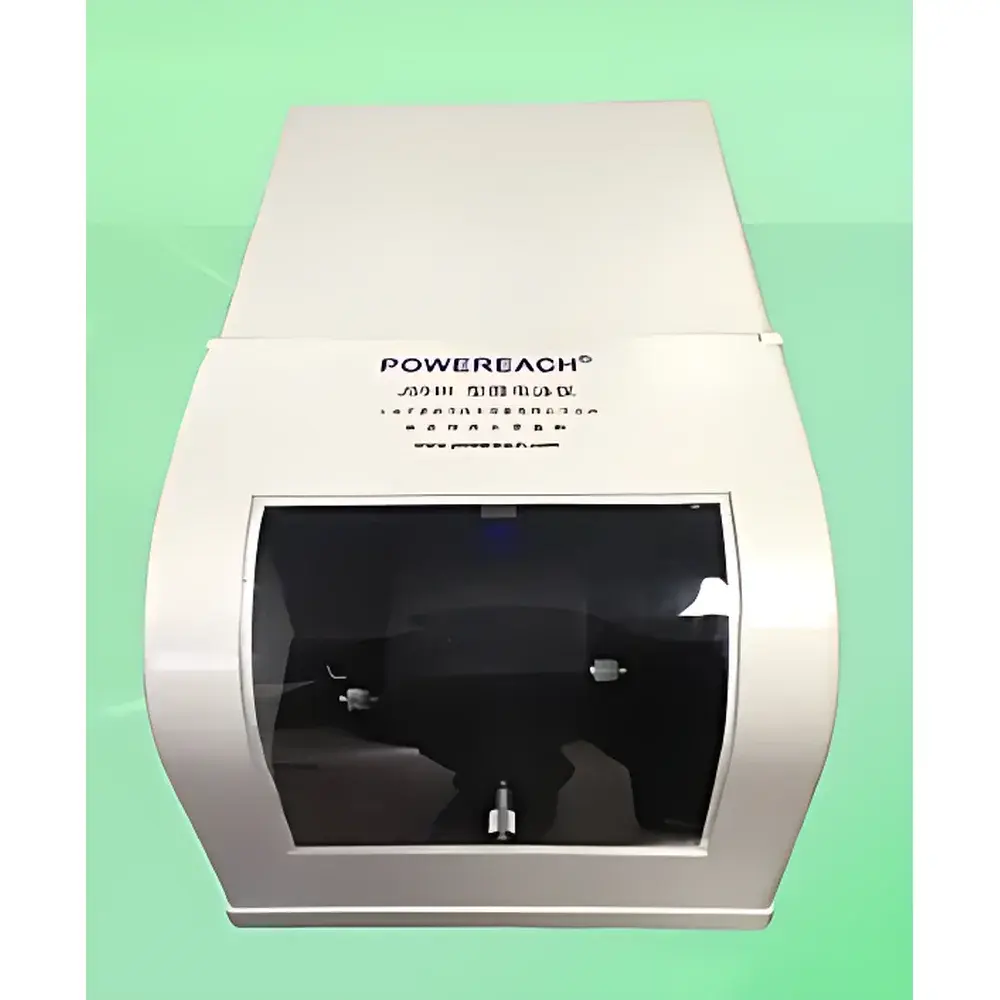
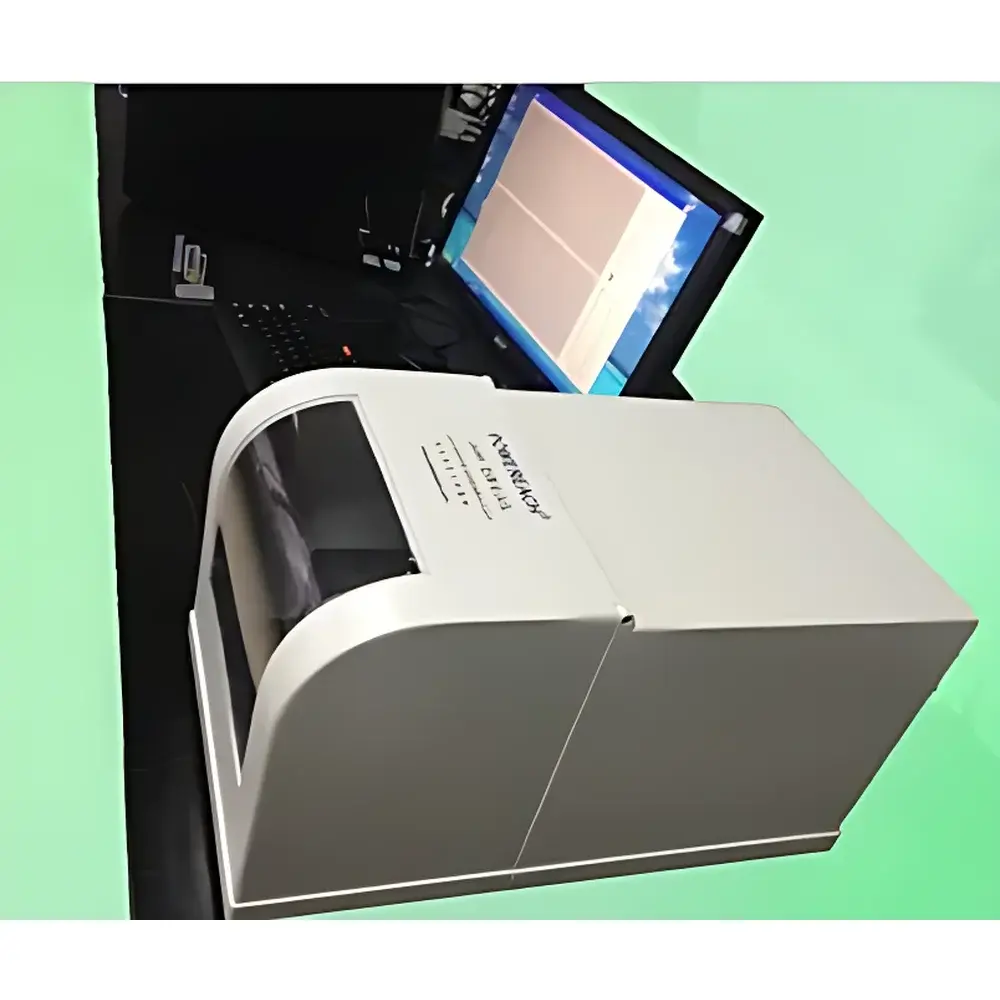
ZETA Potential Analyzer JS94JM by ZYKX
| Brand | ZYKX |
|---|---|
| Origin | Beijing, China |
| Model | JS94JM |
| Zeta Potential Range | ±3000 mV |
| Measurement Accuracy | ±5% |
| pH Range | 0.00–14.00 |
| pH Resolution | 0.1 pH |
| Zeta Resolution | 1 mV |
| Temperature Range | −5.0 to 105.0 °C (±0.1 °C) |
| Optional Thermostatic Platform | −10 to 95 °C |
| Sample Volume per Test | 0.5 mL |
| Optical System | Semiconductor-based blue/green LED illumination (low-power, non-thermal) |
| Magnification | 1200× |
| Electrophoretic Cell | Integrated Ag/Pt/Ti electrodes in 0.5 cm-thick borosilicate glass cuvette |
| Voltage Polarity Switching Interval | 0.30–1.20 s (adjustable) |
| Sampling Duration | 3–10 s |
| Power Supply | 220 V AC, 50 Hz, 150 W |
Overview
The ZYKX JS94JM Zeta Potential Analyzer is a precision electrophoretic instrument engineered for the quantitative determination of zeta potential (ζ) in colloidal and dispersed particulate systems. It operates on the principle of laser Doppler microelectrophoresis—measuring particle electrophoretic mobility under an applied electric field, then converting mobility to zeta potential via the Henry equation (with Smoluchowski or Hückel approximations selectable based on system conductivity and particle size). The instrument is specifically designed for aqueous dispersions with particle diameters ranging from 0.1 µm to 10 µm, making it suitable for routine quality control and fundamental interfacial characterization in R&D laboratories across materials science, pharmaceuticals, and industrial colloid chemistry.
Key Features
- Integrated electrophoretic cell with embedded Ag/Pt/Ti alloy electrodes housed in a 0.5 mm wall-thickness borosilicate glass cuvette—minimizing electro-osmotic flow and eliminating static layer artifacts.
- Optimized near-field optical detection using low-power (<100 µW) blue/green semiconductor LEDs, enabling high-contrast imaging of sub-micron particles without thermal perturbation of the dispersion medium.
- Real-time temperature compensation via calibrated Pt100 probe, continuously feeding ambient and sample temperature data to the analysis engine for accurate ζ calculation per ISO 13099-2:2012.
- Adjustable polarity reversal timing (0.30–1.20 s), minimizing electrode polarization while maintaining measurement repeatability across conductive and low-conductivity media.
- Automated image acquisition at 1200× magnification, capturing four synchronized grayscale frames (two forward, two reverse) for robust velocity vector averaging and statistical outlier rejection.
- Minimal sample requirement (0.5 mL per measurement) and rapid cleaning protocol—supporting high-throughput screening in regulated environments where material conservation is critical.
Sample Compatibility & Compliance
The JS94JM accommodates aqueous suspensions, emulsions, and hydrophilic nanocolloids within the specified size range. It supports pH-adjusted measurements from 0.00 to 14.00, enabling isoelectric point (IEP) mapping for surface functionalization studies. The system complies with core principles outlined in ISO 13099 (Parts 1–3): “Colloidal systems — Methods for zeta-potential determination”, and aligns with ASTM D7826–17 for electrophoretic mobility reporting. While not pre-certified for 21 CFR Part 11, its software architecture supports audit-trail-enabled operation when deployed on validated Windows platforms under GLP/GMP-controlled IT infrastructure.
Software & Data Management
The proprietary acquisition and analysis software provides real-time visualization of electrophoretic velocity histograms, automatic IEP curve fitting (via polynomial regression), and batch export of raw mobility distributions in CSV format. All measurement parameters—including voltage, polarity interval, temperature, and frame timestamps—are embedded in metadata. Exported datasets include traceable calibration logs, user ID stamps, and instrument serial number—facilitating documentation for internal SOPs or regulatory submissions. No cloud connectivity or remote telemetry is implemented; data residency remains fully local per laboratory IT policy requirements.
Applications
- Formulation stability assessment of drug nanocarriers (liposomes, polymeric micelles) under varying pH and ionic strength conditions.
- Surface charge optimization of pigment dispersions in coatings and inkjet inks to prevent flocculation.
- Characterization of functionalized silica or titania nanoparticles for catalytic or sensing applications.
- Quality assurance of protein-polysaccharide complexes in nutraceutical emulsions.
- Teaching laboratory implementation for undergraduate physical chemistry courses covering DLVO theory, double-layer compression, and interfacial electrokinetics.
- Environmental monitoring of clay and metal oxide colloids in leachate or wastewater streams.
FAQ
What particle concentration range is recommended for reliable zeta potential measurement?
For optimal signal-to-noise ratio and minimal multiple scattering, we recommend optical density (OD600) between 0.05 and 0.3. Dilution with matching electrolyte solution is required for highly concentrated samples.
Can the JS94JM measure zeta potential in non-aqueous media?
No—the optical and electrode design is optimized exclusively for aqueous systems. Non-polar solvents require alternative instrumentation (e.g., phase-analysis light scattering with high-voltage cells).
Is calibration verification traceable to NIST standards?
The instrument includes a certified polystyrene latex reference standard (nominal ζ = −52.3 mV at pH 5.0, 25 °C) for daily performance verification. Full traceability documentation is provided with each standard lot.
How does the system handle samples with broad size distribution?
While the JS94JM reports a single average ζ value per run, multimodal mobility distributions are visible in the raw histogram output—enabling manual deconvolution or correlation with independent DLS data.
What maintenance is required for long-term operational stability?
Annual recalibration of temperature and pH sensors is advised. Electrodes require periodic ultrasonic cleaning in dilute nitric acid (1% v/v) followed by thorough rinsing with deionized water.



