
English Product Name
| Origin | Beijing, China |
|---|---|
| Manufacturer Type | Authorized Distributor |
| Origin Category | Domestic (China) |
| Model | PM2.5 |
| Price Range | USD 14,000–21,000 |
| Measurement Principle | Laser Light Scattering |
| Measured Parameters | PM1.0, PM2.5, PM5, PM10, TSP |
Overview
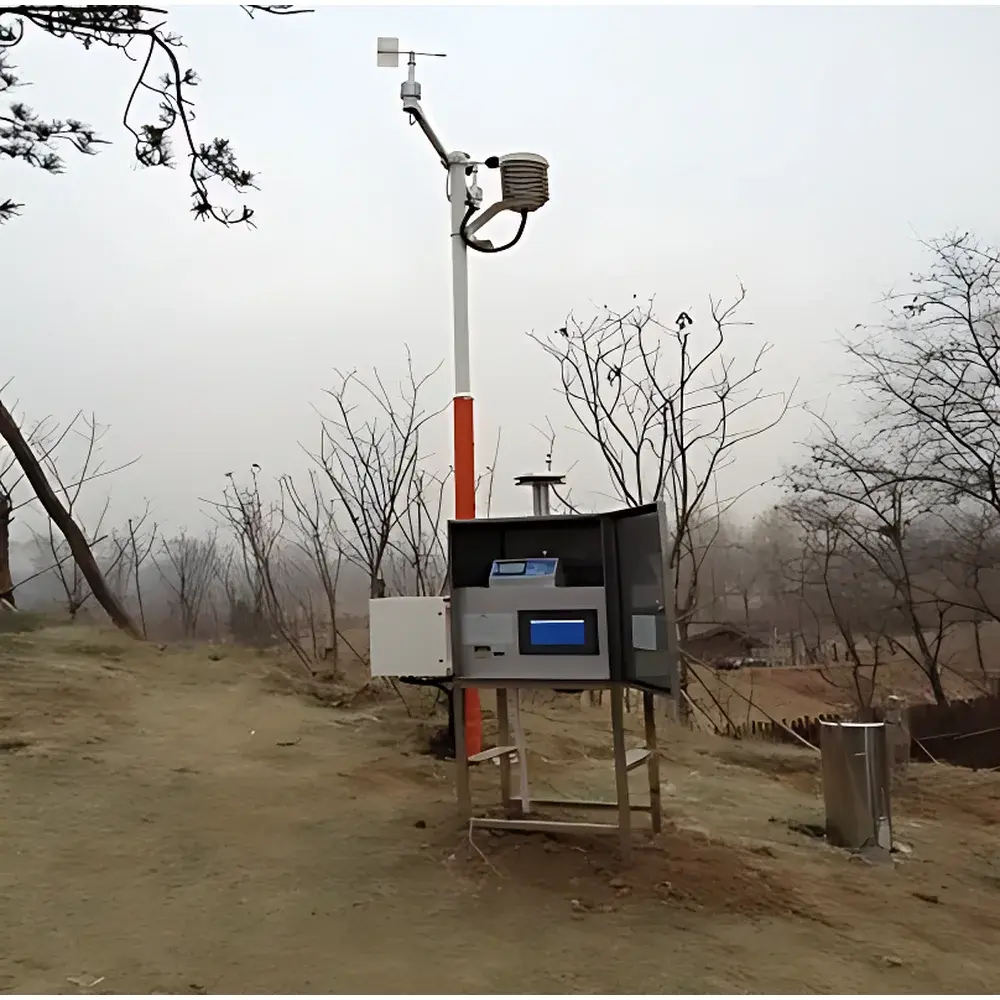
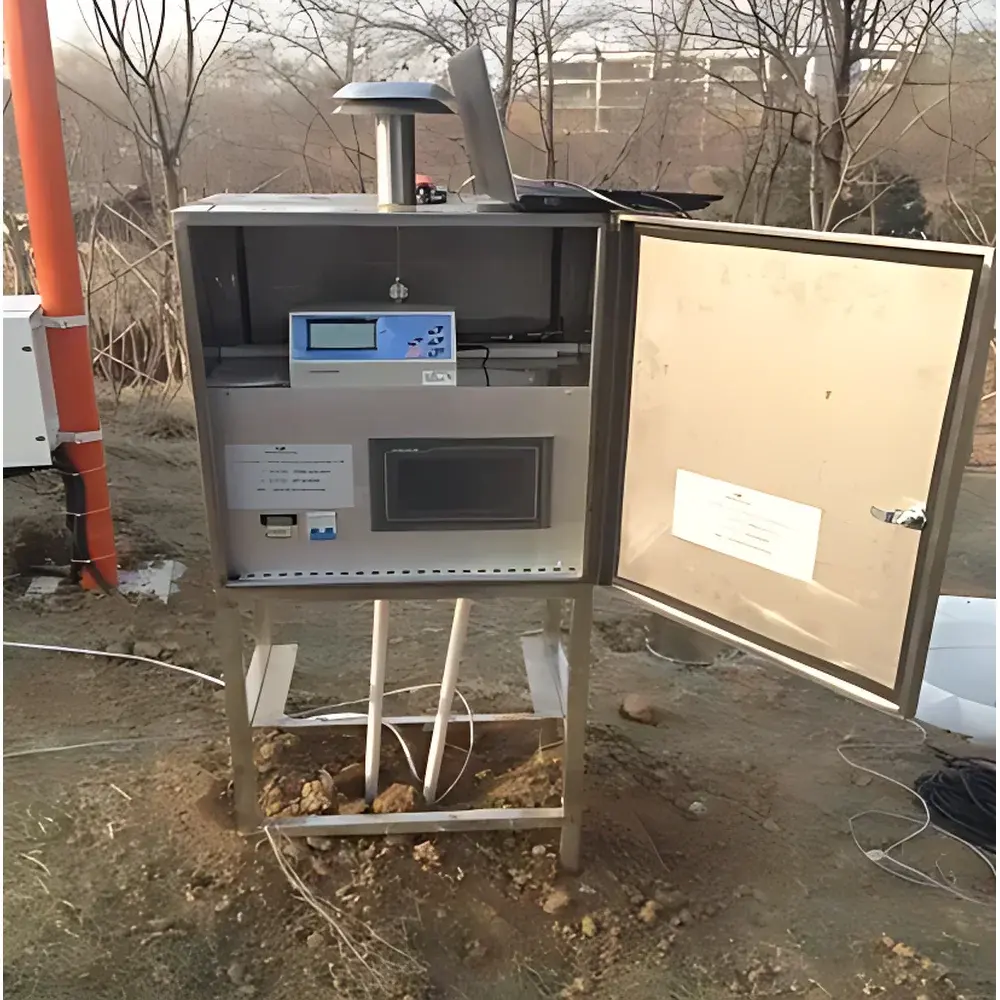
The Beijing-made All-Weather PM2.5 Atmospheric Particulate Matter Monitor (Model PM2.5) is a fixed-site or mobile-deployable environmental monitoring instrument engineered for continuous, real-time quantification of airborne particulate mass concentrations in ambient air, occupational environments, and indoor HVAC systems. It operates on the principle of laser light scattering—where a collimated laser beam interacts with suspended particles, generating scattered light intensity proportional to particle size and concentration. This signal is converted via calibrated algorithms into mass concentration values (mg/m³) for multiple aerodynamic cut-points: PM1.0, PM2.5, PM5, PM10, and total suspended particulates (TSP). Designed for unattended operation under extreme climatic conditions—including sub-zero temperatures—the instrument integrates an internal heating and thermal stabilization system to maintain optical path integrity and sensor performance across seasonal variations. Its measurement range spans 0.001–10 mg/m³ (standard range) and extends to 0.001–100 mg/m³ for high-concentration industrial applications, with a minimum detectable concentration of 2 µg/m³ and resolution of 0.001 mg/m³.
Key Features
- Laser-based optical detection system with NIST-traceable calibration using certified reference membranes
- Integrated humidity compensation algorithm that dynamically corrects scattering response in high-humidity environments (RH > 80%) without requiring desiccant or dilution sampling
- Multi-range particulate sizing capability enabled by interchangeable impactor-cutters, each validated per ISO 13796 and GB/T 15432-1995 for aerodynamic separation efficiency
- Real-time statistical output including instantaneous value, hourly time-weighted average (TWA), min/max/mean over user-defined intervals, and cumulative operational runtime
- Robust environmental housing rated IP65, featuring thermostatically controlled internal heating (−30 °C to +50 °C operating envelope) and anti-condensation optics
- Dual communication architecture supporting RS232 serial interface (with synchronous data streaming), 4–20 mA analog output, and optional Ethernet/Wi-Fi modules for SCADA integration
- Onboard non-volatile memory storing ≥12 months of 1-minute averaged data; exportable via USB or remote software interrogation
Sample Compatibility & Compliance
This monitor is validated for use in outdoor ambient air networks (e.g., national EPA-style stations), indoor air quality (IAQ) assessments in commercial buildings, occupational hygiene evaluations per OSHA PEL and ACGIH TLV guidelines, and stack emission pre-screening in industrial facilities. It complies with Chinese national standards GB 3095-2012 (Ambient Air Quality Standards) and HJ 653-2013 (Technical Specification for Continuous Ambient Air Monitoring Systems), and its cutting head performance aligns with ISO/CEN EN 12341:2014 for PM10 and PM2.5 reference methods. While not a gravimetric reference method itself, it is designed to operate in parallel with FRM/FEM-certified samplers for co-location validation studies. Data logging supports audit-ready timestamping and meets GLP-aligned traceability requirements when used with validated firmware and calibration logs.
Software & Data Management
The included AirQuality Manager software provides secure local or networked data acquisition, visualization, and reporting. It supports automated curve-fitting of temporal trends, overlay of meteorological parameters (via optional external sensors), and generation of regulatory-compliant summary reports (daily/weekly/monthly). All raw and processed datasets are stored with immutable metadata—including calibration history, firmware version, temperature/humidity logs, and operator ID—enabling full 21 CFR Part 11 compliance when deployed in GMP-regulated settings such as pharmaceutical cleanroom monitoring. Data export formats include CSV, XML, and PDF; API access allows integration with third-party environmental information systems (EIS) and municipal air quality dashboards.
Applications
- Ambient air quality monitoring networks operated by municipal or provincial environmental protection bureaus
- Indoor air quality surveillance in hospitals, schools, office buildings, and public transport hubs
- Industrial hygiene assessments in foundries, cement plants, construction sites, and spray-painting facilities
- Real-time feedback control of HVAC filtration efficiency and demand-controlled ventilation systems
- Research-grade field studies on secondary aerosol formation, regional haze transport, and source apportionment modeling
- Pre-compliance screening prior to formal stack testing per GB 16297-1996 or ISO 9096
FAQ
Is this instrument certified as a Federal Reference Method (FRM) or Federal Equivalent Method (FEM) device?
No. It is a performance-verified continuous monitoring instrument intended for indicative, trend-monitoring, and screening applications—not regulatory-grade compliance measurement. For official emissions reporting, it must be co-located and correlation-validated against FRM/FEM devices.
Can the PM1.0 and PM5 channels be used simultaneously with PM2.5 and PM10?
Yes. The system employs sequential multi-stage inertial impactors with synchronized flow control, allowing concurrent derivation of all five size fractions from a single air stream.
What maintenance intervals are recommended for long-term field deployment?
Laser window cleaning every 30 days in high-dust environments; annual recalibration against reference aerosols (e.g., PSL or ammonium sulfate); biannual verification of flow rate accuracy using a primary calibrator traceable to NIM (China National Institute of Metrology).
Does the instrument support remote firmware updates and diagnostic telemetry?
Yes—when equipped with optional cellular or Ethernet connectivity, it enables secure OTA firmware upgrades, live sensor health diagnostics, and automated alerting via email/SMS upon threshold exceedance or hardware fault detection.
Related Products







