
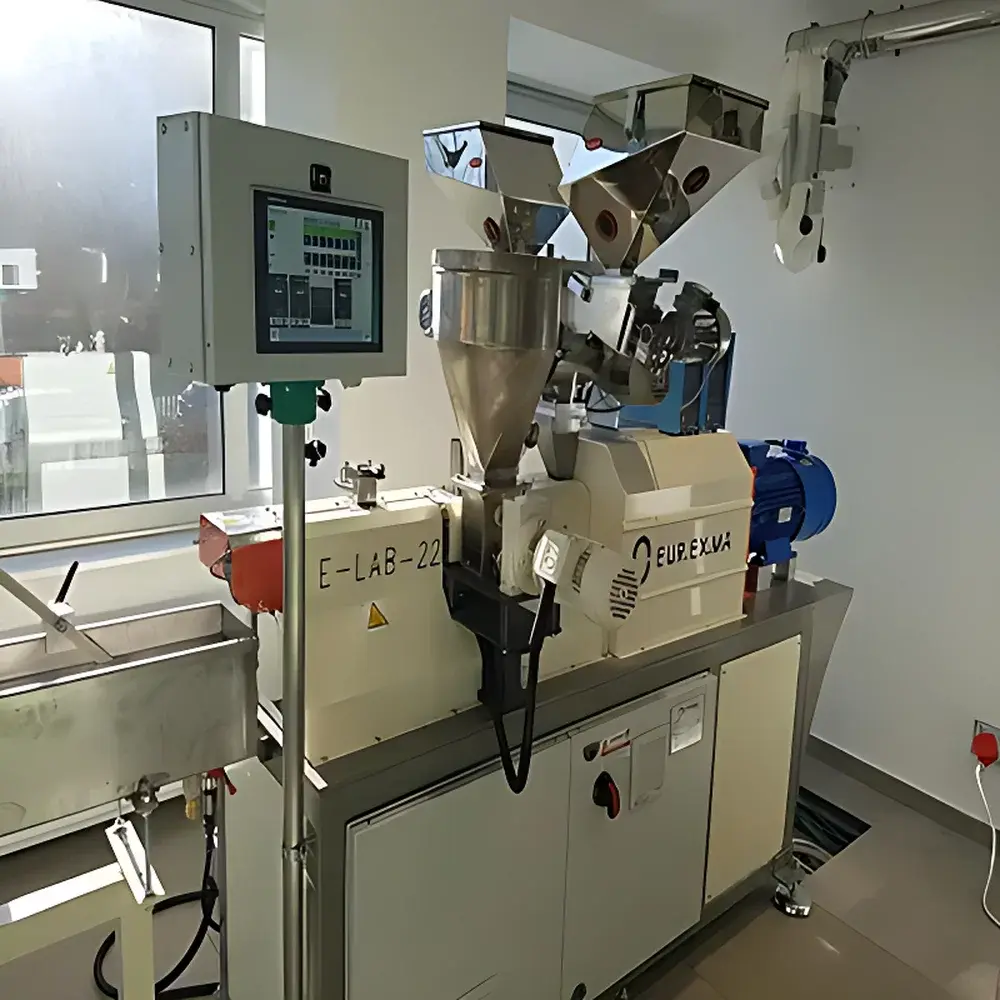
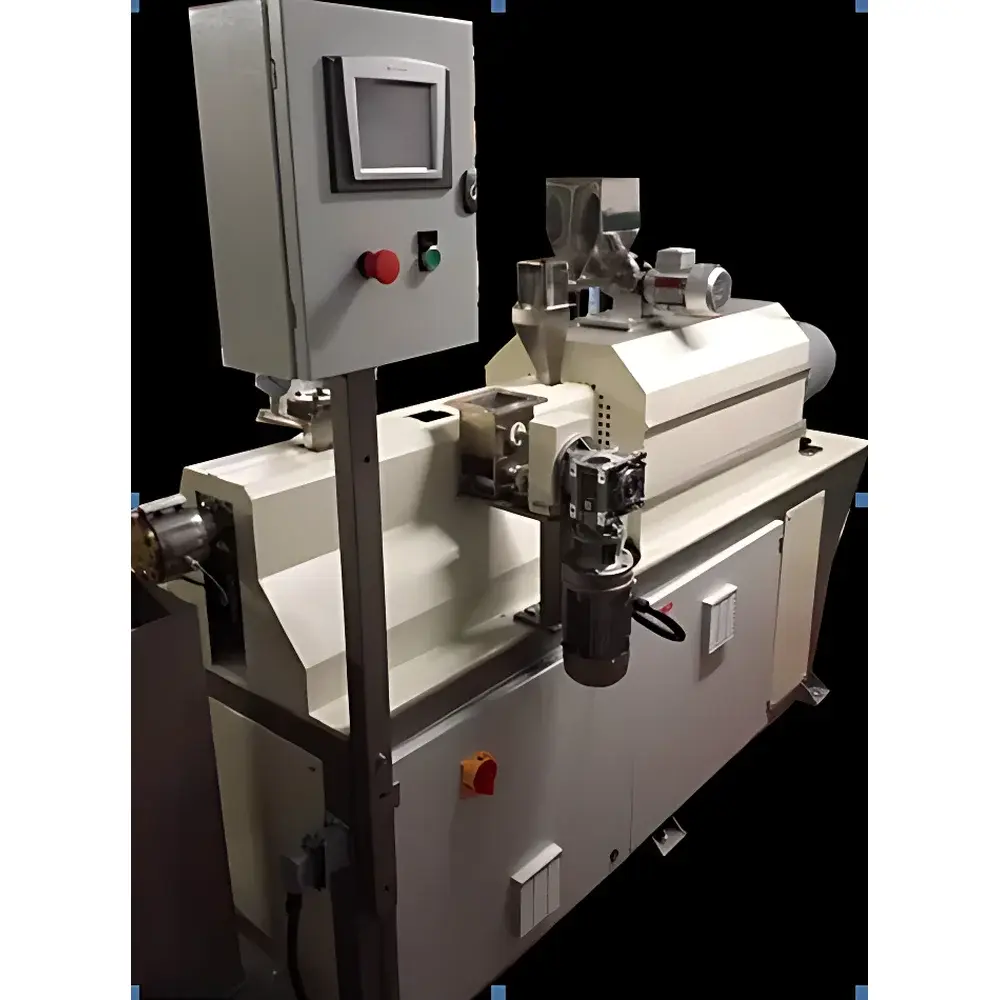
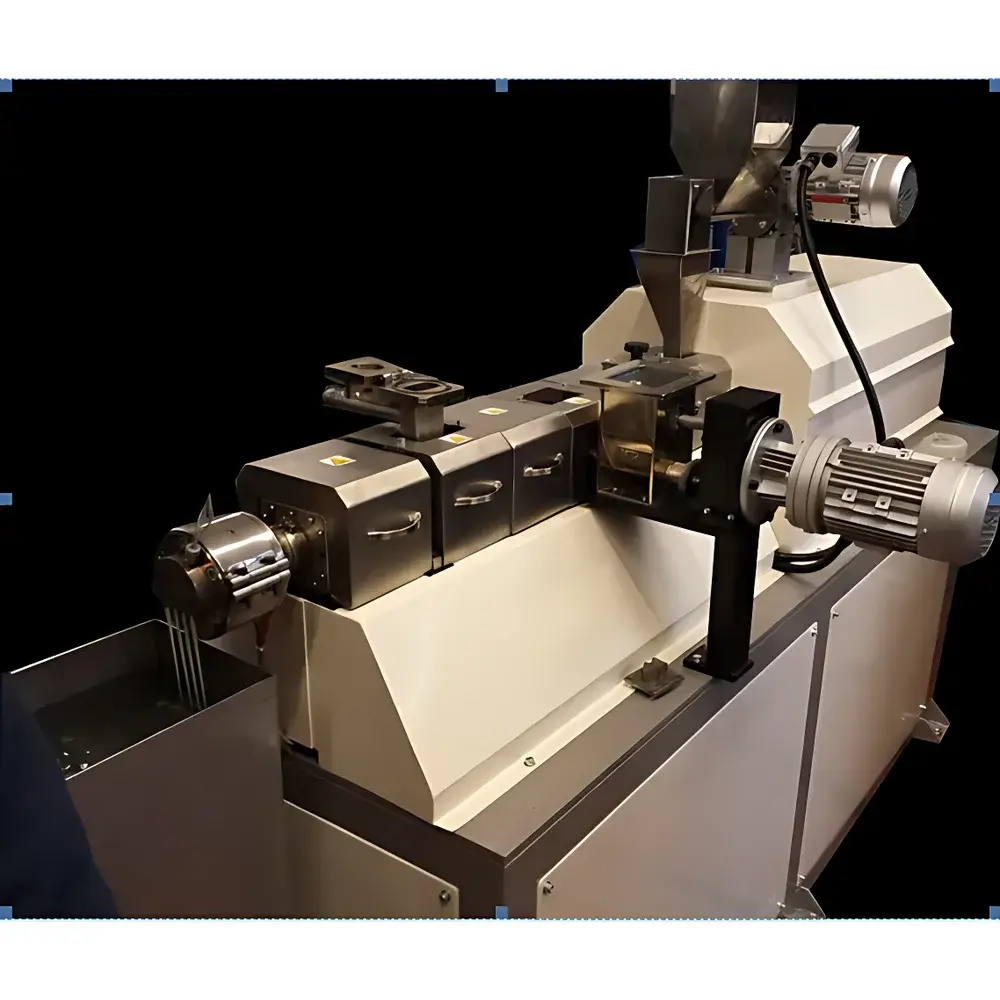
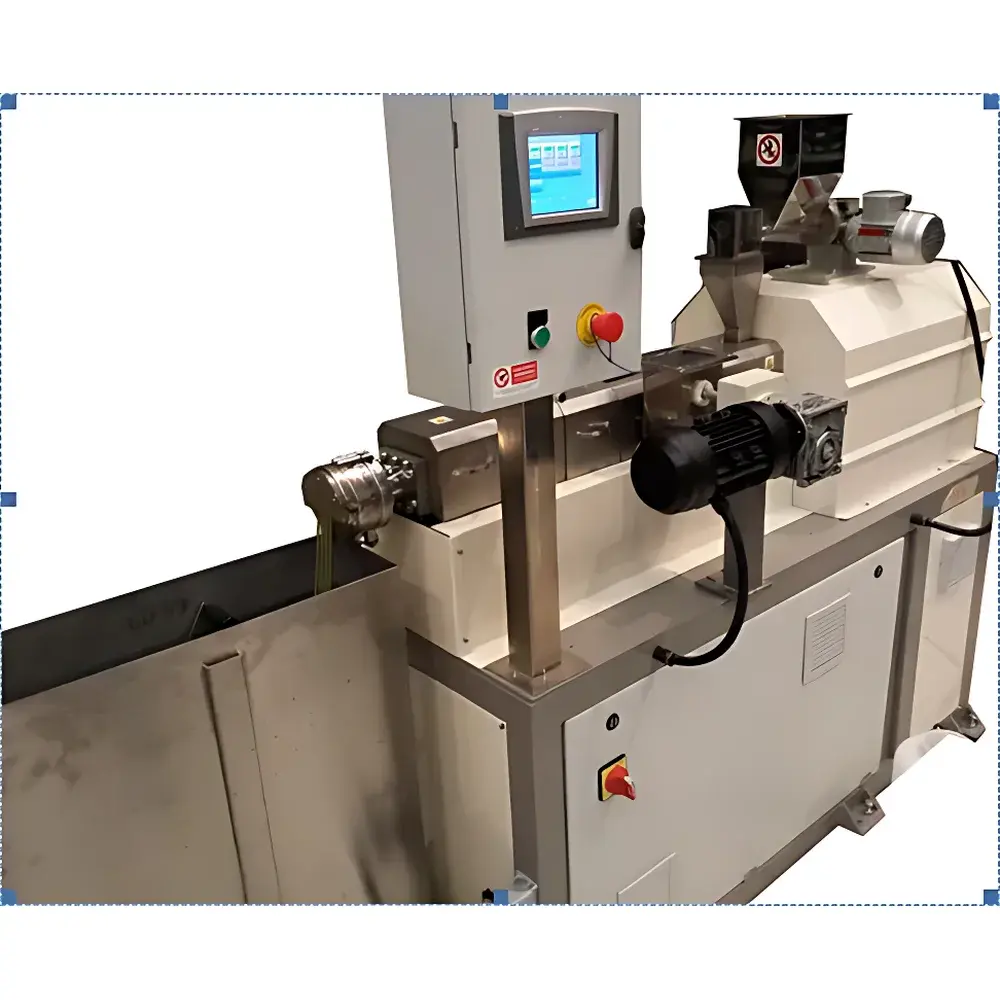
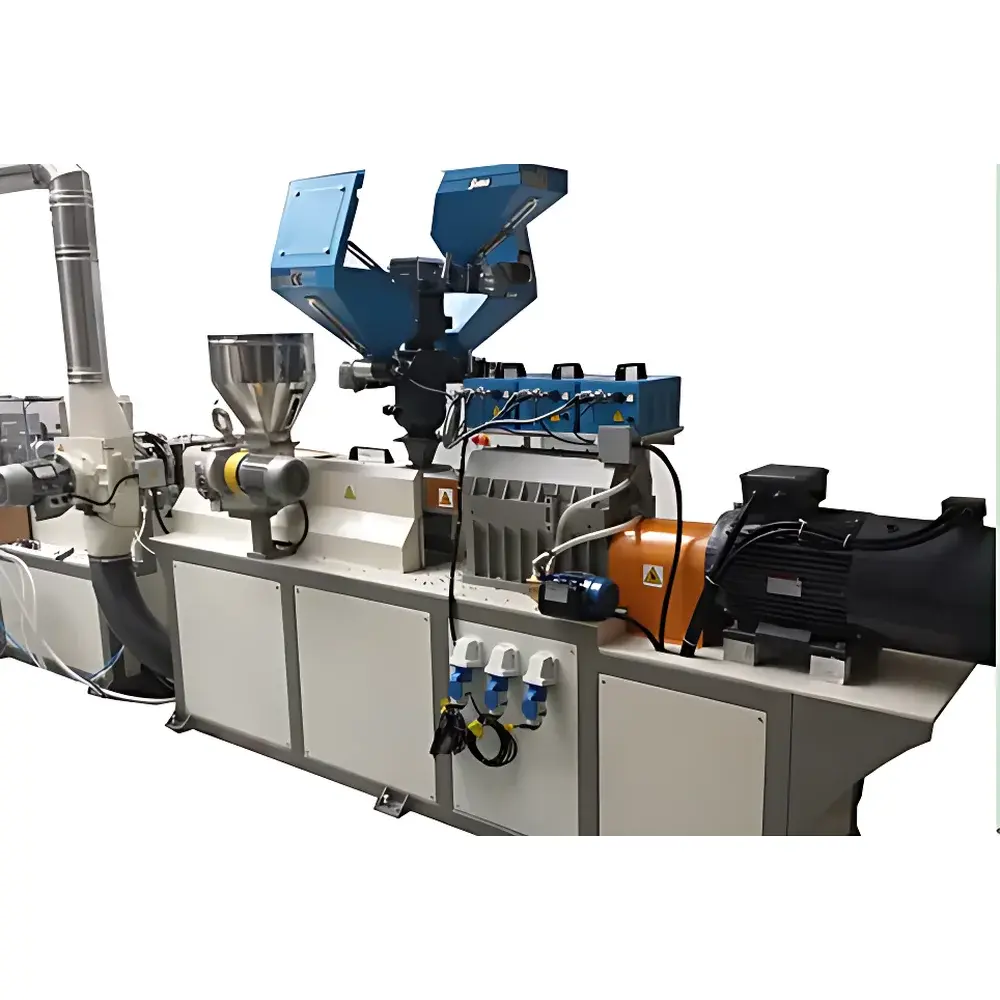
Eurotech E-LAB 22 Twin-Screw Compounding Extruder System
| Brand | Eurotech |
|---|---|
| Origin | Italy |
| Manufacturer Type | Authorized Distributor |
| Origin Category | Imported |
| Model | E-LAB 22 |
| Price Range | USD 13,500 – 40,500 (FOB Italy) |
| Screw Diameter | 22 mm |
| Die Diameter Options | 30 mm |
| Film Width Capability | 200 mm (with flat film die) |
| Configuration | Co-rotating, intermeshing twin-screw |
| Drive Power | 7.5 kW (typical for E-LAB 22) |
| L/D Ratio | 40:1 (standard) |
| Throughput Range | 1–8 kg/h (depending on formulation and screw design) |
| Temperature Control Zones | 6 independent zones (±1 °C accuracy) |
| Material Contact Parts | Nitrided tool steel (X153CrMoV12) or optional corrosion-resistant alloy |
Overview
The Eurotech E-LAB 22 Twin-Screw Compounding Extruder System is a bench-scale, co-rotating, intermeshing laboratory extruder engineered for precise formulation development, material compatibility testing, and small-batch compounding in polymer science and rubber processing laboratories. Based on the fundamental principles of positive displacement conveying and distributive/dispersive mixing within a closely coupled screw geometry, the E-LAB 22 delivers reproducible shear history, controlled residence time distribution, and consistent melt homogenization—critical parameters for evaluating filler dispersion, polymer blending behavior, reactive extrusion kinetics, and masterbatch dilution performance. Its modular barrel design, with six independently controlled heating/cooling zones and precision-machined nitrided steel screws, enables systematic process mapping across temperature, screw speed (0–600 rpm), and feed rate variables—supporting DOE-based optimization aligned with ASTM D3835 and ISO 1133-2 methodologies.
Key Features
- Co-rotating, fully intermeshing twin-screw configuration with 40:1 L/D ratio, optimized for high-intensity distributive and dispersive mixing in viscous polymer melts.
- Modular barrel segments with quick-change capability: standard configuration includes six temperature-controlled zones (range: ambient to 350 °C), each with ±1 °C thermal stability and PID feedback control.
- Screw elements available in multiple geometries—including conveying, kneading blocks (30°, 45°, 60° stagger angles), reverse elements, and deep-flight mixing sections—to support application-specific screw profiling.
- Integrated gravimetric twin-feed system (optional) compliant with ASTM D7927 for accurate multi-component feeding (polymer + filler + additive) with ≤0.5% mass flow deviation.
- Stainless-steel vacuum venting port (10–50 mbar range) for moisture removal or volatile extraction, compatible with standard rotary vane vacuum pumps.
- CE-marked electrical cabinet with integrated safety interlocks, emergency stop circuitry, and motor overload protection per IEC 61800-5-1.
Sample Compatibility & Compliance
The E-LAB 22 accommodates thermoplastic polymers (PP, PE, PA6/66, PC, ABS), thermoplastic elastomers (TPE, TPU), filled compounds (CaCO₃, talc, carbon black, silica), flame-retardant formulations, and reactive systems (e.g., silane-grafted PE). It supports ASTM D3835 (determination of melt viscosity), ISO 1133-2 (melt mass-flow rate under shear), and ISO 20432 (compound homogeneity assessment via image analysis of cryo-fractured specimens). All wetted components meet FDA 21 CFR 177.2400 requirements for food-contact polymer processing when specified with appropriate surface finish (Ra ≤ 0.8 µm) and material grade (e.g., 1.2379 tool steel with ≥65 HRC hardness). The system is designed for GLP-compliant operation with optional audit-trail-enabled PLC logging (IEC 62304 Class B software architecture).
Software & Data Management
The E-LAB 22 operates via Eurotech’s proprietary ExtrusionLab™ control interface (Windows-based, USB/RS485 communication), providing real-time monitoring of torque (0–100% full scale), melt pressure (0–50 MPa), barrel zone temperatures, screw speed, and feed rate. Data acquisition is synchronized at 10 Hz resolution with automatic timestamping and CSV export. Optional compliance packages include 21 CFR Part 11–ready electronic signatures, user role-based access control (admin/operator/technician), and encrypted data archiving with SHA-256 hashing. Historical batch records can be cross-referenced with formulation IDs and raw material lot numbers to support traceability in regulated environments.
Applications
- Development and validation of polymer blends (e.g., PP/EPDM, PC/ABS) with quantification of phase morphology via SEM/TEM post-extrusion.
- Dispersion quality assessment of nanofillers (graphene, CNTs) using rheological fingerprinting (G′, G″, η*) and electrical conductivity mapping.
- Reactive extrusion screening for grafting (maleic anhydride), compatibilization, and in-situ polymerization.
- Thermal stability evaluation of flame-retardant systems under controlled shear and residence time conditions.
- Process simulation for scale-up to pilot (E-LAB 40) or production lines (EVO series), leveraging dimensionless number correlation (Re, We, Fr) and specific mechanical energy (SME) modeling.
FAQ
What is the maximum operating temperature for the E-LAB 22 barrel zones?
Standard configuration supports up to 350 °C; high-temp option extends to 450 °C with Inconel 600 heating cartridges and upgraded insulation.
Can the E-LAB 22 be configured for underwater pelletizing?
Yes—via integration with Eurotech’s compact underwater die-face cutter module (E-WET 22), supporting pellet diameters from 1.0 to 3.5 mm.
Is screw cleaning possible without full disassembly?
The quick-release barrel clamping system allows partial segment removal; nitrogen purging and thermal soak protocols (per ISO 15512) minimize residue carryover between trials.
Does Eurotech provide screw design support for custom applications?
Yes—application engineers deliver validated screw configuration recommendations based on rheological data, filler loading, and target SME profiles.
What documentation is supplied for regulatory submissions?
Factory acceptance test (FAT) report, IQ/OQ protocol templates, material certificates (EN 10204 3.1), and CE declaration of conformity are included standard.




