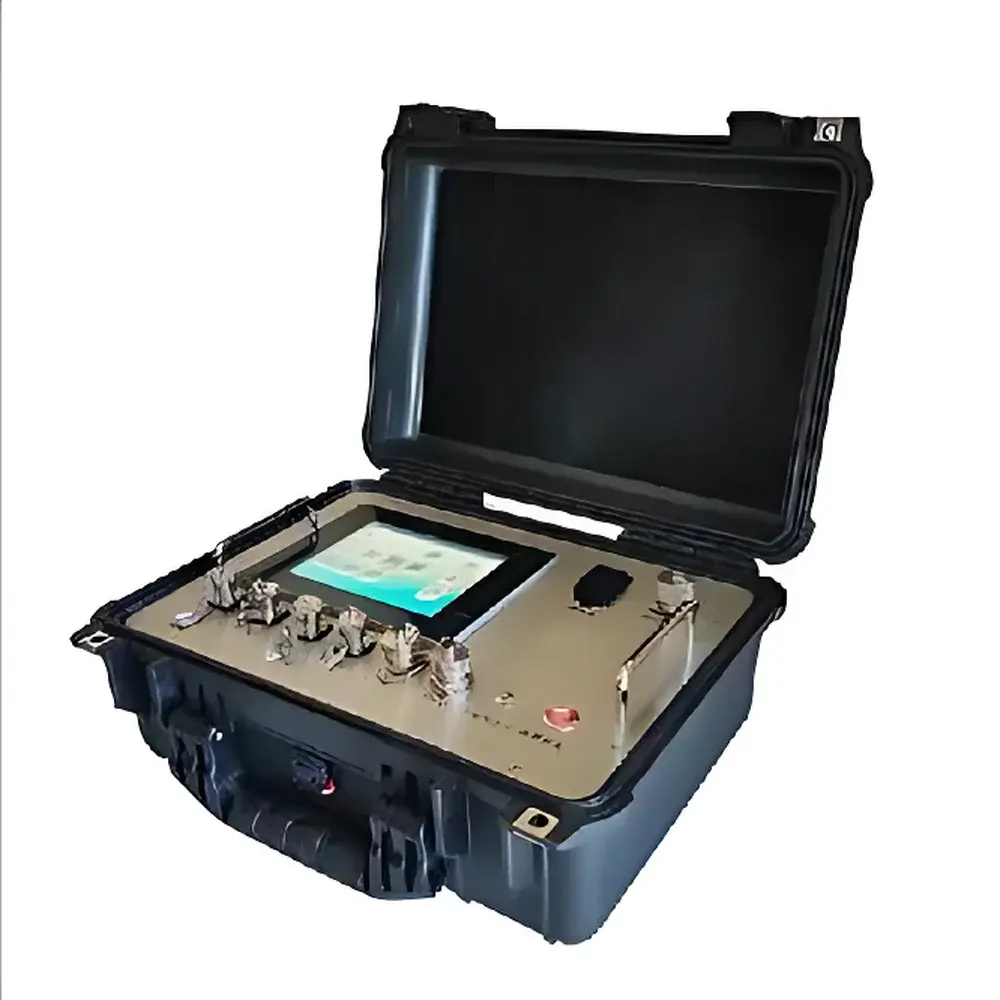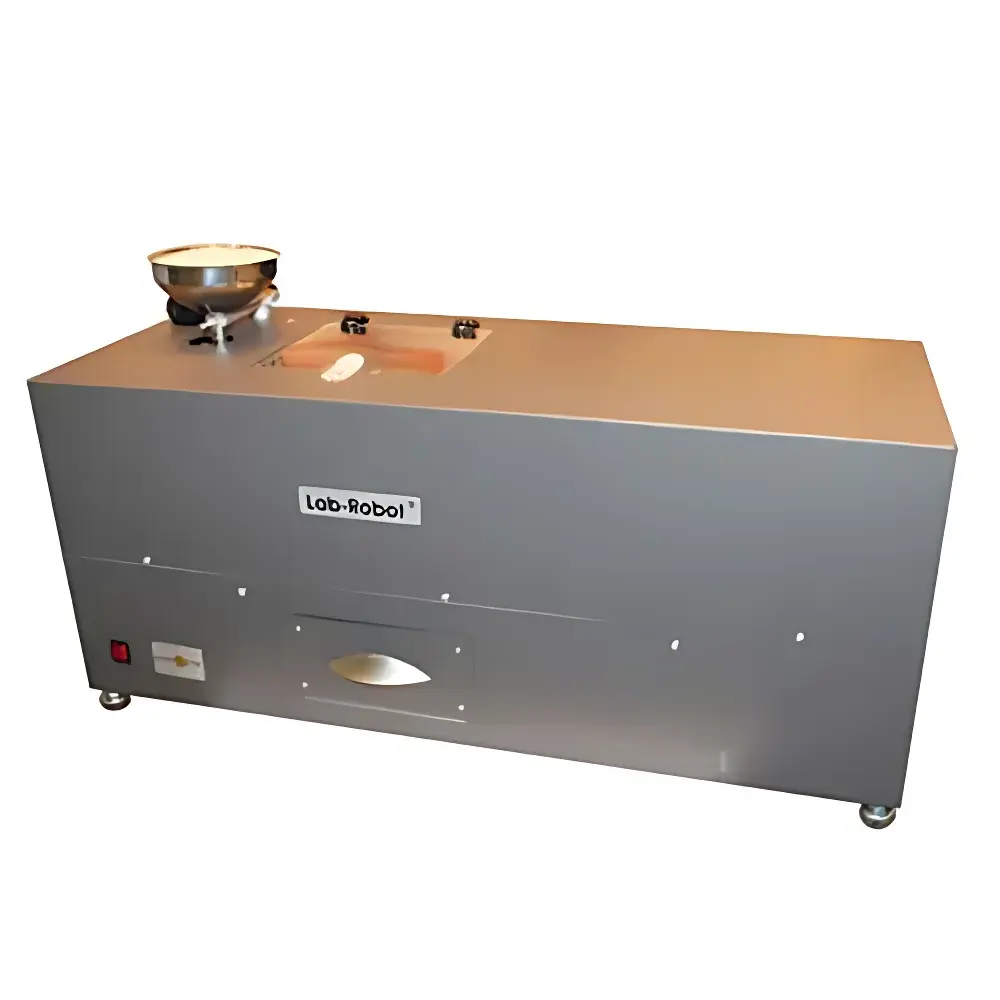
MicrOptik Morphious V1 Polyolefin Particle Morphology & Shape Analysis System
| Brand | MicrOptik |
|---|---|
| Origin | Netherlands |
| Model | Morphious V1 |
| Throughput | Up to 50 kg/h |
| Camera | 4096-pixel CCD linear scanner, 160 MHz line rate |
| Illumination | High-frequency synchronized fluorescent lamp with broad-spectrum white light |
| Host PC | Industrial computer with Intel® Core™ 2 Duo processor |
| OS | Windows XP (custom image processing software) |
| Interface | Ethernet 10/100 Base-T, USB, RS-232, RS-485, digital/analog I/O, Fieldbus (MODBUS RTU/TCP, OPC, SQL) |
| Dimensions | 100 × 50 × 50 cm (L×W×H) |
| Power | 32 W, 230 V AC / 115 V AC, 50/60 Hz |
| Operating Temperature | 10–40 °C |
| Compliance | Designed for GLP/GMP-aligned environments |
Overview
The MicrOptik Morphious V1 Polyolefin Particle Morphology & Shape Analysis System is a high-throughput, inline-capable imaging-based characterization platform engineered for real-time morphological assessment of polymer granules in rubber and plastic manufacturing—particularly polyolefin extrusion, pelletizing, and compounding lines. Unlike static sieve-based or laser diffraction methods, the Morphious V1 employs free-fall imaging metrology: particles are gravity-fed from a precision hopper onto a vibratory dispersion stage, ensuring monolayer separation prior to vertical free fall through an optically optimized detection zone. A high-speed 4096-pixel CCD linear scanner captures silhouette profiles at 160 MHz line rate under calibrated broadband white illumination, eliminating chromatic artifacts common in LED-based systems. Each particle’s geometric signature—including equivalent diameter, aspect ratio, circularity, convexity, roughness, and elongation—is extracted using deterministic edge-detection algorithms compliant with ISO 9276-6 (representation of results of particle size analysis) and ASTM D7260 (standard practice for particle shape analysis by digital image analysis). The system operates continuously at up to 50 kg/h throughput, generating statistically robust datasets suitable for process capability analysis (Cp/Cpk), multivariate SPC, and root-cause correlation with upstream extrusion parameters.
Key Features
- Modular hardware architecture enabling field-upgradable imaging modules, lighting configurations, and conveyor integration
- Proprietary high-frequency synchronized fluorescent illumination—designed to suppress specular reflection and shadowing across translucent, semi-crystalline polyolefin pellets
- Real-time image acquisition and on-the-fly feature extraction with sub-millisecond per-particle latency
- Customizable CTQ (Critical-to-Quality) parameter definitions: users configure pass/fail thresholds for shape outliers (e.g., agglomerates, fishtails, hollow rods, dog-bone deformities, fines, or surface contaminants)
- Multi-format visualization engine: mosaic view, time-evolution heatmaps, bivariate scatter plots (e.g., circularity vs. aspect ratio), histogram distributions, and cumulative frequency curves
- Industrial-grade communication stack supporting MODBUS RTU/TCP, OPC UA, and SQL-based database ingestion—enabling direct linkage to MES/SCADA systems
Sample Compatibility & Compliance
The Morphious V1 is validated for dry, free-flowing thermoplastic granules ranging from 0.5 mm to 12 mm in nominal size—covering standard PP, PE, and copolymer pellets used in injection molding, blow molding, and fiber spinning. It accommodates both virgin and regrind material streams, provided bulk density remains within 0.3–0.9 g/cm³ and moisture content stays below 0.1 wt%. The system meets CE electromagnetic compatibility (EMC) directives and conforms to IEC 61000-6-2/6-4. Its data handling architecture supports traceability requirements aligned with ISO/IEC 17025 and FDA 21 CFR Part 11 when deployed with optional audit-trail-enabled database extensions. All measurement algorithms undergo periodic verification per ASTM E2918 (standard guide for validation of image analysis systems).
Software & Data Management
The embedded Windows XP–based application provides a configurable operator interface with role-based access control (administrator, technician, QA analyst). Raw image metadata and derived morphological descriptors are stored in a structured relational database (Microsoft Access-compatible schema), with automated export to CSV, Excel, or SQL tables. Batch-level summary reports include statistical summaries (mean, std dev, skewness, kurtosis), outlier counts per defect class, and trend charts aligned to production timestamps. The system supports external scripting (VBScript, Python via COM interface) for custom report generation and integration with LIMS. Database schema is open and documented—facilitating third-party analytics (e.g., PCA, PLS regression) without vendor lock-in.
Applications
- Detect and classify extrusion-related defects: fishtailing, die swell irregularities, melt fracture patterns, and surface roughness anomalies
- Quantify pellet agglomeration (dual/triple fusion), fragmentation, and dimensional inconsistency arising from cutter wear or temperature gradient imbalances
- Monitor cooling-line performance via void morphology analysis (hollow-core, “spaghetti”, or “dog-bone” cross-sections)
- Support DOE-driven optimization of screw design, die geometry, and granulator settings
- Enable release testing against internal specifications or customer-facing morphology standards (e.g., automotive OEM granule acceptance criteria)
- Feed predictive maintenance models by correlating shape drift with bearing vibration or motor current signatures
FAQ
Can the Morphious V1 be integrated into an existing PLC-controlled extrusion line?
Yes—the system supports native MODBUS TCP/IP and RS-485 protocols, allowing bidirectional handshake with Allen-Bradley, Siemens, and Mitsubishi PLCs for start/stop triggering, alarm signaling, and setpoint synchronization.
Is calibration required between batches or shifts?
No routine recalibration is needed. The system uses fixed optical geometry and factory-characterized illumination uniformity maps. Daily verification is performed via NIST-traceable ceramic reference pellets supplied with each unit.
Does it support analysis of colored or opaque pellets?
Yes—broad-spectrum white-light illumination ensures consistent contrast across pigmented, carbon-black-filled, or mineral-loaded compounds without spectral bias.
How is data security and user accountability managed?
Role-based login, session logging, and optional electronic signature modules comply with GMP Annex 11 and FDA 21 CFR Part 11 when configured with timestamped, immutable audit trails and encrypted database backups.
What maintenance is required for long-term operational stability?
Annual preventive maintenance includes CCD sensor dust inspection, lens cleaning, vibration-stage alignment verification, and firmware update validation—typically completed onsite in under four hours.