
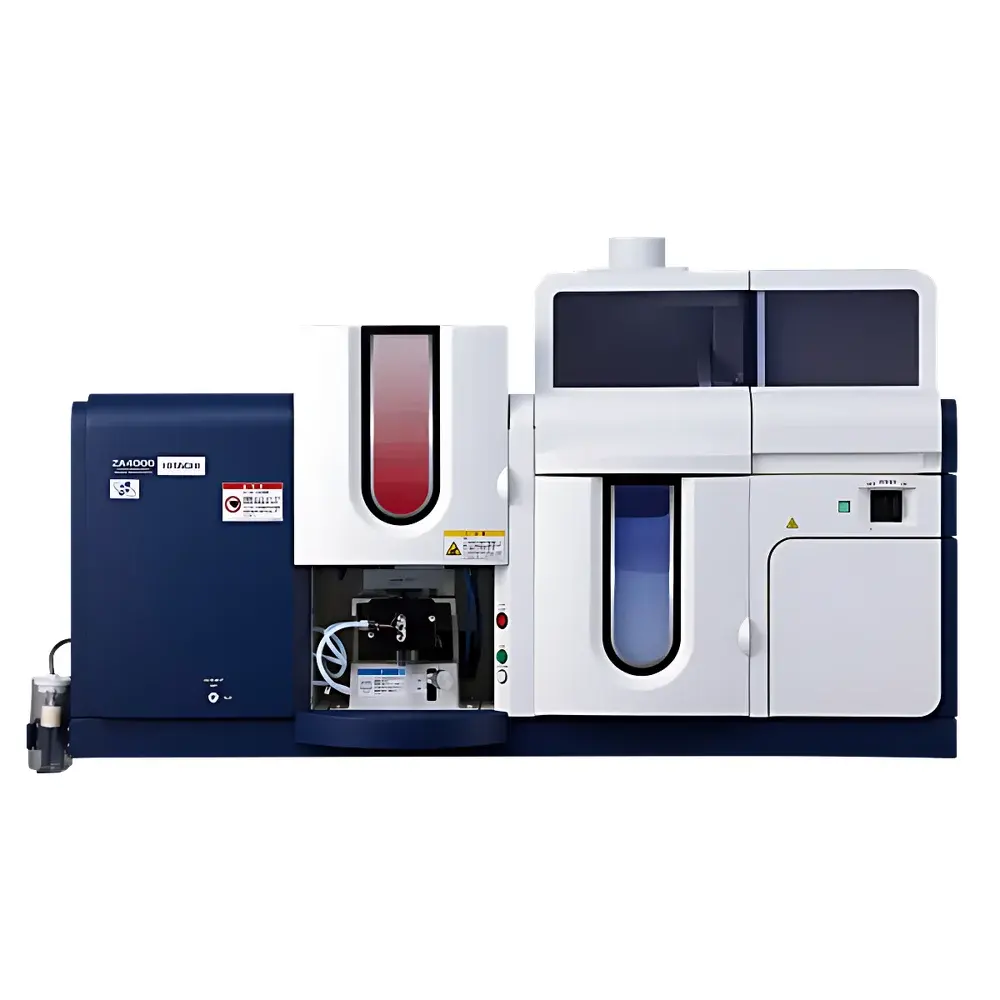
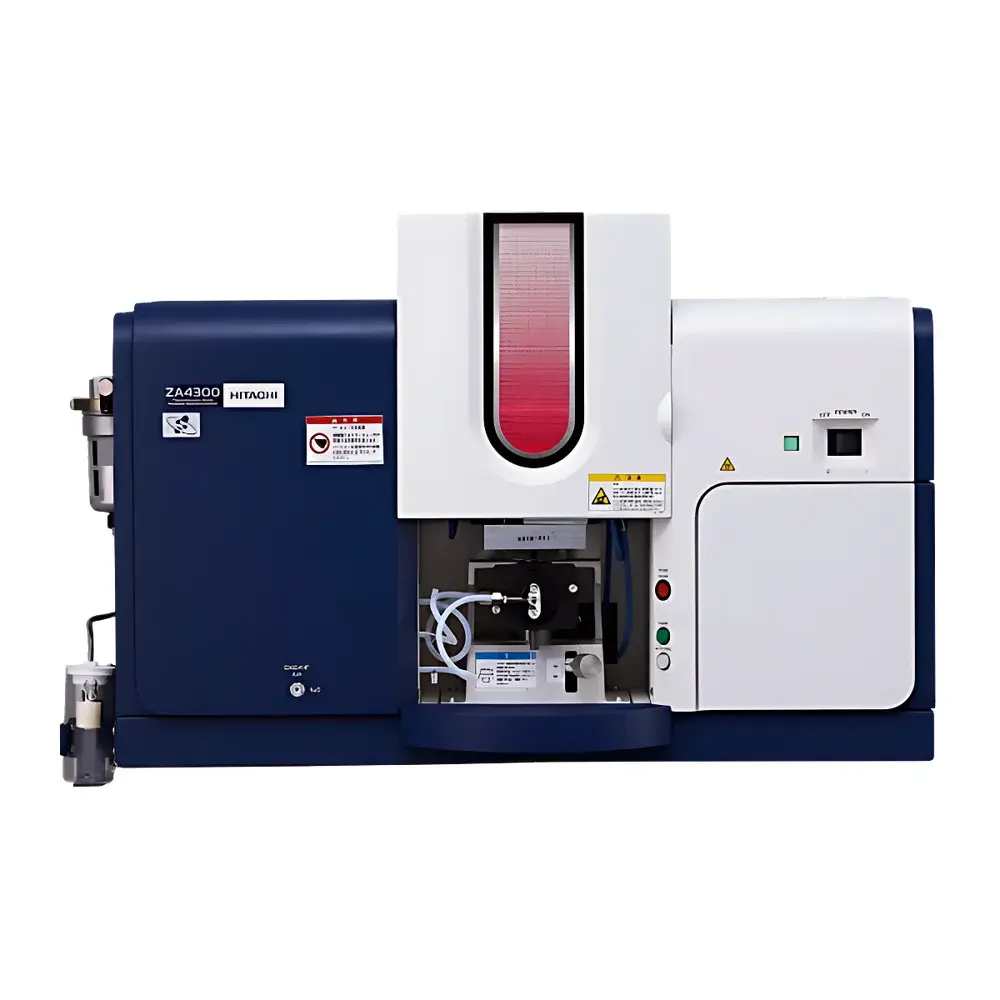
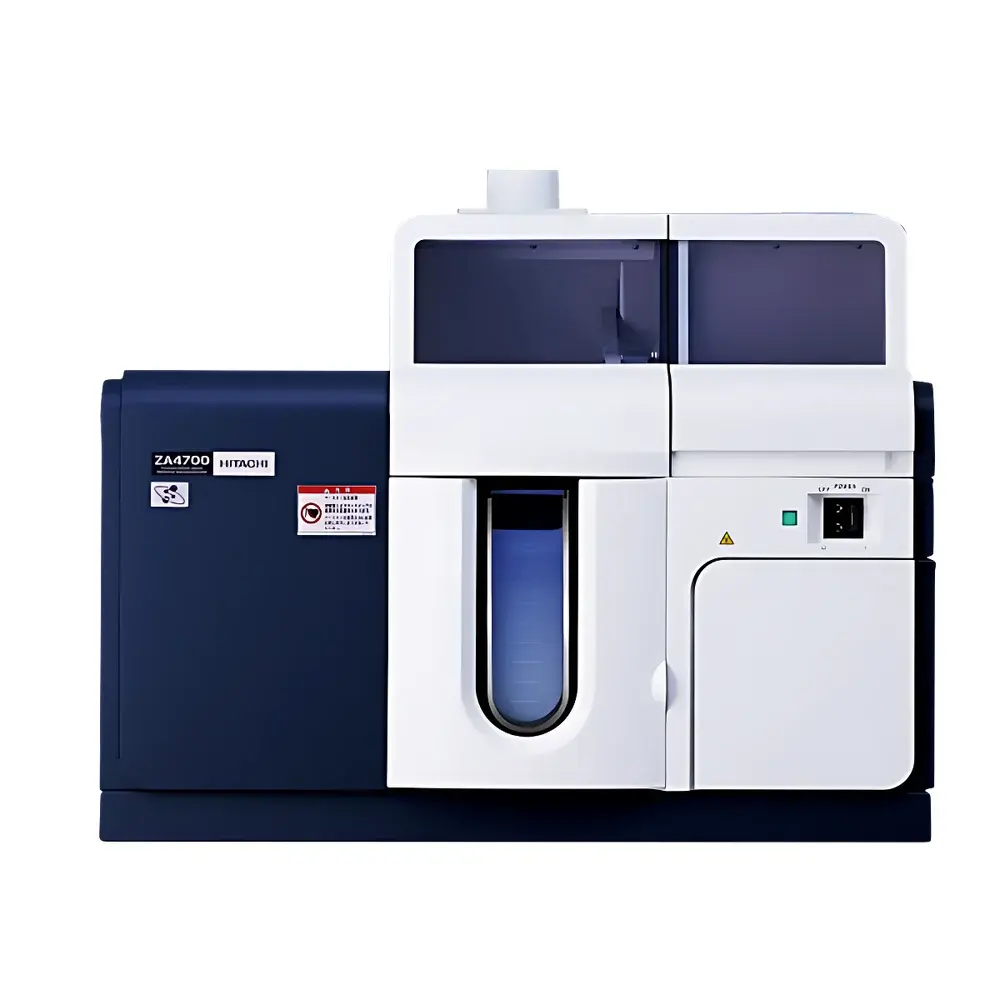
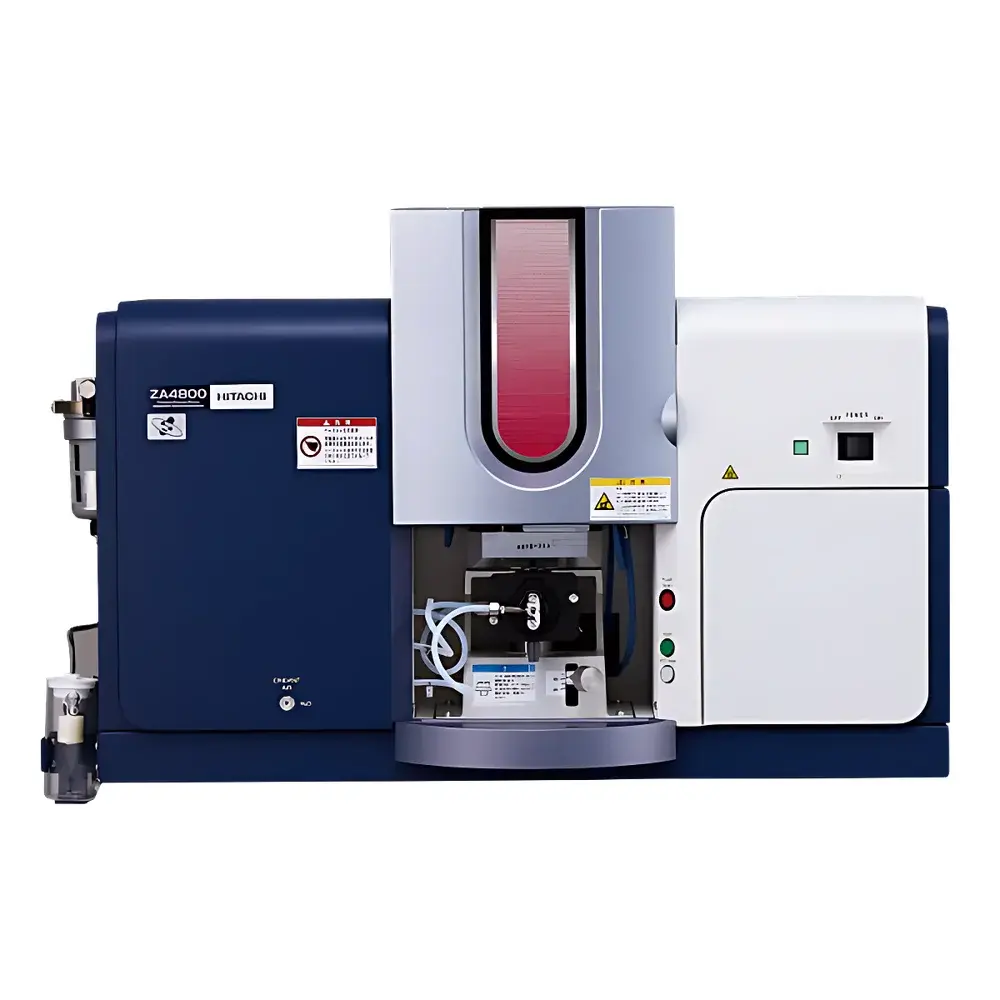
Hitachi ZA4000 Series Atomic Absorption Spectrophotometer
| Brand | Hitachi |
|---|---|
| Origin | Japan |
| Manufacturer | Hitachi High-Tech Corporation |
| Instrument Type | Flame and Graphite Furnace AAS |
| Optical System | Dual-Beam |
| Monochromator | Custom High-Resolution Grating (Motor-Driven for ZA4800) |
| Detector | Photomultiplier Tube (Dual-Detector Configuration) |
| Background Correction | Polarized Zeeman Correction (Full-Wavelength, Real-Time) |
| Baseline Stability | ≤ 0.0004 Abs / 30 min |
| Element Simultaneity | Up to 12 Elements in Sequential Mode (ZA4800) |
| Compliance | ASTM E1756, ISO 8289, USP <731>, FDA 21 CFR Part 11 (Audit Trail & Electronic Signature Ready), GLP/GMP-Ready Software Architecture |
Overview
The Hitachi ZA4000 Series Atomic Absorption Spectrophotometer is a dual-mode analytical platform engineered for precision trace metal quantification across flame atomic absorption (FAAS) and electrothermal atomic absorption (ETAAS) configurations. Based on the fundamental principle of atomic absorption spectroscopy—where ground-state atoms in a vaporized sample absorb characteristic radiation emitted by hollow cathode or multi-element lamps—the ZA4000 leverages polarized Zeeman background correction and dual-beam optical architecture to deliver robust, interference-free measurements at sub-pptr concentration levels. Unlike conventional deuterium (D₂) lamp-based correction systems, the ZA4000’s permanent-magnet-driven polarized Zeeman method enables full-wavelength, real-time background subtraction without spectral limitations—critical for high-accuracy analysis of elements such as Na, K, Ca, and Al in complex matrices where D₂ correction fails. Designed and manufactured in Japan by Hitachi High-Tech Corporation, the ZA4000 series meets stringent international metrological requirements for laboratory accreditation and regulatory compliance.
Key Features
- Polarized Zeeman background correction with permanent magnet configuration—enables background monitoring during drying and ashing stages in graphite furnace mode, supporting method development for volatile elements (e.g., Mg, Pb, Cd).
- Dual-detector optical path: Independent photomultiplier tubes simultaneously acquire sample and reference beam signals, eliminating time-lag artifacts and improving signal-to-noise ratio (SNR) and baseline reproducibility.
- Motorized high-resolution grating drive (ZA4800 model): Enables rapid wavelength switching (< 0.5 s) across up to 12 elemental lines, facilitating true sequential multi-element analysis without lamp rotation or mechanical repositioning.
- Automated flame operation with voice-guided workflow: System autonomously detects aspiration start/end, triggers measurement cycles, and provides audible prompts for sample exchange—reducing operator dependency and training time.
- Graphite furnace diagnostic suite: Includes “Graphite Tube Contamination Check”, “Boil-over Detection” (flagged as “P” in result output), and real-time thermal stage monitoring—supporting GMP/GLP-compliant method validation and troubleshooting.
- Intelligent sample tray visualization: Software renders sample positions in color-coded layout (standards, unknowns, dilutions, matrix modifiers) to prevent misloading; integrates with Excel-based sample metadata import (mass, volume, dilution factor).
Sample Compatibility & Compliance
The ZA4000 accommodates aqueous solutions, acid-digested environmental/biological samples, organic extracts (with appropriate modifiers), and high-salt industrial process streams—including Ni-rich plating baths where Cu quantification at µg/L levels is achieved despite spectral overlap (λCu = 324.7 nm, λNi = 324.8 nm). Its Zeeman correction eliminates non-specific absorption from molecular species and scattering particulates, ensuring validity per ISO 8289-1 for water quality testing and ASTM E1756 for soil and sediment analysis. The system supports full audit trail logging, electronic signatures, and user-access-level controls aligned with FDA 21 CFR Part 11 requirements. All firmware and software modules are validated under GLP/GMP frameworks and support IQ/OQ/PQ documentation packages.
Software & Data Management
The proprietary Hitachi AAS Analysis Station software operates on Windows OS with TLS 1.2–secured network communication. It features embedded method templates compliant with USP and EP 2.2.24, automated calibration curve fitting (linear, quadratic, weighted least squares), and integrated QC flagging (e.g., %RSD >5%, drift >0.002 Abs). Raw spectral data, background-corrected absorbance traces, and furnace temperature profiles are stored in vendor-neutral HDF5 format with embedded metadata (instrument ID, operator, timestamp, sequence ID). Export options include CSV, PDF reports with digital signature fields, and direct LIMS integration via ASTM E1461-compliant XML schema.
Applications
- Environmental labs: Quantification of As, Cd, Cr, Pb, Hg in drinking water (EPA Method 7000B), wastewater, and solid waste leachates.
- Pharmaceutical QA/QC: Elemental impurities screening per ICH Q3D guidelines—especially Pd, Ir, Os, Rh in catalyst residues.
- Electroplating & metal finishing: In-process monitoring of bath composition (Ni, Co, Fe, Cu, Zn) with <2% RSD over 8-hour runs.
- Clinical toxicology: Blood/urine Pb and Cd analysis at sub-µg/L LODs using ZA4700 graphite furnace configuration.
- Geological research: Rare earth element (REE) profiling in digested rock samples with Zeeman-corrected La, Ce, Nd determination.
FAQ
What distinguishes polarized Zeeman correction from conventional D₂ background correction?
Polarized Zeeman correction uses a permanent magnet to split the light source into π and σ components, enabling continuous, wavelength-independent background measurement. Unlike D₂ correction—which is limited to specific UV regions and ineffective for alkali metals—it provides accurate correction across the entire 190–900 nm range, including Na (589 nm) and K (766 nm).
Can the ZA4000 perform simultaneous multi-element analysis?
No—true simultaneity requires ICP-OES or ICP-MS. However, the ZA4800 achieves rapid sequential analysis of up to 12 elements per sample using composite hollow cathode lamps and motorized grating positioning, reducing total cycle time by ≥30% versus conventional AAS.
Is graphite furnace operation fully automated?
Yes. The ZA4700 includes programmable temperature ramping, auto-optimization of pyrolysis/atomization steps, boil-over detection, and contamination diagnostics—all controllable via script-based method files with version control and rollback capability.
Does the system support remote monitoring and data export to LIMS?
Yes. The Analysis Station software includes OPC UA server support, scheduled report generation, and secure REST API endpoints for bidirectional LIMS synchronization—including sample status, instrument health logs, and raw absorbance data.
What validation documentation is provided for regulated environments?
Hitachi supplies full IQ/OQ protocols, 21 CFR Part 11 compliance checklist, electronic signature validation report, and GxP-ready software verification package—including test scripts, expected outcomes, and deviation handling procedures.




