FSM Inline & Dimensional Metrology System for Stress and Thickness Measurement
| Brand | FSM |
|---|---|
| Origin | USA |
| Model | FSM Inline & Dimensional Metrology |
| Temperature Range | Up to 900 °C (for 200 mm and 300 mm wafers) |
| Vacuum/Inert Gas Operation | Yes |
| TDS Capability | Yes |
| Wafer Size Support | 200 mm, 300 mm, 450 mm |
| Non-contact Optical Measurement | Yes |
| Laser Optical Lever (OptiLever®) Technology | Yes |
| Spatial Resolution (XY) | ±0.5 µm |
| Spectral Resolution (Raman option) | 0.1 cm⁻¹ |
Overview
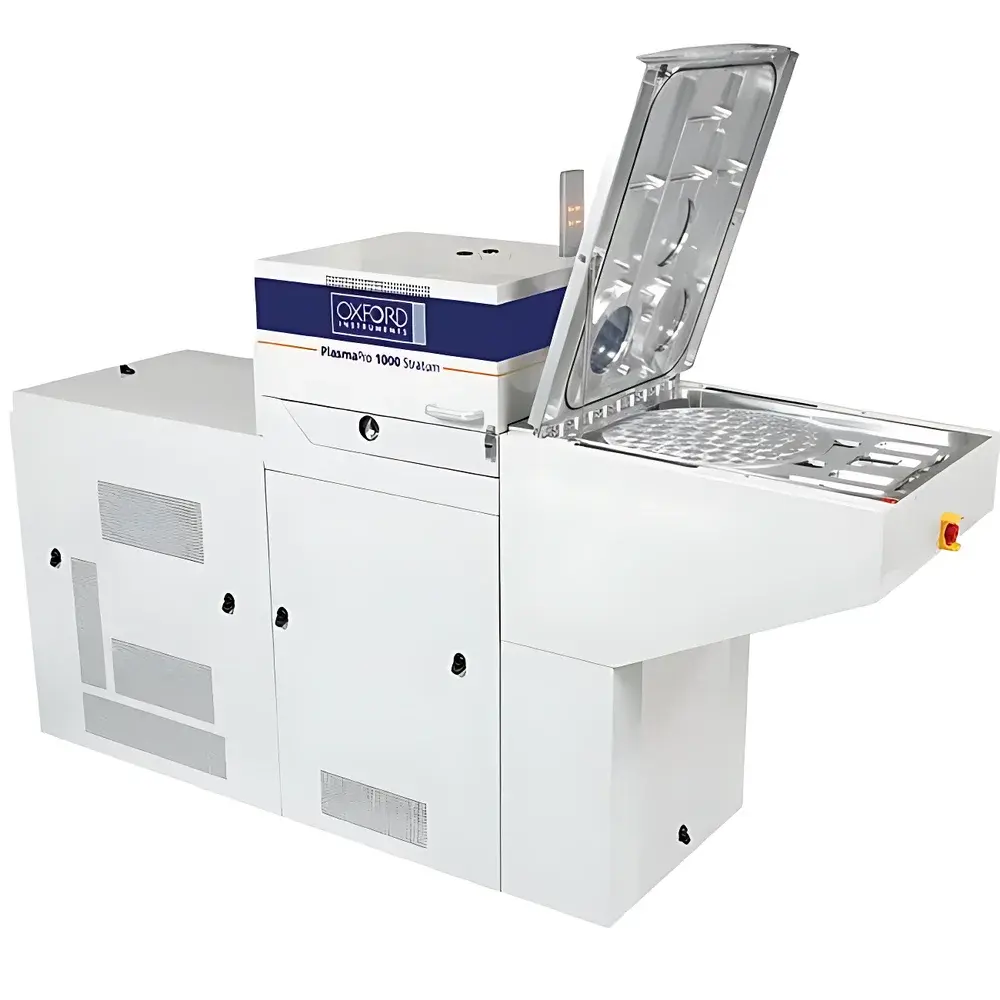
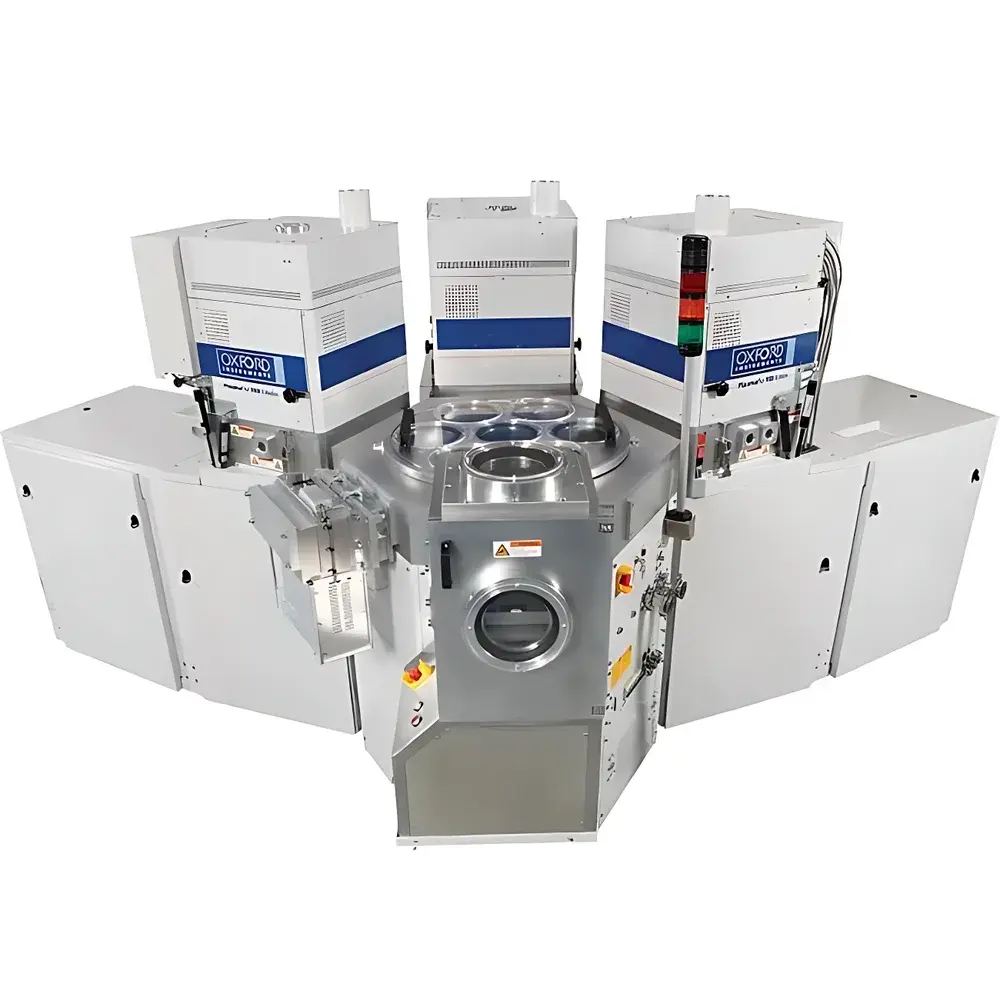
The FSM Inline & Dimensional Metrology System is a high-precision, non-contact optical platform engineered for real-time, in-line monitoring of thin-film stress, wafer curvature (bow/warp), thickness, and critical dimensional parameters in semiconductor front-end and advanced packaging processes. At its core, the system leverages FSM’s patented Laser Optical Lever (OptiLever®) technology—a highly sensitive interferometric method that measures nanoscale surface deflection with sub-micron spatial resolution. This principle enables quantitative mapping of residual stress distribution across full wafers without physical contact, eliminating risk of contamination or mechanical damage. Complementing stress metrology, the system integrates multi-wavelength optical profilometry and microwave-based depth sensing for simultaneous measurement of film thickness, total thickness variation (TTV), through-silicon via (TSV) depth, bump height, and substrate warpage. Designed for integration into automated fab environments, the platform supports both atmospheric, inert-gas, and high-vacuum process conditions—particularly critical for thermally unstable or oxidation-prone materials such as low-k dielectrics, copper interconnects, and novel 2D/compound semiconductors.
Key Features
- Patented OptiLever® laser optical lever technology for full-wafer, non-contact stress and curvature mapping with <0.1 µm repeatability
- Multi-mode thermal capability: FSM 900TC-Vac variant supports controlled heating up to 900 °C under high vacuum (<10⁻⁶ Torr) or programmable inert gas atmospheres
- Integrated Thermal Desorption Spectroscopy (TDS) functionality for real-time gas evolution analysis during temperature ramps—compatible with intact or fractured wafers
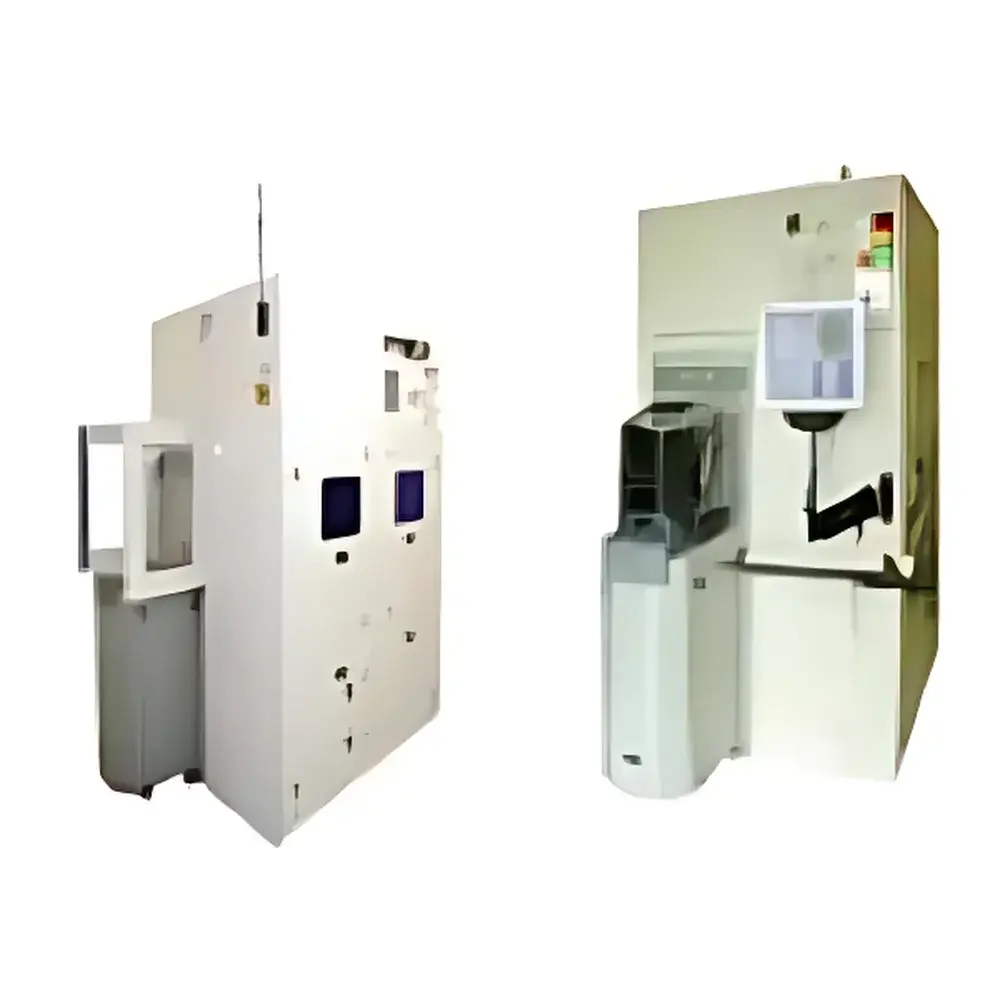
- Modular platform architecture supporting multiple configurations: FSM 128 series (manual/semi-auto), FSM 8108 VITE (high-resolution dimensional metrology), FSM 413 (microwave-assisted silicon depth profiling), and FSM Raman (0.1 cm⁻¹ spectral resolution)
- Automated wafer handling options including cassette-to-cassette (C2C) operation for 300 mm substrates (FSM 128C2C)
- Simultaneous acquisition of absolute thickness, shape, bow, warp, TTV, and local topography on Si, GaAs, glass, sapphire, and polymer tape substrates
- Sub-µm XY positioning accuracy (±0.5 µm) with programmable scanning routines and recipe-driven operation
Sample Compatibility & Compliance
The system accommodates standard semiconductor wafer diameters—200 mm (FSM 128NT), 300 mm (FSM 128L / 128C2C), and 450 mm (FSM 128G)—as well as non-standard substrates including MEMS carriers, display glass panels, and compound semiconductor blanks. It complies with industry-standard mechanical interface protocols (SEMI E10, E15, E27) and supports integration into factory automation networks via SECS/GEM. Data integrity and audit readiness are ensured through configurable electronic logbooks, user-access controls, and optional 21 CFR Part 11-compliant software modules for GMP/GLP environments. All optical and thermal subsystems meet IEC 61000-6-2 (immunity) and IEC 61000-6-4 (emission) requirements for cleanroom deployment.
Software & Data Management
The FSM Metrology Suite provides unified control across all hardware modules via a Windows-based GUI with intuitive workflow navigation. Real-time data visualization includes color-mapped stress contours, cross-sectional profiles, and time-resolved TDS spectra. Raw measurement datasets are stored in vendor-neutral HDF5 format with embedded metadata (timestamp, recipe ID, environmental conditions). The software supports statistical process control (SPC) charting, trend analysis, and export to common industry formats (CSV, XML, SECS-II). Optional Advanced Analytics Module enables multivariate correlation between stress evolution, thermal history, and gas desorption profiles—facilitating root-cause analysis of film delamination, cracking, or interfacial instability. Audit trails record all operator actions, parameter changes, and calibration events with tamper-proof timestamps.
Applications
- Residual stress characterization of PECVD, ALD, and sputtered films (SiNx, SiO2, TiN, TaN, low-k organosilicates)
- Thermal stability assessment of Cu/barrier stacks and ultra-thin interconnect layers under rapid thermal processing (RTP)
- In-line monitoring of wafer warpage during backgrinding, bonding, and TSV filling processes
- Dimensional validation of 3D IC stacking, microbump height uniformity, and TSV trench depth consistency
- Process development for heterogeneous integration involving Si, GaAs, InP, and flexible hybrid electronics
- Failure analysis support via correlation of stress gradients with observed crack propagation or void formation
FAQ
What measurement principles does the FSM system use for stress mapping?
It employs the Laser Optical Lever (OptiLever®) technique, which detects minute wafer surface deflections induced by film stress using a reflected laser beam and quadrant photodetector—based on classical Stoney’s equation with calibrated substrate modulus inputs.
Can the system operate inside a cleanroom environment?
Yes. All models are rated for Class 100 (ISO 5) cleanroom compatibility, with sealed optics, particle-controlled air filtration, and static-dissipative housing.
Is vacuum-compatible TDS analysis possible on partial wafers or diced dies?
Yes. The FSM 900TC-Vac chamber accommodates fragmented wafers and individual dies, enabling localized outgassing analysis without requiring full-die integrity.
How is traceability maintained for calibration and measurement data?
Each system ships with NIST-traceable calibration certificates for optical lever sensitivity, thermal sensor accuracy, and XY stage linearity. Software enforces version-controlled calibration protocols with automatic timestamped logging.
Does the platform support integration with MES or APC systems?
Yes. Native SECS/GEM communication stack enables bidirectional data exchange with manufacturing execution systems (MES) and advanced process control (APC) platforms for closed-loop feedback.