
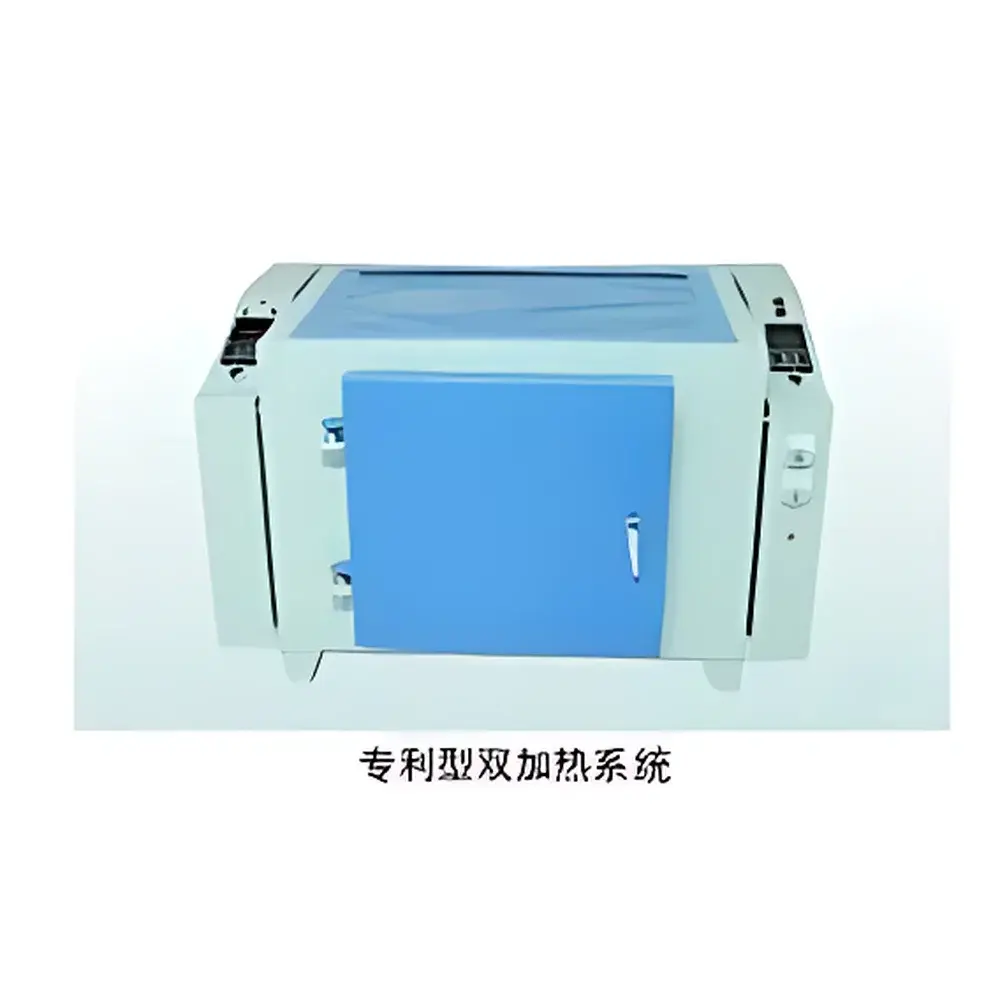
SGM3818 Ultra-High-Temperature Box-Type Muffle Furnace
| Origin | Henan, China |
|---|---|
| Manufacturer Type | Authorized Distributor |
| Origin Category | Domestic (China) |
| Model | SGM3818 |
| Pricing | Available Upon Request |
| Max Operating Temperature | 1800 °C (Oxidizing Atmosphere) |
| Standard Chamber Dimensions (W×D×H) | 200×100×120 mm to 500×200×250 mm (Model-Dependent) |
| Temperature Uniformity | ±8 °C |
| Temperature Stability | ±1 °C |
| Control Accuracy | ≤3 °C Overshoot |
| Control System | 50-Stage Programmable PID with Auto-Tuning, Manual/Auto Seamless Switching, Over-Temperature Alarm, Temp. Compensation & Calibration |
| Heating Architecture | Dual-Zone Independent Heating & Dual-Loop Temperature Control |
| Insulation | Patented Double-Layer Ceramic Fiber Chamber |
| Heating Element | Specialized High-Temperature Resistance Alloy (Oxidation-Stable up to 1800 °C) |
Overview
The SGM3818 Ultra-High-Temperature Box-Type Muffle Furnace is an engineered thermal processing system designed for laboratories and R&D facilities requiring precise, repeatable, and stable operation at extreme temperatures up to 1800 °C in air or mildly oxidizing atmospheres. Built upon a dual-chamber ceramic fiber architecture, the furnace eliminates structural degradation commonly observed in conventional high-temperature units—such as fiber collapse, powder shedding, or thermal cracking—even after prolonged exposure to peak temperature. Its core measurement and control paradigm relies on dual-loop independent temperature sensing and actuation, enabling spatial decoupling of heating zones and minimizing thermal gradient-induced drift. Unlike single-zone furnaces, this architecture ensures consistent thermal profiles across the entire working volume, supporting applications where material phase transitions, sintering kinetics, or ashing protocols demand strict adherence to ISO 5667-12, ASTM E119, or USP thermal validation criteria.
Key Features
- Dual-layer ceramic fiber chamber with proprietary densification technology—resistant to sagging, dusting, and microfracture under cyclic thermal stress up to 1800 °C
- 50-segment programmable temperature profile controller with adaptive PID auto-tuning, enabling complex ramp-hold-cool sequences without manual intervention
- Independent dual-heating-zone configuration with redundant thermocouple inputs (Type S or B, user-selectable), supporting real-time cross-validation and fault detection
- Temperature overshoot limited to ≤3 °C during setpoint transitions; long-term stability maintained at ±1 °C over 24-hour continuous operation
- Integrated over-temperature cut-off circuit with audible/visual alarm and automatic power disengagement—compliant with IEC 61000-6-2 EMC immunity standards
- Front-panel calibration offset adjustment and sensor linearization functions for traceable temperature correction per ISO/IEC 17025 requirements
Sample Compatibility & Compliance
The SGM3818 accommodates crucibles, boats, and trays fabricated from alumina, silicon carbide, molybdenum disilicide, or platinum—compatible with ASTM C865 for refractory testing and ISO 11464 for textile ash content determination. Its sealed muffle design isolates samples from direct flame or element radiation, ensuring contamination-free thermal treatment essential for geochemical sample preparation (e.g., LOI analysis per ASTM D7348) and catalyst calcination. All electrical interfaces conform to UL 61010-1 and CE EN 61000-3-2 emission limits. The unit supports GLP-compliant operation through optional audit-trail-enabled firmware (sold separately), logging timestamped temperature events, operator IDs, and parameter modifications in accordance with FDA 21 CFR Part 11 data integrity guidelines.
Software & Data Management
While the standard configuration features an embedded 4.3-inch TFT touchscreen HMI with local data logging (up to 10,000 records), optional RS485 Modbus RTU or Ethernet TCP/IP connectivity enables integration into centralized laboratory information management systems (LIMS). Third-party SCADA platforms—including Ignition, Siemens Desigo, or LabVIEW—can acquire real-time temperature streams, setpoint commands, and alarm status via open protocol support. Exported CSV logs include calibrated thermocouple voltage, PID output %, and derivative error terms—facilitating post-run root-cause analysis of thermal deviations. Firmware updates are performed via USB flash drive with cryptographic signature verification to prevent unauthorized modification.
Applications
- High-temperature ashing of biological, pharmaceutical, and environmental samples prior to elemental analysis (ICP-OES/MS)
- Sintering of advanced ceramics, solid oxide fuel cell (SOFC) electrolytes, and battery cathode precursors (e.g., NMC, LFP)
- Thermal gravimetric analysis (TGA) pre-conditioning and residue quantification per ISO 11358
- Heat treatment of metallurgical specimens for grain structure stabilization and phase homogenization
- Calibration and verification of secondary temperature sensors used in industrial kilns and annealing lines
- Research-scale pyrolysis and oxidative decomposition studies under controlled dwell-time protocols
FAQ
What atmosphere types are supported inside the SGM3818 chamber?
The furnace is rated for continuous operation in ambient air and mildly oxidizing environments. It is not designed for inert, reducing, or vacuum conditions without optional gas purge or pressure-rated modifications.
Can the SGM3818 be validated for GMP compliance?
Yes—when equipped with the optional IQ/OQ documentation package and audit-trail firmware, it meets baseline qualification requirements for thermal equipment under EU Annex 15 and ASTM E2500-13.
Is temperature uniformity verified across all chamber sizes?
Uniformity mapping (per ASTM E2203) is performed per model variant during factory acceptance testing; certified reports list measured deviations at nine standardized points within each cavity dimension.
What maintenance intervals are recommended for long-term reliability?
Ceramic fiber integrity inspection every 500 operating hours; thermocouple verification every 1,000 hours or annually—whichever occurs first—using NIST-traceable reference standards.
Does the controller support external analog setpoint input?
Yes—the 0–10 VDC analog input port allows integration with PLCs or process controllers for cascade temperature regulation in multi-stage thermal systems.



