
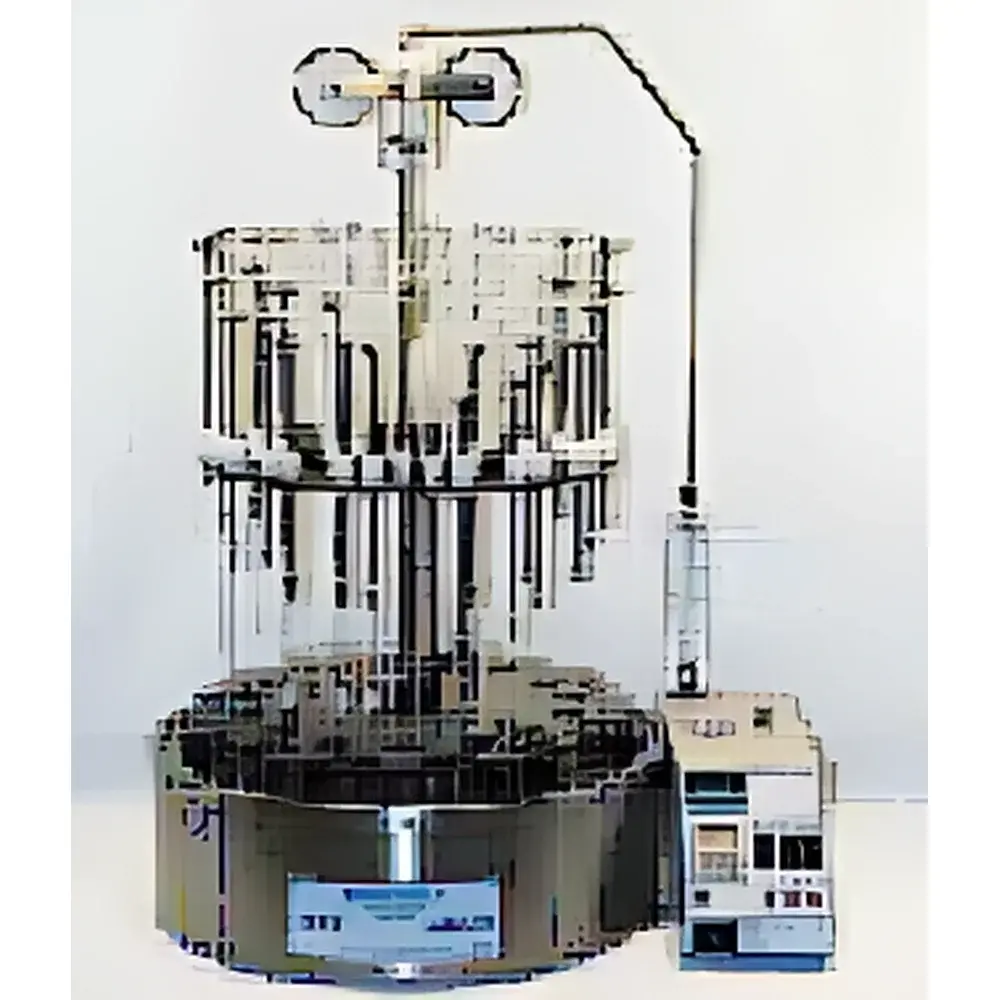
Organomation S1-N-EVAP Nitrogen Evaporator
| Origin | USA |
|---|---|
| Manufacturer Type | Authorized Distributor |
| Origin Category | Imported |
| Model | S1-N-EVAP |
| Pricing | Available Upon Request |
Overview
The Organomation S1-N-EVAP Nitrogen Evaporator is an engineered solution for rapid, reproducible solvent removal in analytical sample preparation workflows. It operates on the principle of gentle inert-gas displacement—introducing precisely controlled, heated nitrogen gas tangentially across the surface of liquid samples to accelerate evaporation without thermal degradation or analyte loss. Unlike vacuum-based concentrators, the S1-N-EVAP avoids foaming, bumping, or oxidation-sensitive compound decomposition by maintaining atmospheric pressure and enabling real-time visual monitoring. Designed for integration into LC-MS, GC-MS, HPLC, and clinical toxicology labs, it supports method-compliant concentration of volatile and semi-volatile organic solvents—including acetonitrile, methanol, ethyl acetate, and dichloromethane—across 6 to 100 sample positions in a single run.
Key Features
- Rotating sample manifold with front-access orientation—enables ergonomic operation and unobstructed visibility during evaporation
- Heated water bath with PID-controlled temperature regulation (ambient to 99 °C, ±0.5 °C stability) for uniform, non-contact thermal input
- Low-flow nitrogen delivery system: 330 mL/min per sample channel, minimizing gas consumption while ensuring laminar flow over sample surfaces
- Individual needle valve–equipped flow meters for precise, independent adjustment and real-time visualization of gas flow per position
- Chemically resistant construction: stainless steel base, anodized aluminum frame, PTFE-coated gas manifolds, and borosilicate glass components compatible with common organic solvents
- Optional acid-resistant epoxy coating available for extended durability in corrosive environments (e.g., hydrochloric or trifluoroacetic acid-containing extracts)
- Modular design accommodates standard laboratory vessels—10–100 mm diameter test tubes, conical centrifuge tubes (15 mL, 50 mL), and round-bottom flasks up to 125 mL
Sample Compatibility & Compliance
The S1-N-EVAP is validated for use with aqueous, alcoholic, and halogenated solvent systems typical in EPA Method 525.3 (drinking water analysis), ASTM D7087 (petroleum hydrocarbon extraction), and USP residual solvent testing. Its open-vessel architecture eliminates cross-contamination risks inherent in sealed-vial evaporators and complies with GLP documentation requirements when paired with audit-trail-capable lab information management systems (LIMS). All wetted materials meet USP Class VI biocompatibility standards; the unit itself carries CE marking for EMC and low-voltage directive compliance. No internal electronics are exposed to vapor pathways—ensuring long-term reliability in high-humidity or solvent-saturated environments.
Software & Data Management
While the S1-N-EVAP is a standalone analog instrument, its operational parameters—including bath temperature setpoint, total runtime, and per-channel flow settings—are fully documentable within electronic lab notebooks (ELN) and LIMS platforms. The integrated mechanical flow control system supports 21 CFR Part 11–compliant procedural logging when used in conjunction with validated digital recording tools. Optional accessories include calibrated temperature probes (traceable to NIST standards) and time-stamped video documentation kits for method validation packages required under ISO/IEC 17025 accreditation.
Applications
- Pre-concentration of environmental water extracts prior to GC-MS analysis of pesticides and PAHs
- Final volume adjustment in clinical pharmacokinetic assays (e.g., plasma steroid quantification via LC-MS/MS)
- Residual solvent removal from synthetic intermediates in API development (ICH Q3C-compliant workflows)
- High-throughput cleanup of forensic urine specimens for amphetamine and opioid screening
- Parallel evaporation of SPE eluates in food safety testing for mycotoxin residue confirmation (AOAC 2007.01)
- Preparation of calibration standards and QC reference materials requiring trace-level solvent elimination
FAQ
What is the maximum recommended operating temperature for the water bath?
The PID-controlled bath is rated for continuous operation up to 99 °C with ±0.5 °C thermal stability at setpoint.
Can the S1-N-EVAP be used with chlorinated solvents such as chloroform or carbon tetrachloride?
Yes—provided appropriate ventilation and PPE protocols are followed; all standard wetted components resist short-term exposure to chlorinated organics.
Is the nitrogen flow rate adjustable per sample position?
Yes—each channel features an independent needle valve and calibrated rotameter for fine-tuned flow control between 0–1000 mL/min.
Does Organomation provide installation qualification (IQ) or operational qualification (OQ) documentation?
Standard IQ/OQ templates aligned with ASTM E2500 and ISO 9001 are available upon request for regulated laboratories.
How does the S1-N-EVAP compare to vacuum centrifugal concentrators for thermolabile compounds?
It avoids vacuum-induced cooling and boiling point depression, preserving integrity of heat-sensitive analytes such as prostaglandins, oligonucleotides, and certain glycosides.



