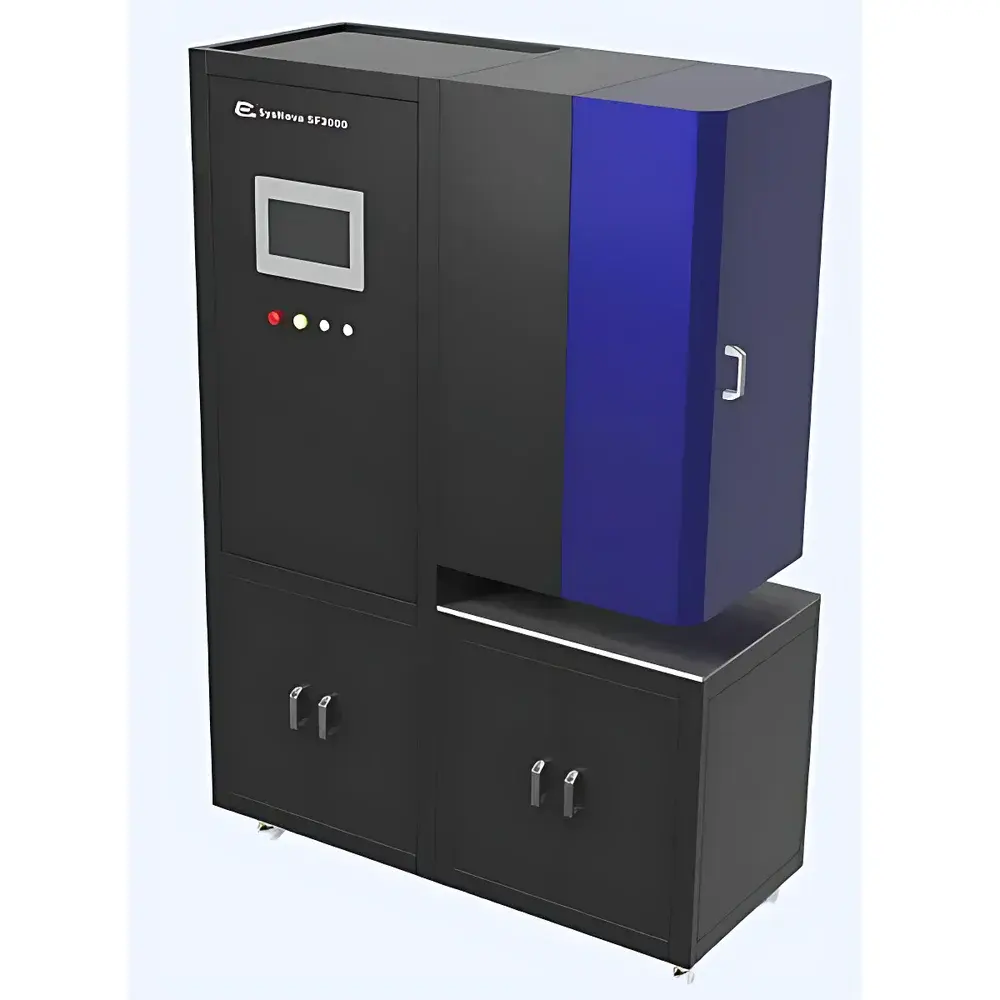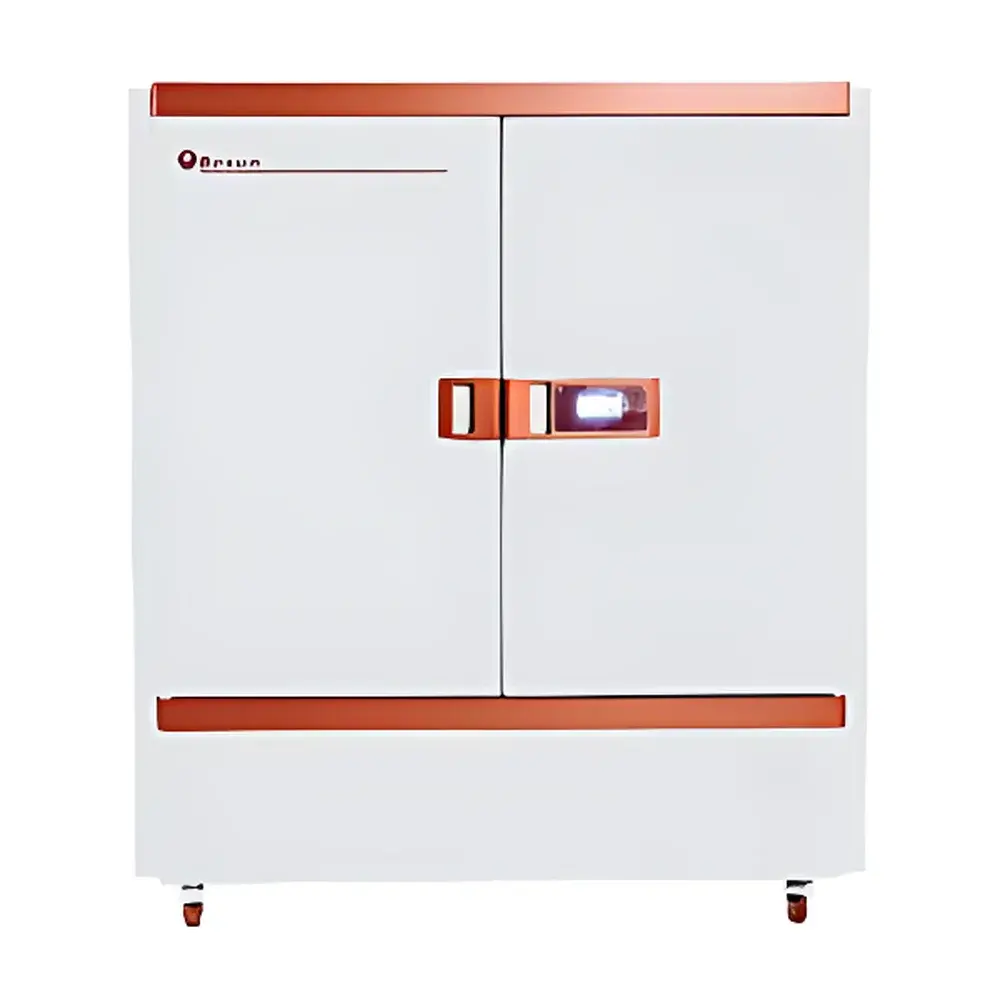
Boxun BXZ-800 Integrated Drug Stability Testing Chamber
| Brand | Boxun |
|---|---|
| Origin | Shanghai, China |
| Manufacturer Type | Direct Manufacturer |
| Model | BXZ-800 |
| Temperature Control Range (Dark) | 0–70°C |
| Temperature Control Range (Illuminated) | 10–70°C |
| Temperature Resolution | 0.1°C |
| Temperature Uniformity (at 25°C) | ±1.5°C |
| Temperature Fluctuation (at 25°C) | ±0.5°C |
| Humidity Range | 35–95% RH |
| Humidity Fluctuation | ±5% RH |
| Illuminance Range | 0–10,000 lux (stepless adjustable) |
| UV Irradiance Range (optional) | 0–2 W/m² (320–400 nm) |
| Total Illuminance Dose Compliance | ≥1.2 × 10⁶ lux·hr |
| Near-UV Energy Dose Compliance (optional) | ≥200 W·hr/m² |
| Chamber Internal Dimensions (L×W×H) | 1220 × 585 × 1123 mm |
| External Dimensions (L×W×H) | 1503 × 910 × 1820 mm |
| Standard Shelves | 8 pcs (max. 16) |
| Illuminated Shelf Modules | 1 standard module (up to 5 optional) |
| Input Power | 3000 W |
| Programmable Cycles | 30 segments × 99 cycles |
| Data Storage Capacity | 250,000 records |
| Real-time Data View | Latest 1600 entries |
| Interface | USB 2.0, RS485 |
| Standard Accessories | Embedded thermal printer, mechanical door lock, C.H. heat-recycling system |
| Optional Accessories | GPRS SMS alert, FDA-compliant monitoring software, GMP-compliant validation package (3Q), wireless temperature/humidity data loggers with calibration certificates (3-point temp / 3-point RH), UV shelf modules |
Overview
The Boxun BXZ-800 Integrated Drug Stability Testing Chamber is an ICH Q1-compliant environmental simulation system engineered for long-term, accelerated, and stress-condition stability studies of pharmaceutical substances and products. It operates on a dual-control architecture integrating precise thermohygrometric regulation with programmable photometric exposure—enabling simultaneous control of temperature (0–70°C), relative humidity (35–95% RH), and illuminance (0–10,000 lux) within a single chamber volume. The system adheres to the scientific principles outlined in the “Guiding Principles for Stability Testing of Chemical Drugs (APIs and Dosage Forms)” issued by China’s NMPA, as well as international benchmarks including ICH Q1A(R3), Q1B, Q5C, and USP . Its design incorporates a variable-frequency refrigeration system, high-efficiency centrifugal airflow distribution, and a patented C.H. (Cycle Heat) thermal recovery mechanism that recaptures residual heating energy—reducing thermal inertia and improving stabilization time by up to 22% compared to conventional chambers. All critical parameters are traceably monitored and logged with timestamped metadata, supporting full auditability under GLP and GMP frameworks.
Key Features
- 4.3-inch TFT LCD touchscreen interface with 16-bit true-color display and Windows CE-based embedded OS—supporting intuitive navigation, multi-user password protection, and screen-saver lockout
- Fuzzy PID temperature and humidity control algorithm with 30-segment, 99-cycle programmability—each segment configurable for duration (1–9999 hours), setpoint ramp rate, and dwell time
- Imported high-efficiency hermetic compressor and EC centrifugal blower ensure low-noise, low-vibration operation and extended service life
- High-accuracy capacitive humidity sensor (±2% RH accuracy) and platinum RTD temperature probes (±0.15°C at 25°C) mounted at multiple spatial locations for uniformity validation
- Modular LED-based illumination system with stepless intensity control and real-time lux metering—calibrated against NIST-traceable reference standards
- Onboard data logging with 250,000-entry non-volatile memory; supports USB export of both process data and event logs (power-on/off, parameter changes, alarms)
- Comprehensive safety architecture: independent overtemperature cutoff, door-open detection, low-water alarm, sensor fault diagnostics, and automatic shutdown on critical failure
- Standard thermal printer for immediate hardcopy output of current conditions, trend snapshots, or full-cycle reports
Sample Compatibility & Compliance
The BXZ-800 accommodates diverse pharmaceutical sample formats—including vials, blister packs, bottles, sachets, and primary/secondary packaging—across eight standard stainless-steel shelves (expandable to sixteen). Its internal chamber geometry (1220 × 585 × 1123 mm) ensures laminar airflow distribution meeting ISO 14644-1 Class 8 requirements for particulate control during storage. The system satisfies regulatory expectations for stability-indicating capability per ICH Q5C: it maintains ≤ ±0.5°C temperature fluctuation and ≤ ±5% RH variation across the working volume at 25°C/60% RH—validated using calibrated wireless data loggers (certified at three points: 15°C/40% RH, 20°C/60% RH, 30°C/80% RH). Optional UV shelf modules deliver spectrally defined near-UV irradiation (320–400 nm) with irradiance control (0–2 W/m²) and integrated dosimetry—enabling compliance with ICH Q1B photostability testing protocols requiring ≥200 W·hr/m² total near-UV exposure.
Software & Data Management
Data integrity is ensured through built-in electronic recordkeeping compliant with FDA 21 CFR Part 11 requirements when paired with optional FDA/GMP monitoring software. This PC-based application provides role-based user authentication, audit trail generation (with immutable timestamps), electronic signatures, and customizable report templates (PDF, CSV, Excel). All instrument events—including parameter modifications, alarm triggers, door openings, and power interruptions—are stored with millisecond-level precision. The embedded RS485 interface enables integration into centralized facility monitoring systems (e.g., Siemens Desigo, Honeywell Experion), while optional GPRS connectivity delivers real-time SMS alerts to designated mobile numbers upon threshold breach or system fault. Calibration certificates for wireless loggers (including NIST-traceable 3-point temperature and 3-point RH verification) and complete 3Q validation documentation (IQ/OQ/PQ) are available as certified deliverables.
Applications
The BXZ-800 serves as a core platform for regulatory submission-supporting stability programs across preclinical development, clinical trial material storage, and commercial batch release. Typical use cases include: long-term storage studies at 25°C/60% RH and 30°C/65% RH; accelerated testing at 40°C/75% RH; intermediate condition evaluation per ICH Q1A(R3); photostability assessment per Q1B (optionally with UV modules); freeze-thaw cycling simulations (via auxiliary cooling accessories); and excipient compatibility screening under controlled humidity gradients. Its modular illumination architecture also supports formulation optimization studies involving light-sensitive actives (e.g., tetracyclines, nitrofurantoin, biologics), while the C.H. thermal recovery system enhances energy efficiency during repeated door access—critical for high-throughput QC laboratories conducting routine stability sampling.
FAQ
Does the BXZ-800 meet ICH Q1B photostability testing requirements?
Yes—when equipped with the optional UV shelf module, it delivers spectrally appropriate near-UV irradiation (320–400 nm) with real-time dosimetry and achieves ≥200 W·hr/m² cumulative exposure, satisfying ICH Q1B Section III.B.2.
Can raw data be exported in machine-readable format for statistical analysis?
Yes—USB export yields timestamped CSV files containing all logged temperature, humidity, illuminance, and event data, fully compatible with JMP, Minitab, and Python pandas workflows.
Is 3Q validation support included with purchase?
No—the base unit includes factory calibration certificates only; full IQ/OQ/PQ documentation, protocol execution, and on-site qualification services are available as billable options.
What is the maximum number of illuminated shelves supported?
The chamber supports up to five independently controllable illuminated shelf modules, each with dedicated intensity and timer settings.
How is temperature uniformity verified across the working volume?
Uniformity is validated per ISO 16770 using nine-point mapping with NIST-traceable wireless loggers; test reports confirm ≤ ±1.5°C deviation at nominal setpoints.