

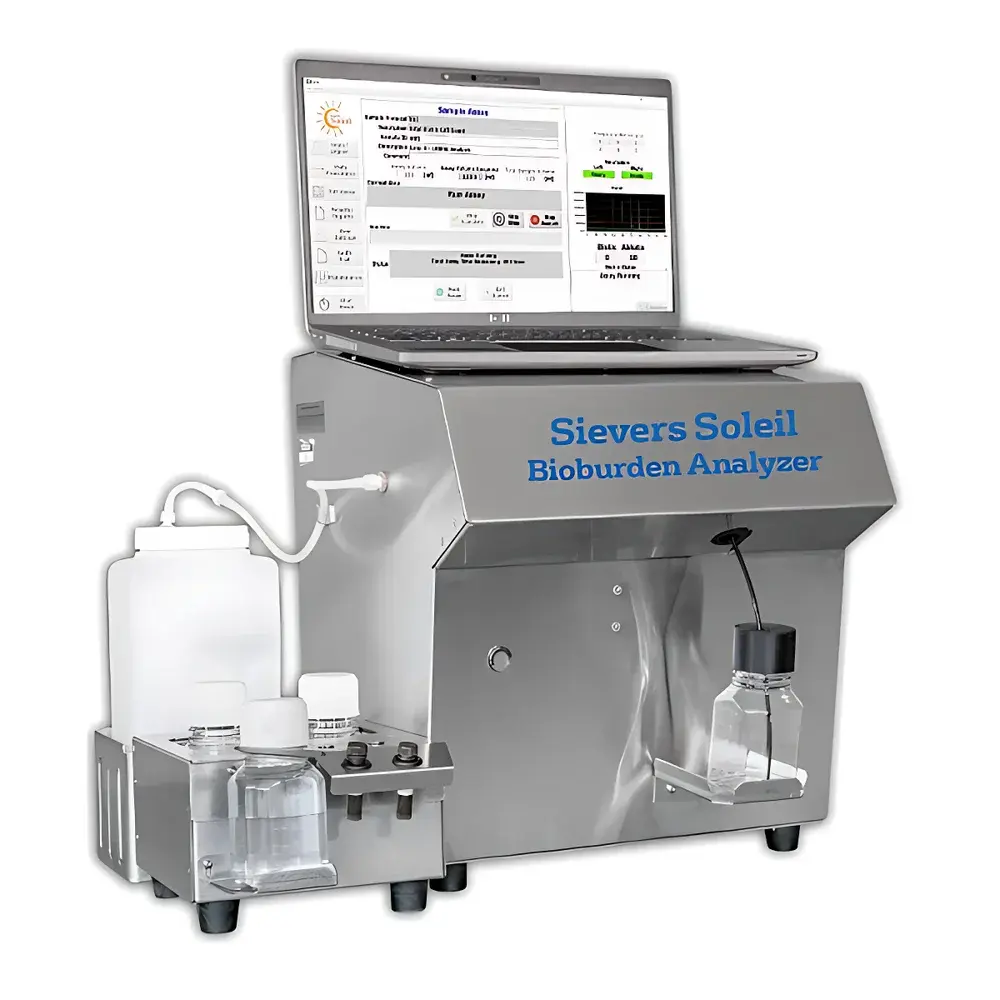
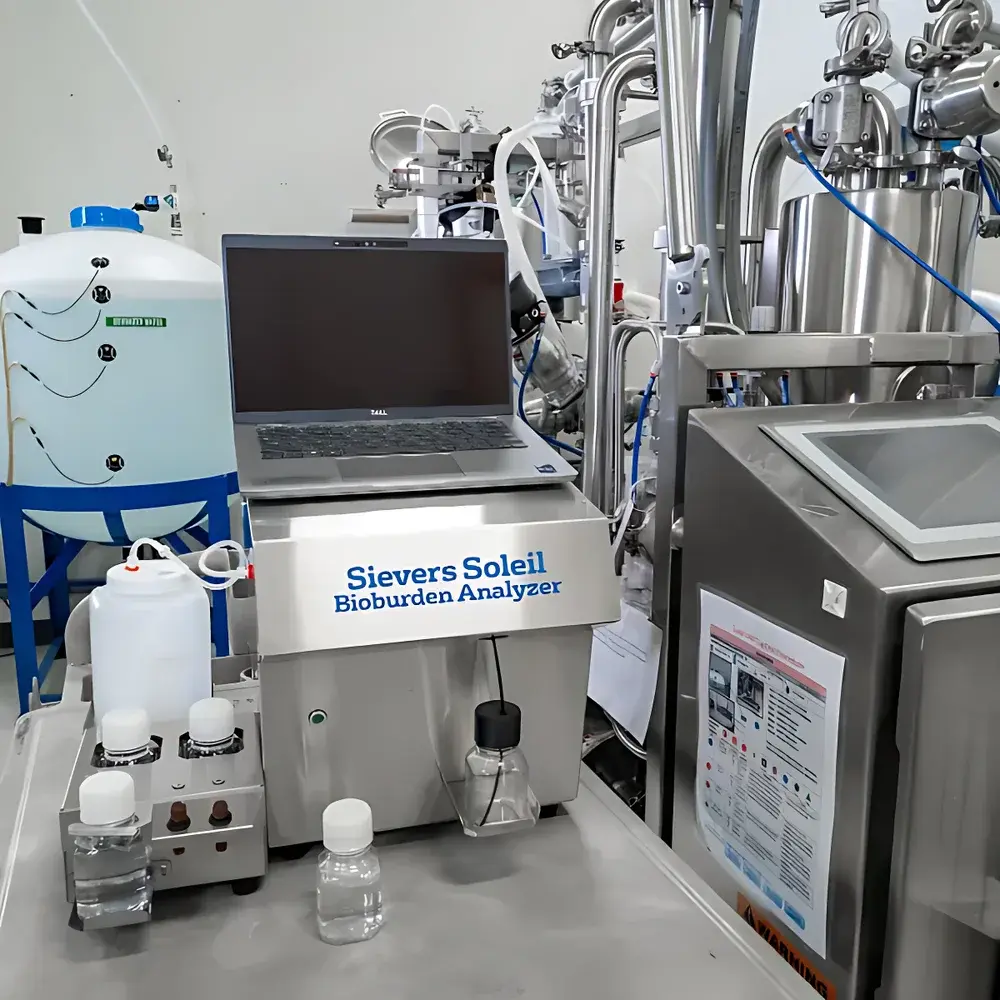
Sievers Soleil Rapid Microbial Detection System
| Brand | Sievers (Veolia) |
|---|---|
| Origin | USA |
| Manufacturer Type | Original Equipment Manufacturer (OEM) |
| Product Category | Imported Instrument |
| Model | Soleil |
| Instrument Type | Fully Automated Rapid Microbial Method (RMM) Platform |
| Dimensions | 48.3 cm × 43.2 cm × 43.2 cm |
Overview
The Sievers Soleil Rapid Microbial Detection System is a fully automated, flow cytometry–based rapid microbial method (RMM) platform engineered for quantitative detection of viable microorganisms in pharmaceutical and biotechnology manufacturing environments. Unlike traditional plate-count methods requiring 3–7 days of incubation, the Soleil system delivers statistically robust, culture-independent results in ≤45 minutes—enabling near real-time monitoring of microbial burden across critical process streams. Its core measurement principle relies on dual-fluorescence viability staining combined with high-throughput hydrodynamic focusing and laser-induced fluorescence detection. This approach discriminates metabolically active cells (Gram-positive bacteria, Gram-negative bacteria, yeasts, and molds) from non-viable cells and abiotic particulates with high specificity and reproducibility. Designed for compliance-driven laboratories, the Soleil system supports data integrity requirements aligned with FDA 21 CFR Part 11, EU Annex 11, and ICH Q5C guidelines for alternative microbiological methods.
Key Features
- Ultra-rapid analysis: Quantitative microbial enumeration completed in ≤45 minutes—from sample loading to final report generation.
- Viability-specific detection: Proprietary reagent suite (Reagents A, B, and C) enables selective staining of intracellular esterase activity and membrane integrity, ensuring only metabolically active cells are counted.
- Robust sample tolerance: Validated for use with ultrapure water, pharmaceutical-grade excipients, cell culture media, APIs, polymers, and stainless-steel surface rinsates without pre-filtration or dilution.
- Integrated thermal conditioning: Onboard incubation module maintains precise 37 °C temperature control during reagent incubation steps, eliminating external water baths or incubators.
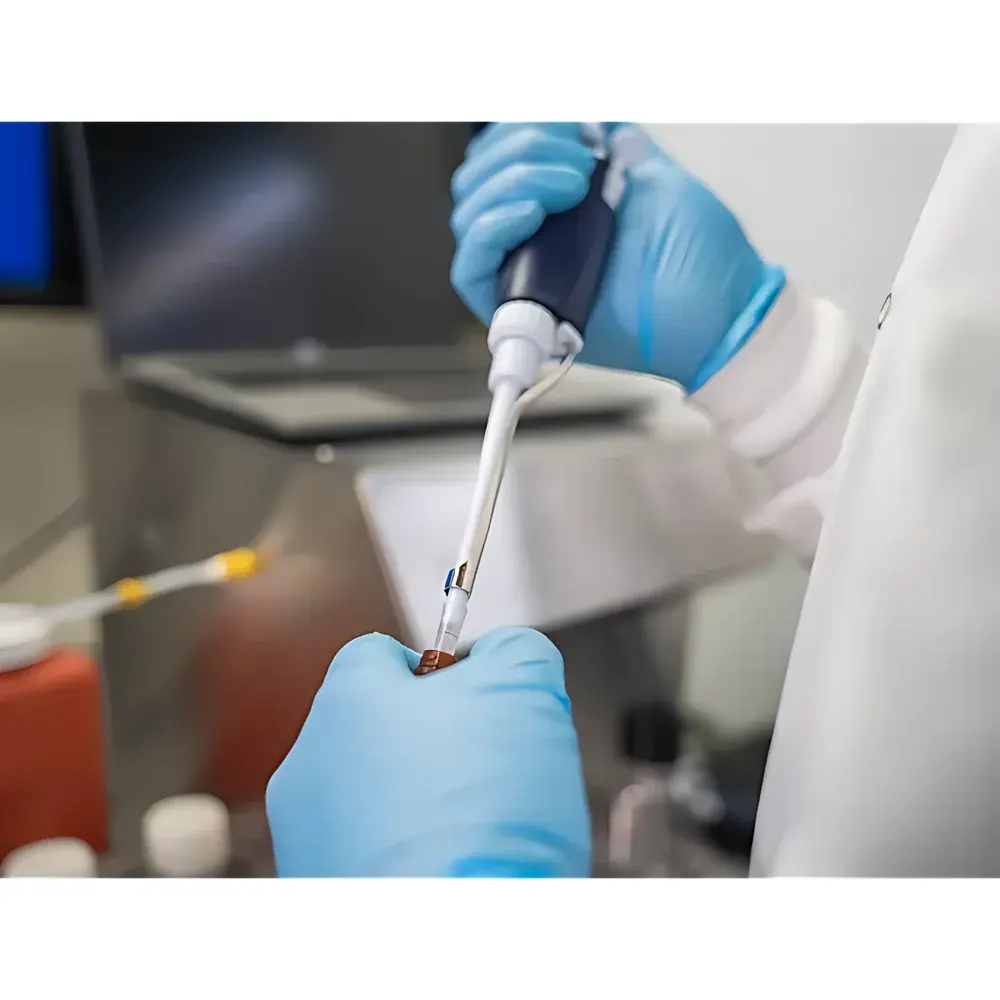
- Automated workflow: Minimal hands-on time (<5 min/sample); no membrane filtration, agar plates, colony isolation, or manual colony counting required.
- Scalable throughput: Supports batch processing of 20–100 mL sample volumes per run with walk-away operation and unattended analysis.
Sample Compatibility & Compliance
The Soleil system has been validated per USP , EP 5.1.6, and ISO 11731-2 for equivalence to pharmacopeial membrane filtration and pour-plate methods across diverse matrices—including WFI, Purified Water, buffer solutions, liquid APIs, and environmental swab eluates. It meets ASTM E2921–22 criteria for performance qualification of rapid microbiological methods in GMP environments. All instrument firmware, software, and reagent lot traceability support full audit trails, electronic signatures, and ALCOA+ data governance principles. The system is compatible with laboratory quality management systems (QMS) and integrates with LIMS via secure HL7 or CSV export protocols.
Software & Data Management
The Soleil Control Software provides intuitive, role-based user interfaces compliant with 21 CFR Part 11 and Annex 11. It includes guided startup sequences, automated calibration verification, dynamic threshold adjustment, and real-time QC flagging. Each analysis generates a comprehensive PDF report containing raw cytogram data, gating parameters, viability ratios, total counts/mL, and pass/fail status against configurable action limits. Audit logs record all user actions, parameter changes, and instrument events with timestamped, immutable entries. Data retention policies support long-term archiving aligned with GLP/GMP record retention requirements (minimum 15 years for regulated submissions).
Applications
- Pharmaceutical water systems: Continuous monitoring of PW, WFI, and pure steam condensate at critical control points.
- Clean-in-place (CIP) and sterilization-in-place (SIP) validation: Rapid assessment of rinse water bioburden post-cycle.
- Raw material and API release testing: At-line microbial enumeration prior to formulation or blending.
- Environmental monitoring: Enumeration of viable organisms from isolator air samples, surface contact plates, and glove port rinsates.
- Process stream surveillance: Real-time trending of bioburden in bioreactor harvests, purification buffers, and fill-finish intermediates.
- Investigations and root cause analysis: Accelerated identification of contamination sources during OOS/OOT events.
FAQ
What regulatory standards does the Soleil system support for method validation?
The Soleil platform supports validation per USP , EP 5.1.6, ISO 11731-2, and PDA Technical Report No. 33 for rapid microbiological methods.
Can the Soleil system replace compendial methods for product release?
Yes—when fully validated per ICH Q5C and approved by regulatory authorities as part of a company’s control strategy, Soleil may serve as a primary release test for water and environmental monitoring.
Is instrument qualification (IQ/OQ/PQ) supported out-of-the-box?
Comprehensive qualification documentation packages—including protocol templates, acceptance criteria, and executed reports—are provided with each system shipment.
How is reagent stability managed across lots?
All Soleil reagents are manufactured under cGMP conditions with full lot traceability, refrigerated stability data (≥12 months at 2–8 °C), and certificate of analysis (CoA) for every shipment.
Does the system require dedicated infrastructure or facility modifications?
No—Soleil operates on standard 120/240 VAC power, requires no compressed gas, vacuum, or exhaust ducting, and fits within standard laboratory bench space.






