
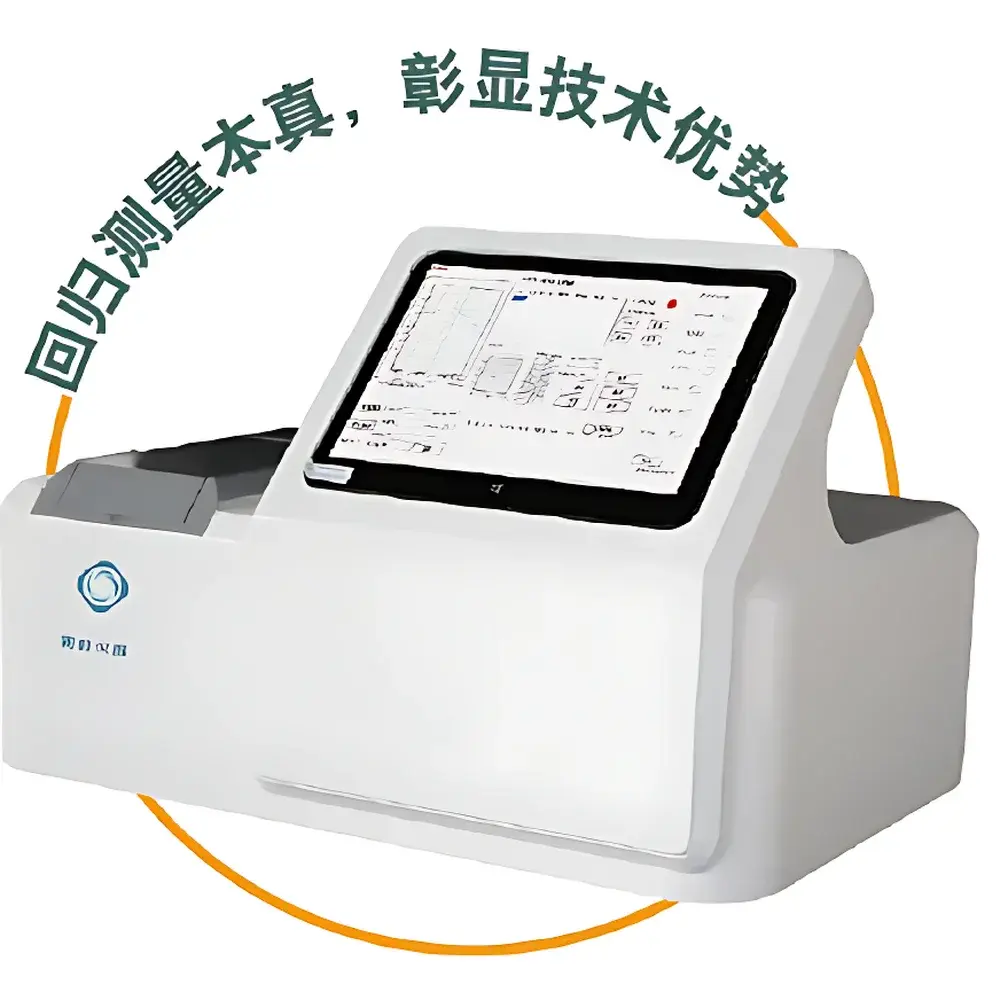
Sipo Environment OIL-IR-3100 Infrared Spectrophotometric Oil Content Analyzer
| Brand | Sipo Environment |
|---|---|
| Origin | Tianjin, China |
| Model | OIL-IR-3100 |
| Instrument Type | Laboratory Benchtop Analyzer |
| Measurement Principle | Infrared Absorption Spectrophotometry (Fourier-transform-free, Dispersive Optical Path) |
| Measurement Range | 0–600 mg/L |
| Detection Limit | 0.1 mg/L (instrument) |
| Accuracy | ≤ ±1% (absolute error at 100 mg/L CH, 20 mg/L CH₂/CH₃) |
| Wavenumber Resolution | 0.5 nm (equivalent to ~0.3 cm⁻¹ in mid-IR region) |
| Wavenumber Repeatability | ±0.01 cm⁻¹ |
| Absorbance Range | 0.00000–200000 A (logarithmic scale, Lambert–Beer compliant) |
| Scan Speed | Full-spectrum acquisition in ≤90 s per sample |
| Wavenumber Range | 2400–3400 cm⁻¹ (2941–4167 nm) |
| Cell Pathlength | 4 cm quartz cuvette |
| Certified Compliance | HJ 637–2018, HJ 1077–2019, GB 18483–2001 |
| Software Features | Triple-wavenumber algorithm (2930, 2960, 3030 cm⁻¹), automatic unit conversion, built-in calibration coefficient matrix (X, Y, Z, F), no standard curve required for quantification |
Overview
The Sipo Environment OIL-IR-3100 is a dedicated benchtop infrared spectrophotometric oil content analyzer engineered for regulatory-compliant determination of petroleum hydrocarbons (total petroleum hydrocarbons, TPH), animal and vegetable oils (AVO), and cooking oil mist in aqueous, solid, and gaseous matrices. It operates on the principle of dispersive infrared absorption spectroscopy—measuring characteristic C–H stretching vibrations at three critical wavenumbers (2930 cm⁻¹ for CH₃, 2960 cm⁻¹ for CH₂, and 3030 cm⁻¹ for =C–H aromatic/vinyl groups) within the mid-infrared region (2400–3400 cm⁻¹). Unlike Fourier-transform IR systems, the OIL-IR-3100 employs a high-stability optical path with narrowband filtering and digital phase-locked signal processing to isolate weak absorbance signals from background noise—enabling sub-0.1 mg/L detection limits without reliance on external calibration curves. Its design fully implements the triple-wavenumber quantitative algorithm mandated by China’s HJ 637–2018 standard, eliminating empirical curve fitting and instead applying fixed, traceable correction coefficients (X, Y, Z, F) derived from pure hydrocarbon reference standards (n-hexadecane, isooctane, benzene).
Key Features
- Dual-channel optical architecture: Independent sample and blank beam paths with matched quartz cuvettes (4 cm pathlength), preventing cross-contamination and minimizing baseline drift.
- Triple-wavenumber direct quantification: Real-time calculation of oil concentration via ρ = X·A2930 + Y·A2960 + Z·(A3030 − A2930/F), compliant with HJ 637–2018 Section 8.1.1—no standard curve generation or maintenance required.
- High-fidelity signal extraction: Analog signal conditioning with narrowband filtering and digital lock-in amplification improves signal-to-noise ratio (SNR), supporting method-level detection limit of 0.01 mg/L (per specified extraction protocol).
- Stabilized optical source: Low-voltage modulated IR source with high-frequency chopper eliminates thermal drift and extends operational lifetime; elliptical condenser optics ensure optimal illumination of the detector active area.
- Wavenumber precision: Polypropylene film-based wavenumber calibration ensures long-term stability; wavenumber repeatability of ±0.01 cm⁻¹ (patented positioning system) guarantees spectral fidelity across repeated measurements.
- Robust mechanical construction: Anodized aluminum chassis provides lightweight structural integrity, passive thermal management, and EMI shielding suitable for shared laboratory environments.
Sample Compatibility & Compliance
The OIL-IR-3100 supports analysis of liquid water samples (e.g., surface water, wastewater, leachate), solid-phase extracts (soil, sediment), and gas-phase condensates (cooking oil mist, industrial stack emissions). Sample preparation follows standardized liquid–liquid extraction using approved solvents—including tetrachloroethylene (PERC), carbon tetrachloride (CCl₄), trichlorotrifluoroethane (CFC-113), or S-316—as specified in HJ 637–2018 and HJ 1077–2019. The instrument’s 4 cm quartz cuvette accommodates standard 50 mL extract volumes and enables direct measurement without dilution across the full 0.0–600 mg/L linear range. All quantitative outputs meet the accuracy (≤ ±1%), repeatability (≤ ±1%), and correlation coefficient (R > 0.999) requirements defined in HJ 637–2018 Annex B and are traceable to national metrological standards. It is validated for use in GLP-regulated environmental testing laboratories and supports audit-ready data logs for regulatory submissions.
Software & Data Management
The embedded Windows-based software provides intuitive workflow navigation with context-sensitive prompts to prevent operator error. It natively integrates three application modules: (1) aqueous oil content per HJ 637–2018, (2) cooking oil mist per GB 18483–2001, and (3) soil-bound hydrocarbons per modified EPA Method 418.1 protocols. All units (mg/L, mg/kg, mg/m³) convert automatically based on sample mass/volume inputs. Spectral data are stored in vendor-neutral CSV format with full metadata (date/time, operator ID, cuvette ID, solvent type, extraction volume, dilution factor). Audit trails record all parameter changes, zeroing events, and coefficient updates—supporting 21 CFR Part 11–compatible electronic signature implementation when deployed on networked lab PCs with domain authentication. Raw absorbance spectra (2400–3400 cm⁻¹) are exportable for secondary review or inter-laboratory comparison.
Applications
- Regulatory monitoring of petroleum hydrocarbons in municipal and industrial wastewater discharge permits (e.g., NPDES equivalents under Chinese MEP requirements).
- Environmental site assessment: quantification of TPH in groundwater and soil from legacy fuel storage facilities.
- Food service emission compliance: routine measurement of cooking oil mist concentrations in kitchen exhaust ducts per GB 18483–2001.
- Research-grade hydrocarbon speciation: differentiation of aliphatic (CH₂/CH₃) vs. aromatic (3030 cm⁻¹) contributions in complex environmental mixtures.
- Method validation studies requiring high-precision, curve-free quantification under ISO/IEC 17025 or CNAS-accredited quality systems.
FAQ
Does the OIL-IR-3100 require daily calibration with standard solutions?
No. Per HJ 637–2018, it uses fixed, pre-determined coefficients (X, Y, Z, F) derived from pure hydrocarbon references. Only initial verification with certified reference materials (e.g., n-hexadecane solution) is required prior to first use.
Can it measure both petroleum hydrocarbons and animal/vegetable oils simultaneously?
Yes. The triple-wavenumber algorithm distinguishes aliphatic saturation (CH₂, CH₃) and unsaturation/aromaticity (=C–H), enabling separate reporting of petroleum hydrocarbons and AVO fractions per HJ 637–2018 definitions.
What solvent options are supported for extraction?
Tetrachloroethylene (PERC), carbon tetrachloride (CCl₄), trichlorotrifluoroethane (CFC-113), and S-316—all compliant with HJ 637–2018 solvent purity specifications.
Is the instrument compatible with LIMS integration?
Yes. ASCII-formatted output files (CSV) include structured headers and timestamps, enabling automated ingestion into common LIMS platforms via scheduled file polling or API middleware.
What environmental conditions are recommended for optimal performance?
Ambient temperature 15–30 °C and relative humidity <50% RH are advised to minimize condensation on optical surfaces and maintain thermal equilibrium of the detector assembly.







