
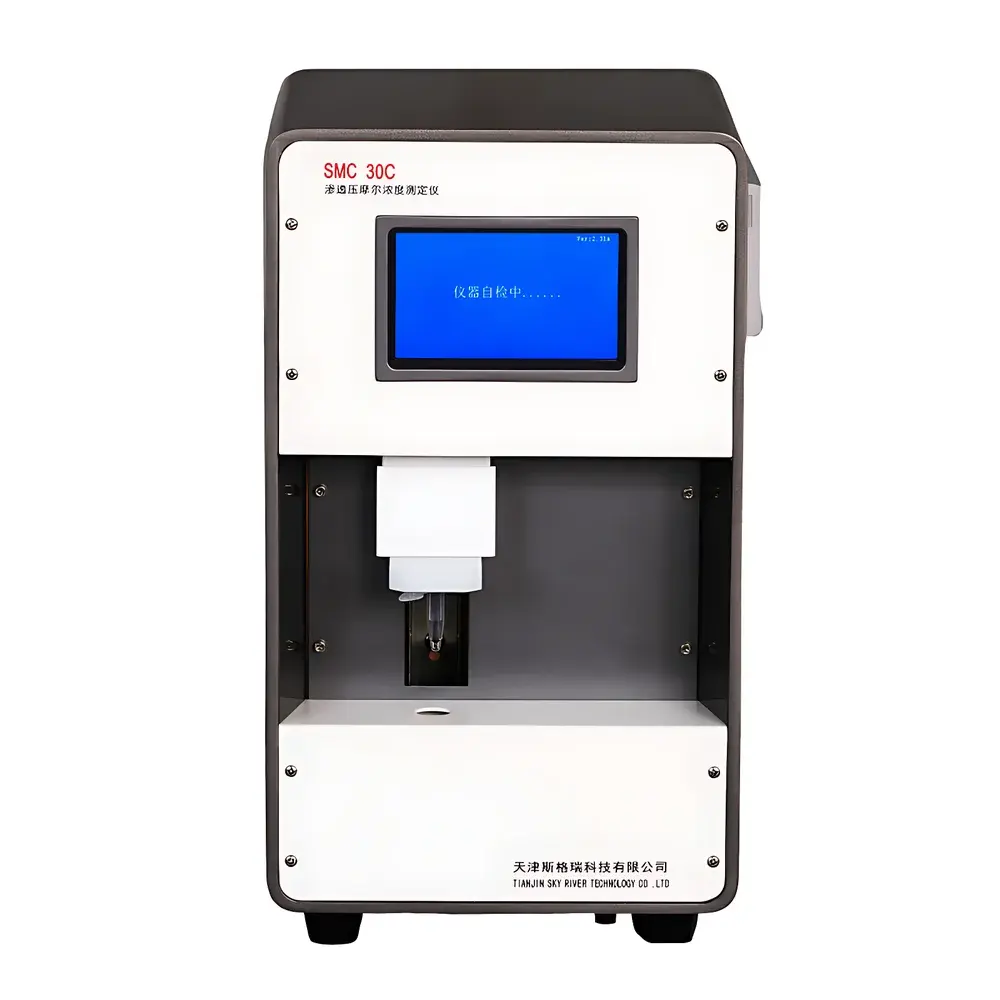
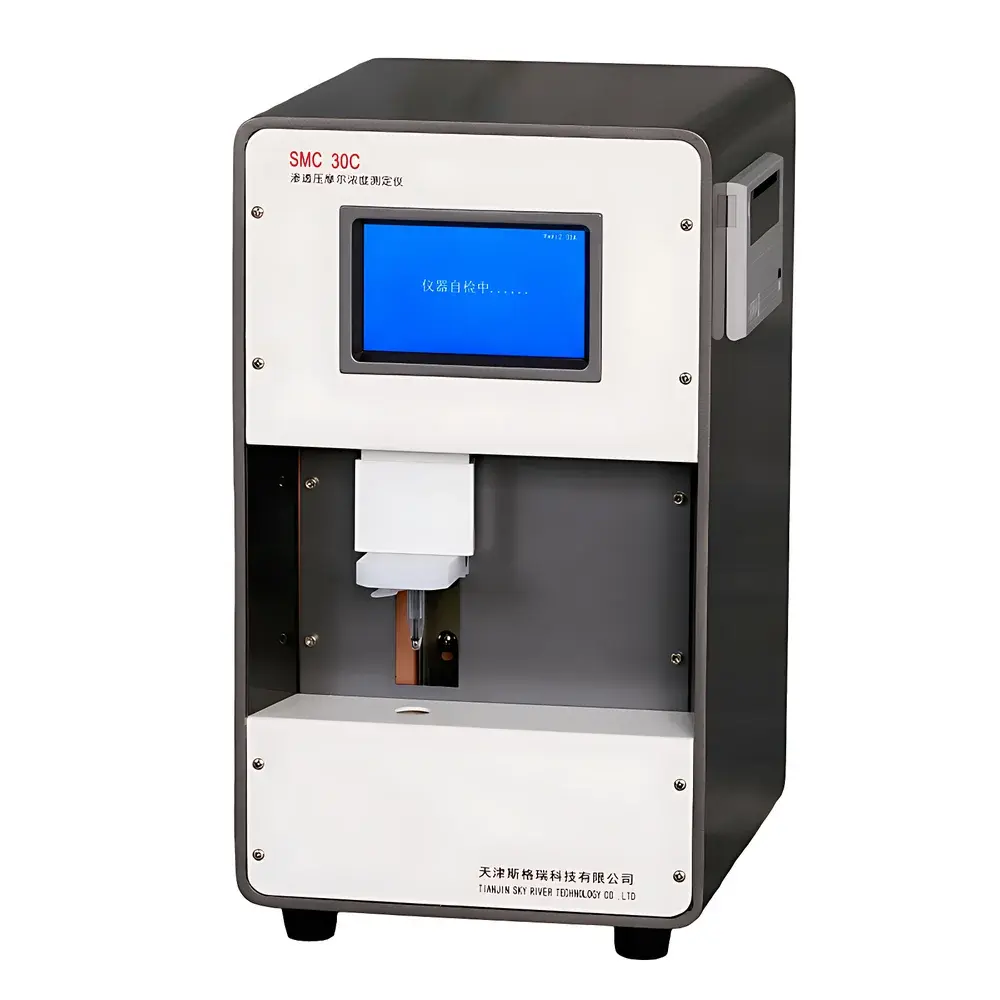

Tianhe SMC 30C Clinical Osmometer
| Brand | Tianhe |
|---|---|
| Origin | Tianjin, China |
| Model | SMC 30C |
| Measurement Principle | Freezing Point Depression |
| Range | 0–3000 mOsmol/kg H₂O |
| Sample Volume | 50–100 µL |
| Test Time | < 2 min |
| Pre-cooling Time | ≤ 3 min |
| Resolution | 1 mOsmol/kg |
| Repeatability | RSD ≤ ±1% (at 300 mOsmol/kg) |
| Accuracy | ±2 mOsmol/kg (≤400 mOsmol/kg), ±1% (>400 mOsmol/kg) |
| Linearity | < 1% deviation from linear fit |
| Operating Temperature | 10–30 °C |
| Operating Humidity | 5–80% RH |
| Power Supply | AC 220 V ±10%, 80 W |
| Regulatory Status | Certified Medical Device per Chinese NMPA Class II requirements |
| Compliance | Meets pharmacopoeial specifications in Chinese Pharmacopoeia (2020 Edition), including for injectables, ophthalmic preparations, and osmotic diuretics |
Overview
The Tianhe SMC 30C Clinical Osmometer is a CE-marked (for export markets) and NMPA-registered Class II medical device engineered for precise, traceable measurement of osmolality in biological fluids and pharmaceutical formulations. It operates on the internationally standardized freezing point depression principle—where the extent of freezing point depression in an aqueous solution is directly proportional to its total solute concentration (in osmoles per kilogram of water). This thermodynamic method delivers high reproducibility and minimal matrix interference, making it the reference technique for clinical laboratories, quality control units in pharmaceutical manufacturing, and regulatory-compliant stability testing. The instrument is validated for use with human serum, plasma, urine, tear film, sweat, and low-volume ophthalmic solutions—aligning with USP <785>, EP 2.2.36, and Chinese Pharmacopoeia (2020 Edition) Chapter 0412 requirements for injectables, eye drops, and osmotic agents.
Key Features
- Freezing point depression detection system with dual-stage Peltier cooling—enabling rapid thermal equilibration and sub-3-minute pre-cooling cycles without refrigerant fluids or maintenance-intensive cryogens.
- High-sensitivity platinum resistance temperature sensor (Pt1000) with digital signal conditioning, delivering 1 mOsmol/kg resolution and ≤±1% RSD at 300 mOsmol/kg across repeated measurements.
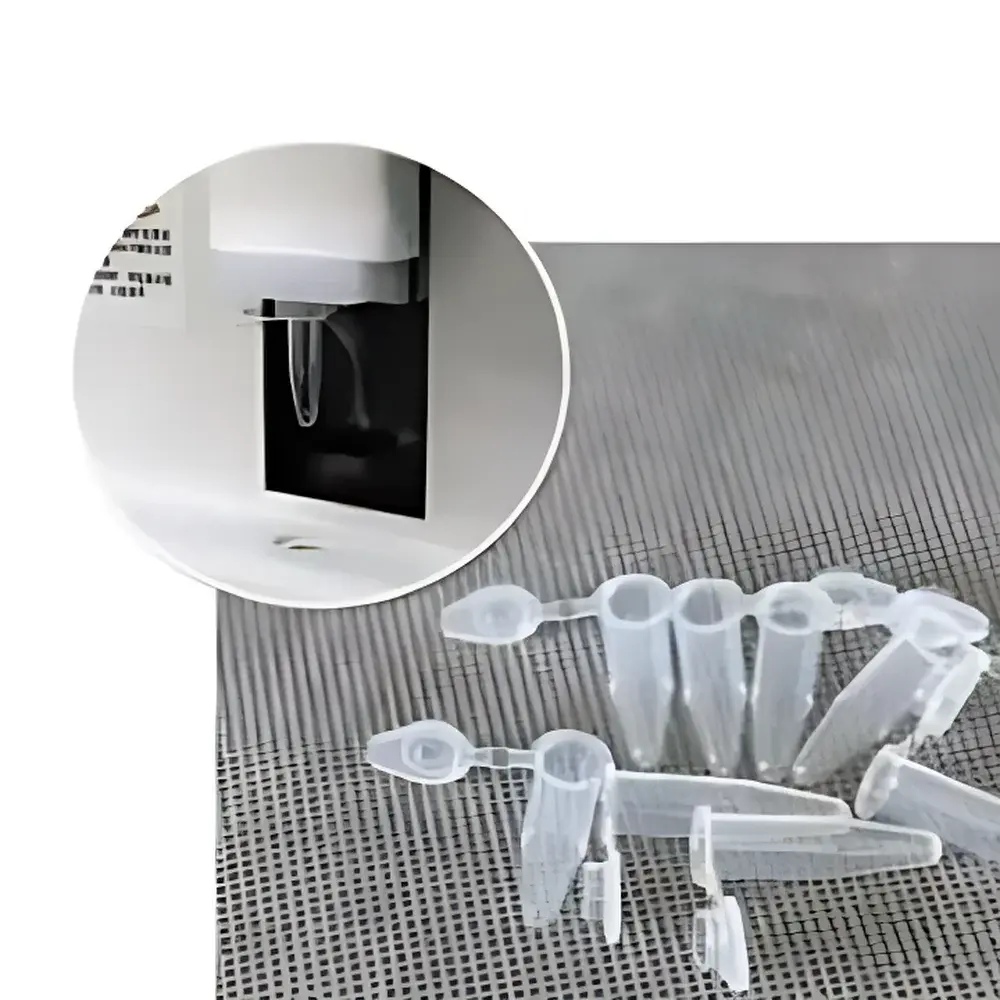
- Automated probe lift mechanism with tactile feedback and soft-stop positioning—minimizing operator-induced variability and protecting both sample integrity and sensor longevity.
- Integrated 7-inch capacitive touchscreen with bilingual UI (English/Chinese), intuitive workflow navigation, and context-sensitive help prompts—designed for multi-user environments including hospital labs and GMP production floors.
- Pre-loaded pharmacopoeial database containing >300 registered injectable and ophthalmic product names per Chinese Pharmacopoeia (2020), enabling rapid method selection, batch ID tagging, and audit-ready metadata capture.
- Zero-liquid-coolant architecture—eliminating thermal fluid leaks, degradation-related calibration drift, and associated downtime—supporting continuous operation in high-throughput clinical settings.
Sample Compatibility & Compliance
The SMC 30C accepts native, unprocessed, or minimally diluted biological samples (50–100 µL volume), including anticoagulated whole blood, centrifuged serum/plasma, random or timed urine, tear fluid collected via capillary microsampling, and sterile-filtered ophthalmic preparations. Its validated measurement range (0–3000 mOsmol/kg H₂O) covers physiological norms (e.g., serum: 275–295 mOsmol/kg), hyperosmolar pathologies (e.g., diabetic ketoacidosis >320 mOsmol/kg), and concentrated parenteral formulations (e.g., hypertonic saline up to 2000+ mOsmol/kg). As an NMPA-certified medical device, it meets GB/T 20468–2006 (Clinical Laboratory Osmometers – Performance Requirements) and supports GLP/GMP documentation workflows—including electronic signature readiness, user-access levels, and full audit trail generation per FDA 21 CFR Part 11 (when deployed with compliant LIMS integration).
Software & Data Management
Embedded microcontroller firmware provides real-time data acquisition, automatic baseline correction, and dual-parameter output: osmolality (mOsmol/kg H₂O), freezing point (°C), and calculated molality ratio (relative to NaCl standard). All results are timestamped, stored internally (≥10,000 records), and exportable via USB to CSV or PDF formats—with configurable print templates (raw data, QC summary, pharmacopoeial compliance report). The system supports two-point and multi-point linear calibration using certified reference standards (e.g., 0, 200, 400, 1000, 2000 mOsmol/kg NaCl solutions), with automatic slope/intercept validation and calibration expiry alerts. Optional Ethernet or RS-232 interfaces enable bidirectional communication with laboratory information systems (LIS) and enterprise quality management software (QMS).
Applications
- Clinical diagnostics: Evaluation of renal concentrating ability, assessment of hyponatremia/hypernatremia etiology, and monitoring of osmotherapy in neurocritical care.
- Pharmaceutical QC: Release testing of sterile injectables (e.g., IV bags, ampoules), ophthalmic solutions (drops, gels), and lyophilized reconstituted products per Chinese Pharmacopoeia Ch. 0412 and ICH Q5C stability guidelines.
- Biotherapeutics development: Osmolality profiling during formulation screening, buffer optimization, and comparability studies for monoclonal antibodies and recombinant proteins.
- Research laboratories: Correlation of osmotic stress with cell viability assays, cryopreservation media validation, and tear film osmolarity assessment in dry eye disease models.
FAQ
What regulatory certifications does the SMC 30C hold for international use?
The SMC 30C carries NMPA Class II registration for clinical use in China and conforms to IEC 61010-1 safety standards. For export, it is supplied with CE DoC (Class I IVD under EU IVDR 2017/746) and can be configured with ISO 13485-aligned documentation packages.
Is the instrument suitable for Good Manufacturing Practice (GMP) environments?
Yes—the firmware supports 21 CFR Part 11-compliant electronic records when integrated with validated network infrastructure; full audit trails, user authentication, and calibration lockout features are enabled by default.
Can the SMC 30C measure non-aqueous or viscous samples?
No—it is designed exclusively for aqueous solutions. Highly viscous, protein-rich, or lipid-emulsified samples require dilution or centrifugation prior to analysis to avoid sensor fouling and thermal lag artifacts.
How often must the system be calibrated?
Calibration verification is recommended before each analytical session using at least one certified standard; full multi-point calibration is required after sensor replacement, major software updates, or quarterly as part of preventive maintenance.
Does the device support remote diagnostics or service access?
Remote firmware updates and diagnostic log retrieval are supported via secure SSH connection under controlled IT governance protocols—subject to customer site security policy approval.





