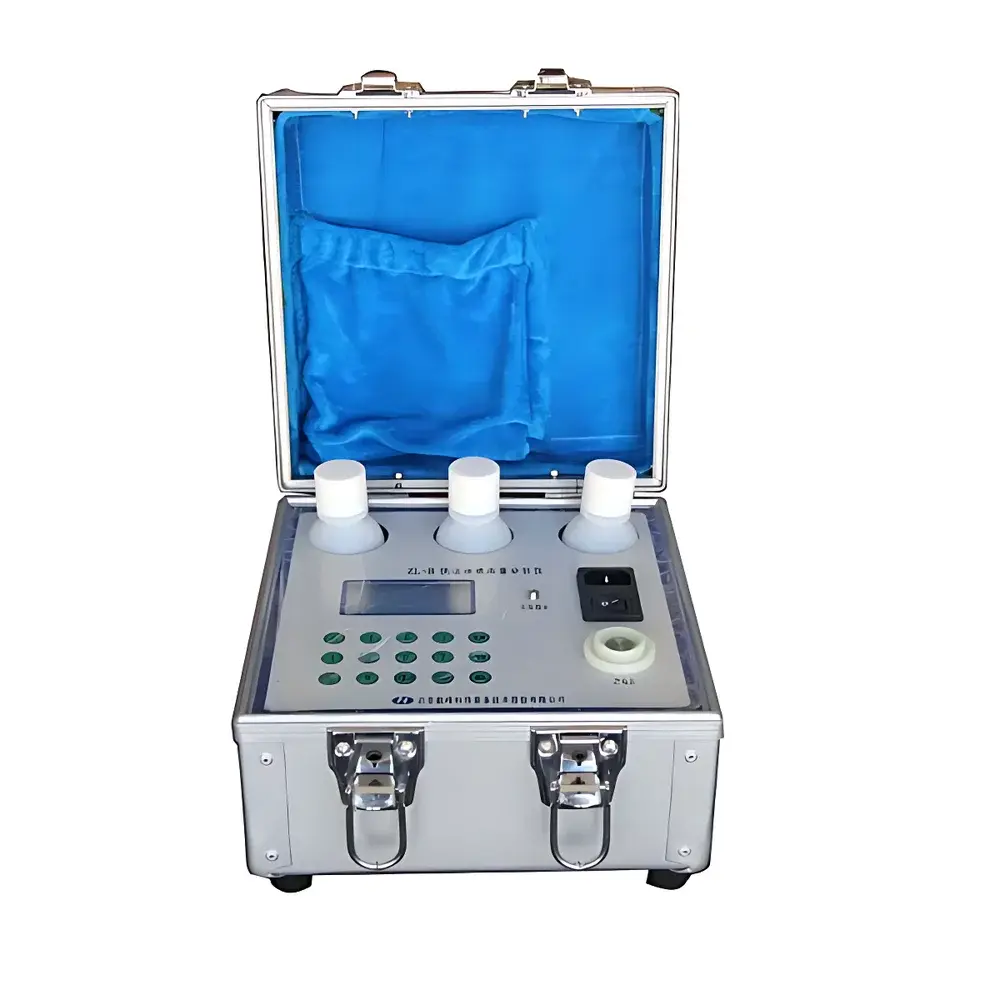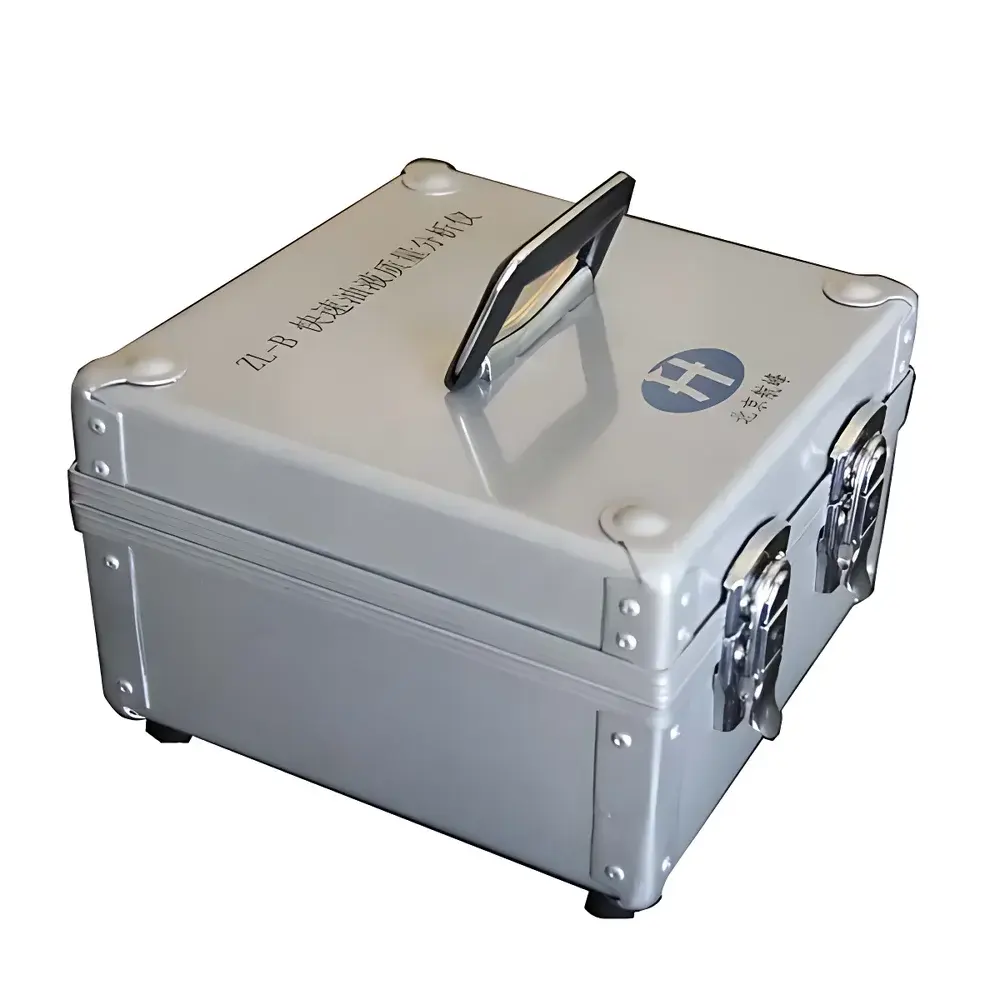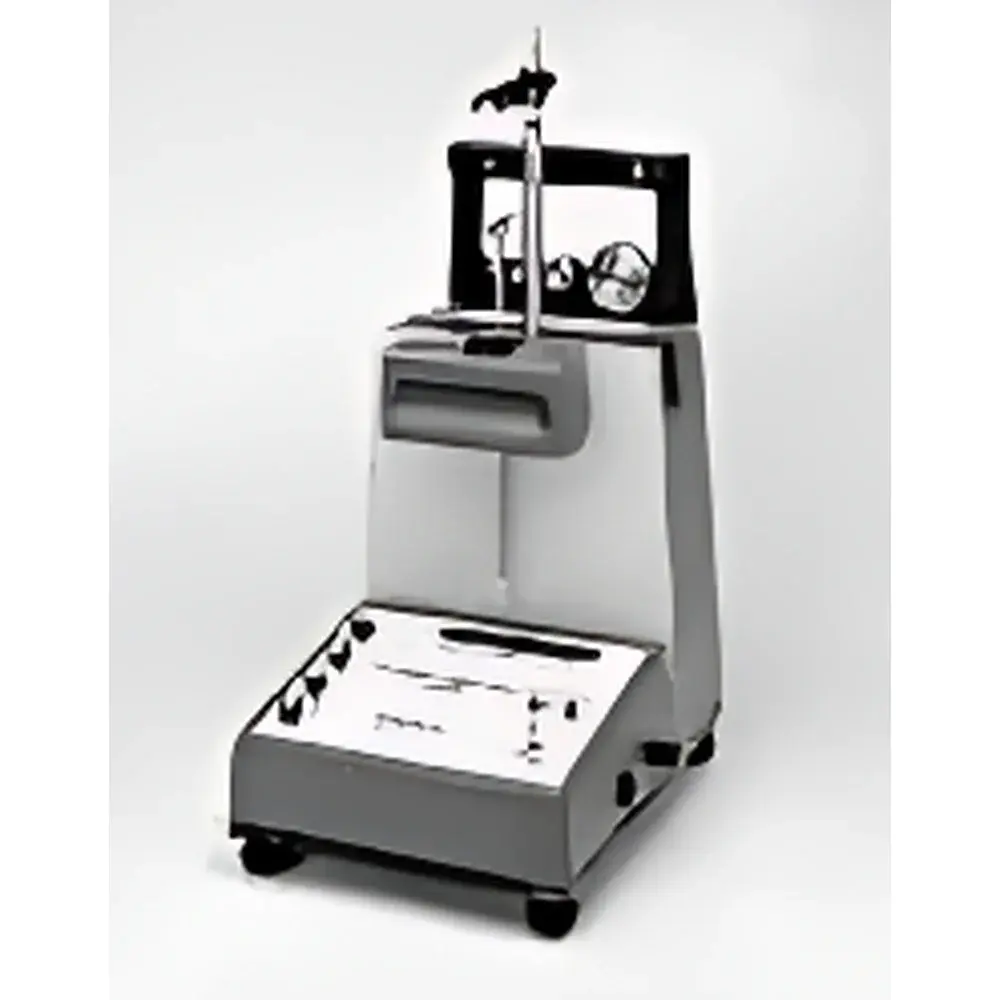
Gurley Model 4171 Stiffness Tester
| Brand | Gurley |
|---|---|
| Origin | USA |
| Model | 4171 |
| Compliance | ASTM D743, TAPPI T820, ISO 2431 |
| Display | Digital (LCD) |
| Operation Mode | Semi-automatic |
| Interface | RS-232 (4171-ET variant) |
| Sample Clamping | Dual-mode — flat specimen clamp (max. thickness 6.35 mm, width 1.27–50.8 mm, length 25.4–114.3 mm) and tubular specimen holder (0°–180° rotational, 15° increments) |
| Force Range | Adjustable via 60 configurable combinations of specimen length, pendulum mass, and mass position |
| Readout Units | Scale units (1.0–7.0), mg-force, or convertible to mN·m (via standardized conversion formula) |
| Data Handling | 100-point memory, auto-averaging, programmable upper/lower limits with audible alert |
| Calibration | Built-in self-check function |
| Enclosure | Rugged carrying case included |
| Optional Accessories | Moisture electrodes (2E, 12E, 15E, 19E, 43E, 55E, 830, H3) |
Overview
The Gurley Model 4171 Stiffness Tester is a precision mechanical instrument engineered for the quantitative assessment of bending resistance—commonly referred to as stiffness—in flexible and semi-rigid materials. Based on the classical pendulum deflection principle, it measures the torque required to bend a specimen through a defined angular displacement (typically 15°), under controlled boundary conditions. This method aligns with internationally recognized test standards including ASTM D743 (Standard Test Method for Stiffness of Paper and Paperboard), TAPPI T820 (Stiffness of Paper and Paperboard), and ISO 2431 (Determination of stiffness of paper and board). Unlike optical or load-cell-based systems, the Gurley 4171 employs a gravity-driven pendulum mechanism with calibrated inertial mass, delivering high reproducibility across repeated measurements without reliance on external power for core operation. Its design prioritizes mechanical stability, operator independence from subjective interpretation, and long-term metrological consistency—key requirements in QC laboratories supporting packaging, pulp & paper, medical tubing, and industrial wire manufacturing.
Key Features
- Dual-clamp architecture: Integrated flat-specimen clamp (for sheets, boards, films; max. thickness 6.35 mm, width 1.27–50.8 mm, length 25.4–114.3 mm) and proprietary tubular specimen holder—enabling secure axial alignment of hoses, catheters, and coiled wires from 0° to 180° in 15° increments.
- Configurable force range: 60 distinct measurement configurations achievable by varying specimen length (25.4–114.3 mm), pendulum mass (standardized weights), and mass radial position—ensuring adaptability across low-stiffness cellulose webs and high-resistance metal foils or polymer tubing.
- Digital readout with dual-unit output: Direct display in Gurley scale units (1.0–7.0), milligram-force (mgf), or convertible mN·m values using the standardized equation provided in ASTM D743 Annex A1—eliminating unit ambiguity in cross-laboratory data comparison.
- Semi-automatic operation: Manual specimen loading followed by automated pendulum release and digital capture—reducing operator-induced variability while maintaining full traceability of test parameters.
- RS-232 serial interface (4171-ET model): Enables direct connection to LIMS or QA databases for automated result logging, audit trail generation, and integration into GLP/GMP-compliant workflows requiring 21 CFR Part 11–compatible electronic records.
- Onboard data management: Stores up to 100 test results with automatic averaging, user-defined pass/fail thresholds, and audible alarm upon limit violation—supporting real-time decision-making on production lines.
Sample Compatibility & Compliance
The Model 4171 accommodates a broad spectrum of material geometries and mechanical behaviors. It is routinely applied to paperboard, corrugated fiberboard, nonwovens, rubber sheeting, thermoplastic tubing (PVC, PE, silicone), braided metal wires, and laminated foils. Its tubular clamping system uniquely addresses industry-specific challenges in pharmaceutical packaging (e.g., collapsible aluminum tubes per USP <661>), medical device validation (catheter kink resistance), and food-grade flexible packaging (laminate curl stability). All operational protocols conform to ASTM D743’s procedural rigor—including specimen conditioning (23°C ± 1°C, 50% RH ± 2%), dimensional tolerances, and pendulum calibration frequency. The instrument itself carries no CE marking but meets functional equivalency requirements for ISO/IEC 17025-accredited testing laboratories performing accredited stiffness determinations.
Software & Data Management
While the base 4171-DT operates as a standalone instrument, the 4171-ET variant supports ASCII-based serial communication via RS-232. Third-party software (e.g., LabVIEW, custom Python scripts, or enterprise QA platforms) can parse timestamped outputs containing specimen ID, scale reading, mgf value, mN·m equivalent, and pass/fail status. Data export includes CSV-compatible formatting for statistical process control (SPC) charting in Minitab or JMP. The built-in memory retains all 100 readings with sequence indexing, enabling retrospective root-cause analysis without external storage dependency. Audit-ready functionality—such as user-defined test IDs and limit-triggered alerts—supports compliance with FDA-mandated documentation practices in regulated environments.
Applications
- Quality control of folding cartons and rigid boxes during converting operations
- Validation of stiffness retention in moisture-sensitive packaging after accelerated aging (e.g., 40°C/75% RH)
- Comparative evaluation of coating effects on paperboard stiffness (e.g., clay vs. latex barrier layers)
- Regulatory submission support for medical device packaging per ISO 11607-1 (sterile barrier systems)
- R&D screening of biodegradable film formulations where flexural modulus correlates with composting performance
- Supplier qualification audits requiring inter-laboratory reproducibility per ISO 5725
FAQ
What standards does the Gurley 4171 comply with?
ASTM D743, TAPPI T820, and ISO 2431 are the primary standards supported. Instrument geometry, pendulum inertia, and angular displacement specifications are designed to meet the dimensional and procedural requirements of these methods.
Can the 4171 measure both flat and tubular specimens without hardware modification?
Yes—the dual-clamp system is factory-integrated. Switching between flat and tubular modes requires only manual repositioning of the specimen holder assembly; no tools or recalibration are needed.
Is calibration traceable to NIST or other national metrology institutes?
The pendulum mass and arm geometry are manufactured to Gurley’s internal dimensional tolerances (±0.02 mm), and the instrument is supplied with a calibration certificate referencing Gurley’s master reference standards. End-user calibration verification may be performed using certified reference specimens available from Gurley or third-party providers.
Does the RS-232 interface support two-way communication?
No—it is transmit-only. The instrument sends ASCII-formatted result strings upon completion of each test; configuration changes must be made manually via front-panel controls.
How frequently should the built-in self-check function be executed?
Gurley recommends performing the self-check before each test session and after any transport or mechanical shock. It verifies pendulum return timing and sensor response linearity against internal reference thresholds.