
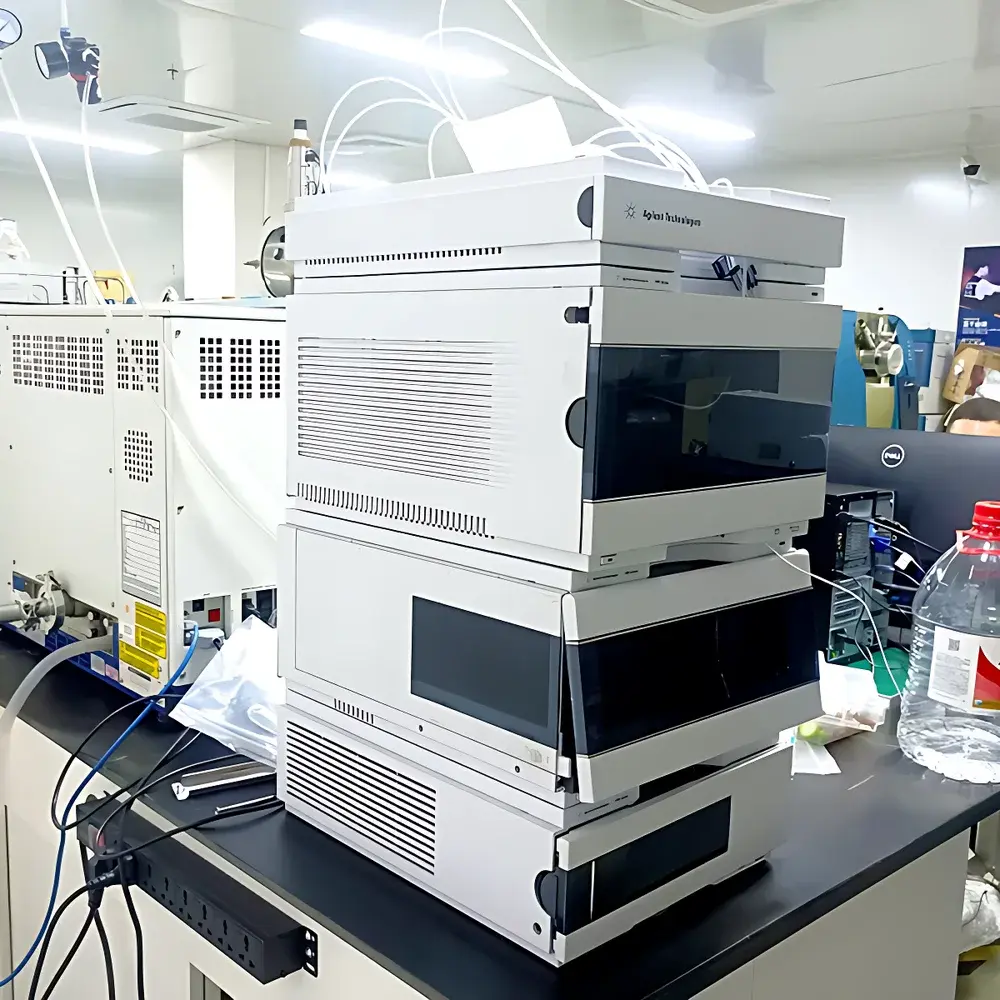
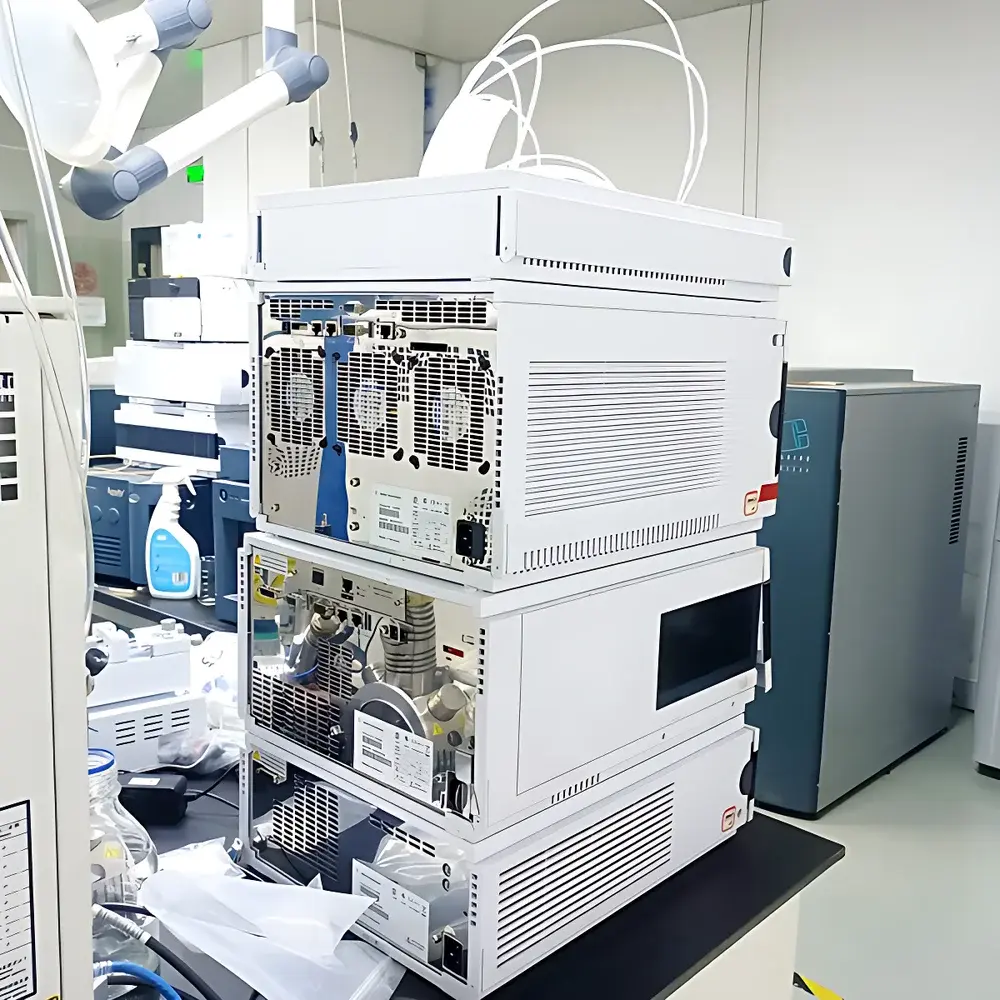
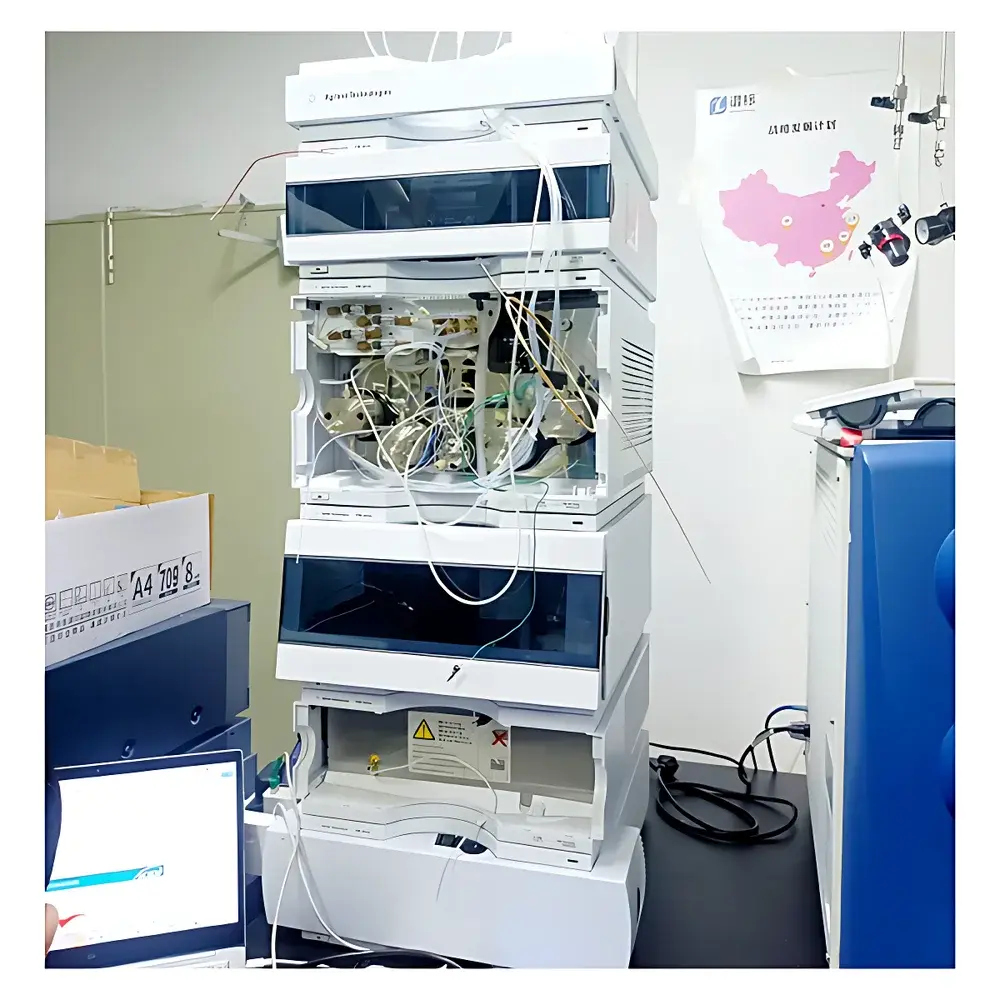
Agilent 1290 Infinity II Binary Ultra-High-Performance Liquid Chromatograph
| Key | Brand: Agilent Technologies |
|---|---|
| Origin | USA |
| Instrument Type | UHPLC System |
| Maximum Pressure | 1200 bar |
| Flow Rate Range | 0.001–5.0 mL/min |
| Flow Precision | ≤0.07% RSD |
| Injection Volume Range | 0.1–100 µL |
| Sample Capacity | 80 positions |
| Column Oven Temperature Range | 5–100 °C |
| UV Wavelength Range | 190–950 nm |
| Data Acquisition Rate | up to 160 Hz |
| Gradient Delay Volume | < 10 µL |
| Carryover | < 0.001% (with Flexible Cube) |
| Compliance | FDA 21 CFR Part 11, ASTM D7594, ISO 17025, USP <621>, GLP/GMP-ready |
Overview
The Agilent 1290 Infinity II Binary Ultra-High-Performance Liquid Chromatograph is an engineered platform for method transfer, high-throughput quantitation, and demanding LC/MS coupling applications. Built upon the foundational principles of ultra-high-pressure liquid chromatography (UHPLC), it operates at pressures up to 1200 bar and delivers precise gradient elution through a low-dead-volume binary pump architecture incorporating active damping and microfluidic Jet Weaver mixing technology. Its design enables full backward compatibility with legacy HPLC and RRLC methods via Intelligent System Emulation Technology (ISET), allowing seamless migration of established protocols without re-optimization—preserving retention times, peak resolution, and relative elution order across instrument generations and vendor platforms. This capability is rooted in real-time hydraulic and thermal emulation of system dwell volume, dwell time, and column heating dynamics—critical parameters governing gradient reproducibility in regulated environments.
Key Features
- Intelligent System Emulation Technology (ISET) ensures deterministic method transfer across Agilent 1100, 1200, and third-party HPLC systems—no hardware modification or method revalidation required.
- Binary pump with <10 µL gradient delay volume and flow precision ≤0.07% RSD (at 1 mL/min), enabling sharp gradient transitions and high-resolution separations on sub-2-µm particles.
- 1290 Infinity II Diode Array Detector (DAD) features a 60-mm pathlength Max-Light Cartridge Cell, delivering baseline noise < ±0.5 µAU and 10× higher UV sensitivity versus prior-generation DADs.
- Data acquisition at up to 160 Hz supports high-speed peak characterization and deconvolution in fast-gradient or LC/MS workflows.
- Autosampler with flow-through needle seat design and Flexible Cube-enabled needle wash provides carryover < 0.001%, validated per USP guidelines for trace-level bioanalysis.
- Column compartment with pop-out valve drive and tool-free valve head exchange facilitates rapid method scouting and multi-column automation.
- Integrated Lab Advisor software offers predictive diagnostics, real-time performance monitoring, and automated alerting—aligned with ISO/IEC 17025 quality management requirements.
Sample Compatibility & Compliance
The system accommodates standard 2.1–4.6 mm ID analytical columns, narrow-bore capillaries, and microfluidic formats. It supports mobile phases containing high-viscosity solvents (e.g., >40% acetonitrile/water mixtures), ion-pairing reagents, and pH-stable buffers (pH 1–12). All fluidic components are chemically inert (PEEK, titanium, sapphire), ensuring compatibility with aggressive solvents and extended column lifetime. The platform meets regulatory expectations for audit trails, electronic signatures, and data integrity under FDA 21 CFR Part 11, with optional secure user authentication, session logging, and immutable raw data archiving. Method validation packages align with ICH Q2(R2), USP , and ASTM D7594 for pharmaceutical and environmental testing laboratories.
Software & Data Management
OpenLab CDS (ChemStation Edition and EZChrom Edition) provides full control, sequence management, and quantitative reporting compliant with GLP/GMP workflows. Raw data files are stored in vendor-neutral .d format with embedded metadata (pressure, temperature, flow, lamp status), supporting long-term archival and third-party processing. Lab Advisor generates system suitability reports (SSR) with pass/fail criteria defined per method, including resolution, tailing factor, and %RSD of retention time—automatically flagged against pre-set thresholds. Audit trail functionality records all parameter changes, user logins, and instrument events with tamper-evident timestamps.
Applications
This system is routinely deployed in pharmaceutical QC/QA for assay, impurity profiling, and stability-indicating assays; in biopharma for mAb charge variant analysis and peptide mapping; in clinical research for therapeutic drug monitoring (TDM); and in environmental labs for PFAS, pesticides, and PAH quantification. Its low dispersion design and high-pressure tolerance make it suitable for 1.7–2.7 µm superficially porous particles (SPP), fully porous sub-2-µm media, and monolithic columns—enabling method development from HPLC to UHPLC within a single platform.
FAQ
Does the 1290 Infinity II support legacy HPLC method transfer without re-optimization?
Yes—via ISET, which emulates dwell volume, gradient delay, and thermal lag of reference instruments to reproduce original chromatograms.
What is the minimum injection volume achievable with acceptable precision?
0.1 µL with ≤1% RSD (n=6) using the high-precision syringe and low-diffusion flow path.
Can the system be integrated into a fully automated lab environment?
Yes—it supports LIMS connectivity via OpenLab API, robotic arm triggering, and scheduled maintenance alerts through Lab Advisor.
Is the DAD compatible with mass spectrometer synchronization?
Yes—the detector’s TTL trigger output and precise timestamping enable synchronized spectral acquisition during MS-triggered events.
How is data integrity ensured during remote operation?
All user actions, method edits, and result exports are logged with digital signatures, immutable timestamps, and role-based access controls per 21 CFR Part 11 Subpart B.
Related Products





