
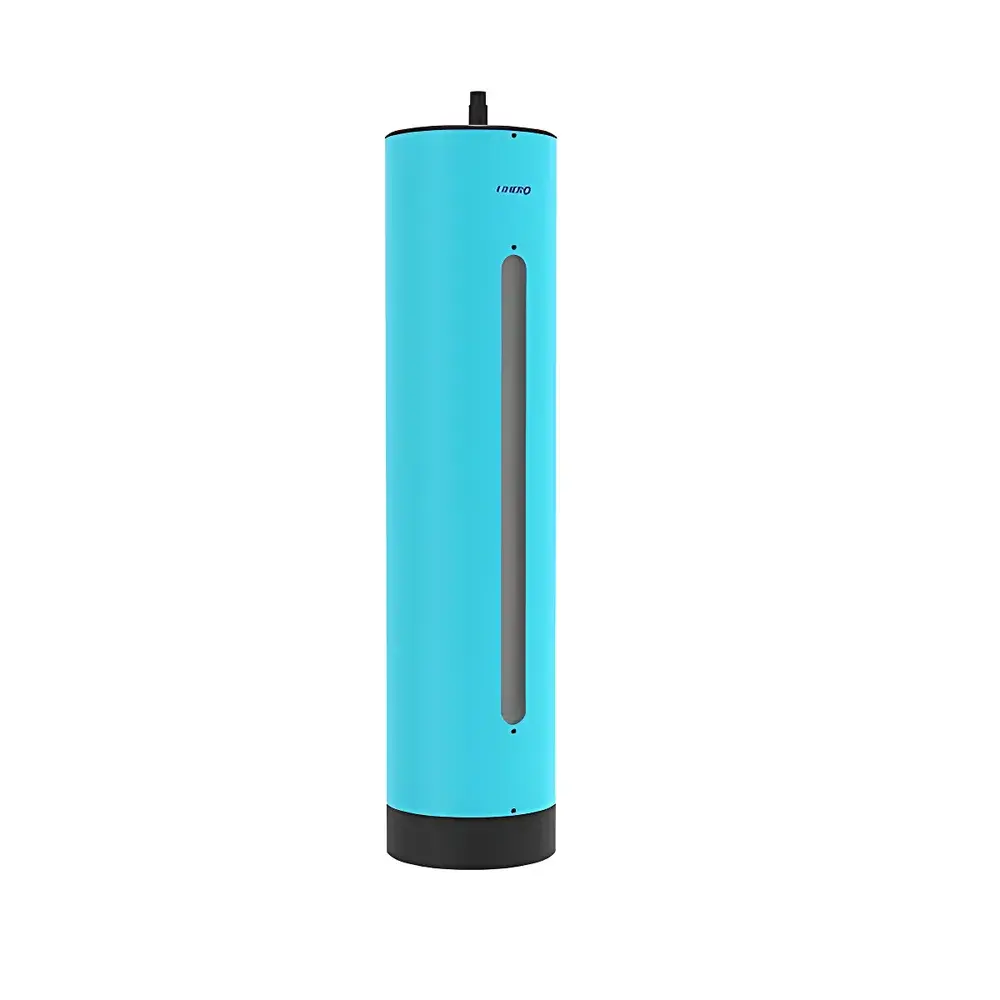
Lihero LHTA-2015 Turbidity & Transparency Analyzer
| Brand | Lihero |
|---|---|
| Model | LHTA-2015 |
| Measurement Principle | 3D Intelligent Dynamic Recognition via Stereoscopic Optical Signal Capture |
| Data Storage Capacity | ≥3 years of timestamped measurements |
| Operating Modes | Automatic and Manual |
| Self-Cleaning Function | Integrated |
| Output Interfaces | Digital signal output (RS-485/Modbus RTU), Remote control interface |
| Alarm Functions | Temperature anomaly, system fault, and operational abnormality detection |
| Compliance Context | Designed for field-deployable water transparency monitoring in accordance with China’s Technical Specification for Black-Odorous Water Body Identification (HJ 972–2018) |
Overview
The Lihero LHTA-2015 Turbidity & Transparency Analyzer is a field-deployable optical instrument engineered for quantitative assessment of water column transparency—specifically targeting black-odorous water bodies as defined under Chinese environmental regulatory frameworks (e.g., HJ 972–2018). Unlike conventional Secchi disk or single-beam transmittance meters, the LHTA-2015 employs a proprietary 3D intelligent dynamic recognition methodology. This approach relies on stereoscopic optical signal capture during continuous water sampling, enabling real-time spatial resolution of light scattering heterogeneity across multiple axial planes. The system processes time-synchronized intensity gradients, polarization shifts, and depth-resolved attenuation profiles to compute transparency as an inverse function of volumetric turbidity distribution—not merely surface-level transmission loss. Its design prioritizes operational robustness in low-flow, high-organic-load urban drainage channels and stagnant ponding zones where conventional nephelometric methods suffer from particle settling bias and flow-dependent calibration drift.
Key Features
- Adaptive dual-mode operation: Configurable automatic cycle timing (user-defined interval from 1 min to 24 h) or manual trigger mode with adjustable integration time constant (0.5–5 s) to accommodate transient sediment resuspension events.
- Onboard non-volatile memory storing ≥3 years of timestamped transparency values (units: cm or m), each tagged with GPS coordinates (optional external module), ambient temperature, and system diagnostic flags.
- Integrated ultrasonic-assisted self-cleaning mechanism for optical windows and flow cell surfaces, activated automatically every 6 hours or upon turbidity threshold exceedance (>100 NTU).
- Real-time health monitoring: Continuous logging of thermal sensor readings (±0.3°C accuracy), LED source intensity decay rate, and photodetector gain stability—each triggering configurable alarm thresholds via relay output or Modbus register flag.
- Digital I/O architecture compliant with industrial RS-485/Modbus RTU protocol, supporting SCADA integration, remote firmware updates, and synchronous command-response control from central monitoring stations.
Sample Compatibility & Compliance
The LHTA-2015 accepts raw, unfiltered water samples within a nominal flow range of 0.1–2.0 L/min, accommodating suspended solids concentrations up to 500 mg/L without clogging. It operates effectively across pH 4.0–10.5 and temperatures from 0°C to 45°C. While not certified to ISO 7027 or ASTM D6508 for laboratory-grade turbidity reporting, its measurement traceability aligns with HJ 972–2018 field verification requirements for black-odorous water identification—including correlation protocols against calibrated Secchi depth and laboratory-based spectrophotometric absorbance at 680 nm. Data audit trails include operator ID (if network-authenticated), calibration event logs, and power-cycle timestamps—supporting basic GLP documentation workflows.
Software & Data Management
The embedded firmware implements deterministic real-time scheduling for optical acquisition, signal processing, and storage. Raw photodiode voltage arrays (16-bit resolution, 1 kHz sampling) are processed using adaptive median filtering and multi-scale edge detection prior to transparency index derivation. Local data export is supported via microSD card (FAT32 formatted) in CSV format with ISO 8601 timestamps. Optional cloud synchronization (via LTE or Ethernet) enables time-series visualization in web-based dashboards with configurable alert rules (e.g., transparency drop >30% over 24 h). All stored records maintain immutable metadata per IEC 62443-3-3 Annex A guidelines for industrial data integrity.
Applications
- Long-term monitoring of transparency recovery in remediated black-odorous rivers and urban canals.
- Correlation studies between in-situ transparency dynamics and lab-measured parameters (CODMn, NH3-N, chlorophyll-a).
- Validation of dredging or aeration intervention efficacy through high-frequency transparency trend analysis.
- Integration into municipal smart-water platforms for early warning of algal bloom onset or sediment resuspension events.
- Field calibration reference for satellite-derived water clarity algorithms (e.g., Landsat-8 OLI or Sentinel-2 MSI band ratios).
FAQ
Does the LHTA-2015 comply with ISO/IEC 17025 for accredited testing laboratories?
No—it is designed for field surveillance, not metrologically traceable certification. Calibration is performed using NIST-traceable turbidity standards (Formazin or AMCO AEPA-1) at user sites per manufacturer-recommended intervals.
Can transparency values be directly converted to Secchi depth?
Empirical conversion coefficients (e.g., Secchi depth ≈ 1.2 × LHTA-2015 transparency value) are site-specific and require local regression against concurrent Secchi measurements; no universal factor is embedded.
Is remote firmware update capability available without physical access?
Yes—when connected to a secure corporate network or LTE gateway with TLS 1.2 encryption, firmware patches and configuration updates can be deployed via authenticated HTTP POST requests.
What maintenance intervals are recommended for optical components?
Quarterly visual inspection of flow cell quartz windows and annual replacement of UV-LED emitters (rated lifetime: 10,000 hours at 25°C ambient).
How does the instrument handle air bubbles in the sample stream?
The 3D recognition algorithm includes bubble discrimination logic based on transient spherical symmetry detection and temporal persistence filtering—rejecting artifacts lasting <200 ms.
Related Products







