
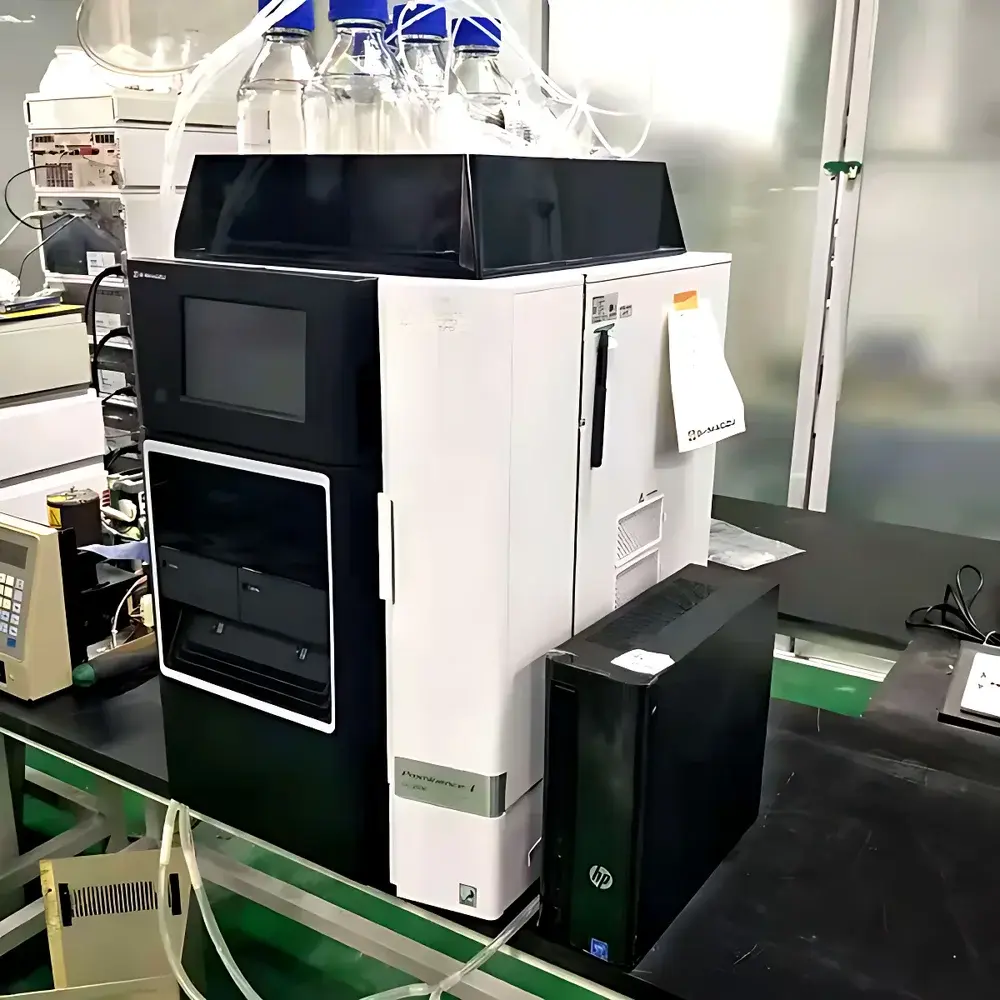
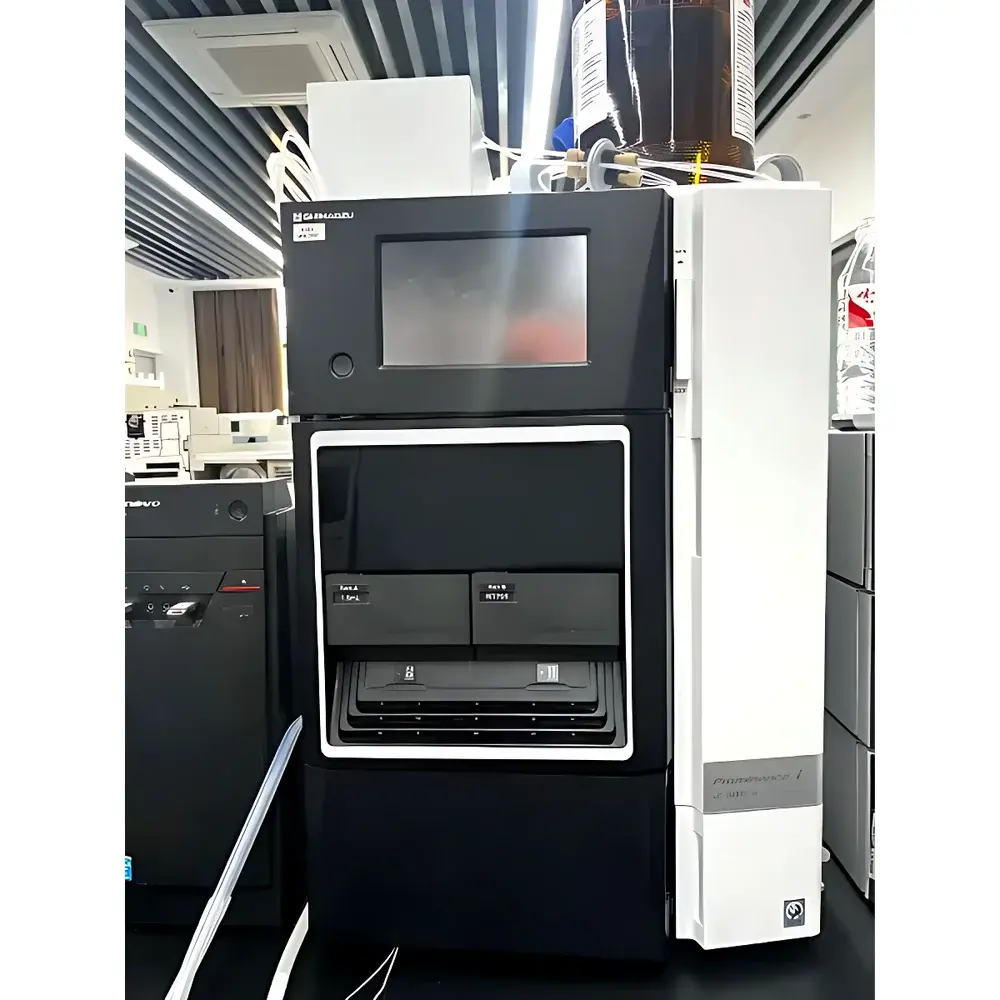
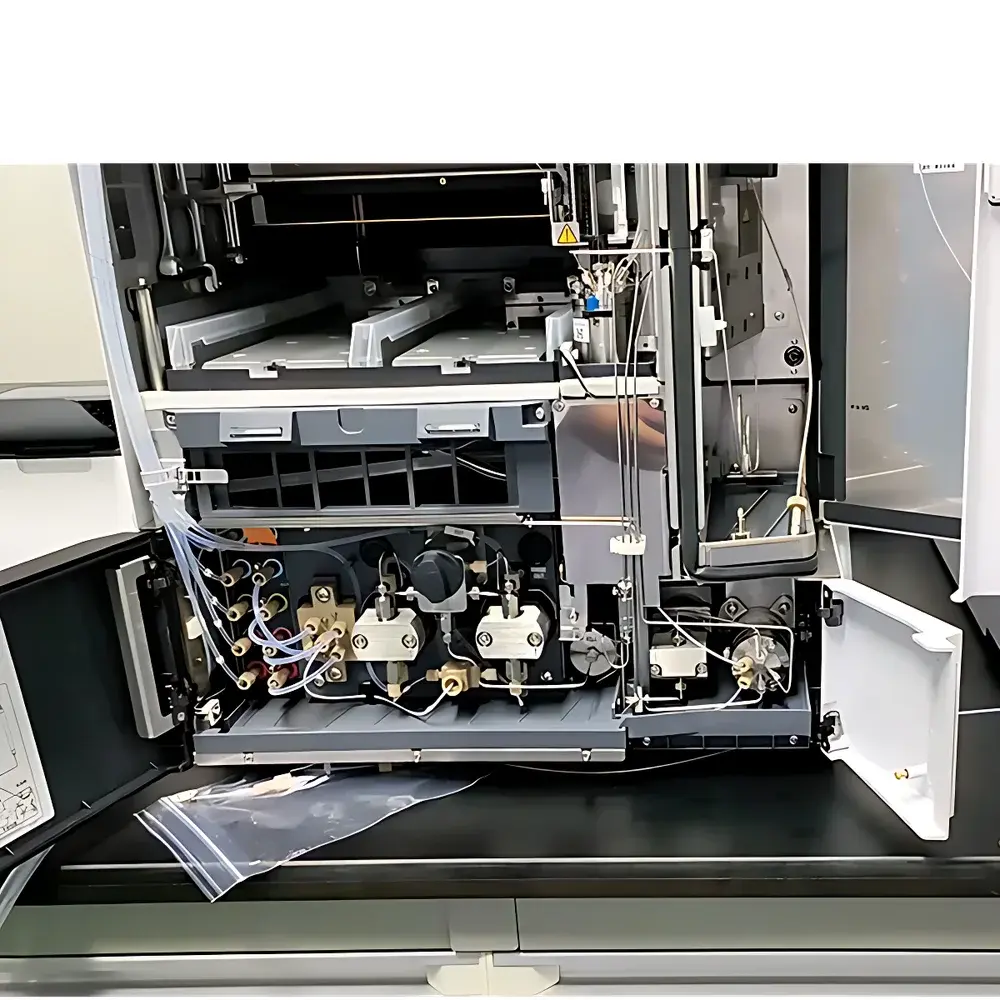
Shimadzu Nexera-i LC-2040 Ultra-High Performance Liquid Chromatograph
| Brand | Shimadzu |
|---|---|
| Origin | Japan |
| Model | LC-2040 |
| Instrument Type | Ultra-High Performance Liquid Chromatograph (UHPLC) |
| Maximum Operating Pressure | 66 MPa (9,500 psi) |
| Flow Rate Range | 0.001–5.0 mL/min |
| Flow Accuracy | ±0.1% RSD |
| Injection Volume Range | 0.1–100 µL |
| Sample Capacity | 80-position autosampler tray (compatible with 96-well plates) |
| Column Oven Temperature Range | 4–85 °C |
| UV-Vis Detector Wavelength Range | 190–700 nm |
| Data Acquisition Rate | Up to 100 Hz |
| Gradient Delay Volume | < 100 µL |
| Carryover | < 0.0025% |
| Baseline Drift | < 0.5 × 10⁻⁵ AU/h (at 254 nm, 1.0 mL/min methanol) |
Overview
The Shimadzu Nexera-i LC-2040 is an integrated ultra-high performance liquid chromatograph engineered for precision, robustness, and operational autonomy in regulated and high-throughput laboratory environments. Based on core UHPLC principles—utilizing low-dispersion fluidics, minimized dwell volume, and high-pressure gradient delivery—the system supports sub-2.5 µm fully porous and superficially porous (core-shell) columns at sustained pressures up to 66 MPa. Unlike conventional HPLC systems constrained by 40 MPa limits, the LC-2040 enables faster separations, higher resolution, and improved peak capacity without requiring 100+ MPa instrumentation. Its design incorporates dual-zone thermal control for both the optical detector flow cell and column oven—critical for baseline stability in low-wavelength UV detection (e.g., 190–220 nm), where ambient temperature fluctuations commonly induce drift. The system meets fundamental requirements for method transfer from HPLC to UHPLC platforms and serves as a validated front-end for LC-MS coupling in DMPK, toxicology, and CMC-compliant bioanalytical workflows.
Key Features
- Integrated UHPLC architecture with 66 MPa maximum pressure capability—enabling use of 2.5 µm and sub-2 µm particle columns and core-shell technology
- 7-inch full-color capacitive touch panel with real-time chromatogram display, instrument status monitoring, and on-device method editing
- Dual-temperature-controlled UV-Vis detector: independent regulation of flow cell and optics housing ensures baseline stability < 0.5 × 10⁻⁵ AU/h at 254 nm
- Ultra-low carryover (< 0.0025%) across polarity gradients—validated for high-sensitivity analysis of polar metabolites and lipophilic APIs
- High-precision micro-injection system supporting 0.1–100 µL volumes with linearity R² > 0.9999 over full range; no dilution required for concentrated samples
- Intelligent System Check (ISC): automated verification of mobile phase levels, pump seal wear, lamp energy, and baseline noise prior to run initiation
- Energy-efficient standby mode reducing power consumption by 95% versus prior-generation systems; EPA ENERGY STAR–aligned shutdown protocol
Sample Compatibility & Compliance
The LC-2040 accommodates diverse sample matrices—including plasma extracts, tissue homogenates, fermentation broths, polymer leachables, and environmental water extracts—without hardware modification. Its autosampler supports standard 2-mL vials, 96-well microtiter plates (MTP), and custom rack configurations. Regulatory compliance is embedded in system architecture: audit trails, electronic signatures, and method/version control are natively supported via LabSolutions software under FDA 21 CFR Part 11 and EU Annex 11 frameworks. All SST (System Suitability Test) parameters—including resolution, tailing factor, and %RSD of retention time—are programmable and reportable within defined acceptance criteria per USP , ICH Q2(R2), and ISO/IEC 17025. Column oven and detector temperature logs, along with pressure and flow telemetry, are timestamped and retained for GLP/GMP traceability.
Software & Data Management
LabSolutions LC/GC 5.9 or later provides full instrument control, sequence management, peak integration, and report generation. The LC-2040 introduces Interactive Communication Mode (ICM), enabling bidirectional synchronization between the instrument’s onboard GUI and LabSolutions: methods and batch tables created on the touch panel upload directly to the workstation without manual re-entry. Remote monitoring via secure HTTPS interface allows real-time chromatogram viewing and alarm notification on iOS/Android devices—critical for instruments housed in fume hoods or classified manufacturing zones. Raw data (.lcd format) is stored with embedded metadata (instrument ID, user, method hash, calibration history) and supports vendor-neutral export to .cdf or .mzML for third-party processing. All data handling conforms to ALCOA+ principles (Attributable, Legible, Contemporaneous, Original, Accurate, Complete, Consistent, Enduring, Available).
Applications
The LC-2040 is deployed across pharmaceutical QC/QA (release testing per Ph. Eur. and JP monographs), biopharmaceutical purity assessment (mAb aggregate/degradant profiling), clinical toxicology (benzodiazepine screening in serum), food safety (mycotoxin quantification in cereals), and environmental analysis (PFAS detection in groundwater). Its fast cycle time (~20 s injection-to-injection for 10 µL injections) and compatibility with short, narrow-bore core-shell columns reduce analysis time by 40–60% versus legacy HPLC methods. In method development labs, the system accelerates scouting gradients and column screening due to rapid equilibration (< 3 column volumes) and reproducible dwell volume (< 90 µL). It is routinely qualified for compendial applications including USP chromatographic system suitability and EP 2.2.46 robustness testing.
FAQ
Is the LC-2040 compatible with existing Shimadzu HPLC methods?
Yes—method translation tools in LabSolutions support automatic scaling of flow rate, gradient time, and injection volume to maintain k′ and α values when migrating from 5 µm to 2.5 µm columns.
Does the system support GLP-compliant electronic records?
Yes—audit trail logging, user access controls, and electronic signature capture are enabled by default and configurable per 21 CFR Part 11 Annex A requirements.
Can the autosampler handle viscous or particulate-containing samples?
The high-torque syringe drive and optional 0.2 µm inline filter kit allow reliable handling of samples up to 25 cP viscosity and clarified biological fluids.
What maintenance intervals are recommended for routine operation?
Pump seal replacement every 6 months (or 2,000 hours), UV lamp every 2,000 hours, and column oven calibration annually—tracked automatically via the Maintenance Scheduler in LabSolutions.
Is remote instrument startup and shutdown supported?
Yes—via LabSolutions Web Client or REST API integration, enabling scheduled power-on, system check execution, and post-run shutdown with environmental log recording.





