Lihero Data Platform with Microservices Architecture
| Brand | Lihero |
|---|---|
| Origin | Hunan, China |
| Manufacturer Type | Authorized Distributor |
| Product Origin | Domestic (China) |
| Model | Data Platform with Microservices Architecture |
| Pricing | Available Upon Request |
Overview
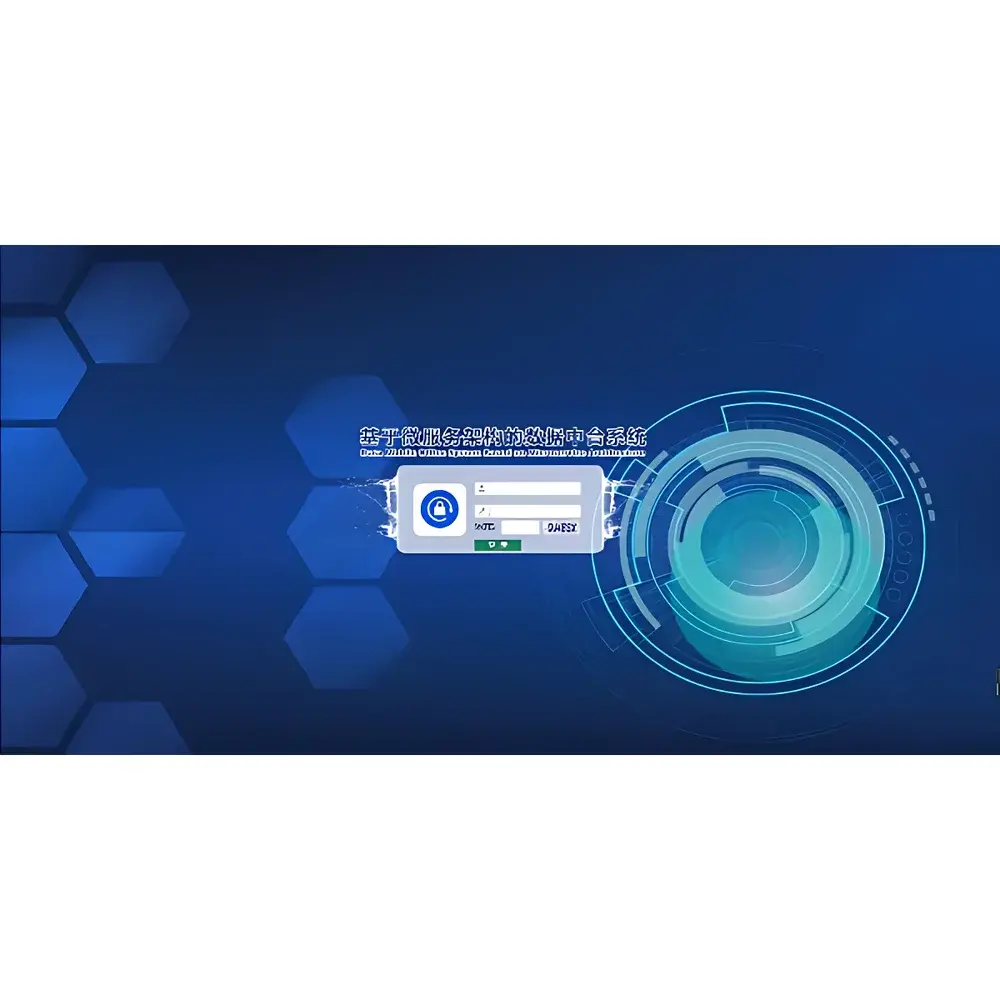
The Lihero Data Platform with Microservices Architecture is a purpose-built enterprise-grade data infrastructure solution designed for laboratory service providers, research institutions, and quality assurance organizations requiring scalable, maintainable, and audit-ready digital operations. Unlike monolithic data management systems, this platform implements a domain-driven, service-oriented architecture grounded in industry-standard microservices principles. It enables the systematic decomposition of complex laboratory data workflows—such as instrument telemetry ingestion, sample metadata harmonization, analytical result aggregation, and compliance reporting—into independently deployable, versioned, and resilient services. Each microservice encapsulates a bounded context aligned with laboratory functional domains (e.g., “Sample Lifecycle Manager”, “Instrument Data Ingestor”, “Audit Trail Publisher”), communicating via lightweight, RESTful or message-based protocols (e.g., HTTP/JSON, AMQP). The architecture supports containerized deployment (Docker/Kubernetes), horizontal scaling per workload intensity, and zero-downtime updates—critical for 24/7 laboratory monitoring environments governed by ISO/IEC 17025, GLP, or FDA 21 CFR Part 11 requirements.
Key Features
- Domain-Driven Service Decomposition: Business capabilities—including sample registration, instrument integration, calibration log synchronization, and report generation—are modeled as discrete, autonomous microservices, each owning its schema and lifecycle.
- Decentralized Data Management: Each microservice maintains its dedicated database instance (e.g., PostgreSQL for transactional metadata, TimescaleDB for time-series instrument data), eliminating shared database coupling and enabling technology heterogeneity (SQL/NoSQL/time-series).
- API-First Design: All internal and external interactions are mediated through well-documented, versioned REST APIs conforming to OpenAPI 3.0 specifications, supporting secure OAuth 2.0 authentication and granular RBAC policies aligned with laboratory role hierarchies (e.g., Analyst, QA Reviewer, Lab Manager).
- Resilience & Observability: Built-in circuit breakers, retry policies, and distributed tracing (via OpenTelemetry) ensure fault isolation during instrument communication failures or third-party API outages—minimizing cascading impact across laboratory data pipelines.
- CI/CD Integration: Native compatibility with GitOps workflows (e.g., Argo CD) enables automated testing, validation, and rollout of service updates—supporting rapid iteration while preserving regulatory traceability of configuration changes.
Sample Compatibility & Compliance
The platform natively ingests structured and semi-structured data from heterogeneous laboratory sources: LIMS exports (CSV, XML), instrument vendor APIs (Agilent, Thermo Fisher, Waters), IoT sensor networks (temperature/humidity/loggers), and ELN entries. All data transformations adhere to IUPAC-recommended metadata conventions (e.g., ISA-Tab) and support FAIR principles (Findable, Accessible, Interoperable, Reusable). The architecture facilitates compliance with ISO 17025:2017 Clause 7.5 (data control), USP (analytical instrument qualification), and FDA 21 CFR Part 11 through built-in electronic signature enforcement, immutable audit logs (WORM storage), and configurable retention policies. Role-based access controls enforce separation of duties between data entry, review, and approval—essential for GxP-aligned laboratory operations.
Software & Data Management
The platform includes a centralized service registry (Consul or Eureka), API gateway (Kong or Apigee), and unified logging stack (ELK or Loki/Grafana). Data lineage is automatically captured at service invocation level, enabling full traceability from raw instrument output to final analytical report. Metadata tagging follows Dublin Core and ASTM E1467 standards, ensuring interoperability with enterprise data catalogs (e.g., Atlan, Collibra). All configuration parameters—including data retention periods, encryption ciphers (AES-256), and TLS 1.3 enforcement—are managed declaratively via Git repositories, enabling version-controlled, auditable infrastructure-as-code governance.
Applications
- Centralized aggregation and contextualization of multi-vendor instrument data (HPLC, GC-MS, FTIR, particle analyzers) into unified analytical dashboards.
- Automated generation of audit-ready compliance reports for ISO 17025 accreditation or regulatory submissions (e.g., ANDA, MA dossier annexes).
- Real-time anomaly detection across environmental monitoring networks using streaming microservices (Apache Flink/Kafka Streams).
- Dynamic scaling of computational resources for high-throughput data processing (e.g., spectral deconvolution, chromatographic peak integration) without service disruption.
- Secure, role-governed data sharing between internal labs, contract research organizations (CROs), and regulatory authorities via controlled API endpoints.
FAQ
How does this platform differ from traditional ETL-based data warehouses?
Unlike batch-oriented ETL systems, this architecture processes data in near real-time via event-driven microservices—enabling immediate feedback loops for QC decision-making and reducing latency between instrument output and actionable insight.
Can legacy laboratory instruments be integrated?
Yes—through protocol-agnostic adapter microservices that translate vendor-specific formats (e.g., Agilent ChemStation .D folders, Thermo Xcalibur .raw) into standardized JSON-LD payloads compliant with ISA-Tab v2.0.
Is the platform validated for GxP use?
While the base architecture is designed for GxP alignment, site-specific IQ/OQ/PQ validation documentation and test scripts are provided as part of professional services engagement—not embedded in the default distribution.
What database technologies are supported for custom microservices?
PostgreSQL, MySQL, MongoDB, TimescaleDB, and SQLite are pre-qualified; other ACID-compliant or time-series engines may be integrated subject to compatibility verification and performance benchmarking.
How is data sovereignty maintained across distributed microservices?
Each microservice enforces strict boundary ownership: no cross-service database queries are permitted. Inter-service data exchange occurs exclusively via idempotent, schema-validated API calls or asynchronous event publishing—ensuring architectural integrity and auditability.
Related Products