
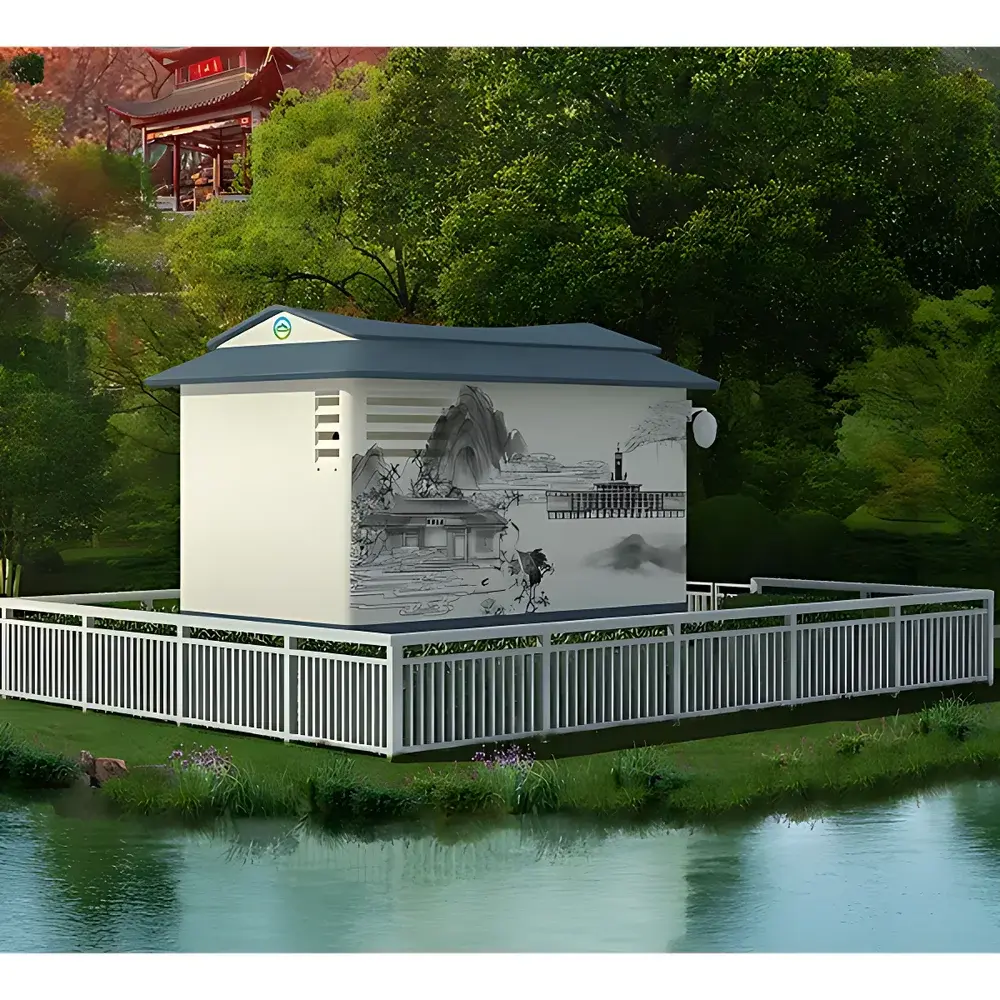
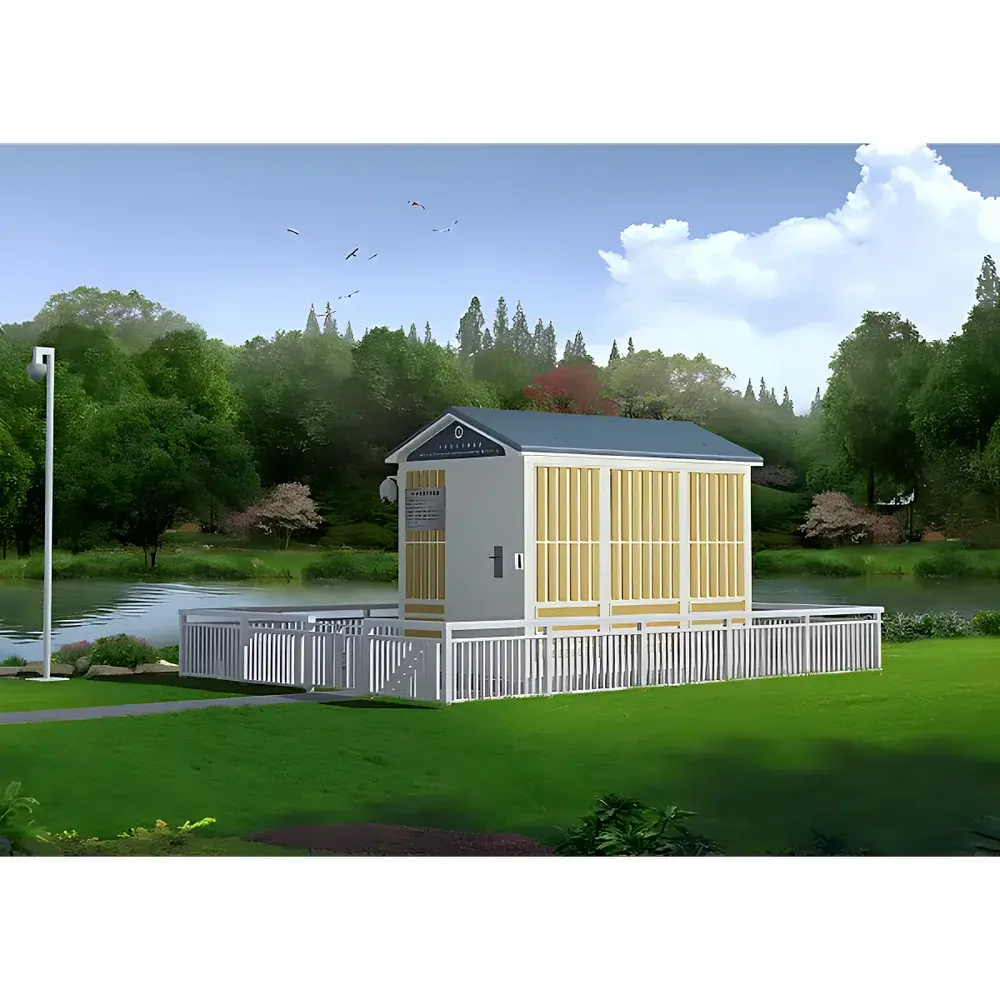
Lihero LFOSMS-2017 Compact Outdoor Water Quality Monitoring Station
| Brand | Lihero |
|---|---|
| Origin | Hunan, China |
| Manufacturer Type | Authorized Distributor |
| Country of Manufacture | China |
| Model | LFOSMS-2017 |
| Pricing | Available Upon Request |
Overview
The Lihero LFOSMS-2017 Compact Outdoor Water Quality Monitoring Station is an integrated, cabinet-based environmental monitoring system engineered for continuous, unattended operation in field-deployed surface water, groundwater, or effluent monitoring applications. Unlike traditional fixed-site water quality stations requiring dedicated shelters and civil infrastructure, the LFOSMS-2017 consolidates sampling, sample conditioning, multi-parameter analysis, data acquisition, telemetry, and surge protection into a single IP65-rated stainless-steel enclosure. Its modular architecture implements standardized wet-chemistry and electrochemical sensing principles—including conductivity, pH, dissolved oxygen (DO), oxidation-reduction potential (ORP), turbidity, ammonium (NH₄⁺), nitrate (NO₃⁻), total phosphorus (TP), and chemical oxygen demand (COD)—collectively constituting the “Conventional Nine Parameters” widely adopted under Chinese EPA HJ 91.1–2019 and aligned with ISO 5667-3 for water sampling practice. Optional sensor modules support targeted detection of priority pollutants such as heavy metals (e.g., Pb, Cd, As via anodic stripping voltammetry), organic micropollutants (e.g., phenols, PAHs via UV-Vis spectrophotometry), or nutrient speciation (e.g., orthophosphate, nitrite), enabling regulatory compliance across municipal, industrial, and ecological monitoring mandates.
Key Features
- Stainless-steel cabinet construction (AISI 304) eliminates need for reinforced concrete foundations or climate-controlled station buildings—reducing installation lead time to under 48 hours and permitting deployment on riverbanks, reservoir perimeters, or wastewater outfall zones with minimal site preparation.
- Multi-stage lightning protection system compliant with IEC 61643-11:2011, integrating Type I+II+III SPDs at AC input, signal lines, and Ethernet ports to safeguard power supply, analog/digital I/O, and TCP/IP communication against direct strikes and induced surges up to 40 kA (8/20 μs).
- Automated operational sequence: programmable peristaltic sampling (depth- or flow-proportional), filtration (5–25 µm cartridge), air-bubble removal, reagent dosing (for COD/NH₄⁺/TP), electrode calibration (pH/ORP/DO), and self-cleaning cycles using ultrasonic transducers and high-pressure water jets—minimizing manual intervention to quarterly maintenance intervals.
- Modular analyzer design supports hot-swappable sensor cartridges and plug-in reagent kits; all core analyzers meet ISO 7027 (turbidity), ISO 5814 (DO), and ASTM D1293 (pH) metrological traceability requirements.
- Ergonomic internal layout provides ≥600 mm service clearance around all critical components, including pump manifolds, flow cells, and data loggers—facilitating tool access, leak inspection, and component replacement without disassembly of adjacent subsystems.
Sample Compatibility & Compliance
The LFOSMS-2017 accepts raw water samples with suspended solids ≤100 mg/L and temperature range 0–40 °C. Integrated pre-filtration and de-bubbling ensure stable hydraulic conditions for electrochemical and optical sensors. All analytical methods adhere to national standard methodologies (e.g., HJ 535–2009 for ammonia nitrogen, HJ 505–2009 for CODCr) and are compatible with international QA/QC protocols including duplicate sampling, certified reference material (CRM) verification, and field blank analysis. System-level validation follows GLP principles, with audit trails for calibration events, maintenance logs, and alarm history stored locally and synchronized to central servers. Data transmission complies with HJ 212–2017 communication protocol for environmental monitoring systems and supports TLS 1.2-encrypted MQTT/HTTP(S) payloads for secure cloud ingestion.
Software & Data Management
Embedded Linux-based data logger (ARM Cortex-A9, 512 MB RAM) runs real-time OS with deterministic I/O scheduling. Local storage retains ≥180 days of second-level sensor readings, diagnostic codes, and video snapshots (via optional IP camera module). Remote configuration, firmware updates, and alarm threshold adjustments occur via web-based HMI (HTML5-compliant, responsive design) or RESTful API. Central platform integration supports OPC UA, Modbus TCP, and JSON/XML over HTTPS—enabling interoperability with SCADA, EMS, and digital twin platforms. Full audit trail functionality satisfies FDA 21 CFR Part 11 requirements for electronic records and signatures when deployed in regulated utility environments.
Applications
- River and lake water quality surveillance networks (e.g., Yangtze River Basin monitoring nodes)
- Drinking water source protection zones requiring rapid-deployment early-warning capability
- Industrial park effluent discharge monitoring under permit conditions (e.g., GB 8978–1996)
- Smart irrigation canal networks with real-time salinity and nutrient feedback
- Temporary construction site runoff monitoring during infrastructure projects
FAQ
What power supply options are supported?
The system operates on 220 VAC ±10%, 50 Hz, with optional DC backup (24 VDC) and solar hybrid configuration (MPPT charge controller + LiFePO₄ battery bank) for off-grid locations.
Can the station operate in freezing temperatures?
Yes—the cabinet includes thermostatically controlled heating (−20 to +5 °C ambient operation) and antifreeze-compatible fluid paths; all sensors are rated for continuous use down to −10 °C.
Is remote diagnostics available?
Yes—embedded SSH access, live sensor waveform streaming, and automated fault code reporting (e.g., “Flow Cell Obstruction,” “pH Electrode Drift Exceeded”) enable predictive maintenance without on-site visits.
How is data security ensured during transmission?
All telemetry uses certificate-based mutual TLS authentication, AES-256 encryption, and HMAC-SHA256 message integrity checks; local SD card storage is encrypted via LUKS.
Does the system support third-party sensor integration?
Yes—RS-485, RS-232, and 4–20 mA analog inputs accept OEM sensors meeting MODBUS RTU or HART 7 protocols; custom driver development is available under NDA.







