
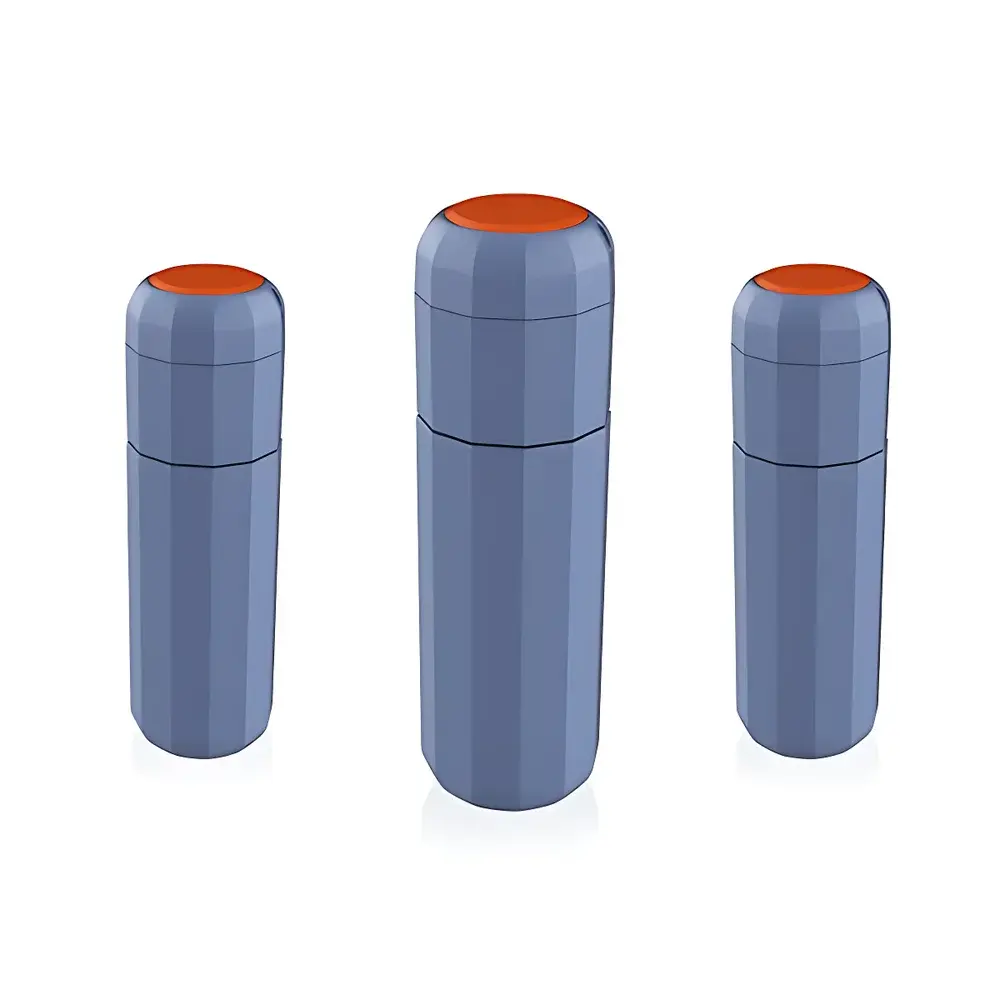
Lihero IBOT 500 Smart Multi-Parameter Water Sampling Bottle
| Brand | Lihero |
|---|---|
| Origin | Hunan, China |
| Manufacturer Type | Authorized Distributor |
| Country of Origin | China |
| Model | IBOT 500 |
| Pricing | Available Upon Request |
| Capacity | ≥500 mL |
| Communication | Dual-mode (NFC + Cellular/LTE-M) |
| Sensor Integration | Integrated water-level, temperature, conductivity, and valve-status sensors |
| Sampling Modes | Timed, Event-Triggered (depth/conductivity), Remote-Initiated |
| Data Logging | Timestamped lid actuation, valve operation, environmental temperature, GPS trajectory, battery voltage |
| Compliance | Designed for field-deployable environmental monitoring per ISO 5667-1, ASTM D3370, and EPA Method 1664B workflows |
Overview
The Lihero IBOT 500 Smart Multi-Parameter Water Sampling Bottle is an engineered field-deployable sampling system designed for autonomous, traceable, and condition-aware collection of surface and depth-stratified water samples in environmental monitoring, wastewater surveillance, and hydrological research applications. Unlike conventional passive sampling containers, the IBOT 500 integrates a sealed, tamper-evident 500 mL borosilicate glass or FDA-compliant HDPE bottle with an intelligent cap module housing a multi-sensor array and microcontroller-based control logic. Its core measurement architecture relies on real-time transduction of physical parameters—including hydrostatic pressure (for depth estimation), electrical conductivity (for salinity/contaminant proxy), thermistor-based temperature, and Hall-effect or optical valve position sensing—enabling context-driven sampling decisions without manual intervention. The device operates as a node within distributed environmental sensor networks, supporting regulatory-grade data integrity through time-synchronized logging, cryptographic ID tagging, and audit-ready metadata generation.
Key Features
- Integrated sensor suite: Pressure transducer (0–10 m H₂O range, ±1% FS), dual-electrode conductivity sensor (0–20 mS/cm, ±2% reading), NTC thermistor (−10 to +50 °C, ±0.3 °C), and lid-integrated magnetic switch for binary open/close state detection.
- Intelligent valve actuation: Motor-driven stainless-steel pinch valve with closed-loop feedback; detects stall conditions, timeout faults (>8 s actuation), and mechanical obstruction via current signature analysis.
- Dual-mode wireless interface: Near-field communication (NFC) for local configuration and status readout (ISO/IEC 14443-A); cellular LTE-M (or NB-IoT optional) for encrypted MQTT-based telemetry transmission to central platforms.
- Onboard data integrity: All sensor readings, valve events, lid transitions, GPS coordinates (via integrated u-blox M8N), and battery voltage (2.8–4.2 V range) are timestamped using internal RTC with NTP synchronization capability.
- Power management: Rechargeable Li-SOCl₂ primary cell (10-year shelf life, >3 years field deployment at 1 sample/hour); low-voltage warning (<3.0 V) triggers priority telemetry upload and disables non-critical functions.
Sample Compatibility & Compliance
The IBOT 500 supports aqueous matrices including freshwater, estuarine, wastewater effluent, and treated drinking water. Bottle materials comply with USP Class VI and ISO 10993-5 cytotoxicity standards for sample integrity. Sensor wetted parts are constructed from 316L stainless steel, EPDM elastomers, and PEEK polymer to ensure chemical resistance across pH 4–10 and chloride concentrations ≤20,000 mg/L. The system adheres to ISO 5667-1:2019 (water quality — sampling — guidance on the design of sampling programs and sampling techniques), ASTM D3370-22 (standard practices for sampling water), and supports GLP-aligned workflows through immutable event logging and user-authenticated parameter configuration. Optional firmware enables 21 CFR Part 11-compliant electronic signatures and audit trail export.
Software & Data Management
The IBOT 500 communicates with the Lihero Environmental Data Hub (LEDH), a cloud-based platform offering role-based access control, geospatial visualization, automated QA/QC flagging (e.g., out-of-range conductivity-depth correlation), and CSV/NetCDF export compliant with WQX (Water Quality Exchange) schema. Firmware updates are delivered over-the-air (OTA) with SHA-256 signature verification. Local configuration is supported via NFC-enabled Android/iOS mobile application, enabling offline setup of sampling schedules, trigger thresholds (e.g., Δconductivity > 50 µS/cm within 30 s), and geofence boundaries. All telemetry includes ISO 8601 timestamps, IANA time zone identifiers, and WGS84-encoded coordinates.
Applications
- River and reservoir profiling: Depth-triggered sequential sampling across vertical profiles to assess thermal stratification, nutrient gradients, or contaminant plume migration.
- Wastewater outfall monitoring: Conductivity-triggered sampling at discharge points to capture episodic industrial releases or stormwater surges.
- Drinking water distribution integrity: Mobile deployment on inspection vehicles to correlate chlorine residual decay with temperature and residence time.
- Regulatory compliance reporting: Automated generation of chain-of-custody records, including GPS trace, ambient temperature history, and valve actuation logs required under EU WFD and US Clean Water Act Section 304(h).
- Academic hydrological studies: Long-term unattended deployment in remote catchments where manual retrieval is logistically constrained.
FAQ
What depth resolution does the pressure sensor provide?
The hydrostatic pressure sensor delivers 1 cm water column resolution (0.98 Pa) within its 0–10 m operating range, calibrated against NIST-traceable dead-weight testers.
Can the IBOT 500 operate in seawater?
Yes—the sensor housing and valve assembly are rated IP68 and corrosion-resistant to 35 g/kg NaCl solutions; however, long-term immersion beyond 72 hours requires post-deployment desalination rinse per maintenance protocol.
Is GPS positioning available underwater?
No—GPS functionality is active only at surface or during transport; depth is derived solely from pressure measurement, with temperature compensation applied in real time.
How is data security ensured during transmission?
All cellular telemetry uses TLS 1.2 encryption; device authentication employs X.509 certificates provisioned at manufacturing; no plaintext credentials are stored or transmitted.
Does the system support integration with third-party SCADA or LIMS platforms?
Yes—RESTful API and Modbus TCP gateways are available for integration with Siemens Desigo, Emerson DeltaV, or LabVantage LIMS via documented JSON payloads and register maps.



