
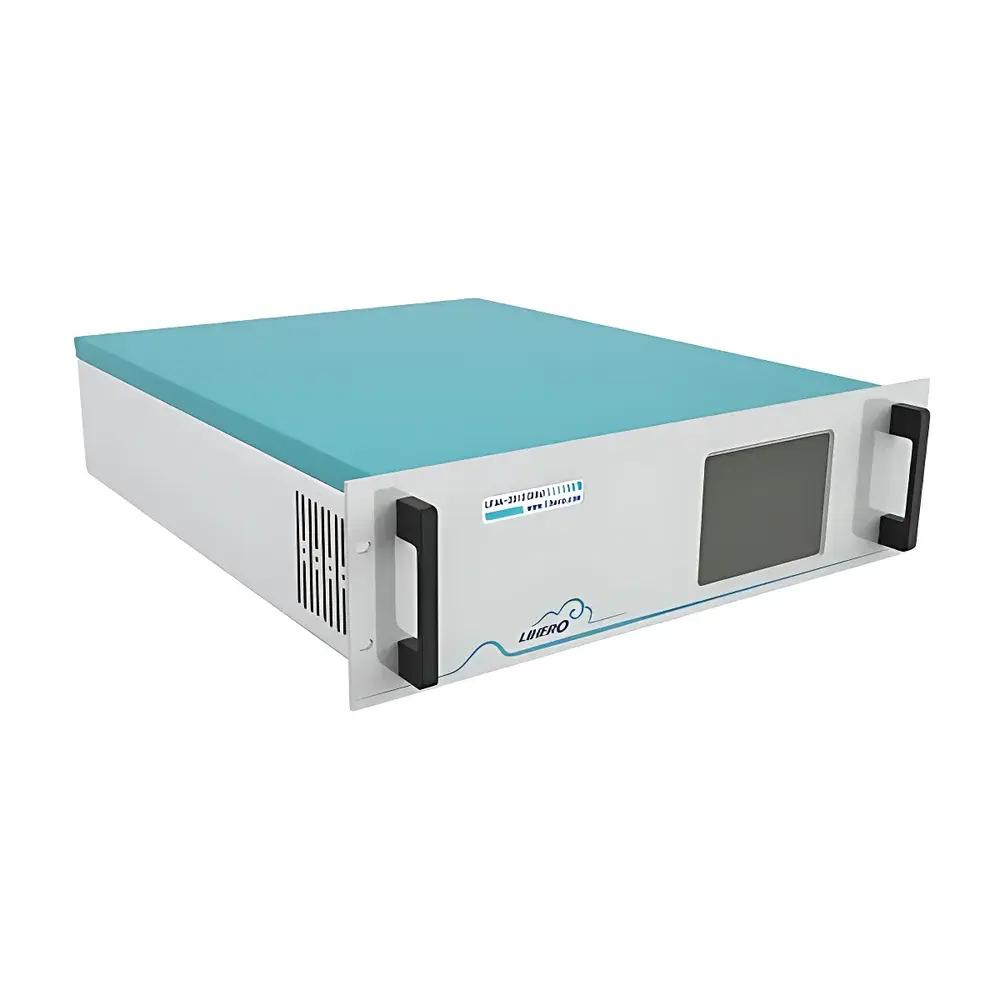
Lihero LFAQMS-2012 Environmental Air Gaseous Pollutants Analyzer
| Brand | Lihero |
|---|---|
| Model | LFAQMS-2012 |
| Measurement Principle | UV Absorption (SO₂, O₃), Chemiluminescence (NO₂), Non-Dispersive Infrared (CO) |
| Compliance | HJ 654–2013 |
| Output Channels | 8 configurable alarm relay outputs |
| Data Tagging | Embedded validity flags per measurement record |
| Interface Options | RS232/RS485, Ethernet, Modbus TCP, analog 4–20 mA |
| Calibration Mode | Automated zero/span calibration with manual override capability |
Overview
The Lihero LFAQMS-2012 Environmental Air Gaseous Pollutants Analyzer is a certified, stationary ambient air monitoring system engineered for continuous, unattended measurement of four regulated gaseous pollutants: sulfur dioxide (SO₂), nitrogen dioxide (NO₂), ozone (O₃), and carbon monoxide (CO). Designed in strict accordance with the technical specifications and validation protocols outlined in China’s Ministry of Ecology and Environment standard HJ 654–2013, the analyzer employs established reference-grade detection methodologies—ultraviolet (UV) absorption spectroscopy for SO₂ and O₃, chemiluminescence detection for NO₂, and non-dispersive infrared (NDIR) absorption for CO. Each measurement channel operates independently with dedicated optical paths, flow control, and temperature-stabilized detectors to ensure long-term baseline stability and interferences mitigation. The system is configured for permanent installation in national or municipal ambient air quality monitoring stations, where regulatory data integrity, traceability, and operational continuity are mandatory.
Key Features
- Integrated automated quality control: Built-in zero/span verification cycles triggered by user-defined schedules or event-driven logic (e.g., post-alarm, pre-data transmission), compliant with QA/QC requirements for regulatory reporting.
- Dual-mode calibration architecture: Supports both fully automated calibration sequences and operator-initiated manual zero/span adjustments via intuitive touchscreen interface or remote command protocol.
- Measurement metadata tagging: Every data point is timestamped and annotated with real-time instrument status flags—including flow rate deviation, lamp intensity decay, pressure/temperature drift, and calibration event markers—enabling rigorous data validity assessment per ISO/IEC 17025 and China’s Ambient Air Quality Monitoring Technical Specifications.
- Modular I/O architecture: Equipped with eight programmable relay outputs for discrete alarm signaling (e.g., sensor fault, calibration overdue, power loss, communication timeout), plus dual serial ports (RS232/RS485), 10/100 Mbps Ethernet, Modbus TCP server/client mode, and four isolated 4–20 mA analog outputs for seamless integration into SCADA, EMS, or centralized AQMS platforms.
- Robust environmental enclosure: IP55-rated housing with internal temperature and humidity regulation ensures stable operation across –20 °C to +50 °C ambient conditions, meeting outdoor deployment requirements for Class I and II monitoring sites under HJ 655–2013.
Sample Compatibility & Compliance
The LFAQMS-2012 is validated for ambient air sampling at standard temperature and pressure (STP: 25 °C, 101.325 kPa), with integrated critical orifice flow control and heated sample lines to prevent condensation and adsorption losses. It meets the performance criteria defined in HJ 654–2013 for detection limits (SO₂: ≤2 ppb; NO₂: ≤1 ppb; O₃: ≤1 ppb; CO: ≤0.1 ppm), precision (<2% RSD over 24 h), and accuracy (±5% of reference value). While not CE-marked or EPA EQPM-listed, its analytical methodology aligns with internationally recognized principles: UV absorption conforms to ISO 13964 for SO₂ and ISO 13963 for O₃; chemiluminescence follows ISO 10427 for NOₓ; NDIR for CO is consistent with ISO 4226. The system supports audit-ready data logging with tamper-evident timestamps and optional GLP-compliant electronic signature workflows.
Software & Data Management
The embedded firmware provides local configuration, diagnostics, and real-time parameter visualization via a 7-inch resistive touchscreen. All measurement data, calibration logs, alarm events, and system diagnostics are stored internally on industrial-grade microSD with ≥30 days of buffered retention. Data export is supported via CSV over USB or FTP/SFTP push to central servers. Optional Lihero AQMS Manager software enables remote fleet monitoring, batch calibration scheduling, statistical validation reports (e.g., MDL, bias, precision), and compliance dashboards aligned with HJ 664–2013 reporting templates. Audit trails include user login history, parameter change logs, and certificate-of-calibration uploads—fully compatible with 21 CFR Part 11–ready configurations when deployed with external identity management.
Applications
- National and provincial ambient air quality monitoring networks requiring HJ 654–2013–compliant instrumentation
- Urban background, traffic, and industrial fence-line monitoring stations
- Research-grade field studies requiring synchronized multi-pollutant time-series data
- Calibration verification and transfer standards support for mobile labs and reference analyzers
- Integration into smart city environmental IoT platforms with edge-level data preprocessing
FAQ
Does the LFAQMS-2012 support remote firmware updates?
Yes—firmware upgrades can be performed over Ethernet using signed binary packages; update logs and rollback capability are retained in non-volatile memory.
Is external calibration gas required for routine operation?
Yes—certified zero air and span gases (NIST-traceable or equivalent) must be supplied for daily or weekly automated calibration cycles as specified in HJ 654–2013 Annex B.
Can the analyzer operate without continuous network connectivity?
Yes—the system functions autonomously with full local data logging, alarm execution, and internal clock synchronization; network loss triggers local buffering until reconnection.
What maintenance intervals are recommended?
Optical windows require cleaning every 30 days in high-particulate environments; pump filters every 90 days; ozone generator lamps every 12 months; full system performance verification annually per HJ 654–2013 Section 7.2.
Is the data output format compatible with international air quality databases (e.g., EEA, WHO AirQ+)?
Raw output is ASCII-based CSV with ISO 8601 timestamps and SI units; mapping to EEA AirBase or WHO AirQ+ schemas requires configuration-level field remapping, supported via AQMS Manager export templates.
Related Products







