
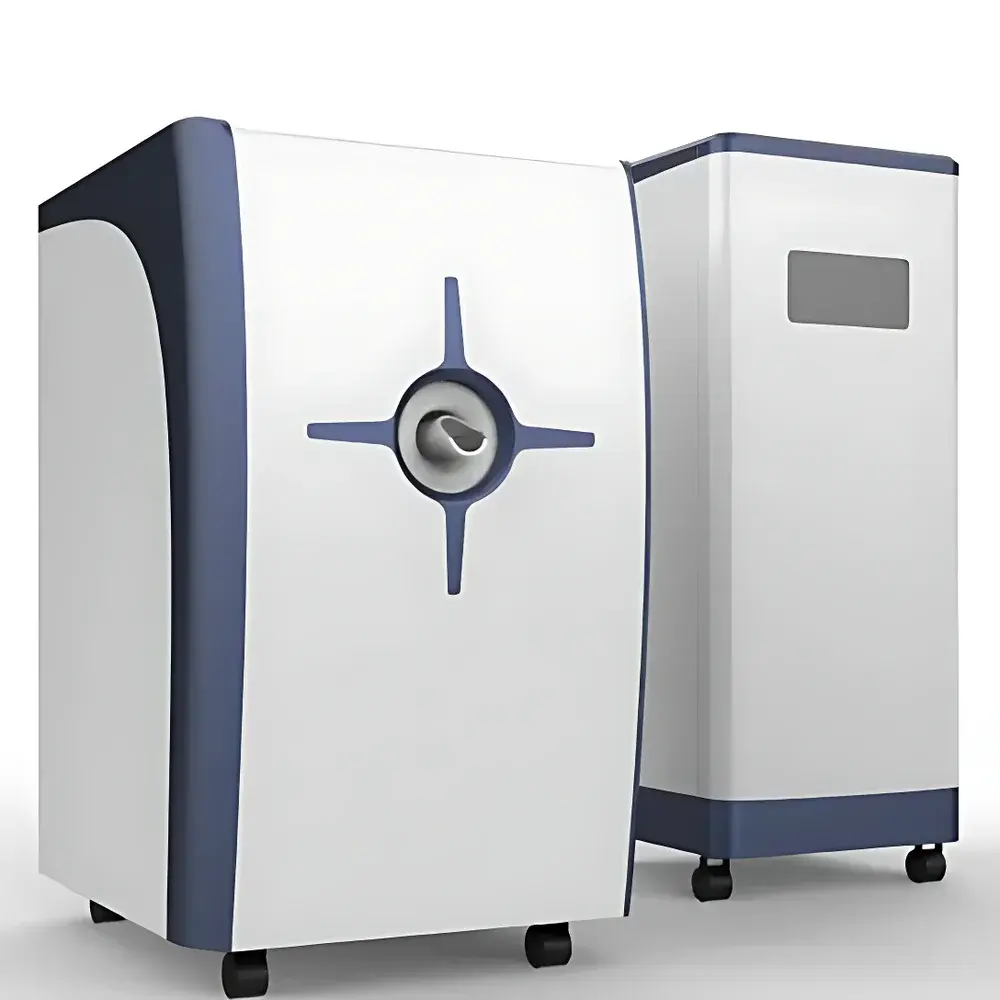
Huatong HT-MRSI50-50KY 1.2T Permanent-Magnet Small Animal MRI System
| Brand | Huatong NMR (HTNMR) |
|---|---|
| Origin | Shanghai, China |
| Manufacturer Type | Direct Manufacturer |
| Instrument Category | Preclinical MRI System |
| Animal Model | Rat |
| Magnetic Field Strength | 1.2 T ±0.05 T |
| Proton Resonance Frequency | 51 MHz ±2 MHz |
| Magnet Pole Diameter | 300 mm |
| Effective Imaging Volume (Coil Bore) | Φ50 mm × H80 mm |
| Field Homogeneity | <8 ppm over 50 mm × 50 mm × 80 mm DSV |
| Spatial Resolution (in-plane) | 0.08 mm (measured on 0.05 mm water phantom) |
| Gradient Strength | 10 G/cm (100 mT/m) |
| Max Gradient Amplitude | 200 mT/m (X/Y/Z) |
| Image Matrix | Up to 256 × 256 × 128 |
| Image Linearity | >98% in X/Y/Z (50 mm × 50 mm × 80 mm) |
| Temperature Stability | ±0.005 °C chamber control, 1 m°C display resolution |
| Field Drift | <100 Hz/h (Larmor frequency drift) |
| Data Format | DICOM-compliant export |
Overview
The Huatong HT-MRSI50-50KY is a compact, permanent-magnet-based 1.2 Tesla preclinical magnetic resonance imaging (MRI) system engineered for high-fidelity structural, functional, and spectroscopic imaging of small animal models—primarily rats—under controlled laboratory conditions. Operating at a proton Larmor frequency of 51 MHz, the system leverages a robust, self-shielded Halbach-type permanent magnet architecture with a 300 mm pole gap and optimized field homogeneity (<8 ppm over a 50 mm × 50 mm × 80 mm DSV). Its design emphasizes reproducibility, thermal stability (±0.005 °C chamber control), and long-term field consistency (<100 Hz/h drift), enabling quantitative longitudinal studies without cryogen dependency. Unlike superconducting systems, this permanent-magnet platform delivers stable, low-maintenance operation ideal for core facilities, teaching laboratories, and translational research units requiring routine in vivo MRI access without infrastructure-intensive cooling or quench management.
Key Features
- 1.2 T homogeneous static magnetic field generated by a high-stability permanent magnet assembly, eliminating liquid helium consumption and associated operational overhead
- Dedicated Φ50 mm × 80 mm vertical-bore RF probe optimized for rat-sized specimens, supporting both transmit/receive and dual-tuned configurations for multi-nuclei capability (e.g., 1H/19F)
- Triple-axis gradient system with 10 G/cm (100 mT/m) nominal strength and peak amplitude up to 200 mT/m per axis, enabling advanced diffusion-weighted, perfusion, and functional MRI protocols
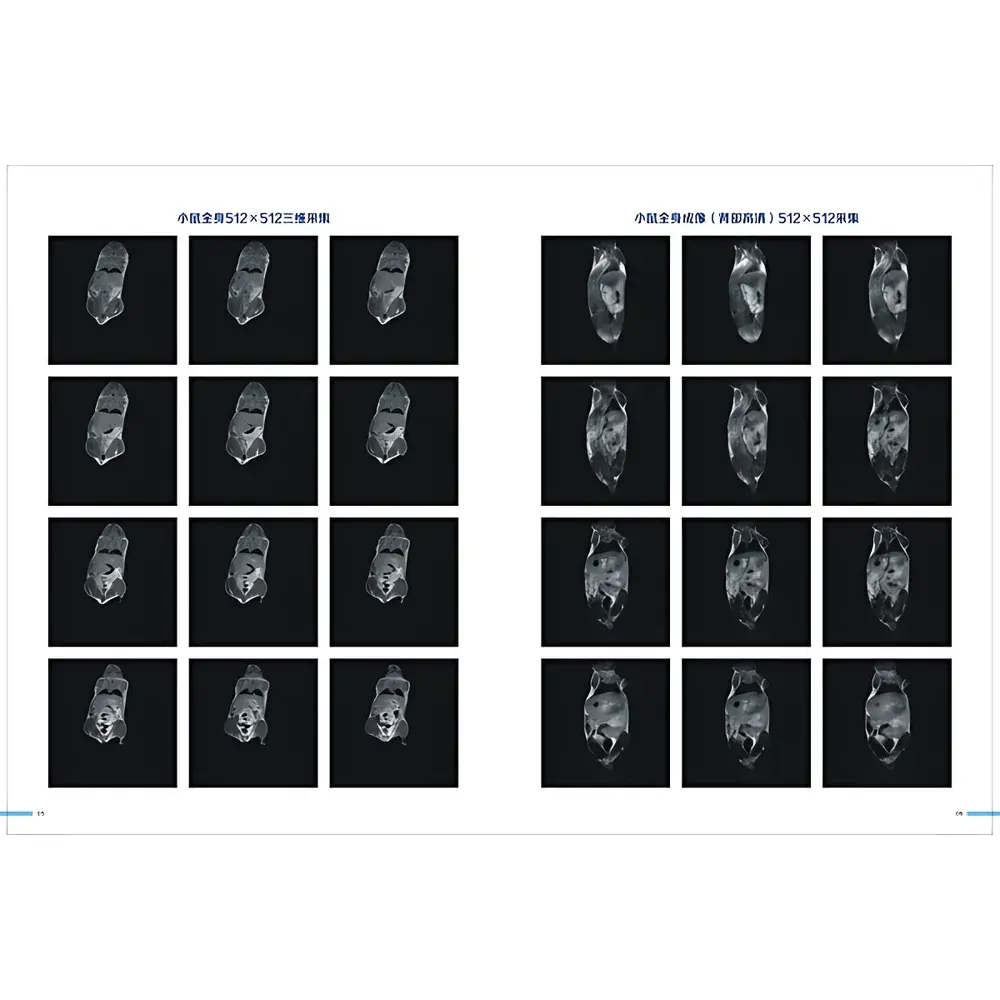
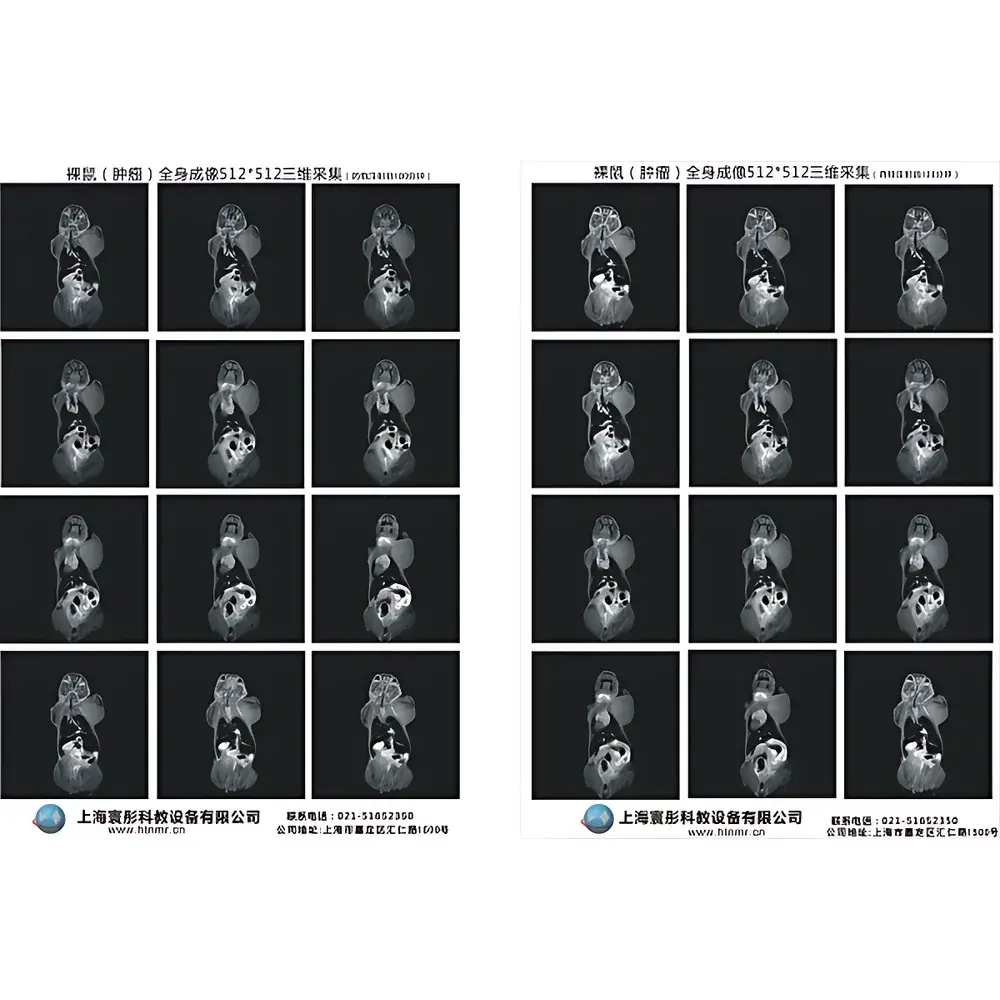
- High-resolution imaging capability: isotropic voxel resolution down to 0.08 mm (validated on standardized 0.05 mm water phantom), with full 3D matrix support up to 256 × 256 × 128
- Comprehensive pulse sequence library including spin echo (SE), turbo spin echo (TSE), gradient echo (GRE), inversion recovery (IR), CPMG for T2 mapping, and 3D GRE for volumetric acquisition
- Integrated temperature-regulated animal handling system with real-time physiological monitoring interface (optional integration with respiration gating and ECG triggering)
Sample Compatibility & Compliance
The HT-MRSI50-50KY is validated for whole-body in vivo MRI of adult Sprague-Dawley or Wistar rats (typically 200–500 g), accommodating standard stereotactic holders and non-invasive anesthesia delivery via nose cone. The system supports ex vivo tissue imaging, contrast agent biodistribution studies (e.g., Gd-based, iron oxide, or fluorinated agents), and longitudinal pharmacokinetic assessment. All image acquisition and reconstruction workflows comply with DICOM 3.0 standards (ISO/IEC 12052), ensuring interoperability with PACS, OsiriX, Horos, and other clinical or preclinical analysis platforms. While not FDA-cleared for human use, the system adheres to ISO 10993 biocompatibility guidelines for animal-contact components and meets IEC 61000-6-3 EMC emission requirements for laboratory environments. Data integrity protocols align with GLP documentation practices, supporting audit-ready metadata tagging and time-stamped acquisition logs.
Software & Data Management
The system runs on a Linux-based acquisition workstation with proprietary Huatong MRI Console software, featuring intuitive graphical pulse sequence editor, real-time k-space visualization, and parallel reconstruction acceleration. Raw data are stored in vendor-neutral NIfTI format alongside DICOM-compliant exports, preserving acquisition parameters (TR/TE/TI, FOV, matrix, bandwidth, flip angle) for traceable analysis. Built-in tools include T1/T2 map generation, region-of-interest (ROI) quantification, multiplanar reformatting (MPR), and 3D surface rendering with pseudo-color overlay. Audit trails record user actions, parameter modifications, and session timestamps—supporting 21 CFR Part 11–compatible electronic signatures when deployed with validated identity management modules. Export pipelines integrate with MATLAB, Python (via nibabel), and FSL for advanced modeling, machine learning segmentation, or radiomics feature extraction.
Applications
This system serves as a foundational platform for hypothesis-driven preclinical investigation across multiple domains: neuroimaging (stroke, neurodegeneration, tumor engraftment), cardiovascular phenotyping (myocardial infarction, aortic remodeling), oncology (xenograft growth kinetics, anti-angiogenic therapy response), and metabolic disease (fatty liver, pancreatic islet imaging). Its high spatial fidelity enables morphometric analysis of organ volume, cortical thickness, and lesion burden; its spectroscopic readiness supports 1H-MRS for metabolite profiling (e.g., NAA, choline, lactate) in targeted voxels. In drug development, it facilitates non-invasive PK/PD correlation—tracking contrast agent clearance, vascular permeability (Ktrans), or diffusion restriction (ADC maps) as biomarkers of therapeutic efficacy. Educational applications include hands-on MRI physics instruction, sequence optimization labs, and comparative imaging methodology training.
FAQ
Is this system suitable for mouse imaging?
Yes—the Φ50 mm coil accommodates mice (20–35 g) with appropriate positioning aids; however, optimal signal-to-noise ratio and resolution are achieved with rat-scale specimens due to coil geometry and field-of-view constraints.
Does the system support dynamic or functional MRI (fMRI)?
It supports BOLD fMRI through rapid GRE-EPI acquisition (minimum TR ≈ 1.5 s), though dedicated respiratory/cardiac gating hardware is required for motion correction in awake or lightly sedated paradigms.
Can I perform MR spectroscopy (MRS) with this instrument?
Single-voxel 1H-MRS is supported using PRESS or STEAM sequences; spectral processing includes phase correction, baseline fitting, and metabolite quantification relative to internal water reference.
What maintenance is required for the permanent magnet?
No cryogen refills or quench management; annual field mapping and gradient calibration are recommended. Ambient temperature stabilization (±0.5 °C room variation) is advised to maintain homogeneity specifications.
Is remote operation or multi-user scheduling possible?
Yes—the console supports secure SSH access and integrates with institutional LDAP/Active Directory. A web-based scheduler module enables reservation management and queue prioritization across research groups.
Related Products



