
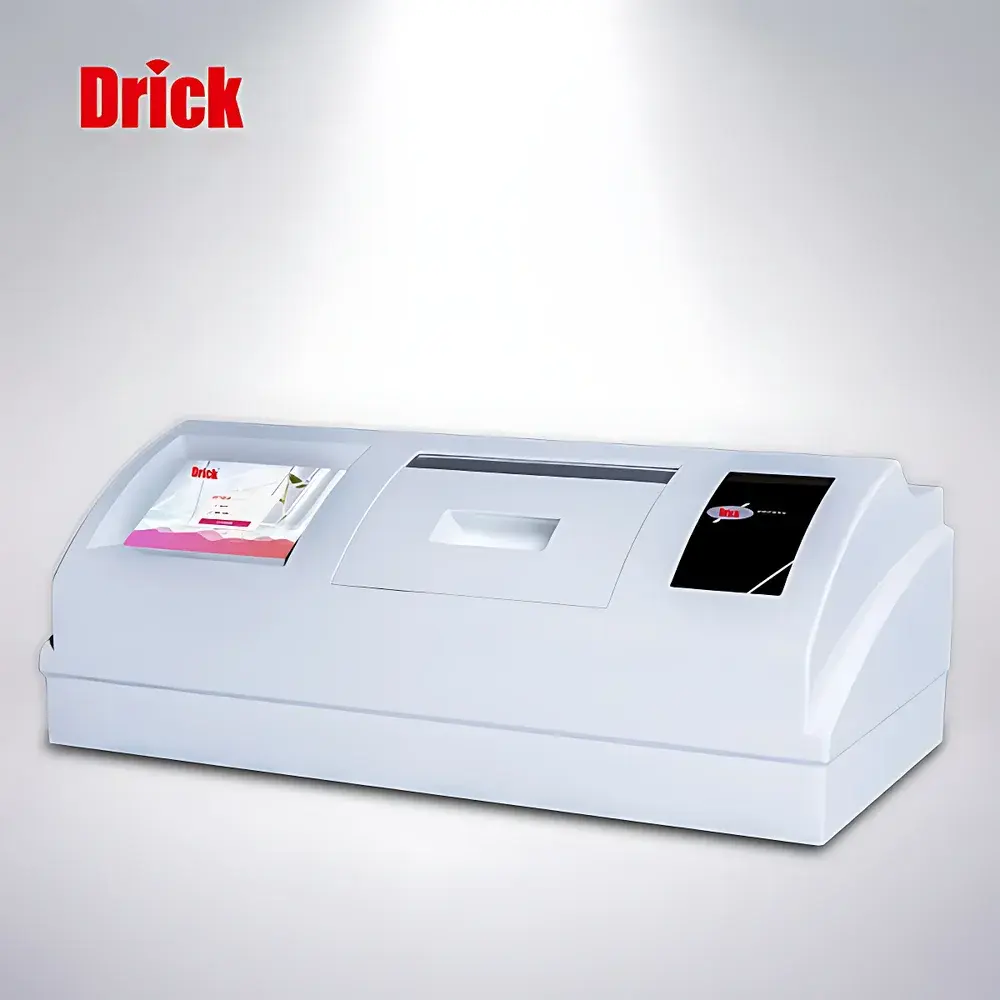
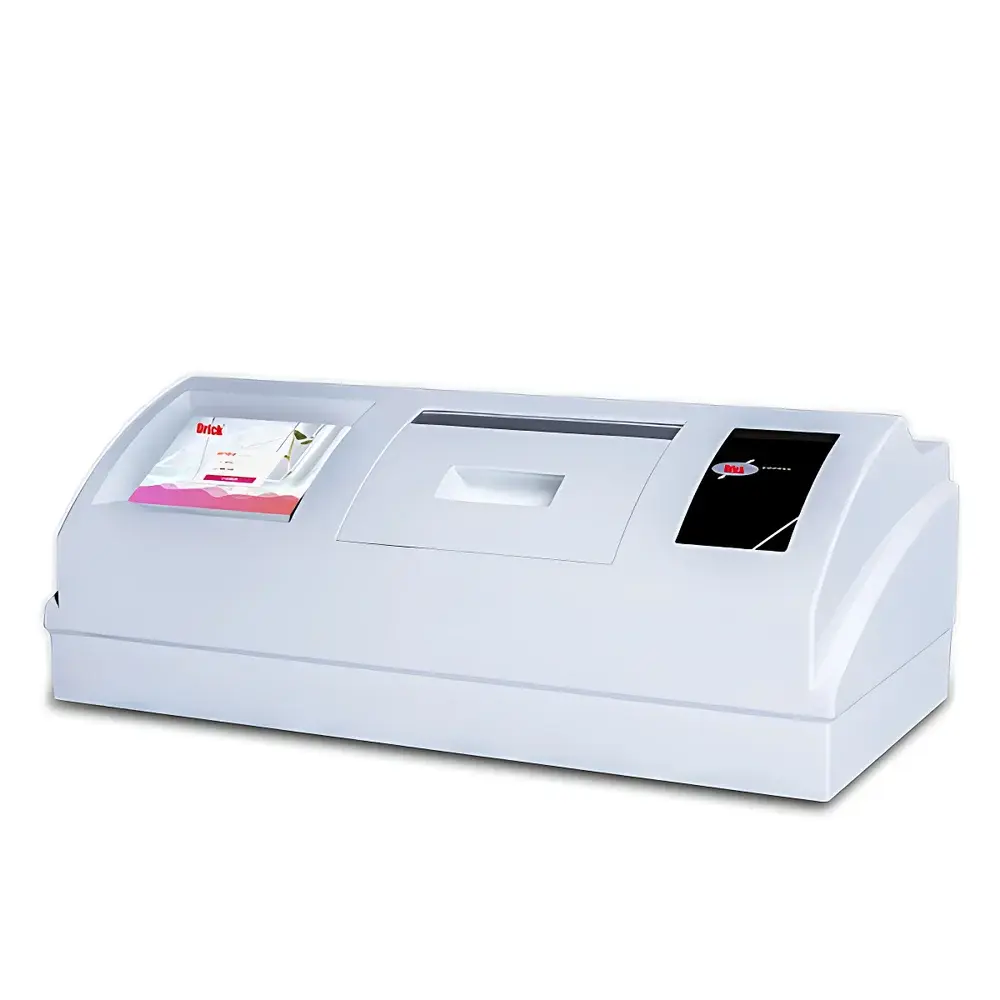
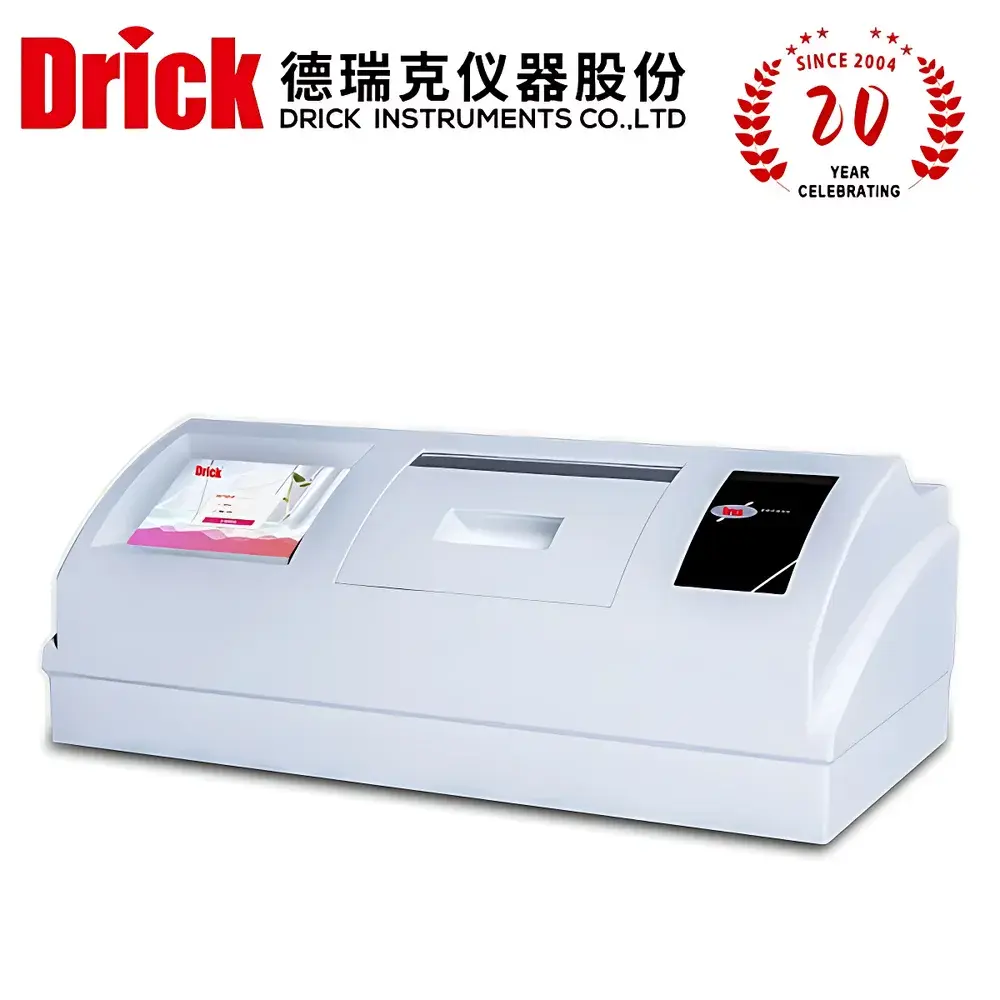
Drick DRK-Z630 Automated Temperature-Controlled Polarimeter
| Brand | Drick |
|---|---|
| Origin | Shandong, China |
| Manufacturer Type | Direct Manufacturer |
| Product Category | Domestic Instrument |
| Model | DRK-Z630 |
| Price Range | USD 11,200–14,000 (FOB) |
| Product Type | Automated Polarimeter |
| Temperature Control | Yes (Peltier-controlled jacketed cell holder) |
| Digital Display | Yes (high-resolution LCD with real-time angle and concentration readout) |
| Light Source | High-stability 589.3 nm LED (sodium D-line equivalent) |
| Measurement Range | Optical Rotation ±89.99° |
| Accuracy | ±0.01° (for optical rotation between −45° and +45°) |
Overview
The Drick DRK-Z630 Automated Temperature-Controlled Polarimeter is a precision optical instrument engineered for high-reproducibility measurement of optical rotation in chiral substances—primarily used in pharmaceutical quality control, fine chemical synthesis validation, food & beverage sugar analysis, and academic research on enantiomeric purity. It operates on the fundamental principle of polarimetry: linearly polarized light passes through an optically active sample, and the plane of polarization rotates proportionally to the concentration, path length, specific rotation, and temperature of the analyte. The DRK-Z630 integrates a thermoelectric (Peltier) temperature-regulated cell holder to maintain sample temperature stability within ±0.1°C across the operational range of 10–40°C—critical for eliminating thermal drift and ensuring compliance with pharmacopoeial methods (e.g., USP , EP 2.2.7, and ChP IV). Its microprocessor-controlled optical system employs a high-stability 589.3 nm LED source, eliminating lamp aging effects and spectral drift common in sodium-vapor or halogen sources.
Key Features
- Automated zero-point calibration and auto-ranging measurement sequence reduces operator dependency and improves inter-laboratory reproducibility.
- Peltier-based temperature control enables precise, programmable stabilization of sample cells (standard 100 mm and optional 200 mm path lengths), supporting GLP-compliant method validation.
- Dual-mode output: direct optical rotation (°) and sucrose concentration (°Z) with automatic conversion using built-in IUPAC-compliant algorithms per ISO 11797:2014.
- High-resolution 0.001° angular resolution with traceable accuracy verified against NIST-traceable quartz control plates (included).
- Robust mechanical architecture featuring anti-vibration optical baseplate, sealed photodetector module, and EMI-shielded signal processing circuitry for stable operation in shared lab environments.
- Compliance-ready design: supports audit trails, user access levels (admin/operator), and electronic signature capability when paired with optional compliant software modules.
Sample Compatibility & Compliance
The DRK-Z630 accommodates standard 100 mm and 200 mm polarimeter tubes (with optional quartz or glass variants), as well as custom-length cells for low-volume or high-viscosity samples. It is routinely deployed in QC labs performing identity testing of APIs (e.g., L-DOPA, ibuprofen, chloramphenicol), assay of dextrose and fructose in syrups per AOAC 952.07, and enantiomeric excess determination in asymmetric catalysis workflows. Instrument design aligns with key regulatory expectations: mechanical stability meets ISO 17025:2017 clause 6.4.3 for measurement equipment; temperature control performance satisfies ASTM E2918-21 requirements for thermal uniformity in optical instrumentation; and firmware architecture allows integration into 21 CFR Part 11–compliant data management systems via RS-232/USB interfaces.
Software & Data Management
The DRK-Z630 includes embedded firmware with onboard data logging (up to 1,000 measurements with timestamp, temperature, and operator ID). Optional PC-based PolarSoft v3.2 software provides expanded functionality: method templates for USP/EP/ChP monographs, statistical process control (SPC) charting, raw data export to CSV/XML, and configurable PDF report generation with digital signature fields. All data files include embedded metadata (instrument ID, calibration date, environmental conditions), enabling full traceability required under GMP Annex 11 and WHO TRS 992 Annex 10. Audit trail logs record all parameter changes, calibration events, and user logins—retained for ≥12 months and exportable for regulatory review.
Applications
- Pharmaceutical QC: Identity confirmation and assay of chiral active ingredients per USP monographs (e.g., USP Diazepam, USP Penicillin V Potassium).
- F&B Industry: Brix-equivalent sucrose quantification in fruit juices, honey, and soft drinks per AOAC Official Methods of Analysis.
- Academic Research: Enantiomeric excess (ee%) calculation in synthetic organic chemistry and biocatalysis studies.
- Chemical Manufacturing: Batch release testing of optical purity for intermediates such as menthol, limonene, and camphor derivatives.
- Regulatory Submission Support: Generation of validated, auditable datasets for FDA ANDA filings, EMA marketing authorization applications, and NMPA registration dossiers.
FAQ
What temperature range does the Peltier system support?
The integrated thermoelectric module maintains sample temperature from 10°C to 40°C, with setpoint accuracy of ±0.1°C and stability of ±0.05°C over 30 minutes.
Is the instrument supplied with calibration standards?
Yes—each unit ships with two NIST-traceable quartz rotatory standard plates (±5° and ±30°), certified calibration certificate, and validation protocol template.
Can the DRK-Z630 be integrated into a LIMS environment?
Via optional PolarSoft Connect module, it supports ASTM E1384-compliant HL7 and ASTM E2500-07 data exchange protocols for seamless LIMS ingestion.
Does the firmware support multi-user authentication?
Yes—three-tier user roles (Administrator, Supervisor, Operator) with password protection and session timeout are enabled by default.
What is the warranty coverage and service response time?
Standard 24-month parts-and-labor warranty; technical support response guaranteed within 1 hour, remote diagnostics initiated within 2 hours, and on-site service dispatched within 72 hours for covered regions.




