
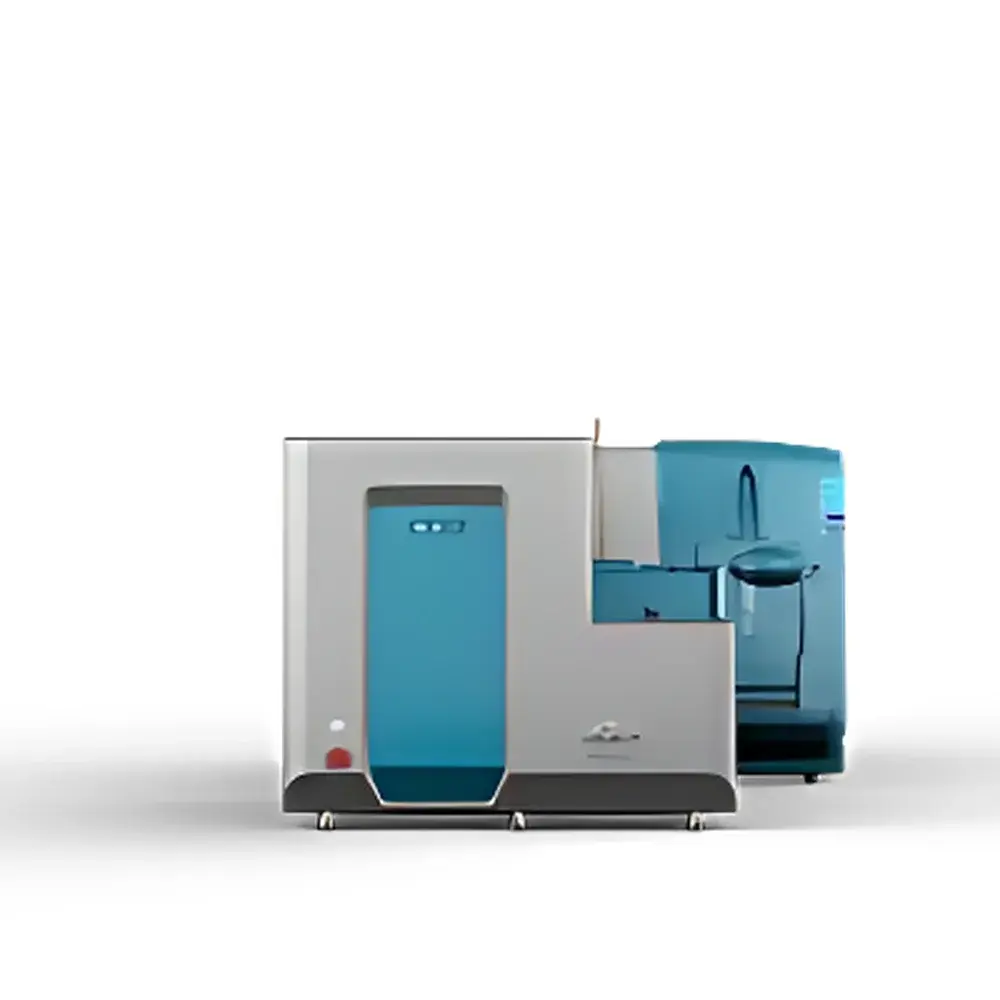
SCIEX Echo™ MS+ Acoustic Ejection Mass Spectrometry System
| Brand | SCIEX |
|---|---|
| Origin | USA |
| Model | Echo™ MS+ System |
| Configuration Options | Integrated with SCIEX Triple Quad™ 6500+ System or ZenoTOF™ 7600 System |
| Sample Introduction Method | Contactless Acoustic Droplet Ejection (ADE) |
| Throughput | Up to 1 sample per second |
| Compatibility | Standard 384-well and 1536-well microplates |
| Interface | Orthogonal Probe Ionization (OPI) Source |
| Regulatory Alignment | Designed for GLP/GMP-compliant workflows |
| Software Platform | SCIEX OS v2.4 or later |
Overview
The SCIEX Echo™ MS+ Acoustic Emission Mass Spectrometry System represents a paradigm shift in high-throughput quantitative and qualitative mass spectrometry analysis. Unlike conventional liquid chromatography–mass spectrometry (LC-MS) platforms that rely on robotic pipetting or autosampler syringe injection, the Echo™ MS+ employs contactless acoustic droplet ejection (ADE) coupled with orthogonal probe ionization (OPI) to deliver analyte-laden nanoliter droplets directly into the mass spectrometer ion source. This ADE–OPI architecture eliminates physical contact between sampling hardware and samples—thereby removing carryover, reducing solvent consumption, and enabling true parallelization of sample introduction. The system is engineered for precision, reproducibility, and robustness in demanding environments such as pharmaceutical discovery, clinical assay development, and high-volume bioanalysis laboratories where speed, data fidelity, and regulatory traceability are non-negotiable.
Key Features
- Contactless acoustic droplet ejection: Uses focused ultrasonic energy to eject sub-microliter droplets from standard microplates without tip contact, ensuring zero cross-contamination and eliminating wash cycles.
- Integrated OPI source: Delivers consistent ionization efficiency across diverse matrices—including DMSO-based compound libraries—without requiring chromatographic separation or extensive method re-optimization.
- Throughput-optimized architecture: Achieves up to 1 sample per second, supporting >8,000 analyses per 24-hour run—ideal for large-scale screening campaigns involving ADME, PK/PD, or metabolite identification.
- Modular instrument integration: Available in two validated configurations—paired with either the SCIEX Triple Quad™ 6500+ system for ultra-sensitive targeted quantitation or the ZenoTOF™ 7600 system for high-resolution, data-independent acquisition (DIA) and structural characterization.
- Automated workflow compatibility: Fully supports integration with third-party robotic liquid handlers, plate stackers, and track systems via standardized APIs and trigger protocols.
- Enhanced port cleaning protocol: Built-in electrode cleaning between wells extends operational uptime and maintains signal stability over extended runs (>10,000 ejections per maintenance cycle).
Sample Compatibility & Compliance
The Echo™ MS+ system accepts samples in standard ANSI/SLAS-format microplates (96-, 384-, and 1536-well), accommodating volumes from 1–5 µL per well. It demonstrates exceptional performance across complex biological matrices—including plasma, serum, cell lysates, and tissue homogenates—as well as synthetic compound libraries dissolved in DMSO. Method validation studies confirm compliance with ICH M10 guidelines for bioanalytical method validation and support alignment with FDA Bioanalytical Method Validation guidance. When operated with SCIEX OS software under configured audit trail and electronic signature settings, the platform meets requirements for 21 CFR Part 11 compliance, facilitating use in regulated environments governed by GLP or GMP standards.
Software & Data Management
SCIEX OS software serves as the unified control and data processing environment for the Echo™ MS+ system. Version 2.4 and later provide dedicated ADE method editors, real-time ejection monitoring, and integrated QC metrics including droplet volume consistency tracking and ion signal stability scoring. Raw data files (.wiff) are generated with embedded metadata covering plate position, ejection parameters, and instrument configuration—ensuring full traceability. Batch processing workflows support automated peak integration, calibration curve fitting, and report generation compliant with LIMs export formats (e.g., CSV, XML). All user actions—including method edits, instrument calibrations, and result approvals—are logged with timestamps, operator IDs, and change descriptions to satisfy ALCOA+ data integrity principles.
Applications
- High-throughput small-molecule screening in drug discovery pipelines
- Direct analysis of DMSO-stored compound libraries without dilution or desalting
- Rapid bioanalytical support for preclinical pharmacokinetic studies
- Metabolite identification workflows leveraging ZenoTOF™ 7600’s high-resolution MS/MS capabilities
- Quantitative biomarker verification using Triple Quad™ 6500+ MRM detection
- Cell-based assay readouts integrating intracellular metabolite profiling with viability endpoints
FAQ
How does acoustic droplet ejection differ from traditional autosampler injection?
Acoustic ejection uses focused ultrasound to transfer nanoliter droplets without physical contact, avoiding carryover, tip clogging, and solvent waste associated with syringe-based systems.
Can the Echo™ MS+ system be used without LC separation?
Yes—the OPI source enables direct infusion analysis, though LC coupling remains optional for enhanced selectivity in highly complex samples.
Is method transfer possible between Triple Quad™ and ZenoTOF™ configurations?
Core ADE parameters and plate mapping are interchangeable; however, acquisition methods (MRM vs. SWATH/DIA) must be independently optimized for each mass spectrometer platform.
What maintenance is required for sustained high-throughput operation?
Routine maintenance includes weekly OPI source cleaning and quarterly transducer calibration; electrode cleaning is performed automatically between wells.
Does the system support isotopic internal standard normalization?
Yes—SCIEX OS allows co-ejection of analyte and stable-isotope-labeled internal standard from adjacent wells, enabling precise ratio-based quantitation.
Related Products



