
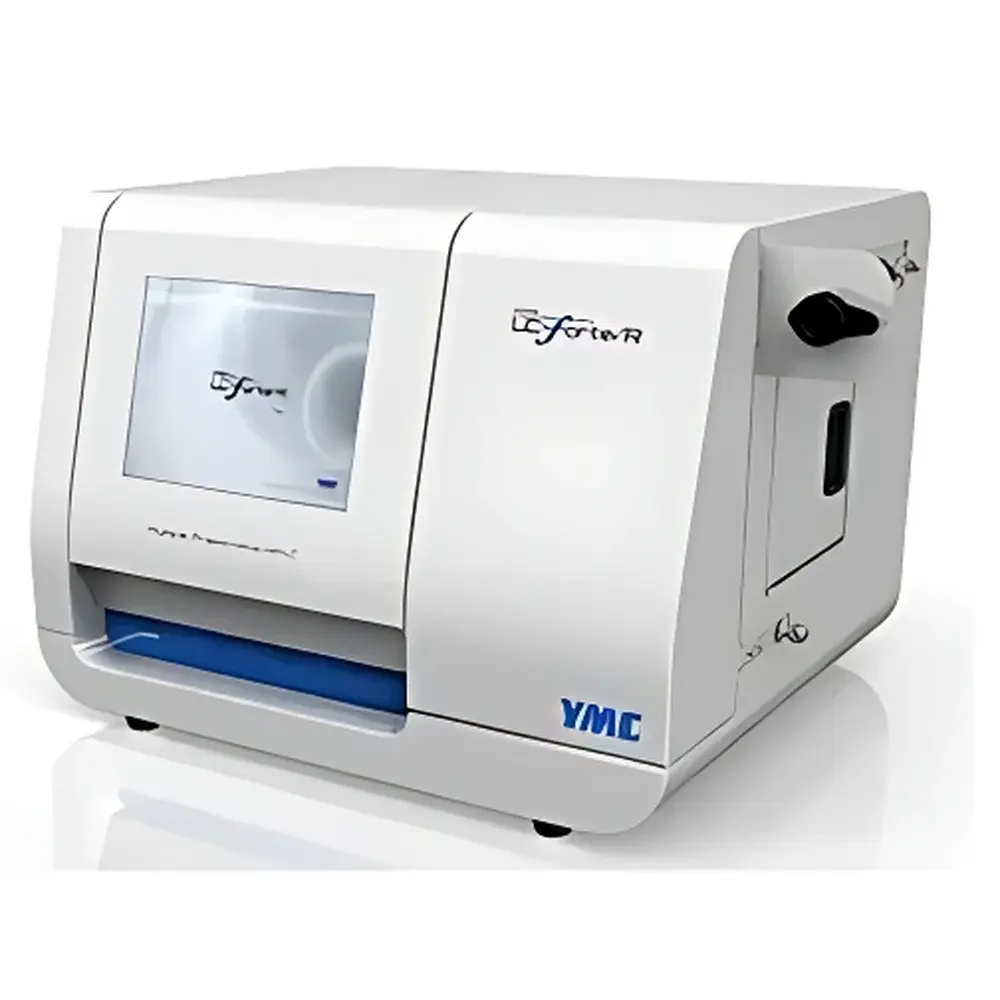
YMC K-Prep FC Industrial-Scale Preparative Liquid Chromatography System
| Brand | YMC |
|---|---|
| Origin | Japan |
| Model | K-Prep FC |
| Application Level | Industrial Preparative |
| Instrument Type | Medium-Low Pressure Preparative LC |
| Flow Rate Range | 1–750 mL/min |
| Flow Rate Reproducibility | ≤±2% (≥75 mL/min) |
| Maximum Pressure | 10 MPa |
| Wavelength Range | 195–600 nm |
| Gradient Capability | Isocratic & Gradient (FC750G / FC1500G variants) |
| Detection | UV/VIS |
| Pump Technology | Dual-plunger linear cam, pulse-free delivery |
| Column ID Compatibility | φ50–φ150 mm |
| Software Compliance | CSV-aligned per MHLW Japan “Guideline on Computerized Systems in GxP Environments” |
| Regulatory Alignment | Supports IQ/OQ protocols |
Overview
The YMC K-Prep FC is an industrial-scale preparative liquid chromatography system engineered for robust, reproducible separation and purification of small-molecule APIs, natural products, chiral intermediates, and synthetic peptides at gram-to-kilogram scale. Operating under medium-low pressure (up to 10 MPa), it employs a dual-plunger linear cam pump architecture to deliver pulse-free solvent flow across a wide dynamic range (1–750 mL/min), ensuring high volumetric accuracy and long-term stability during extended fractionation runs. Unlike analytical or semi-preparative platforms, the K-Prep FC is purpose-built for process transfer — supporting seamless scale-up from method development (e.g., on YMC’s Triart or Polyamine columns) to cGMP-compliant manufacturing batches. Its mechanical design prioritizes operational safety, thermal management, and service accessibility, with all high-pressure wetted parts constructed from SUS316 stainless steel and FEP-lined fluid paths to ensure chemical compatibility with aggressive solvents (e.g., THF, DCM, TFA-containing mobile phases).
Key Features
- Modular architecture supporting both isocratic (FC750S/FC1500S) and gradient (FC750G/FC1500G) configurations — configurable via software without hardware modification
- Pulse-free dual-plunger pump with linear cam drive, delivering ≤±2% flow accuracy at ≥75 mL/min and maintaining consistent backpressure response across viscosity shifts
- UV/VIS detector with 195–600 nm wavelength coverage, optimized for broad-spectrum compound detection including low-UV-absorbing amines and conjugated carbonyls
- Integrated 5-channel fraction collector with valve-switching logic, enabling timed, peak-triggered, or threshold-based collection strategies
- Computer-controlled operation via proprietary Windows-based software compliant with Japan’s Ministry of Health, Labour and Welfare (MHLW) CSV guidelines — fully audit-trail enabled with user-level access control, electronic signatures, and change history logging
- GMP-ready mechanical construction: IP54-rated enclosure, leak-detection sensors, emergency stop circuitry, and traceable component certification (ASME BPE-compliant tubing joints, USP Class VI elastomers)
Sample Compatibility & Compliance
The K-Prep FC accommodates preparative columns with internal diameters from 50 mm to 150 mm, supporting standard packing materials including silica, C18, phenyl-hexyl, and chiral stationary phases (e.g., YMC CHIRAL ART series). Its fluidic design minimizes band broadening and ensures laminar flow profiles even at high flow rates, preserving resolution during large-volume injections (1–300 mL via integrated sample pump). The system meets ISO 9001:2015 quality management requirements and is validated for use in regulated environments: IQ/OQ documentation packages are provided, and the control software supports 21 CFR Part 11 compliance through role-based authentication, immutable audit trails, and electronic signature workflows. All wetted surfaces comply with USP , EP 3.1.1, and JIS G 4303 for austenitic stainless steel.
Software & Data Management
Control and data acquisition are managed through YMC’s proprietary K-Prep Control Software, developed under strict adherence to the Japanese MHLW “Guideline on Computerized Systems in GxP Environments” (2019 revision). The software provides real-time monitoring of pressure, flow, UV absorbance, and fraction collection status; supports method cloning, sequence scheduling, and automatic report generation (PDF/CSV). Raw chromatograms and instrument logs are stored in a structured SQLite database with SHA-256 hashing for integrity verification. Data export functions include ASTM E1381-compliant ASCII output for third-party analysis tools. Audit trail records capture operator ID, timestamp, parameter changes, and system events — retained for ≥30 years per internal retention policy.
Applications
- Purification of active pharmaceutical ingredients (APIs) and drug metabolites under cGMP conditions
- Isolation of natural product fractions (alkaloids, flavonoids, terpenoids) from crude extracts
- Chiral resolution of racemic mixtures for asymmetric synthesis support
- Removal of synthetic impurities and residual catalysts in fine chemical manufacturing
- Process validation studies requiring high-reproducibility fraction recovery (RSD <1.5% across 10 consecutive runs)
- Method scouting and scalability assessment for downstream continuous chromatography integration
FAQ
Does the K-Prep FC support method transfer from analytical HPLC systems?
Yes — retention time and selectivity correlation is maintained via column geometry normalization (L/dc2) and flow rate scaling laws; YMC provides method translation templates and column equivalency tables.
Can the system be integrated into a larger automation framework (e.g., LIMS or MES)?
It supports OPC UA server mode for bidirectional communication with enterprise systems; custom API endpoints are available under NDA for middleware integration.
What validation documentation is included with shipment?
Factory-issued IQ/OQ protocols, calibration certificates for pump flow and UV wavelength, and CSV validation summary reports aligned with ICH Q5A and ASTM E2500.
Is remote monitoring and troubleshooting supported?
Yes — optional secure TLS 1.3-enabled remote desktop access with session logging and two-factor authentication for technical support engineers.
How often does the system require preventative maintenance?
Recommended every 1,000 operational hours or annually, whichever occurs first; PM kits include pump seal replacements, detector lamp calibration, and pressure transducer verification.





