
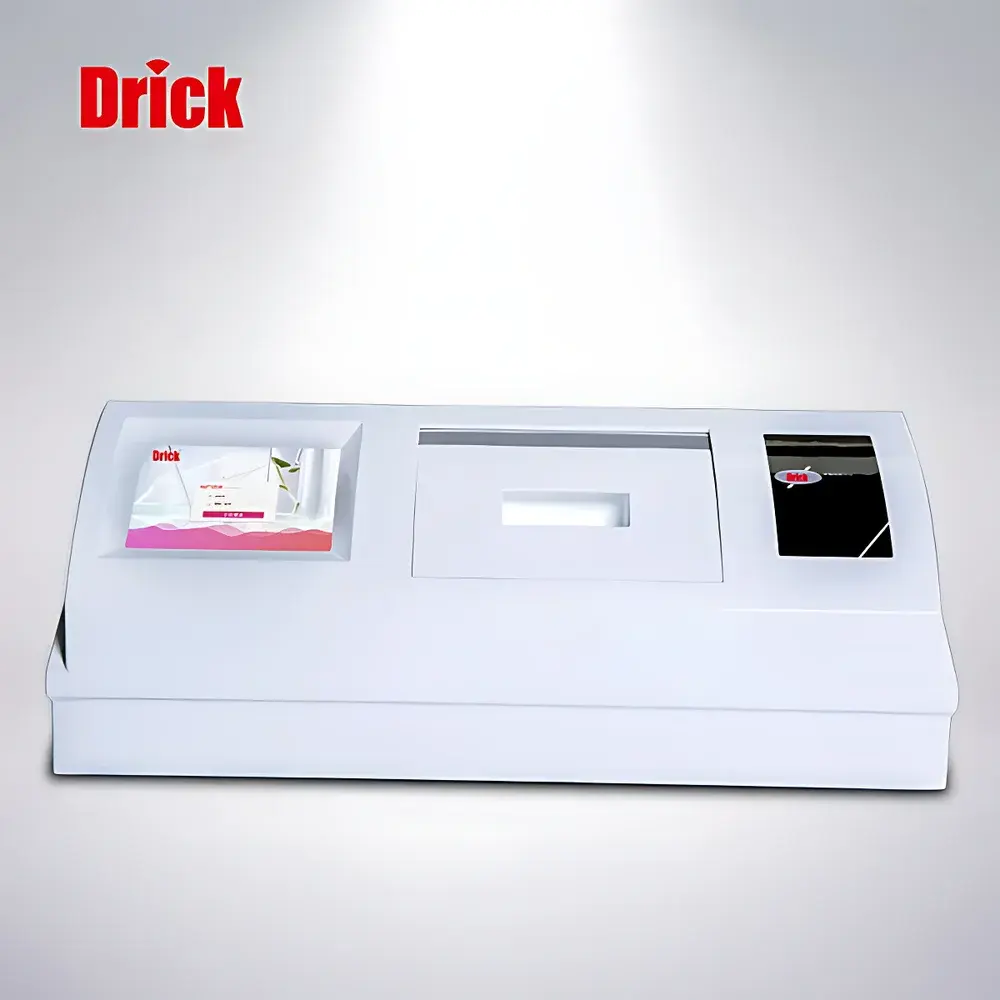
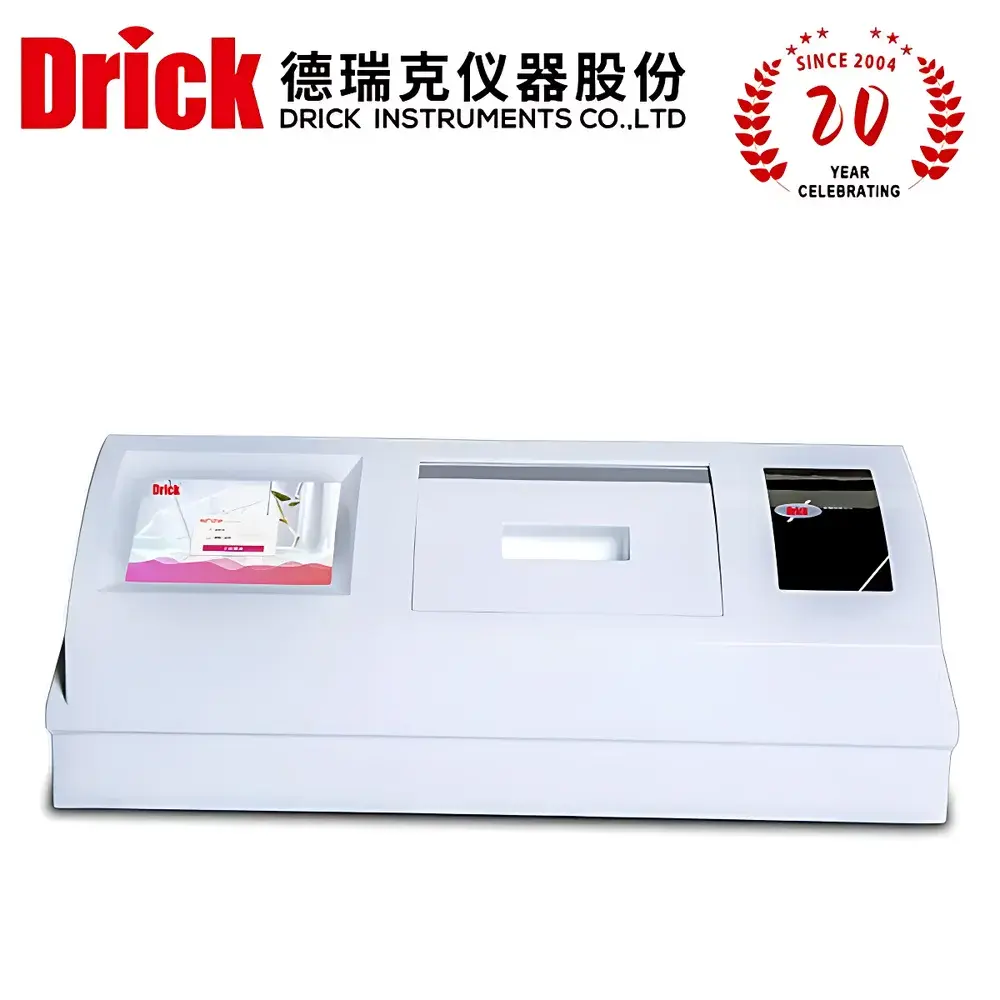
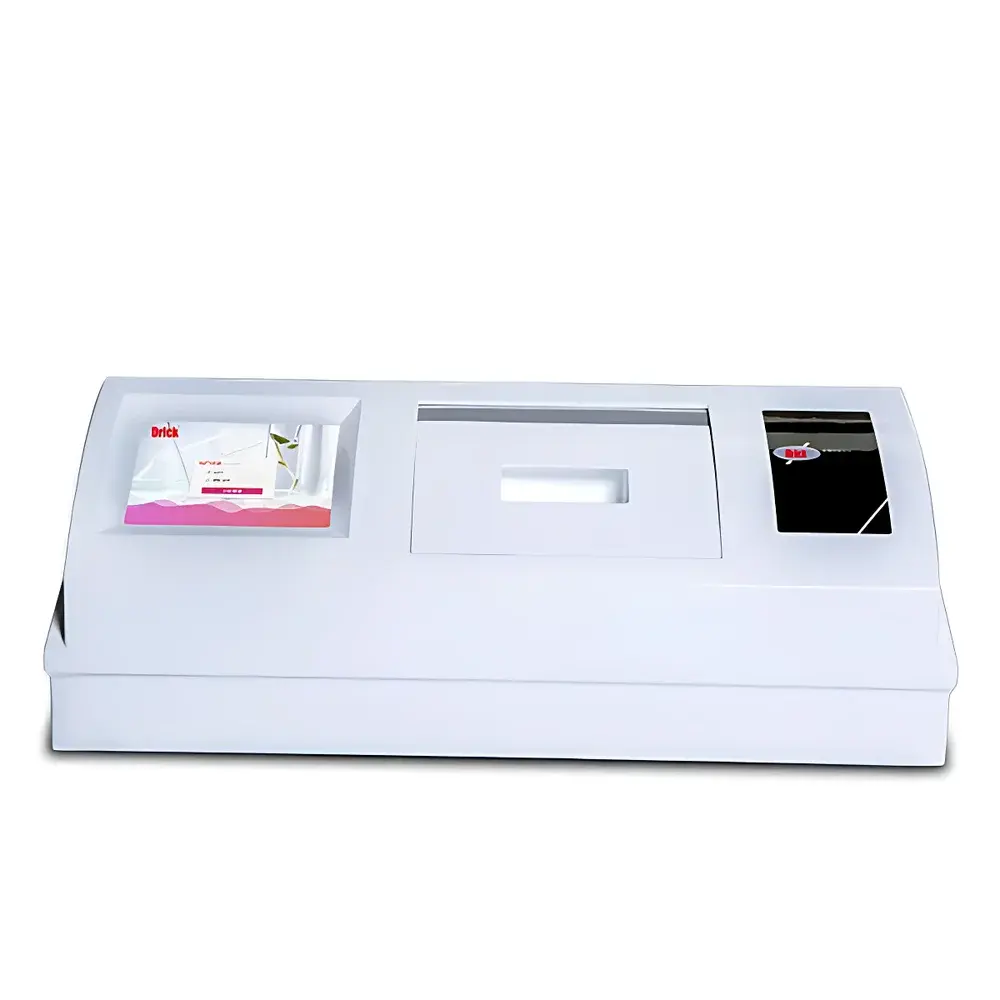
Drick DRK-Z620 Temperature-Controlled Automatic Polarimeter
| Brand | Drick |
|---|---|
| Origin | Shandong, China |
| Manufacturer Type | Direct Manufacturer |
| Product Category | Domestic |
| Model | DRK-Z620 |
| Price Range | USD 11,200 – 14,000 (FOB Qingdao) |
| Instrument Type | Automatic Polarimeter |
| Temperature Control | Yes, Peltier-based thermostatic system |
| Display | Digital LCD with real-time readout |
| Light Source | High-stability 589.3 nm LED (sodium D-line equivalent) |
| Optical Rotation Range | ±89.99° |
| Sucrose Scale Range | ±257°Z |
| Resolution | 0.001° (optical rotation), 0.01°Z (sugar scale) |
| Repeatability | ≤±0.002° |
| Accuracy | ±0.004° (at 20°C, verified with NIST-traceable quartz control plates) |
Overview
The Drick DRK-Z620 Temperature-Controlled Automatic Polarimeter is a precision optical instrument engineered for the quantitative measurement of optical rotation — a fundamental chiroptical property arising from the interaction of plane-polarized light with optically active substances. Based on the principle of polarimetric analysis, the DRK-Z620 employs a high-stability 589.3 nm LED light source calibrated to approximate the sodium D-line wavelength, ensuring spectral consistency required for pharmacopoeial and industrial sugar analysis. Its integrated Peltier-based temperature regulation system maintains sample cell temperature within ±0.1°C across a range of 10–40°C, directly addressing thermal drift — a primary source of measurement uncertainty in classical polarimetry. Designed for routine quality control and R&D applications in pharmaceutical, food, chemical, and academic laboratories, the DRK-Z620 delivers traceable, reproducible results compliant with ISO 8539:2022 (Polarimeters — Performance requirements and test methods) and aligned with USP <788> and EP 2.2.7 guidelines for optical rotation determination.
Key Features
- Peltier-controlled thermostatic sample chamber with digital setpoint adjustment (10–40°C, resolution 0.1°C) and real-time temperature monitoring
- High-intensity, low-heat 589.3 nm LED light source offering >10,000-hour operational lifetime and minimal spectral drift
- Dual-scale digital display showing simultaneous optical rotation (°) and sucrose concentration (°Z) with 0.001° angular resolution
- Auto-zero calibration function with internal reference path compensation to eliminate mechanical zero drift
- Robust aluminum alloy optical bench and vibration-damped base for long-term stability under non-ideal lab conditions
- Compliant with IEC 61000-4 electromagnetic compatibility standards and RoHS 2011/65/EU directive
Sample Compatibility & Compliance
The DRK-Z620 accommodates standard 100 mm and 200 mm pathlength glass cells (supplied with O-ring seals and cell holders), supporting aqueous, alcoholic, and organic solvent-based solutions. It is routinely deployed for assay of enantiomeric purity in APIs (e.g., L-DOPA, ibuprofen), sucrose content verification in syrups and fruit juices per AOAC 951.02, and specific rotation validation of natural products such as menthol and camphor. All measurements meet traceability requirements per ISO/IEC 17025:2017 when used with NIST-traceable quartz rotatory standards (e.g., SRM 8500 series). The instrument’s design supports GLP-compliant workflows, including manual audit trail documentation and user-accessible calibration logs.
Software & Data Management
While the DRK-Z620 operates as a standalone benchtop unit with full local control, optional RS-232/USB interface enables integration with LIMS or custom data acquisition platforms. Exported data includes timestamp, temperature, measured rotation, calculated concentration (°Z), and operator ID — formatted as CSV for direct import into Excel or statistical software (e.g., JMP, Minitab). Firmware supports configurable pass/fail limits and batch reporting. Though not natively 21 CFR Part 11 compliant, the device supports ALCOA+ principles through secure manual recordkeeping; full electronic signature and audit trail functionality require external validated software layer per FDA guidance.
Applications
- Pharmaceutical QC: Specific rotation testing of chiral active ingredients per USP <788>, EP 2.2.7, and JP 6.05
- Food & Beverage: Sucrose quantification in soft drinks, honey, and confectionery per ICUMSA Methods GS2/3-13 and AOAC Official Method 951.02
- Academic Research: Kinetic studies of enzymatic hydrolysis (e.g., invertase activity via α-D-glucose + β-D-fructose formation)
- Chemical Synthesis: Real-time monitoring of asymmetric reactions and resolution efficiency assessment
- Regulatory Submission Support: Generation of raw data packages meeting ICH Q5C stability protocol requirements
FAQ
What temperature accuracy does the Peltier system achieve?
The system maintains setpoint temperature within ±0.1°C over the 10–40°C operating range, verified using calibrated platinum resistance thermometers traceable to NIST.
Is the LED source stable enough for regulatory submissions?
Yes — spectral output remains constant within ±0.3 nm over 10,000 hours; intensity drift is <0.2% per 1,000 hours, satisfying USP <788> photometric stability criteria.
Can the DRK-Z620 be used for non-sugar optically active compounds?
Absolutely — it measures raw optical rotation (°) independent of scale; °Z conversion is user-selectable and can be disabled for general chiral compound analysis.
Does the instrument support multi-point calibration?
It includes single-point auto-zero and user-initiated two-point calibration using certified quartz standards; full multi-point linearity verification requires external reference materials.
What documentation is provided for IQ/OQ validation?
Factory test reports, metrological verification certificates, and a comprehensive user manual with installation checklist and performance qualification templates are included.



