
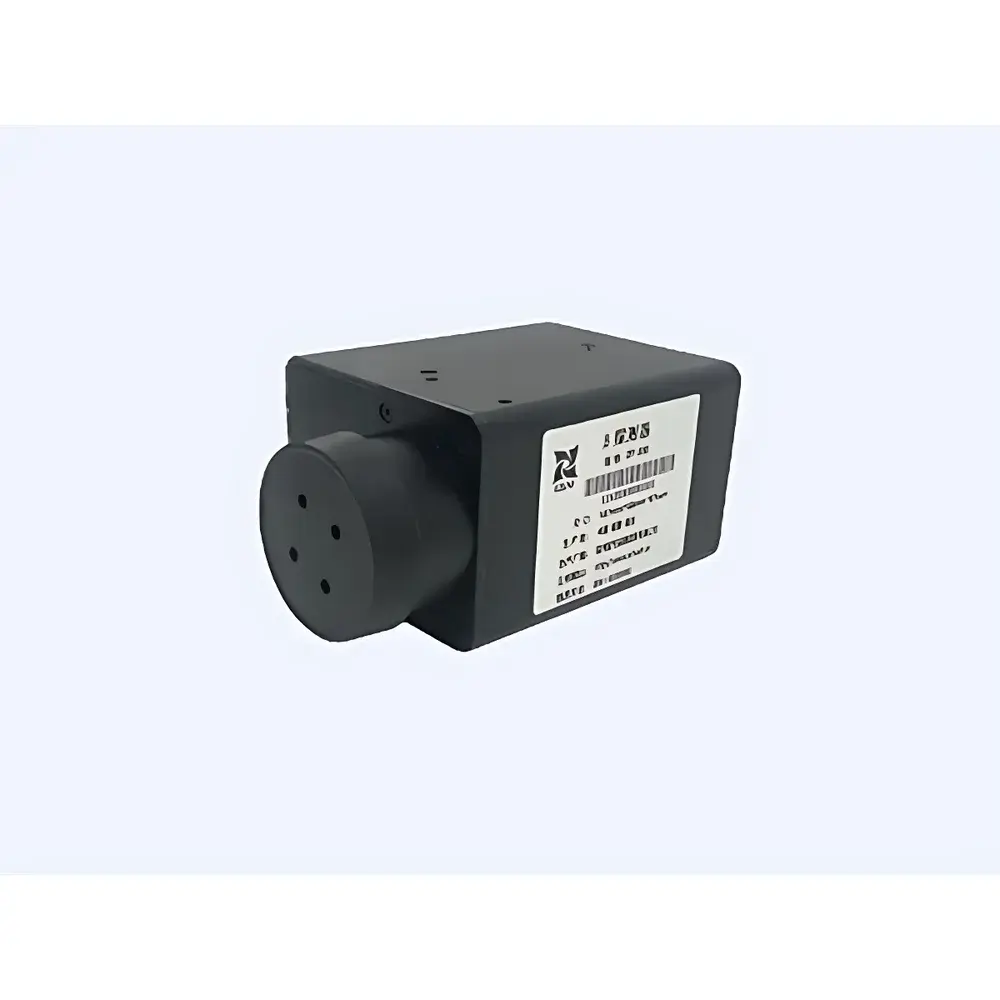
SMACH ZY330 Beta-Ray Particulate Mass Monitor with Integrated β-Attenuation Detection
| Brand | SMACH |
|---|---|
| Model | ZY330 |
| Detection Principle | Beta-ray attenuation (¹⁴C source) |
| Effective Window Diameter | 25 mm |
| Supply Voltage | ±11.5–±12.5 V DC |
| Current Consumption | ≤50 mA (+12 V), ≤10 mA (−12 V) |
| Output Signal | Positive TTL |
| Pulse Width | 500 ± 100 ns |
| Pulse Amplitude | 5.0 ± 0.2 V |
| Background Count Rate | ≤3 cps |
| Measurable Count Rate Range | 315–385 kcps |
| 1-Hour Stability | ≤0.3% |
| Operating Temperature | 0–40 °C (≤90% RH, non-condensing) |
| Storage Temperature/Humidity | −20–+50 °C (≤93% RH) |
Overview
The SMACH ZY330 Beta-Ray Particulate Mass Monitor is a precision environmental instrumentation system engineered for continuous, real-time measurement of airborne particulate matter (PM) mass concentration—specifically PM10 and PM2.5—using the well-established beta-ray attenuation (BAM) principle. At its core, the ZY330 integrates a low-energy 14C beta radiation source with a high-sensitivity, low-noise scintillation or gas-proportional detection module optimized for electron counting in the 10–200 keV range. As ambient air is drawn through a defined sampling inlet and deposited onto a moving filter tape at a controlled flow rate (typically 16.7 L/min per EN 12341 and ISO 20581), beta particles traversing the accumulated particulate layer experience energy-dependent attenuation. The detector quantifies the reduction in transmitted beta flux relative to a clean reference baseline, enabling traceable, linear conversion to mass concentration (µg/m³) via the Beer–Lambert relationship. Designed for unattended operation in fixed-site ambient monitoring networks, the ZY330 complies with the physical measurement architecture specified in EPA Method PS-11, EN 12341:2014, and ISO 20581:2017 for reference-grade PM monitoring.
Key Features
- Low-noise, high-reproducibility beta detection module with ≤3 counts per second (cps) intrinsic background—critical for achieving sub-µg/m³ detection limits under low-dust conditions;
- Broad dynamic count-rate range (315–385 kcps), supporting accurate quantification across urban, industrial, and rural aerosol loading scenarios without signal saturation or dead-time correction artifacts;
- Stable ±0.3% 1-hour drift performance, validated under controlled thermal and humidity conditions (0–40 °C, ≤90% RH, non-condensing), ensuring data continuity during extended field deployments;
- Robust TTL-compatible digital output interface (5.0 ± 0.2 V, 500 ± 100 ns pulse width) designed for seamless integration with industrial PLCs, SCADA systems, and third-party data loggers compliant with IEC 61131-3 and Modbus RTU protocols;
- 25 mm effective detection window diameter—optimized for uniform beta flux geometry and minimal edge effects when coupled with standardized 40 mm wide filter tapes (e.g., quartz fiber or Teflon-coated glass fiber);
- Modular mechanical architecture supporting routine maintenance, source replacement, and detector recalibration without system disassembly—reducing downtime and total cost of ownership.
Sample Compatibility & Compliance
The ZY330 is compatible with gravimetrically certified filter media meeting ISO 20581 Annex A specifications, including MCE, PTFE, and quartz-fiber substrates. Its sampling train design adheres to EN 12341:2014 requirements for isokinetic inlet geometry, flow control accuracy (±2% of setpoint), and temperature/pressure compensation. The instrument satisfies the metrological traceability framework outlined in ISO/IEC 17025:2017 for environmental testing laboratories and supports audit-ready documentation for GLP and GMP-aligned monitoring programs. While not an EPA-certified Federal Equivalent Method (FEM) device, the ZY330 meets the performance criteria for indicative monitoring per EU Directive 2008/50/EC Annex XI and serves as a robust technical platform for method validation studies, QA/QC reference comparisons, and educational calibration exercises.
Software & Data Management
The ZY330 operates autonomously but interfaces with optional PC-based configuration and diagnostics software supporting ASCII and CSV export formats. Raw pulse counts, temperature/humidity telemetry, flow rate logs, and filter tape position timestamps are timestamped to UTC with millisecond resolution. Data structures conform to the Air Quality Data Exchange Format (AQDX) v2.1 schema, facilitating ingestion into national databases such as China’s CNEMC platform or international repositories like EBAS (European Monitoring and Evaluation Programme). Audit trails—including parameter changes, calibration events, and maintenance records—are retained onboard with write-protected memory, satisfying basic requirements for 21 CFR Part 11-compliant environments when deployed with supplementary electronic signature modules.
Applications
- Ambient air quality monitoring networks operated by municipal environmental bureaus and regional ecological protection agencies;
- Source apportionment studies requiring synchronized PM mass data alongside co-located GC-MS, IC, or XRF analyzers;
- University laboratory instruction in nuclear instrumentation, atmospheric physics, and environmental metrology;
- Industrial stack emission verification where regulatory thresholds require continuous BAM-based compliance reporting;
- Long-term trend analysis of dust storm impacts, construction site fugitive emissions, and biomass burning plume dispersion;
- Calibration transfer between reference-grade BAM instruments and optical particle counters (OPCs) in multi-sensor validation campaigns.
FAQ
What beta-emitting isotope is used in the ZY330, and what is its activity?
The ZY330 employs a sealed 14C source; specific activity is configured per regional licensing requirements and is documented in the Type Approval Certificate supplied with each unit.
Does the ZY330 include integrated flow control and meteorological sensors?
No—the ZY330 is a dedicated beta-attenuation detection module. It requires external volumetric flow controllers and optional temperature/pressure/humidity transducers for full EN-compliant operation.
Can the ZY330 be operated in heated or refrigerated enclosures?
Yes, provided internal enclosure conditions remain within the specified operating range (0–40 °C, ≤90% RH, non-condensing) and electromagnetic interference from cooling fans or heaters is mitigated.
Is firmware upgradable in the field?
Firmware updates are performed via RS-232 or USB-to-serial interface using authenticated binary packages; version history and update logs are stored in non-volatile memory.
What filter tape types are recommended for long-term stability?
Quartz-fiber tapes (e.g., Pallflex TX40HI20WW) are preferred for high-temperature or high-humidity applications; Teflon-coated glass fiber tapes offer optimal beta transmission uniformity for regulatory-grade measurements.
Related Products







