
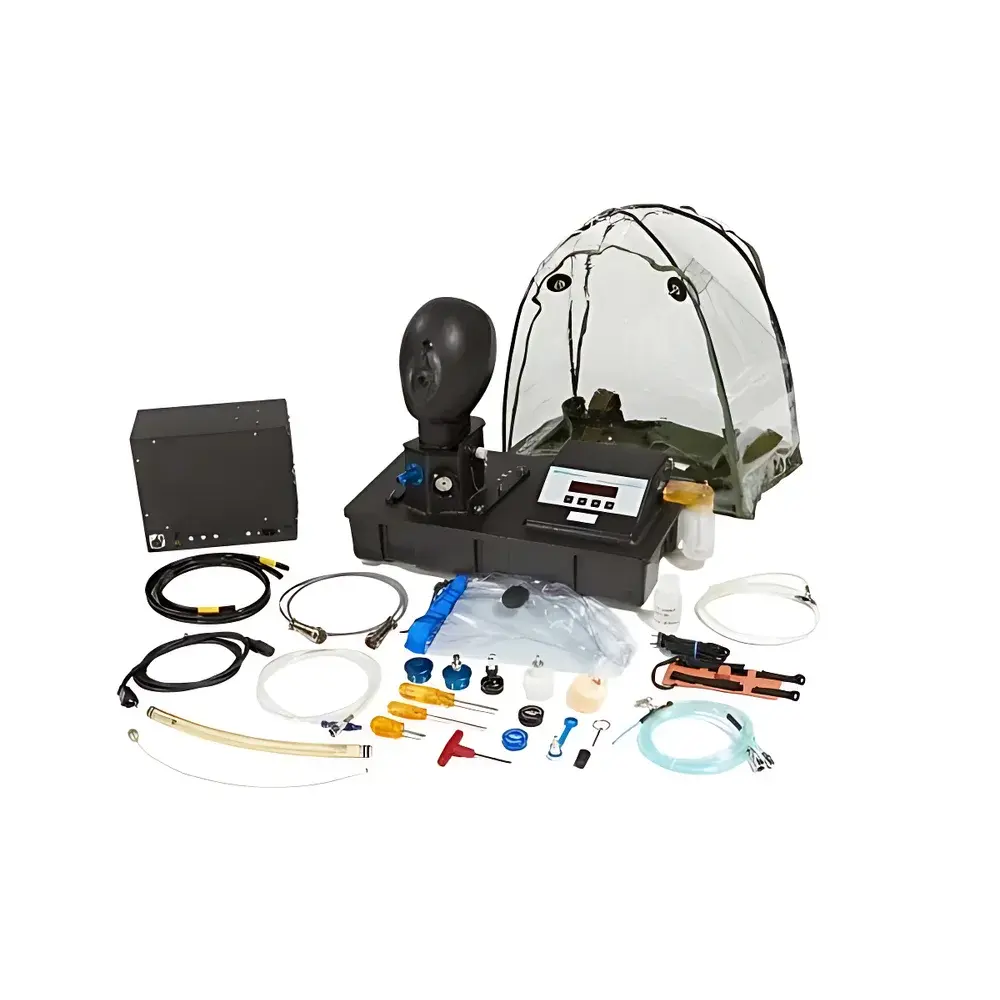
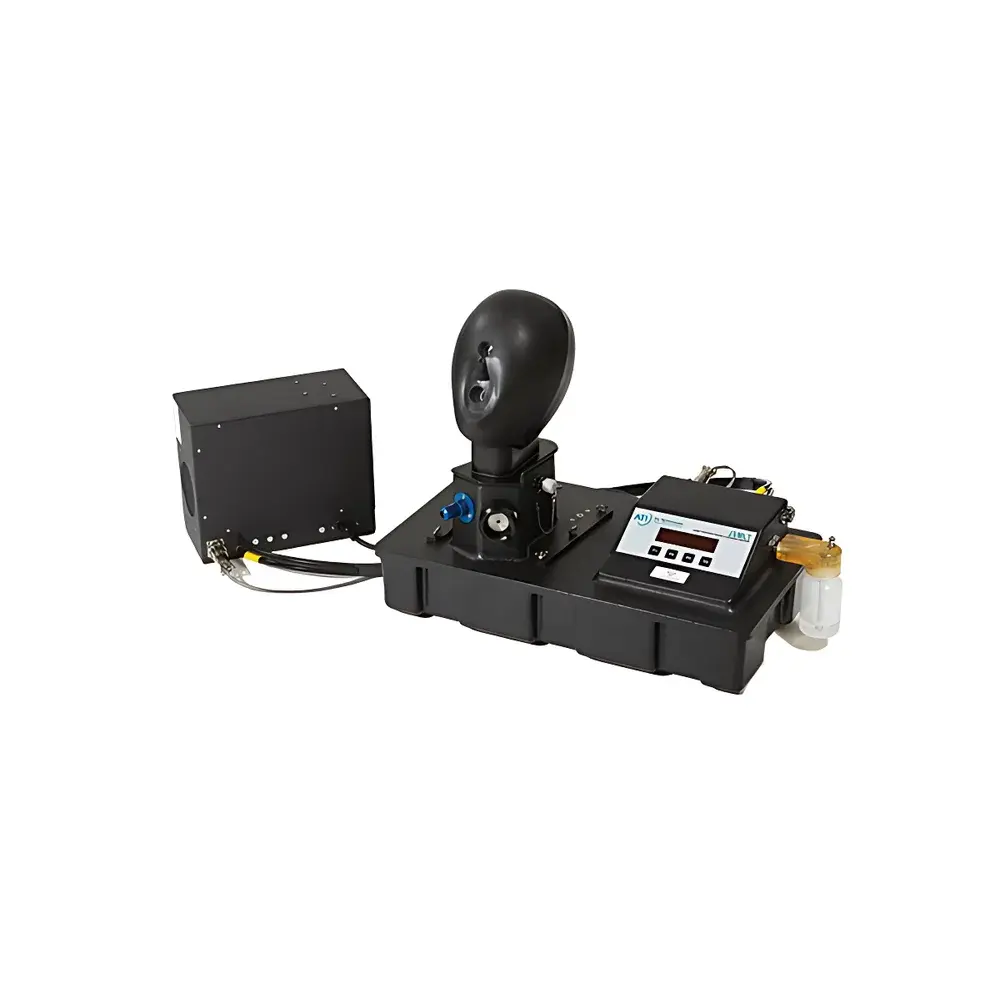
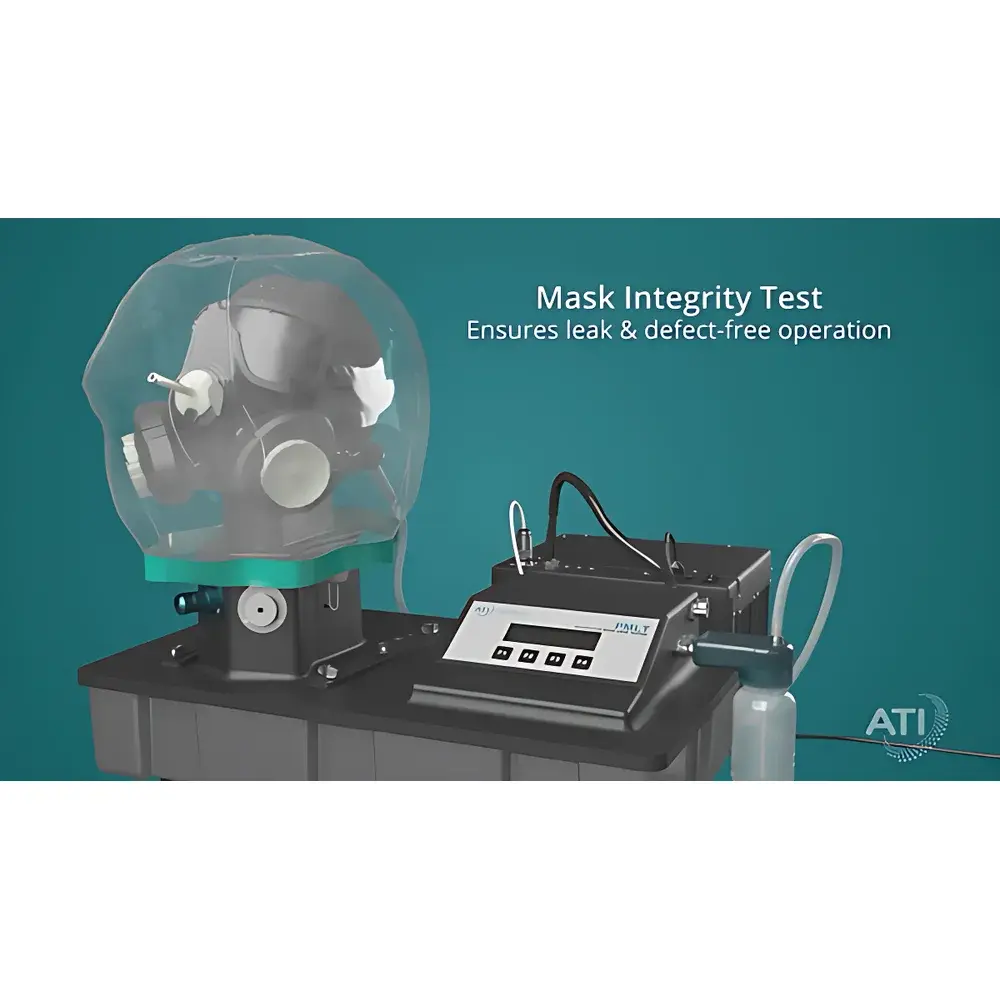
ATI PMLT Portable Mask Leakage Tester
| Brand | ATI |
|---|---|
| Origin | USA |
| Manufacturer Type | Authorized Distributor |
| Origin Category | Imported |
| Model | PMLT |
| Price | USD $100,000 |
| Dimensions (Packaged) | 81 cm × 57 cm × 51 cm |
| Weight (Packaged) | ~41 kg |
| (Unpackaged) | ~26 kg |
| Power Supply | 100–250 V AC, 50/60 Hz |
| Aerosol Agent | Polyalphaolefin-4 (PAO-4) |
| Detection Principle | Near-forward light-scattering photometry |
| Detection Range | 0.0005–100% aerosol penetration |
| Fit Factor Limit | 200,000 |
| Data Interface | RS-232 serial port |
Overview
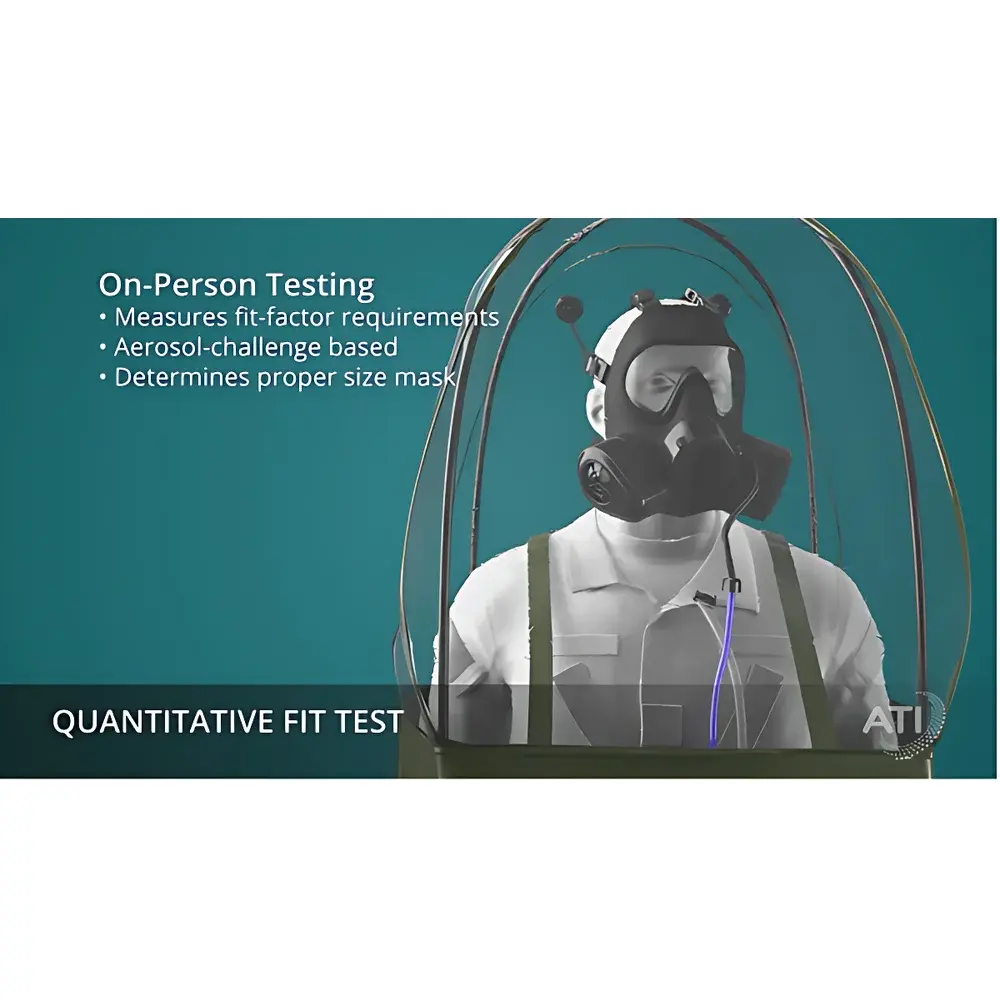
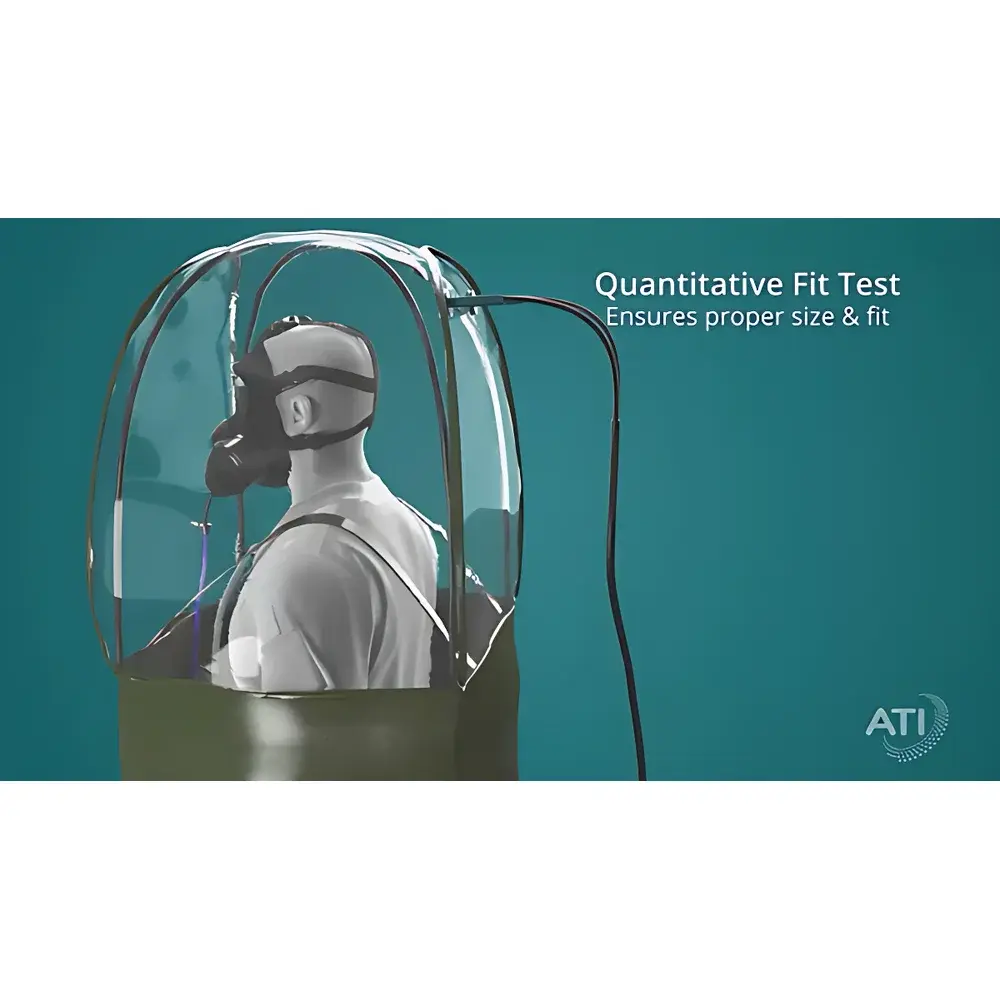
The ATI PMLT Portable Mask Leakage Tester is a field-deployable, quantitative respirator fit-testing instrument engineered for precision assessment of facepiece seal integrity under real-world operational conditions. It operates on the principle of aerosol photometry—introducing a polydisperse challenge aerosol (PAO-4) into the ambient test environment and measuring the concentration differential between ambient air and the interior of the respirator using a near-forward light-scattering photometer. This methodology aligns with the U.S. National Institute for Occupational Safety and Health (NIOSH) STP-0011 and ASTM F1885–22 standards for quantitative fit testing, and is identical to the technique employed by the U.S. Department of Defense for Joint Service Mask Leakage Testing (JSMLT). Unlike qualitative methods relying on taste or odor detection, the PMLT delivers objective, numerical fit factors—enabling traceable, auditable, and repeatable compliance verification for CBRN (Chemical, Biological, Radiological, Nuclear) respiratory protection programs.
Key Features
- Portable, self-contained design housed in a ruggedized Pelican™ transit case—fully integrated with aerosol generator, photometric detector, sampling probe, power supply, and calibration accessories.
- Real-time, quantitative fit factor calculation up to 200,000—exceeding OSHA and NIOSH minimum pass thresholds (e.g., ≥100 for half-masks, ≥500 for full-facepieces).
- Modular accessory compatibility: supports testing of all commercially available N95, elastomeric, powered air-purifying respirators (PAPRs), and military-grade CBRN masks—including legacy and next-generation systems.
- Leak-source isolation capability: enables directional probing of high-risk interface zones (e.g., exhalation valve seals, speech diaphragm gaskets, drinking tube couplings, inhalation inlet gaskets) to localize and remediate leakage paths without mask disassembly.
- Intuitive touch-panel interface with backlit digital display—designed for gloved operation and rapid setup (<5 minutes) in field or laboratory environments.
- Universal AC input (100–250 V, 50/60 Hz) ensures global deployment readiness without voltage conversion hardware.
Sample Compatibility & Compliance
The PMLT is validated for use with all NIOSH-certified filtering facepiece respirators (FFRs), elastomeric half- and full-facepieces, and military CBRN masks compliant with MIL-STD-282, AEP-55, and NATO AC/225(ED) standards. Its PAO-4 aerosol challenge protocol satisfies the requirements of OSHA 29 CFR 1910.134 Appendix A, ISO 16900-1:2015 (Respiratory protective devices — Methods of test — Part 1: Determination of inward leakage), and EU Regulation (EU) 2016/425 Annex II. The system supports GLP-compliant data recording when paired with validated third-party software configured for audit-trail logging per FDA 21 CFR Part 11.
Software & Data Management
Raw photometric signal output and calculated fit factors are transmitted via RS-232 serial interface to external PCs running validated fit-test management software. The PMLT itself does not store historical test records internally; instead, it functions as a calibrated measurement engine—ensuring data integrity through direct instrument-to-software telemetry. Compatible platforms support CSV export, multi-user role-based access control, electronic signature capture, and automated report generation aligned with ISO/IEC 17025 documentation requirements.
Applications
- Quantitative respirator fit testing for first responders, nuclear facility personnel, hazardous materials (HAZMAT) teams, and military CBRN units.
- Validation of mask reconditioning protocols following decontamination cycles.
- Verification of seal integrity during respirator procurement qualification and shelf-life stability studies.
- Root-cause analysis of field-reported leakage incidents via targeted component-level interrogation.
- Training and competency assessment in occupational health and safety programs requiring documented fit-test compliance.
FAQ
Does the PMLT require annual recalibration?
Yes—ATI recommends annual factory recalibration against NIST-traceable photometric standards, with interim user verification using the included zero-air and reference aerosol check procedures.
Can the PMLT test reusable elastomeric respirators with replaceable filters?
Yes—the system accommodates both filter-in-place and filter-removed configurations to isolate facepiece seal performance from filter media efficiency.
Is PAO-4 the only acceptable challenge agent?
PAO-4 is the primary agent specified in NIOSH and military protocols; however, the PMLT’s photometric detector is compatible with other polydisperse oils (e.g., DOS, DEHS) when validated per ASTM F1885–22 Annex A2.
What is the minimum detectable leak level?
The photometer achieves a lower detection limit of 0.0005% aerosol penetration—equivalent to a fit factor of 200,000—ensuring sensitivity well beyond regulatory pass/fail thresholds.
Is the PMLT certified for use in GMP-regulated pharmaceutical cleanrooms?
While not intrinsically cleanroom-rated, the PMLT may be deployed in classified environments following site-specific risk assessment and aerosol containment validation per ISO 14644-1.





