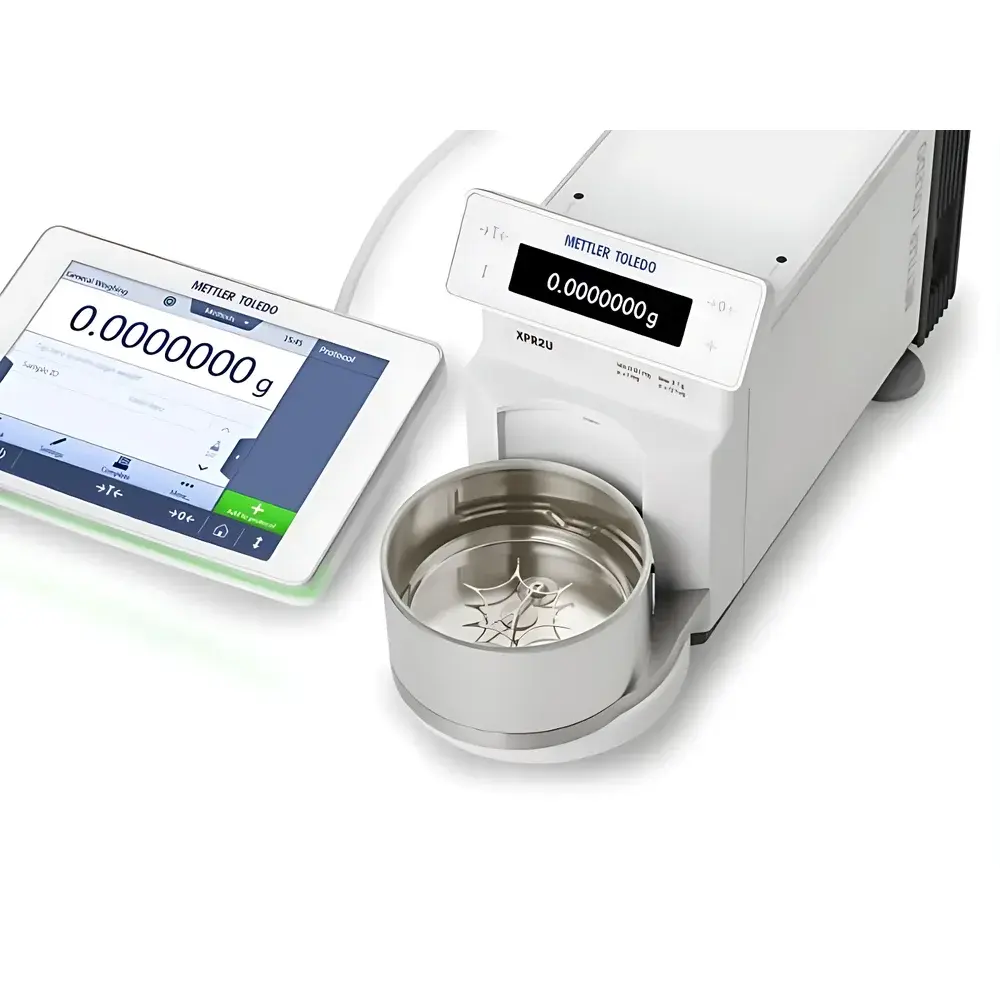
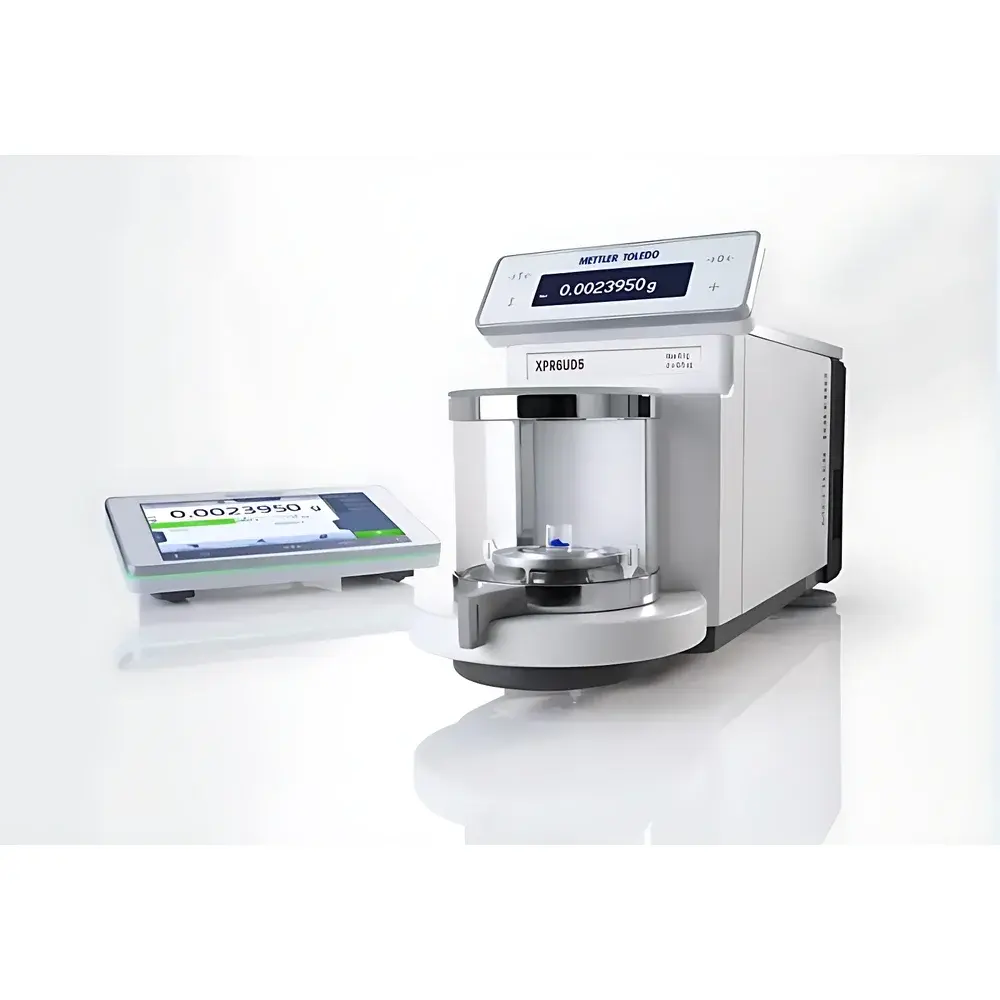
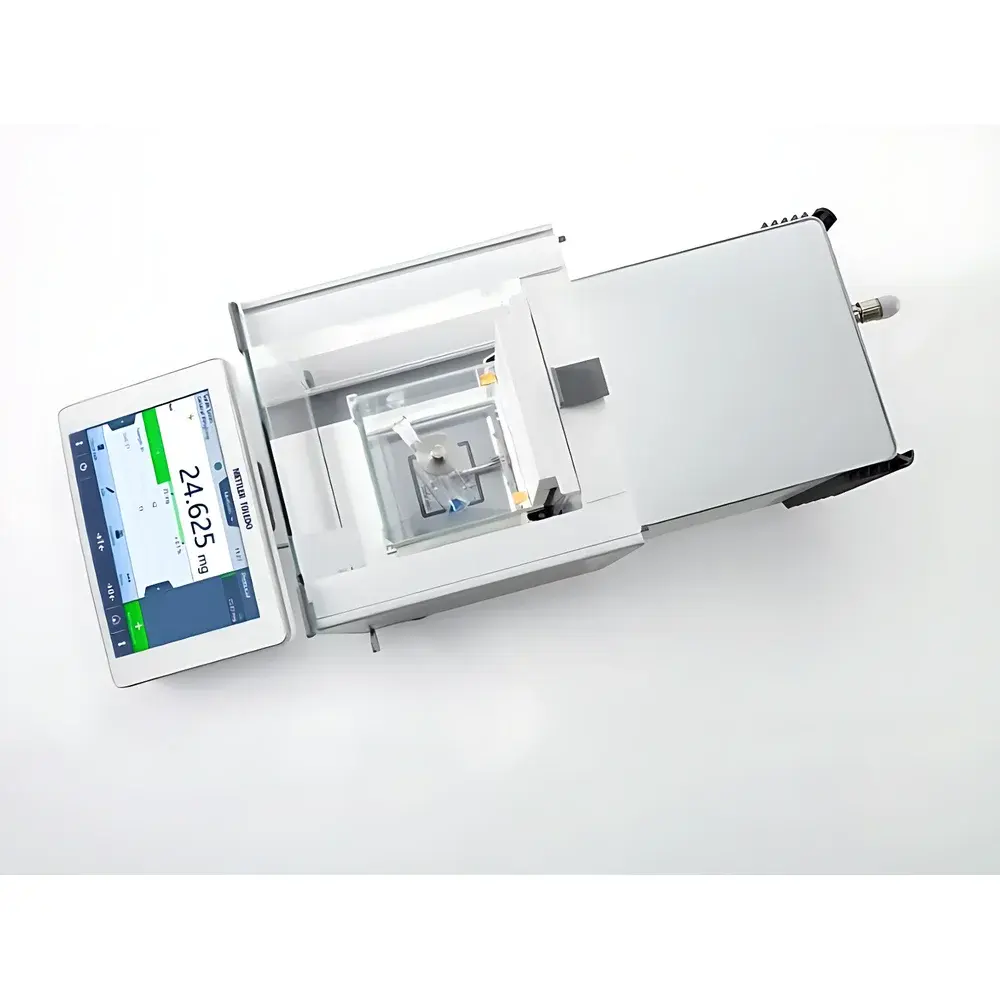
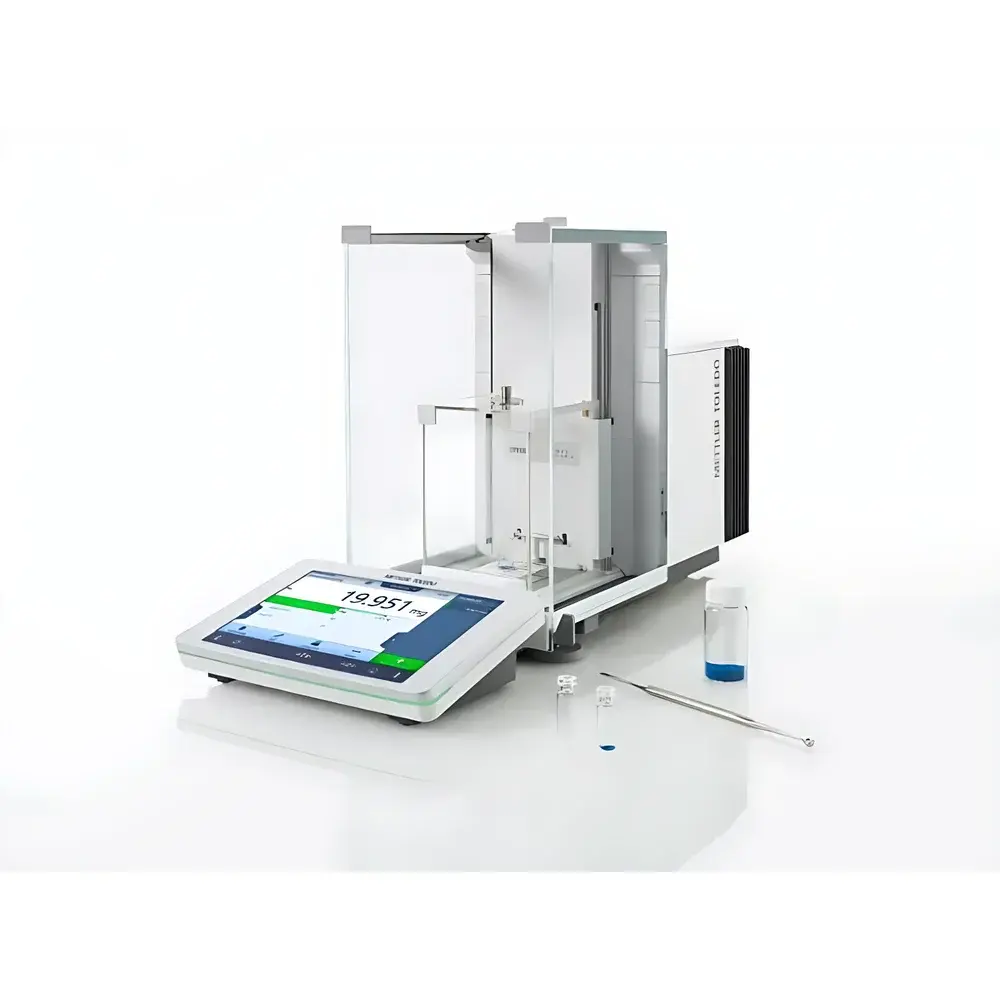
METTLER TOLEDO XPR Series Ultra-Micro and Micro Balances
| Brand | METTLER TOLEDO |
|---|---|
| Model Range | XPR2U / XPR6 / XPR26 / XPR56 / XS3DU |
| Maximum Capacity | 2.1 g to 52 g |
| Readability | 0.1 µg to 10 µg |
| Repeatability | ≤ ±0.00025 mg |
| Compliance | GxP, USP <41>, <1251>, ISO/IEC 17025, GLP/GMP Audit Trail Ready |
Overview
The METTLER TOLEDO XPR Series represents the engineering benchmark for ultra-micro and micro weighing in regulated laboratory environments. Designed around electromagnetic force compensation (EMFC) technology with monolithic sensor architecture, these balances deliver traceable mass measurement at the sub-microgram level — critical for applications where sample scarcity, volatility, toxicity, or cost demands absolute minimization of material use. The XPR2U (2.1 g / 0.1 µg), XPR6 (6.1 g / 1 µg), XPR26 (22 g / 1 µg), XPR56 (52 g / 1 µg), and XS3DU (dual-range: 0–800 mg / 1 µg & 0–3.1 g / 10 µg) models are purpose-built for precision-critical workflows in pharmaceutical QC, reference standard preparation, catalyst research, nanomaterial formulation, and forensic toxicology. Each system integrates real-time environmental monitoring, active drift compensation, and structural isolation to maintain metrological integrity under variable lab conditions — ensuring compliance with ISO 9001, ISO/IEC 17025, and pharmacopeial requirements including USP (Balance Performance Verification) and (Weighing on Analytical Balances).
Key Features
- SmartScreen TFT color touchscreen with intuitive Chinese/English bilingual interface — supports glove-compatible operation and customizable user profiles.
- SmartSens infrared sensors enable hands-free control of door actuation, tare, print, and data transfer — reducing contamination risk and operator-induced variability.
- proFACT dual-interval automatic calibration (XPR models): temperature- and time-triggered internal weight adjustment with linearization correction across the full range — validated per ISO 17025 Clause 6.5.2.
- FACT automatic calibration (XS3DU): single-interval internal recalibration optimized for stability in non-ultra-sensitive micro-weighing tasks.
- LevelControl real-time leveling feedback system alerts users via visual and audible prompts when tilt exceeds ±0.5° — preventing systematic error from mechanical misalignment.
- SmartGrid draft shield design (XPR26/XPR56 only): aerodynamically optimized grid structure minimizes air turbulence and accelerates stabilization time by up to 40% versus conventional solid shields.
- GWP® Excellence software integration provides automated risk-based assessment of balance suitability for defined weighing tasks — including MinWeigh configuration, uncertainty calculation, and audit-ready documentation.
- RS232 standard port + modular interface slot supporting optional Bluetooth 5.0, Ethernet (TCP/IP), LocalCAN, PS/2, or additional RS232 — enabling seamless integration into LIMS, ELN, and MES platforms.
Sample Compatibility & Compliance
The XPR Series accommodates diverse sample forms — powders, crystals, lyophilized APIs, metal foils, filter media, and volatile organics — within its hermetically sealed draft chambers. All models meet IEC 61326-1 (EMC) and IEC 61010-1 (safety) standards. For regulated environments, the balances support full 21 CFR Part 11-compliant electronic records: digital signatures, role-based access control, immutable audit trails, and secure data export (CSV, XML, PDF). MinWeigh functionality — configured on-site by METTLER TOLEDO service engineers — dynamically calculates and enforces the minimum sample mass required to achieve target measurement uncertainty, satisfying USP and EU GMP Annex 18 requirements. Routine verification via BalanceCheck prompts periodic external weight validation using certified Class E2 or E1砝码, aligning with ISO/IEC 17025 Clause 6.4.10.
Software & Data Management
Embedded firmware supports direct export of raw weighing data with metadata (timestamp, operator ID, environment log, calibration status, uncertainty estimate). Optional LabX™ software enables centralized instrument management, method templating, SOP-guided workflows, and automated report generation compliant with ALCOA+ principles. All data exports include cryptographic hash signatures for integrity verification. Local data storage retains ≥10,000 weighings with full traceability; network-connected units synchronize with time servers (NTP) for ISO 17025-conformant timestamping. Firmware updates are digitally signed and verified pre-installation to ensure supply-chain security.
Applications
- Pharmaceutical: Primary and secondary reference standard weighing (ICH Q5C), low-dose API formulation, residual solvent analysis sample prep.
- Materials Science: Catalyst loading quantification, thin-film deposition mass verification, nanoparticle dispersion concentration calibration.
- Environmental Testing: Filter-based particulate matter (PM2.5/PM10) gravimetric analysis per EPA Method IO-3.2 and ISO 12103-1.
- Jewelry & Precious Metals: Alloy composition verification, hallmarking sample preparation, scrap valuation with traceable chain-of-custody.
- Academic Research: Isotope-labeled compound handling, enzyme kinetics substrate dosing, electrochemical electrode loading.
FAQ
What is the difference between proFACT and FACT calibration technologies?
proFACT (XPR series) performs two-point internal calibration — one at zero and one at full capacity — with temperature-compensated linearity correction. FACT (XS3DU) executes single-point zero-and-span calibration without linearity adjustment, suitable for general micro-weighing where ultra-high linearity is not mandated.
Is MinWeigh function available out-of-the-box?
No. MinWeigh requires on-site activation and configuration by a certified METTLER TOLEDO service engineer, who validates local environmental conditions, defines process tolerances, and links the setting to specific user roles and methods.
Can the XPR2U be used for USP compliance testing?
Yes — when operated within its specified environmental envelope (temperature stability ±1°C, humidity 30–60% RH, vibration isolation), the XPR2U meets repeatability, sensitivity, and eccentricity criteria defined in USP for ultra-micro applications.
Does the balance support GLP-compliant audit trails?
Yes. All user actions — including weighing events, calibration, parameter changes, and login/logout — are logged with timestamps, operator IDs, and reason-for-change fields. Logs are non-erasable and exportable in encrypted format.
How is uncertainty calculated for XPR-series measurements?
Uncertainty is derived per EURACHEM/CITAC Guide CG4, incorporating readability, repeatability, eccentricity, nonlinearity, and buoyancy correction — all automatically computed and displayed during MinWeigh-assisted operations.