
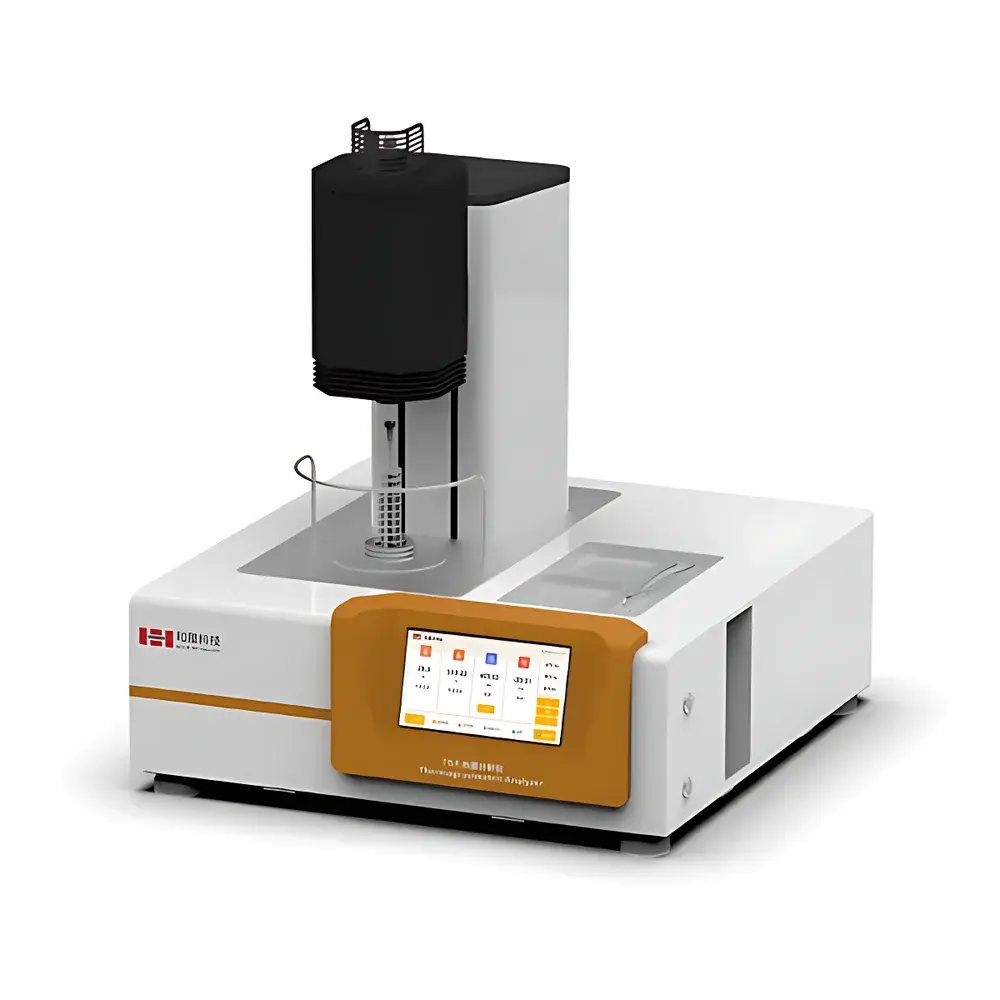
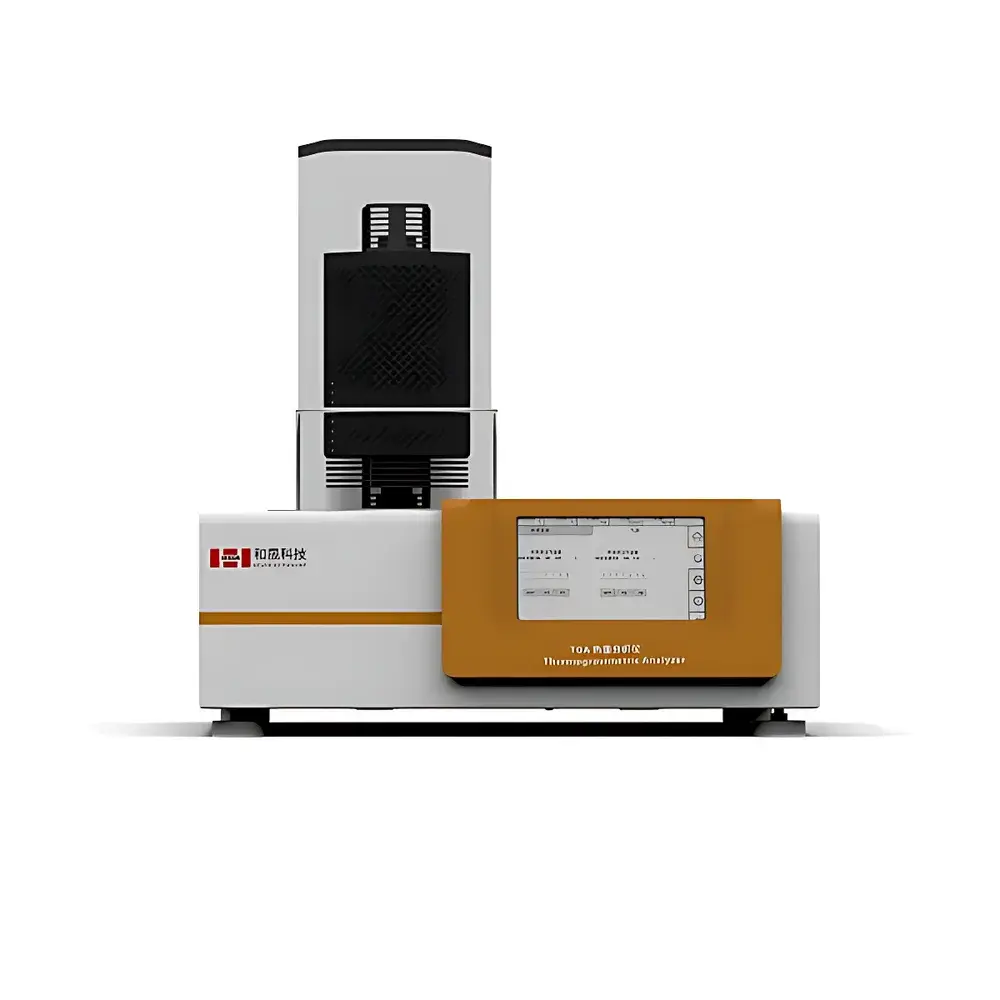
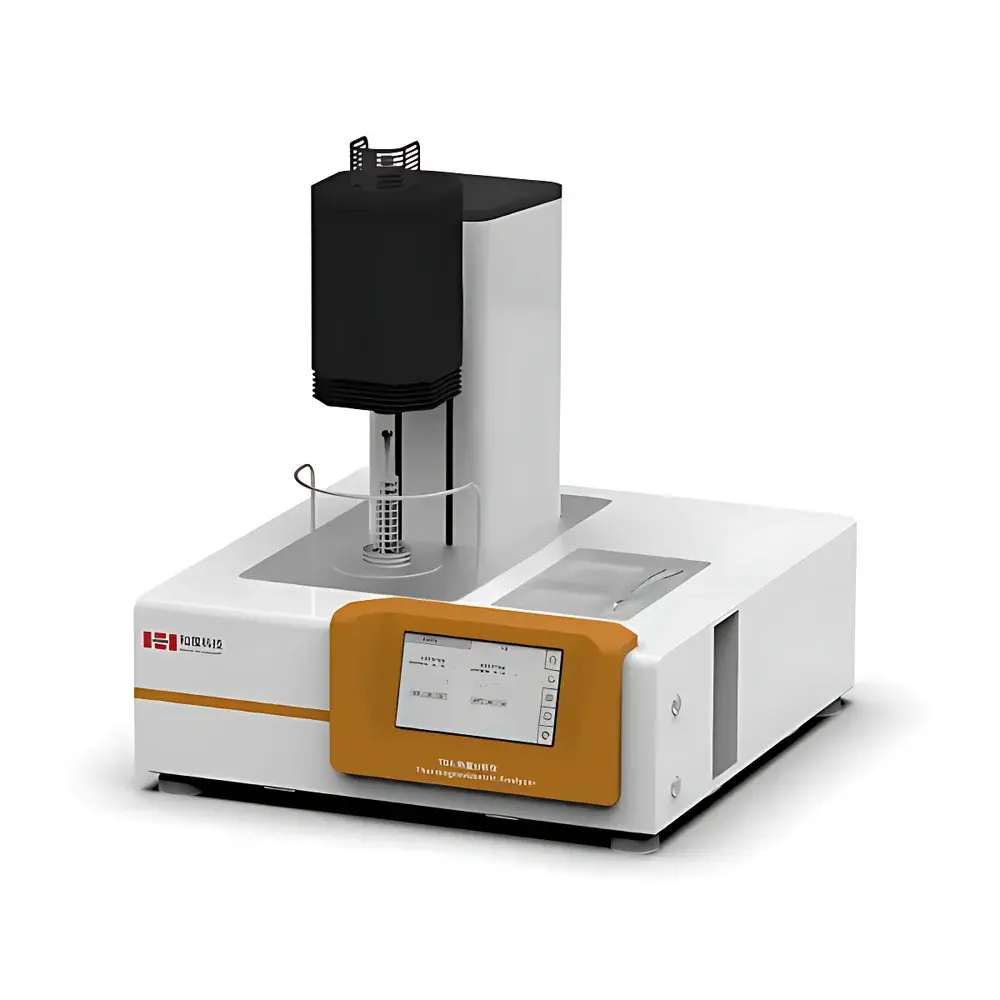
HESON HS-TGA-302 Vertical-Lift Thermogravimetric Analyzer
| Brand | HESON |
|---|---|
| Origin | Shanghai, China |
| Manufacturer Type | Direct Manufacturer |
| Regional Category | Domestic (China) |
| Model | HS-TGA-302 |
| Test Environment | Ambient Pressure |
| Sample Capacity | 1 sample per run |
| Instrument Type | General-purpose |
| Temperature Range | RT to 1300 °C |
| Temperature Accuracy | ±0.1 K |
| Balance Sensitivity | 1 µg |
| Heating/Cooling Rate | 0–100 °C/min |
| Maximum Sample Mass | 5 g |
| Baseline Drift | ≤10 µg |
Overview
The HESON HS-TGA-302 is a vertically configured, top-loading thermogravimetric analyzer engineered for high-precision mass change measurement under controlled thermal conditions. It operates on the principle of thermogravimetry—quantifying real-time mass variation as a function of temperature or time under defined atmospheric conditions (inert, oxidizing, static, or dynamic gas flow). The instrument employs a high-stability microbalance with 1 µg resolution and integrated ring-weight calibration, coupled with a robust vertical furnace capable of continuous operation from ambient temperature up to 1300 °C. Its lift mechanism enables precise, reproducible sample positioning without manual handling post-loading, minimizing thermal disturbance and mechanical drift. The system supports standardized thermal protocols per ASTM E1131, ISO 11358, and USP <467>, and is designed for compliance with GLP and GMP data integrity requirements—including audit-trail-enabled software logging and electronic signature support.
Key Features
- Vertical top-loading architecture with motorized lift mechanism for repeatable sample placement and reduced thermal lag
- High-resolution quartz crystal microbalance with 1 µg sensitivity and ≤10 µg baseline drift over full temperature range
- Furnace with uniform heating zone and ±0.1 K temperature accuracy; programmable ramp rates from 0 to 100 °C/min
- Modular gas control system supporting dual-gas switching (e.g., N₂/O₂), mass flow regulation, and optional humidified or reactive atmospheres
- Integrated water-cooling circuit enabling rapid cooling from 1000 °C to 50 °C in ≤20 minutes
- Pre-calibrated crucible compatibility with Pt, Al₂O₃, Au, SiO₂, Ag, ZrO₂, and Al; custom crucibles available upon request
- Built-in blank curve acquisition and automatic subtraction for enhanced signal-to-noise ratio in low-mass-loss applications
Sample Compatibility & Compliance
The HS-TGA-302 accommodates solid, powder, and granular samples up to 5 g in mass, with optimized geometry for homogeneous heat transfer and minimal convection artifacts. It is routinely deployed in academic, pharmaceutical, and industrial R&D labs for characterization of polymers, ceramics, catalysts, battery materials, metallurgical precursors, and geochemical matrices. Regulatory alignment includes full traceability per FDA 21 CFR Part 11 (when used with compliant software), adherence to ISO/IEC 17025 calibration documentation standards, and compatibility with ASTM D3850 (decomposition kinetics), ASTM E2550 (thermal stability), and ISO 11358-1 (general TGA principles). Optional purge gas humidification and reactive gas modules extend applicability to corrosion studies, oxidative degradation, and hygroscopicity profiling.
Software & Data Management
The instrument is operated via HESON Thermal Analysis Suite (HTAS), a Windows-based platform supporting multi-step temperature programming, real-time DTG (derivative thermogravimetry) calculation, and synchronized data export in ASTM E1447-compliant ASCII or universal .tdf formats. HTAS includes automated peak detection, mass-loss step integration, kinetic modeling (e.g., Kissinger, Ozawa-Flynn-Wall), and customizable reporting templates aligned with journal submission requirements (e.g., Journal of Thermal Analysis and Calorimetry). All user actions, method parameters, calibration logs, and raw datasets are timestamped and stored with immutable audit trails. Exported data are compatible with third-party analysis tools including OriginLab, MATLAB, and Thermo Scientific OMNIC for TGA-FTIR correlation.
Applications
The HS-TGA-302 serves as a foundational tool for compositional quantification, decomposition pathway mapping, and thermal stability assessment across diverse domains: polymer thermal degradation kinetics (e.g., PLA, PTFE, SEBS); inorganic phase transitions (e.g., CaC₂O₄·H₂O dehydration, metal oxide reduction); catalyst deactivation analysis; moisture/volatiles content per USP <921>; residual solvent quantification in APIs; char yield prediction in biomass pyrolysis; and thermal aging behavior of composites under simulated service conditions. Its compatibility with evolved gas analysis (EGA) interfaces enables seamless coupling to FTIR or MS systems—facilitating molecular identification of decomposition products in real time, as demonstrated in published studies on carbon nanotube-modified resins, Ni-Co hydrotalcite corrosion inhibitors, and Mn ore activation mechanisms.
FAQ
What crucible materials are standard with the HS-TGA-302?
Platinum (Pt), alumina (Al₂O₃), and gold (Au) crucibles are supplied as standard options. Additional materials—including silica (SiO₂), silver (Ag), zirconia (ZrO₂), and aluminum—are available on request.
Can the instrument perform isothermal holds and multi-cycle heating-cooling sequences?
Yes—HTAS supports unlimited stepwise programs, including isothermal segments, cooling ramps, and repeated thermal cycles with user-defined dwell times and rate transitions.
Is the system compatible with TGA-FTIR or TGA-MS coupling?
Yes—the HS-TGA-302 features a standardized heated transfer line port (operating up to 230 °C) and gas flow synchronization interface for direct integration with commercial FTIR and mass spectrometry systems.
How is temperature calibration verified?
Calibration is performed using certified reference materials (e.g., Ni, Cu, Al) per ISO 11358-2, with traceable NIST-traceable certificates provided with each instrument shipment.
Does the software support kinetic analysis of decomposition steps?
Yes—HTAS includes built-in models for model-free (Ozawa-Flynn-Wall, Kissinger) and model-fitting (n-th order, diffusion-controlled) kinetic evaluation, with uncertainty propagation and confidence interval estimation.



