
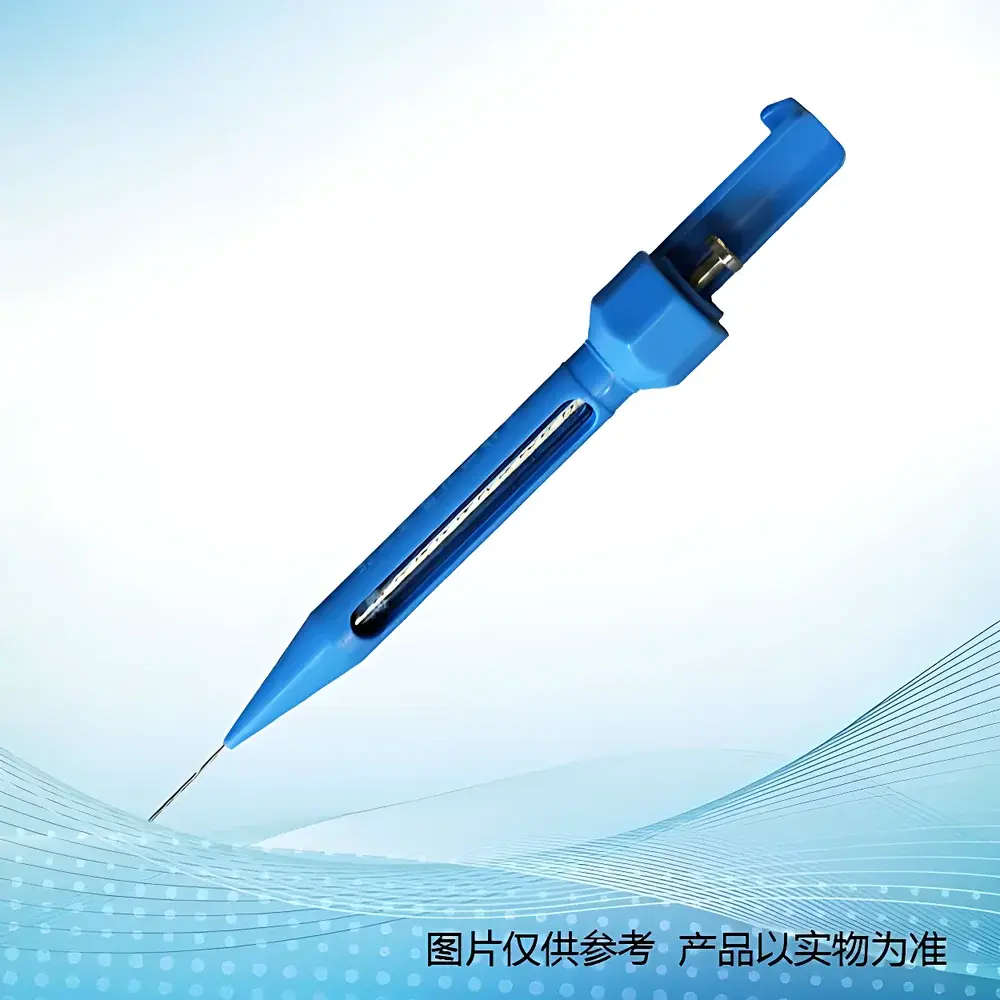
GDYS-102SK Portable Permanganate Index Analyzer by Jida Xiaotian’e
| Brand | Jida Xiaotian'e |
|---|---|
| Origin | Jilin, China |
| Manufacturer Type | Direct Manufacturer |
| Product Category | Domestic |
| Model | GDYS-102SK |
| Price Range | USD 280–1,400 (FOB) |
| Instrument Type | Portable/Handheld Water Quality Analyzer |
| Measured Parameter | Permanganate Index (COD<sub>Mn</sub>) |
| Detection Limit | 0.50 mg/L |
| Measurement Range | 0.00–8.00 mg/L |
| Accuracy | ±5% of reading |
| Method | Micro-titration with pre-packaged reagent kit |
| Analysis Time | ≤10 minutes per sample |
| Sample Matrix | Drinking water and raw water sources with chloride concentration <300 mg/L (as Cl⁻) |
Overview
The GDYS-102SK Portable Permanganate Index Analyzer is an engineered field-deployable instrument designed for rapid, on-site quantification of the permanganate index (CODMn) in drinking water and source water samples. CODMn serves as a critical surrogate parameter for assessing non-specific organic load and oxidizable matter—particularly low-molecular-weight organics such as alcohols, aldehydes, and unsaturated compounds—in potable water systems. Unlike dichromate-based chemical oxygen demand (CODCr) methods, the permanganate index employs potassium permanganate (KMnO₄) under mild acidic or neutral conditions at elevated temperature (typically 100 °C for 30 min), followed by back-titration with sodium oxalate. The GDYS-102SK implements a miniaturized, standardized micro-titration protocol compliant with ISO 8467:1993 and GB/T 5750.7–2006 (Standard Methods for Examination of Drinking Water – Organic Indexes). Its design prioritizes operational robustness, minimal reagent consumption, and operator independence—making it suitable for routine surveillance by water utility technicians, environmental health officers, and field laboratories operating under resource-constrained or mobile deployment conditions.
Key Features
- Pre-calibrated micro-titration system optimized for reproducible endpoint detection using visual colorimetric transition (pink-to-colorless)
- Integrated heating block with precise temperature control (100 ±1 °C) to ensure reaction kinetics consistency per ISO 8467 requirements
- Dedicated single-use reagent kits—each containing pre-weighed KMnO₄, H₂SO₄, and Na₂C₂O₄—eliminating manual reagent preparation and cross-contamination risk
- Compact, battery-operated architecture (optional AC adapter support) enabling operation in remote sampling locations without grid access
- On-device reference scale and calibrated burette syringe (0.01 mL resolution) for direct titrant volume readout and manual calculation
- Compliance-ready documentation package supporting GLP-aligned recordkeeping for municipal water quality reporting
Sample Compatibility & Compliance
The GDYS-102SK is validated for use with clarified, low-turbidity (<5 NTU) drinking water and surface/groundwater source samples containing chloride concentrations below 300 mg/L (as Cl⁻). Elevated chloride interferes via competitive oxidation, leading to overestimation; therefore, samples exceeding this threshold require chloride masking (e.g., with Ag₂SO₄) or alternative methodology (e.g., iodometric correction)—procedures not integrated into the base instrument but referenced in the user manual. The analyzer conforms to national standard GB/T 5750.7–2006 and aligns methodologically with ISO 8467:1993. While not certified to ISO/IEC 17025 for accredited testing, its performance characteristics meet internal QA/QC criteria for Level 2 field screening per WHO Guidelines for Drinking-water Quality (4th ed., Annex 2).
Software & Data Management
The GDYS-102SK operates as a standalone analytical platform without embedded digital data logging or Bluetooth/Wi-Fi connectivity. All measurements are recorded manually in standardized field logs or laboratory notebooks. However, the instrument’s standardized protocol—including fixed reaction time, controlled temperature, and discrete reagent dosing—enables full traceability and audit readiness. Optional companion Excel-based calculation templates (supplied with purchase) automate result derivation from titrant volume, blank correction, and dilution factors—supporting alignment with FDA 21 CFR Part 11 principles when used within validated electronic record workflows. Raw data fields (sample ID, date/time, titrant volume, blank volume, temperature) are structured to feed into LIMS-compatible spreadsheets.
Applications
- Routine monitoring of treated drinking water at distribution points and household taps
- Source water assessment during watershed surveys and seasonal vulnerability studies
- Emergency response screening following flood events or suspected contamination incidents
- Verification of filtration and disinfection process efficacy in small-scale water treatment plants
- Educational use in environmental science laboratories for teaching redox titration fundamentals and water quality indicator interpretation
FAQ
What is the permissible chloride interference limit for accurate CODMn measurement?
The GDYS-102SK requires chloride concentration ≤300 mg/L (as Cl⁻); above this, results exhibit positive bias due to parallel oxidation of Cl⁻ by KMnO₄.
Can the instrument be used for wastewater or industrial effluent analysis?
No—it is not validated for high-organic, high-turbidity, or saline matrices; wastewater applications require CODCr methods per ISO 6060 or EPA 410.4.
Is calibration verification required before each use?
Yes: a system blank and certified reference standard (e.g., 2.00 mg/L potassium hydrogen phthalate solution) must be analyzed daily to confirm method accuracy and reagent integrity.
How is measurement uncertainty estimated?
Combined uncertainty (k=2) is ±5% of reading, derived from repeatability (n=6, RSD ≤3.2%), titrant delivery precision (±0.01 mL), and standard reference material recovery (96–104%).
Are replacement reagent kits supplied with lot-specific certificates of analysis?
Yes: each batch of GDYS-102SK reagent kits includes CoA documenting KMnO₄ purity, oxalate equivalence, and stability under recommended storage (2–8 °C, desiccated).
Related Products







