
Davis 6450 Pyranometer
| Brand | Davis Instruments |
|---|---|
| Origin | USA |
| Model | 6450 |
| Operating Temperature | -40 to +65°C |
| Storage Temperature | -45 to +70°C |
| Sensor Type | Sealed Silicon Photodiode |
| Spectral Response (10% points) | 400–1100 nm |
| Cosine Response Error | ±3% of reading (0–±70°), ±10% of reading (±70–±85°) |
| Cosine Response Error | ±2% of full scale (0–±90°) |
| Measurement Range | 0–1800 W/m² |
| Accuracy | ±5% of full scale |
| Drift | ±2% per year |
| Output Signal | 0–3 VDC (1.67 mV per W/m²) |
| Cable Length | 0.6 m |
| Cable Specification | 4-conductor, 26 AWG, RJ-11 connector |
| Housing Material | UV-stabilized PVC |
| Dimensions | 51 × 70 × 57 mm |
| Weight | 226 g |
| Resolution | 1 W/m² |
| Integration Interval | 50 s to 1 min |
| Calibration | Traceable to secondary standard |
| Temperature Coefficient | +0.12% per °C (referenced to 25°C) |
Overview
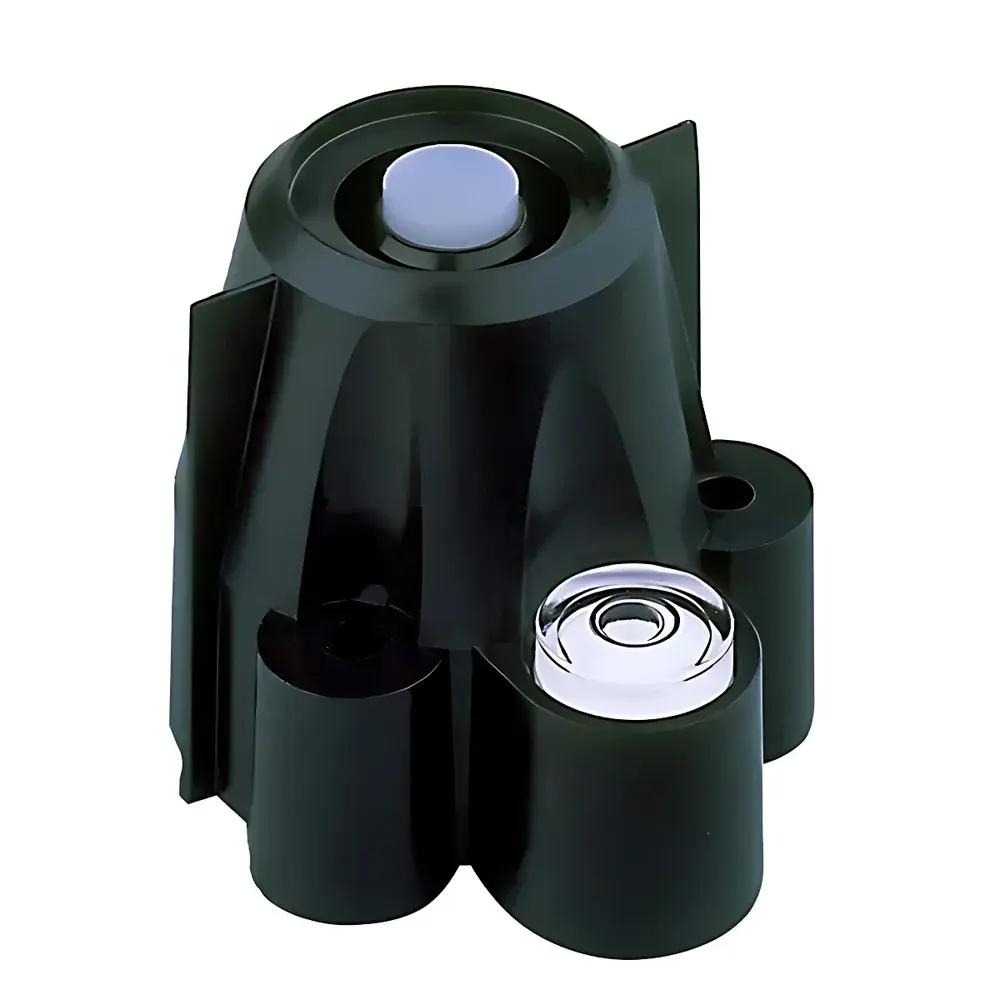
The Davis 6450 Pyranometer is a precision-calibrated, silicon photodiode-based broadband solar radiation sensor engineered for continuous, field-deployable measurement of global horizontal irradiance (GHI). It operates on the principle of photovoltaic conversion: incident solar photons within the 400–1100 nm spectral band generate a proportional photocurrent in the sealed silicon diode, which is linearly amplified and output as a stable 0–3 VDC analog signal (1.67 mV per W/m²). Unlike thermopile-based pyranometers, the 6450 delivers rapid response time and low power consumption—critical for battery-operated weather stations such as the Vantage Pro2 and Vantage Pro2 Plus. Its design prioritizes thermal stability: the UV-resistant PVC housing incorporates convection cooling channels and a reflective outer surface to minimize self-heating artifacts, while the integrated diffuser—welded directly to the housing—ensures IP65-level environmental sealing and consistent cosine correction across the full hemispherical field of view.
Key Features
- Sealed, temperature-compensated silicon photodiode with spectral responsivity aligned to the CIE photopic curve and ASTM G173-03 solar reference spectrum
- Optimized cosine response: ±3% deviation from ideal cosine law up to ±70° zenith angle; ±2% full-scale error over 0–90° incidence range
- Integrated leveling bubble and spring-loaded mounting screws enable rapid, repeatable horizontal alignment without external tools
- Patented fin-and-ring optical geometry enhances directional response while minimizing shadowing and thermal offset
- Rain-shedding cavity between dome and housing prevents water pooling—validated under simulated irrigation and heavy rainfall conditions
- Factory-calibrated against NIST-traceable secondary standards; calibration certificate included with each unit
- Low-power operation compatible with 3 VDC supply (±10%), drawing ≤1 mA typical current—ideal for remote, solar-powered deployments
Sample Compatibility & Compliance
The Davis 6450 is designed for outdoor, unsheltered installation in accordance with ISO 9060:2018 classification for “Secondary Standard” pyranometers (Class C). It meets IEC 61724-1:2021 requirements for PV system performance monitoring and is widely deployed in agricultural microclimate networks, educational meteorology labs, and distributed environmental sensor arrays. While not certified to ISO/IEC 17025 for metrological laboratory use, its ±5% full-scale accuracy and <2% annual drift satisfy operational thresholds for long-term trend analysis, evapotranspiration modeling (FAO-56), and solar resource assessment at Class B site characterization level. The device complies with RoHS Directive 2011/65/EU and carries CE marking for EMC immunity (EN 61326-1) and environmental robustness (EN 60529 IP65).
Software & Data Management
The 6450 interfaces natively with Davis Vantage Pro2 consoles via standardized RJ-11 pinout (green = signal, black = ground, yellow = +3 VDC). Output data is automatically integrated into console firmware for real-time irradiance display, cumulative energy logging (MJ/m²), and configurable averaging intervals (50 s to 1 min). When connected to Davis WeatherLink Live or third-party DAQ systems via analog-to-digital converters (e.g., Campbell Scientific CR1000X with AM16/32B multiplexer), raw voltage signals support post-processing with user-defined calibration coefficients and temperature compensation algorithms. All irradiance values are timestamped and stored with metadata including sensor ID, integration period, and ambient temperature—enabling traceability in GLP-compliant environmental monitoring workflows.
Applications
- Solar energy yield forecasting and PV system performance validation
- Agricultural evapotranspiration (ET₀) estimation using Penman-Monteith or Hargreaves equations
- Urban heat island effect studies requiring high-temporal-resolution GHI time series
- Calibration reference for lower-cost radiometric sensors in distributed IoT networks
- Classroom instruction in atmospheric physics, renewable energy engineering, and environmental science
- Long-term climate monitoring in NOAA COOP and citizen science networks (e.g., CoCoRaHS)
FAQ
Is the Davis 6450 suitable for scientific-grade solar resource assessment?
It meets Class C specifications per ISO 9060:2018 and is appropriate for operational monitoring and trend analysis—but not for primary reference measurements requiring thermopile-class uncertainty (<±2%).
Can the 6450 be mounted alongside a rain gauge without interference?
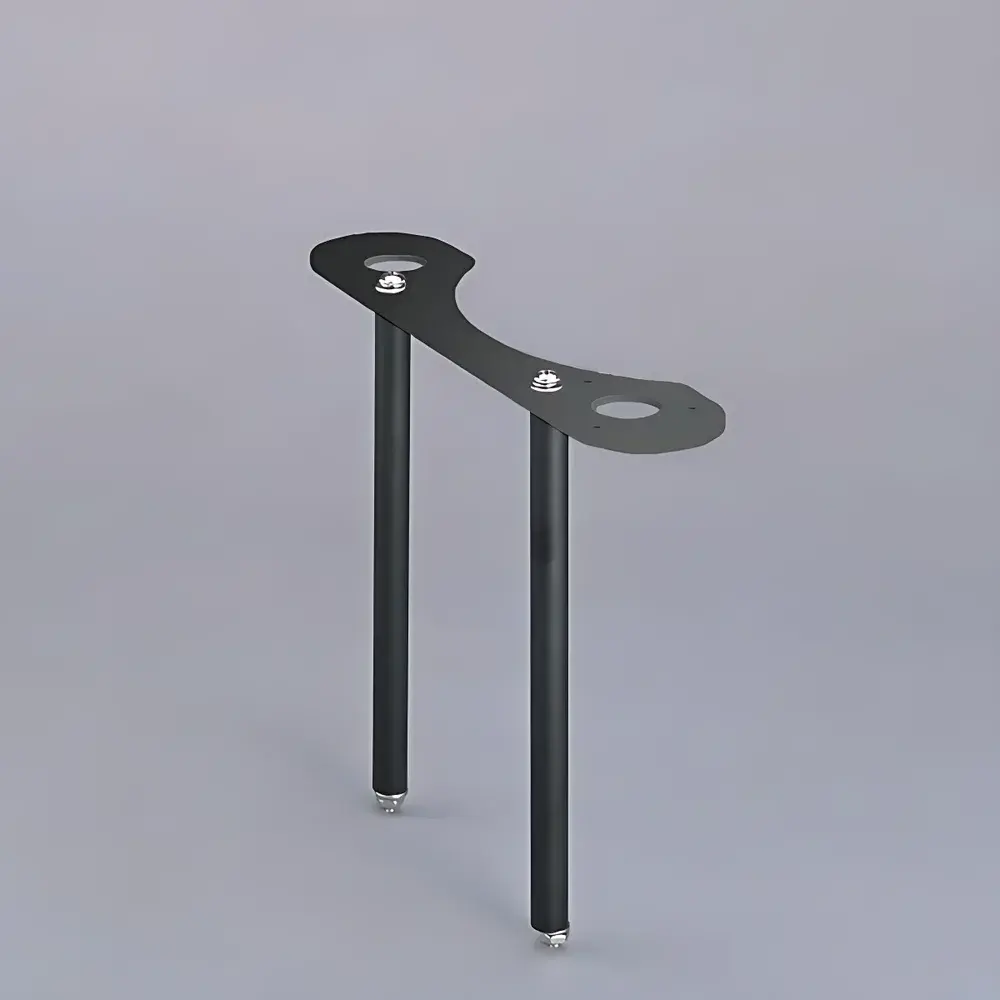
Yes—when installed using the optional Radiation Mounting Bracket (Part #6673), the sensor achieves optimal separation and avoids splash-induced shading or thermal coupling.
Does the sensor require periodic recalibration?
Davis recommends recalibration every two years for critical applications; annual verification against a stable reference is advised for compliance-driven deployments.
What is the impact of temperature on measurement stability?
The built-in temperature coefficient (+0.12%/°C) is compensated in Vantage Pro2 firmware; standalone DAQ users must apply linear correction relative to 25°C reference.
Is the 6450 compatible with non-Davis data loggers?
Yes—its 0–3 VDC analog output and RJ-11 interface are electrically interoperable with any system supporting 3 V excitation and high-impedance voltage input (≥10 kΩ).







